REVIEW · CAPITOL & LIBRARY OF CONGRESS
Castle to Capitol: Museums of the National Mall Architecture Tour
Book on Viator →Operated by DC Design Tours · Bookable on Viator
National Mall buildings, explained on foot. This small-group walk is built around architecture and the design choices behind America’s best-known museums, starting at the Smithsonian Castle and ending at Capitol Hill. You get the “what is it?” and the “why does it look like that?” in a smart, story-driven format.
I especially like two things: you cover a big chunk of the National Mall in about two hours, and the focus stays on the outside features that you can actually see up close. The Smithsonian Castle admission is included, so you’re not paying extra just to make the first stop feel complete.
One heads-up: most stops are short, and you’ll often be looking at buildings from the street or garden edges rather than going deep inside every museum.
In This Review
- Key takeaways before you go
- Why this National Mall architecture tour works so well
- Price and value: what $48 buys you
- Route basics: starting at the Smithsonian Castle and ending at Capitol Hill
- Stop-by-stop: what to look for on the walk
- Stop 1: Smithsonian Castle Building (the tour’s anchor)
- Stop 2: Smithsonian Arts and Industries Building (a design lesson in one quick stop)
- Stop 3: Hirshhorn Museum and Sculpture Garden (the spaceship on the Mall)
- Stop 4: National Gallery of Art from the Mall edge (neoclassical meets modern)
- Stop 5: National Museum of the American Indian (wind-and-water geometry)
- Stop 6: U.S. Botanic Garden (the calm break)
- Stop 7: Bartholdi Park (a detour that pays off)
- Stop 8: Capitol Hill (the final view moment)
- The guide makes or breaks the architecture reading
- Small group size: why max 20 matters on this route
- Family-friendly, but design-focused
- What to wear and how to plan your day
- Who should book Castle to Capitol
- Should you book Castle to Capitol?
- FAQ
- What’s the duration of the Castle to Capitol tour?
- How much does the tour cost?
- Is admission to the Smithsonian Castle included?
- Where does the tour start and where does it end?
- How big is the group?
- Is this tour refundable if plans change?
Key takeaways before you go
- Architecture-first route across the east side of the National Mall, from the Capitol to the Washington Monument area
- Smithsonian Castle admission included, so the opening stop isn’t just a photo moment
- Small group (max 20) keeps the walk moving and makes it easier to ask questions
- Historian guide style can turn details like materials, shapes, and symmetry into clear stories
- Varied sights from the Smithsonian complex to the Hirshhorn and National Museum of the American Indian
- Great ending view at the foot of Capitol Hill on the west lawn
Why this National Mall architecture tour works so well
The National Mall can feel like a long list of places to visit. This tour turns that list into a trail with a point. You walk the east side between the U.S. Capitol and the Washington Monument area, and the guide helps you read the buildings like clues.
I like that it’s not only “what museum is here,” but also “how the building communicates.” You start at the Smithsonian’s headquarters at the Smithsonian Castle, then connect the design to how the Smithsonian shaped the Mall itself over time. With a historian at the front of the group, you get both the artistry and the context.
You can also read our reviews of more museum experiences in Washington DC



Price and value: what $48 buys you
At $48 per person for about 2 hours, the value comes from two places. First, the tour includes admission to the Smithsonian Castle, so you’re paying for a guided experience rather than stacking separate tickets. Second, you’re hiring a local guide who can point out architectural design elements most people walk right past.
Another quiet advantage: the itinerary is designed for concentrated learning. You’re not spending half your day figuring out what to see next. You’re getting a guided sequence along a compact stretch of the Mall, and that makes the price feel easier to justify—especially if you like structure, stories, and explanations.
Route basics: starting at the Smithsonian Castle and ending at Capitol Hill

You meet at Smithsonian Castle, 1000 Jefferson Dr SW, Washington, DC 20560. The tour wraps on the west lawn of the U.S. Capitol, with a view back across the National Mall—exactly the kind of payoff that helps the whole walk click into place.
The tour is built around major Smithsonian and National Mall landmarks. It’s also timed so you can keep moving without feeling rushed. Expect a guided walk that stays on the east side sights, with multiple architectural stops and a final scenic conclusion at Capitol Hill.
And yes, you get a mobile ticket, which is useful in a city where plans can shift fast.
Stop-by-stop: what to look for on the walk
The route is short enough to stay energetic, but each stop is still treated like a mini lesson. Here’s how the experience plays at each major point, and what you should watch for as you go.
Stop 1: Smithsonian Castle Building (the tour’s anchor)
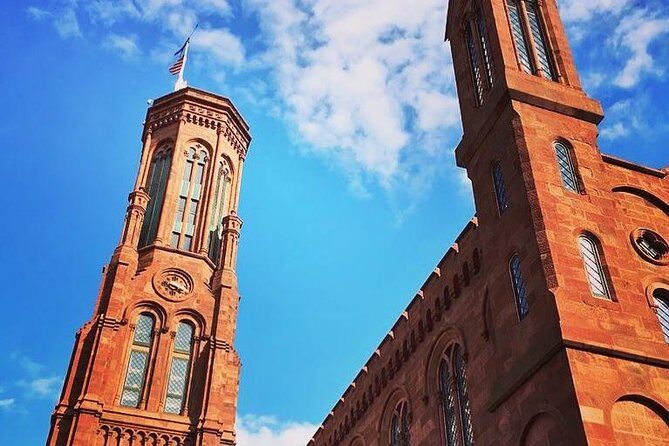
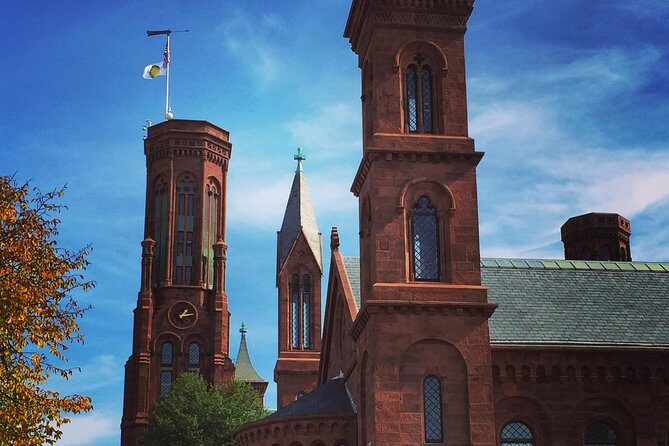
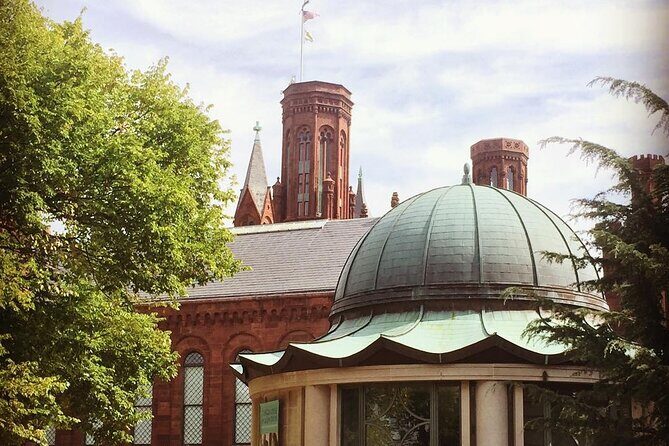
The tour begins outside the Smithsonian Castle, the headquarters of the Smithsonian Institution. The guide frames it as more than an attractive landmark: it’s tied to the Smithsonian’s role in shaping the Mall fabric since 1847.
You’ll also hear big-picture context about the Smithsonian as a whole. It’s described as America’s Attic, with 30 million annual visitors, 19 museums, and more than 140 million items in its collection. That scale matters because it explains why the Smithsonian wasn’t just building exhibits—it was building a public stage for learning.
What to notice: even if you’re just passing by, look at how the Castle signals authority and permanence. It’s meant to feel like a headquarters, not a temporary gallery.
You can also read our reviews of more shopping tours in Washington DC






Stop 2: Smithsonian Arts and Industries Building (a design lesson in one quick stop)
Next comes the Smithsonian Arts + Industries Building, described as the Smithsonian’s second home. This is a shorter stop, but it’s useful because it keeps the focus on design rather than only museum names.
What to notice: the exterior details. The tour keeps pushing you to connect architectural choices to the purpose of the building—how styles communicate a mission.
Stop 3: Hirshhorn Museum and Sculpture Garden (the spaceship on the Mall)
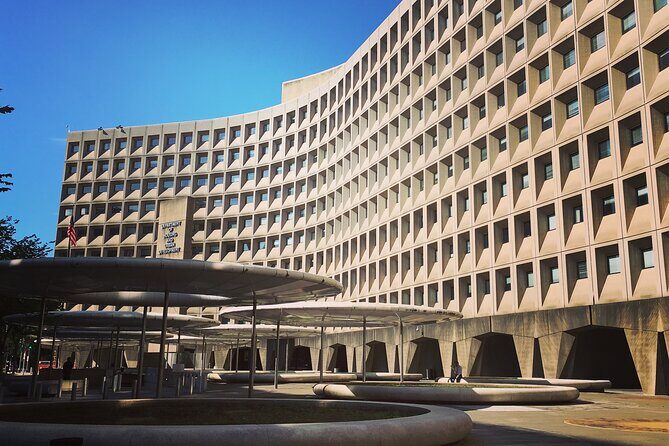
Then you reach the Hirshhorn Museum and Sculpture Garden—often described as a kind of spaceship on the National Mall. This is where the tour’s architecture focus feels especially fun, because the Hirshhorn’s bold, modern look contrasts with the more classical surroundings.
What to notice: the building’s massing and the way it visually interrupts the setting. On a street-level walk, contrasts like this make the “architecture reading” skill click immediately.
Stop 4: National Gallery of Art from the Mall edge (neoclassical meets modern)
The tour includes a contrast view at the National Gallery of Art: a stark difference between the Neoclassical West building and the Modern East building. Even if you don’t go inside, this comparison is exactly the kind of architectural storytelling you can only get with a guide pointing it out.
What to notice: how the styles feel like different eras speaking to each other in the same view. The guide helps you see that this isn’t random—it’s an intentional design evolution.
Stop 5: National Museum of the American Indian (wind-and-water geometry)
The National Museum of the American Indian is described as meant to look sculpted by wind and water, with a building story that includes a turbulent past. That mix of design intention plus project history adds weight to a stop that could otherwise be only aesthetic.
What to notice: the texture and shape cues on the exterior. The guide steers you toward how the architecture is trying to communicate movement and resilience.
If you’re coming with family, this is also a strong “pause here” stop. Kids tend to like any building that looks like it’s doing something, and this one is built for visual impact.
Stop 6: U.S. Botanic Garden (the calm break)
The U.S. Botanic Garden is treated as a hidden gem among the museum blocks. This matters because the National Mall can feel all spectacle and monuments. A garden stop gives your brain a different kind of input.
The stop here is around 10 minutes, long enough to reset and pick up more quiet details. Even if you’re not going deep into plants, it changes the tempo of the walk.
What to notice: how the garden’s setting and layout create a softer experience between big museum facades.
Stop 7: Bartholdi Park (a detour that pays off)
Next is Bartholdi Park, described as a secret spot off the National Mall with a historic and beautiful fountain, sculpted by someone unexpected. A short off-route stop like this is where the tour feels more than a museum slideshow.
What to notice: the difference between main-axial monumental spaces and tucked-away corners. These small pockets are where architecture stops being abstract and becomes lived space.
Stop 8: Capitol Hill (the final view moment)
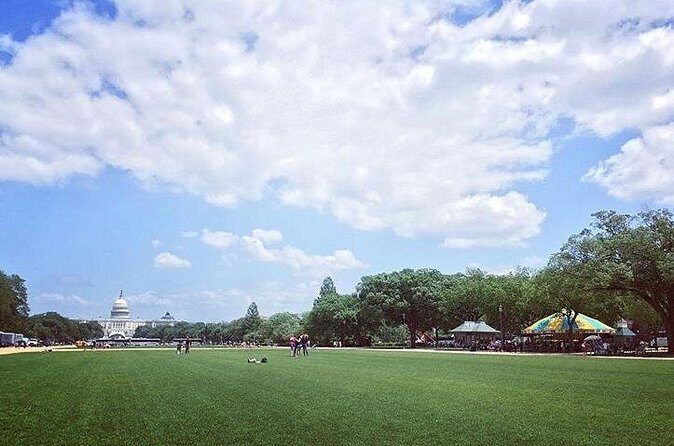
The tour ends at the foot of Capitol Hill, with breathtaking views of the U.S. Capitol and the National Mall. It’s timed as a wrap-up that lets you see everything you just learned how it fits together.
What to notice: sightlines. When you’re walking, the buildings can feel like separate stops. At the end, your perspective locks in and you start connecting them as one long architectural conversation.
The guide makes or breaks the architecture reading
This is one of those tours where the guide’s style is part of the product. People describe the guides as funny, well prepared, and strong at explaining design in plain language.
In the best examples from the experience, guides like Carolyn, Sam, and Cathryn are named for an ability to teach architecture without turning it into a textbook. One guide approach even includes showing historical pictures from a phone, which helps you see what changed over time rather than only reading today’s appearance.
Practical takeaway for you: if you’re the type who likes to ask questions, this tour is set up for that. A historian guide can answer the “why this style” questions that you’d never think to ask if you were just sightseeing.
Small group size: why max 20 matters on this route
A max group of 20 isn’t just a comfort detail. On the National Mall, spacing and pacing matter. With a smaller group, the guide can keep everyone together without turning the tour into a stop-and-wait rhythm.
It also means you’re more likely to get quick follow-ups, especially if your interest leans architecture, design, or how the Smithsonian helped shape the Mall. For families, it helps too: kids and teens handle a shorter, guided sequence better than a long unstructured day.
Family-friendly, but design-focused

The tour is described as educational and fun for the whole family. That balance is possible because the stops are mostly exterior and visually readable. You’re not stuck trying to get through museum interiors during a short walk. You’re looking at buildings, shapes, and garden spaces, then moving along.
If you’ve got a mixed group—one person who loves museums, one who’s more into photos, and one who wants the story—this format works because everyone can find something to enjoy.
What to wear and how to plan your day
This is a walking tour on the National Mall east side, roughly 2 hours. That means you should plan for comfortable shoes and weather-ready layers.
I’d also treat it like a day-planning anchor. Since the route ends at Capitol Hill, you can naturally build the rest of your itinerary around that area—either grabbing a bite nearby or continuing your Capitol-area sightseeing after the tour finishes.
One more practical tip: confirm your start time and meeting spot before you head out. A past hiccup involved a tour time mismatch due to a third-party listing, so if you’re booking through a seller, verify the time shown to you matches the time on your confirmation.
Who should book Castle to Capitol
Book this if you want:
- A guided way to understand architecture and design on the National Mall
- A compact route from Smithsonian Castle to Capitol Hill in about 2 hours
- Smithsonian Castle admission included with a local guide
It’s also a good fit for people visiting on a schedule crunch. You get a strong overview of major museum buildings on the east side without having to decide which one to prioritize first.
You might skip it (or pair it with extra time) if you only care about going inside specific museums. Since many stops are short, you’ll likely want to return later for deeper museum time.
Should you book Castle to Capitol?
Yes, if your ideal Washington DC day includes a guided “read the buildings” experience. At $48 with Smithsonian Castle admission included and a max 20 group, it’s a solid value for what you get: design guidance, historian storytelling, and an easy-to-follow route that ends with a strong payoff view.
My advice: treat it as your National Mall orientation. Once you’ve walked this route and learned how the architecture connects, you’ll enjoy everything you do afterward much more—even if you didn’t plan to be an architecture fan.
FAQ
What’s the duration of the Castle to Capitol tour?
It runs for about 2 hours (approx.).
How much does the tour cost?
The price is $48.00 per person.
Is admission to the Smithsonian Castle included?
Yes. The tour includes the Smithsonian Castle with admission included.
Where does the tour start and where does it end?
You start at Smithsonian Castle (1000 Jefferson Dr SW, Washington, DC 20560) and end on the west lawn of the U.S. Capitol near Capitol Hill.
How big is the group?
The tour has a maximum of 20 travelers, keeping it small-group and more personal.
Is this tour refundable if plans change?
Free cancellation is available. You can cancel up to 24 hours in advance for a full refund.