REVIEW · CITY TOURS
Washington DC: See the City Segway Tour
Book on GetYourGuide →Operated by Capital Segway · Bookable on GetYourGuide
If you want DC fast, this is it. In two hours you’ll cover a pile of National Mall sights with effortless Segway riding and a guide’s radio narration.
I like the way the training removes the fear factor, then the top-notch headsets keep you locked onto every story as you roll past the major monuments. The other big win is simple math: you see far more than you could on foot in the same time.
One consideration: you’ll need decent comfort with balance and standing for the full 150 minutes, and weather can affect the schedule.
In This Review
- Key things you’ll notice on this Segway tour
- Segways + radio headsets: why this tour works in DC
- Capital Segway Tours: what you do before you ride
- The meeting point near the White House: easy to find, easy to start
- 150 minutes of DC highlights: how the route feels on a Segway
- The route begins with the White House
- Lafayette Square and the US Treasury
- Constitution Gardens and the Lincoln Memorial area
- Vietnam and Korean War memorials
- DC War Memorial, Tidal Basin, and WWII Memorial
- Washington Monument and the Smithsonian/National Gallery zone
- The US Capitol, National Archives, and government-building passes
- Stop-by-stop vibe: what each landmark is best for
- The guides: what you can expect from the narration style
- Price and value: what $70 gets you, and what to weigh
- Practical tips so you feel confident and comfortable
- Who this Segway tour is best for
- Should you book this Segway tour of Washington DC?
Key things you’ll notice on this Segway tour
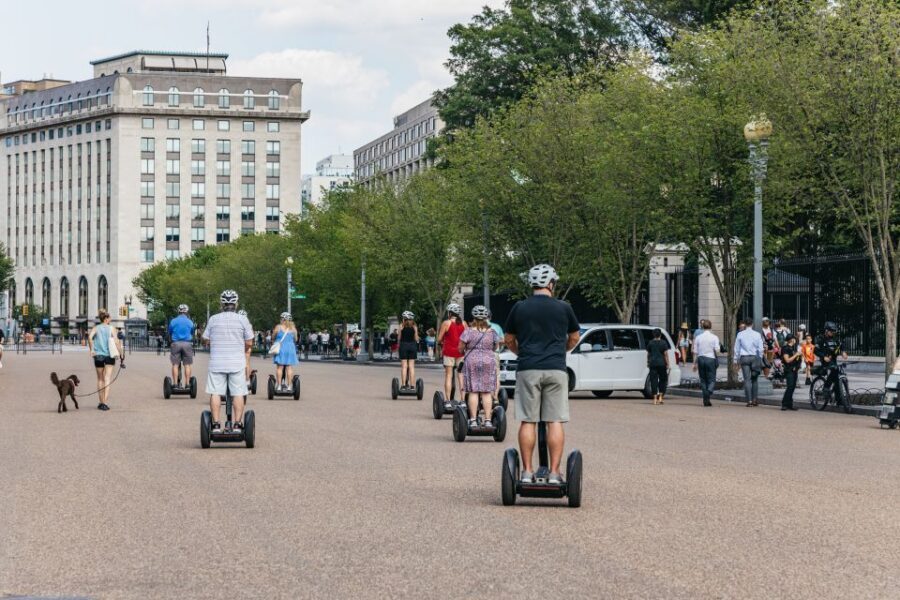
- Short, guided sessions instead of all-day walking across the National Mall
- 30 minutes early training and equipment fitting so first-time riders can get going
- Radio headsets that make the guide’s landmarks stories easy to follow
- A landmark-heavy route starting at the White House and circling major memorials
- Photo-friendly stops, with time to pause and take pictures at key points
- Single-file riding habits that keep things safer around public areas
Segways + radio headsets: why this tour works in DC
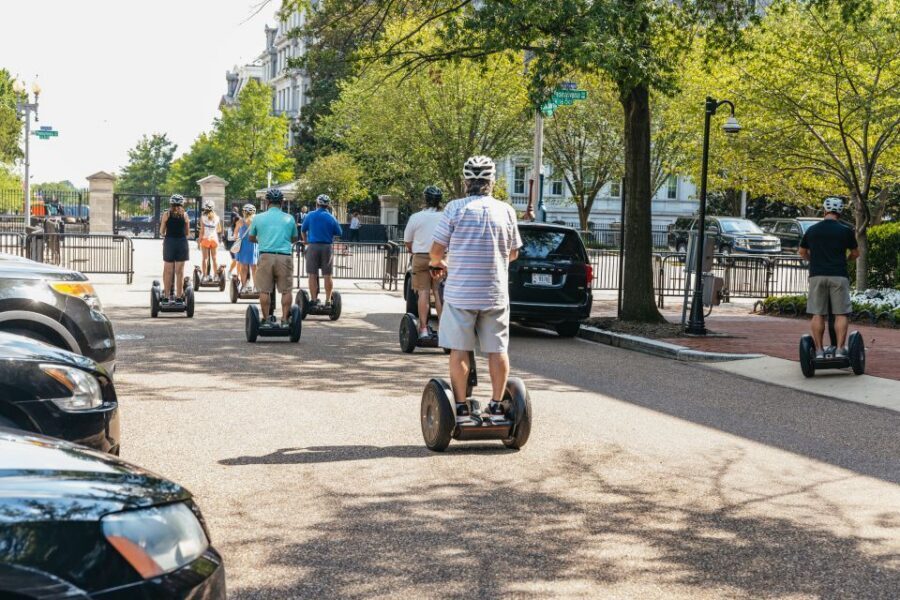
Washington DC is laid out for sightseeing, but it’s still a lot of pavement. This tour flips the usual problem. Instead of spending hours walking between far-flung stops, you glide there and spend your time on the monuments themselves.
The radio system matters more than it sounds. On a standard walk, you’re constantly turning your head, falling behind, or missing bits when traffic or crowds get noisy. Here, you hear the guide’s commentary clearly as you move, which keeps the tour from feeling like a blur.
Price-wise, $70 per person is not “cheap,” but it’s also not just a guided walk. You get your own Segway, a helmet, a live guide, and the radio headset. When you price out equipment + trained instruction + a guide for 150 minutes, it starts to feel more like convenience you can actually use, not a splurge for the sake of it.
You can also read our reviews of more city tours in Washington Dc



Capital Segway Tours: what you do before you ride

Plan to arrive 30 minutes early. That time is for training, equipment fitting, and settling your nervous system before you roll into traffic-adjacent streets and busy tourist zones.
The process starts with a short video and presentation, then you get one-on-one instruction from the experienced staff. You also get a practice run so you’re not learning the machine while everyone is waiting on you. One helpful pattern from past riders: they needed only a few minutes before they felt in control.
You’ll be fitted with a helmet and issued the Segway setup. The goal is confidence, not perfection. If you can stand, steer, and pay attention, you’ll likely be fine.
Also, keep an eye on comfort basics. The tour asks for comfortable shoes, and your feet will spend plenty of time on the ground while you’re stopped for sights or photos. A couple riders noted their feet felt the strain toward the end, so choose footwear that can handle a long “standing + positioning” day.
The meeting point near the White House: easy to find, easy to start

You meet your guide at the Capital Segway Tours office on Connecticut Avenue, inside the store located about half a block north of the White House. It’s a convenient starting position for a National Mall loop because you don’t waste time commuting out to the attractions.
If you’re using the Metro, it’s easy to reach from the Farragut West and Farragut North stations. That’s a small detail, but it matters. The easier your start, the more relaxed you’ll feel when you’re being fitted and learning controls.
150 minutes of DC highlights: how the route feels on a Segway

The core idea is simple: you start at the White House area and then roll through the biggest National Mall landmarks in a tight loop. The tour is built to show you as many of the listed stops as possible within the 150 minutes.
Because the schedule is landmark-focused, you’ll see a mix of classic photo spots, formal squares, and major memorials. You’re not trying to “tour the city” in a broad way. You’re hitting the famous DC highlights in a concentrated package.
You’ll likely get a quick soundcheck with the radio equipment before you head out. Once everyone’s comfortable, the guide takes the group out in a pattern that prioritizes safety. Past riders have described mostly single-line movement at times, which keeps you from getting squeezed in crowds while still moving efficiently.
The route begins with the White House
The first stop is the White House, just across the street from the starting point. This is a smart warm-up because you’re right where the streets are active and the sidewalks are familiar. You get a major landmark immediately, which also helps your brain connect what you’re learning on the Segway to what you came to see.
From there, your guide brings the story thread: presidents, power, and the symbolism behind the buildings and monuments. If you’re the type who likes context, this is where the tour starts paying you back.






Lafayette Square and the US Treasury
Next up, you’ll move through the area around Lafayette Square and the US Treasury. These spots are great for understanding DC’s “power belt,” the zone where institutions cluster and the city’s layout starts to make sense.
The Segway speed helps here. You’re covering distance without losing the chance to pause for photos and directional orientation.
Constitution Gardens and the Lincoln Memorial area
You’ll also pass the Constitution Gardens and then get to Lincoln Memorial and the Reflecting Pool area. This is where the experience often feels most iconic.
The Reflecting Pool gives you that classic sightline between monuments. If you like photo angles, this area is a gift, because even from outside viewpoints you can frame the memorial with the pool and the surrounding architecture.
Some riders mention a rest pause around Lincoln Memorial so feet can recover and the group can reset. That kind of break is worth it because the Segway keeps you moving, but standing and holding a pose for pictures is still work.
Vietnam and Korean War memorials
After Lincoln, you can expect the memorials that hit differently. The Vietnam Veterans Memorial and the Korean War Memorial are both part of the route.
These stops are less about distance and more about perspective. You’ll be close enough to take in the design and spacing while the guide explains what you’re looking at. The radio narration is especially useful here because it helps you shift from “I’m seeing a thing” to “I understand the meaning of the thing.”
DC War Memorial, Tidal Basin, and WWII Memorial
The tour continues to additional memorials, including the DC War Memorial, Tidal Basin, and the WWII Memorial. This stretch is where you really feel the value of having a guide.
On foot, you might rush through segments just to keep moving. On Segway, you can slow down at the right moments because the ride doesn’t drain you the same way walking does.
Tidal Basin is also one of those areas where the scenery changes the feel of the tour. Even without claiming any specific interior access, getting gliding views and a guided explanation can make this part feel more like a cultural stop than just another photo stop.
Washington Monument and the Smithsonian/National Gallery zone
You’ll pass by the Washington Monument area and the Smithsonian Museums and National Gallery of Art area. This is the “DC’s museum galaxy” moment.
If you’re planning a museum day later, this is a great orientation stop. You’ll see what’s where and you’ll start building a mental map for what to tackle next.
The US Capitol, National Archives, and government-building passes
The route can also include the US Capitol area and the National Archives, plus the US Navy Memorial and the FBI Building area and Freedom Plaza.
These are “I’m in the capital” stops, where the guide’s stories give you a reason to care beyond the facade. You’ll likely feel the momentum change here: the tour becomes more about civic symbolism and less about “pretty pictures” (though there will be plenty of those too).
One rider specifically said the Segway tour was the ideal mode to explore and learn about many of the buildings and monuments. That matches the way this route is designed: movement first, meaning built in.
Stop-by-stop vibe: what each landmark is best for
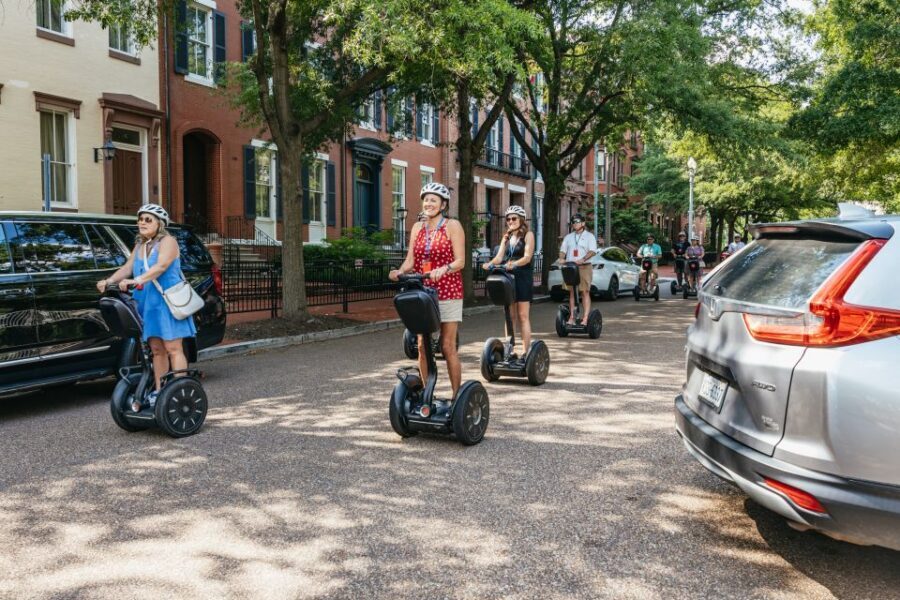
You’re not going to do deep museum-style exploration on a Segway tour. The value is the quick, guided snapshot. Here’s what each type of stop does for you.
- Monuments as anchors: White House, Lincoln Memorial, Washington Monument. These are the moments that structure your sense of DC.
- Memorials as meaning: Vietnam Veterans Memorial, Korean War Memorial, WWII Memorial. Your guide’s narration is what turns sight-seeing into understanding.
- Museum neighborhoods as planning help: Smithsonian Museums and National Gallery of Art area. You’ll finish with a better game plan for later days.
- Government sites as context: US Capitol, National Archives, FBI Building, Freedom Plaza. Even from the sidewalk, the guide gives you the who/what/why.
And because you’re riding, you can cover the whole arc without needing constant breaks just to catch your breath. That’s a real advantage if you’re visiting with limited time, or if you’d rather put your walking energy into museum interiors later.
The guides: what you can expect from the narration style

The guides are a huge part of why this tour earns a high rating. You’ll hear the guide’s commentary via the radio headset system, and the group stays together long enough to follow the story thread.
In past runs, riders have named guides like Kyle, Brandon, Ty, Chris, Teddy, Evan, Ernesto, Paulo, Rocky, Ryan, Dominique, and Ralfi. The specific personalities vary, but the consistent theme is clear: guides mix history and humor with a pace that keeps you engaged without rushing you out the door.
If you want trivia, this is a good bet. One rider highlighted the tour as a lot of fun with a good amount of trivia, and that fits how the commentary is described: fact-packed, but not dry.
Guides also appear to be proactive about photos. Several riders mentioned guides taking pictures for the group, which makes a difference. You don’t want to spend the best moments trying to frame shots with your phone while staying balanced.
Price and value: what $70 gets you, and what to weigh
Let’s talk straight. You’re paying for two things:
- Time: 150 minutes that cover multiple landmark clusters
- Gear + instruction: Segway, helmet, radio system, and staffed training
If your DC trip is packed, the speed-to-sightseeing ratio is the value. Multiple riders explicitly said it’s a better way to see more sites in less time than walking.
If your trip is unhurried and you love long walks, you can absolutely do the Mall by foot. But then you’ll trade the Segway experience for lower cost. This tour is best when you want the “greatest hits” without spending your whole day moving between them.
There’s also a timing reality to keep in mind. One rider said the tour felt shorter than expected, which can make it feel like the value is slightly worse. It doesn’t sound common, but it’s worth knowing: outdoor tours can run a bit long or short depending on conditions.
Practical tips so you feel confident and comfortable

Here’s how to set yourself up for an easy ride.
Wear comfortable shoes. The tour doesn’t ask for hiking boots, but your feet should handle standing and occasional slowing for pictures.
Arrive early and take the training seriously. The one-on-one instruction and practice run is there for a reason. Riders describe getting the hang of it within minutes, and that’s the best-case scenario when you actually follow staff guidance.
Expect the radio headset feel. Most riders love hearing every word clearly, but one rider noted headset comfort issues with small ear canals. If you’re sensitive about audio fit, plan to communicate with staff if it feels off.
Keep your expectations realistic for stops. A Segway tour is about seeing and learning from the outside and from short pauses. It won’t replace time inside a museum, but it can tell you what to prioritize later.
If you’re camera-ready, you’ll enjoy the pauses more. Several riders mentioned their guides took photos for the group, and that usually works best when you’re already posed rather than scrambling mid-ride.
Who this Segway tour is best for

This tour is a strong match if:
- you want to see the National Mall highlights without spending the whole day walking
- you’re curious about stories behind the major sites, not just postcard views
- you want a low-stress way to cover distance while still stopping for photos
It’s less ideal if:
- you’re not comfortable standing for long periods
- you need an option for pregnancy accommodations (it’s not recommended for pregnant women)
- you’re under 16 (DC law sets the minimum age at 16)
Should you book this Segway tour of Washington DC?
I think you should book it if you like guided sightseeing with a clear purpose: see the greatest-hits landmarks, hear the stories through the headset, and keep your day efficient. The mix of training, radio narration, and landmark density makes it an easy value call for first-time DC visitors and time-crunched trips.
Skip it if you’re trying to maximize museum time inside buildings, or if you’re worried about balance and standing. In that case, a walking route or a different style of tour might fit better.
If your top priority is orientation plus highlights—White House to the memorials to the Capitol zone—this is one of the more practical ways to do DC fast without feeling like you sprinted the whole day.