REVIEW · GUIDED
4-Hr DC Monuments Small Group Sightseeing Guided Tour
Book on Viator →Operated by Heart of DC Tours · Bookable on Viator
DC monuments hit different in the morning.
This 4-hour guided loop is built for real sightseeing time, with a small group max of 12 and a plan that strings together the big-name memorials you’d expect, plus a few worth-spotting stops on the way. You get audio links for each site, bottled water, and an air-conditioned vehicle that keeps the day pleasant even when Washington runs hot.
Two things I really like: the pacing between photo stops (you actually have moments to look, not just pass through), and the guide’s storytelling—Ken from Heart of DC Tours keeps the history tied to what’s right in front of you. For example, he’s the kind of host who can handle a late arrival calmly and still get your group where you need to be, plus one booking even turned into a more personal, bonus-site feel when the timing worked out. The one thing to watch is the walking/standing: you’ll be on sidewalks and memorial grounds for short stretches, so moderate physical fitness helps.
Key takeaways at a glance
- Small-group pace (up to 12): enough structure to cover the classics without feeling rushed.
- Onboard audio links for each stop: helpful when you want context without hunting for information.
- A/C vehicle and bottled water: a practical lifesaver in summer or humid shoulder seasons.
- Top photo vantage points: especially around the Tidal Basin and the White House area.
- A guide who stays flexible: helpful when timing goes sideways (traffic, meeting points).
- A thoughtful mix of memorial types: from grand architecture to names-on-stone remembrance.
In This Review
- How the 4-Hour DC Loop Keeps You From Feeling Rushed
- Meeting at One CityCenter and Settling Into a Comfortable Ride
- Thomas Jefferson Memorial: Neoclassical Calm by the Tidal Basin
- White House Exterior Photos From the Ellipse Area
- World War II Memorial: 56 Pillars and the Reflecting Pool Backdrop
- Ford’s Theatre: Red Brick, Columns, and a Live Streetscape
- FDR and MLK at the Tidal Basin: Perseverance Meets Purpose
- Vietnam Veterans Wall: Over 58,000 Names and the Part You’ll Feel
- Lincoln Memorial: 36 Columns, Unity, and Those Steps
- Korean War Veterans Memorial: Stainless Steel Figures and a Quiet Wall
- Capitol Exterior: Neoclassical Grandeur Without the Ticket-Plan Headaches
- The Time Between Stops: Passing Major Landmarks and Using Restrooms
- Why Ken’s Style Changes the Whole Day
- Who This Tour Fits Best (And Who Might Want Something Else)
- Quick FAQ About This 4-Hr Monuments Tour
- FAQ
- How long is the 4-Hr DC Monuments Small Group tour?
- What’s included on the tour?
- Do I need to bring earbuds or headphones?
- What time does the tour start and where do we meet?
- How many people are on the tour?
- Are tickets included for the stops?
- Is there WiFi on board?
- What memorials and landmarks are on the route?
- Will we have time for breaks and restrooms?
- What kind of fitness level do I need?
- Should You Book This Tour?
How the 4-Hour DC Loop Keeps You From Feeling Rushed

If you only have half a day, you need two things in Washington DC: smart routing and clear priorities. This tour gives you a tight schedule (about 4 hours) with 10–20 minute stops at major sights, plus driving time where you still get value from the city. The result is a monuments-and-history hit that fits into a packed itinerary without eating your whole day.
The other quiet advantage is the structure. DC memorials can be spread out, and it’s easy to spend time in transit instead of at the sites. Here, you’re in an air-conditioned vehicle while the guide handles the movement between stops. That means you can spend your energy on what matters: reading details, spotting symbols, and getting a few good photos.
Meeting at One CityCenter and Settling Into a Comfortable Ride

You start at One CityCenter, 850 10th St NW, and the tour returns you to the same meeting point. The scheduled start is 9:00 am, which is a big deal for memorials: mornings tend to be calmer for both photos and walking.
You’ll travel by a modern air-conditioned vehicle, and you’re provided bottled water. That sounds basic, but it changes the feel of the day. A lot of DC sightseeing is waiting for traffic lights, walking up gentle grades, and standing still for photos. Having cold water ready cuts through the fatigue.
Also note the audio setup: you get audio links for each site, but earbuds/headphones are not included. Bring your own headphones so the audio is actually usable while you’re standing at the memorials.
You can also read our reviews of more guided tours in Washington DC



Thomas Jefferson Memorial: Neoclassical Calm by the Tidal Basin
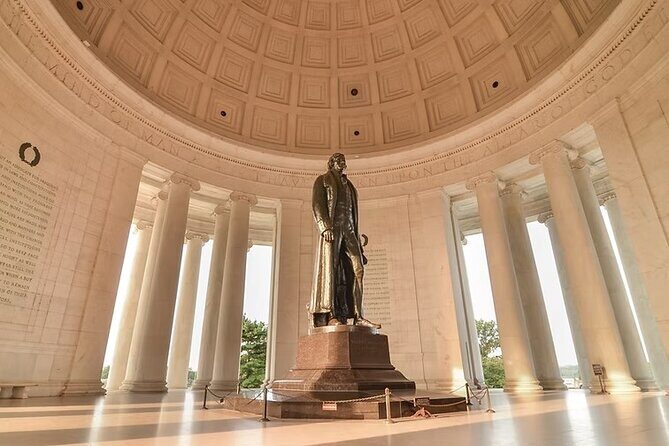
The tour opens with the Thomas Jefferson Memorial, a neoclassical building inspired by the Pantheon. You’ll get about 15 minutes here, including time to look up at the towering Jefferson figure and scan the interior excerpts from his writings.
What I like about starting here is the mood. Jefferson is tied to ideals of liberty and freedom, and the architecture reinforces that seriousness without being gloomy. If you’re there during cherry blossom season, the Tidal Basin area adds a softer, more contemplative vibe for photos and reflection.
A practical tip: use your first minute to orient yourself—figure out where the best exterior angle is before you start moving around inside. With a short stop, that quick plan saves time.
White House Exterior Photos From the Ellipse Area
Next up: the White House with around 10 minutes. You’re not going inside on this tour, but you do get the chance to take exterior photos from prime angles, including viewpoints related to the Ellipse.
This stop is mostly about perspective. The White House is one of those sights where your first photo is usually “big building.” Your second photo is where you notice the symmetry, the surrounding gardens, and how the manicured grounds frame the building. The short timing works because you’re not trying to do everything—you’re capturing the essentials and moving on.
If you’re a photographer, aim to take a wide shot first, then a slightly tighter one after you’ve spotted the best line of sight.
World War II Memorial: 56 Pillars and the Reflecting Pool Backdrop
The World War II Memorial is a heavier stop, with about 15 minutes. You’ll see the 56 pillars, representing U.S. states and territories involved in the war, and the memorial sits with the Reflecting Pool and the nearby Lincoln Memorial context.
There are also more visual layers than you might expect: cascading fountains and mosaics that add movement and texture. It’s not just a wall of names; it’s a whole environment designed for remembrance.
With only a short visit, don’t feel pressure to read everything line-by-line. Instead, pick a few key symbols and let the rest sink in. This is one of those places where your attention matters more than speed.
Ford’s Theatre: Red Brick, Columns, and a Live Streetscape
Then the tour shifts tone to Ford’s Theatre, scheduled as a free admission stop (entry noted as free). You get about time for photos, around 10 minutes listed for the stop.
This is the kind of sight that looks good even if you’re standing across the street: the red brick façade and ornate columns bring 19th-century elegance to a busy modern street. The marquee and the energy outside can make your photos feel less like a “monument day” and more like a DC city day.
Quick photo strategy: get one shot straight-on for the façade, then one at an angle that includes the street atmosphere. That second one tends to look more like a memory and less like a postcard.



FDR and MLK at the Tidal Basin: Perseverance Meets Purpose
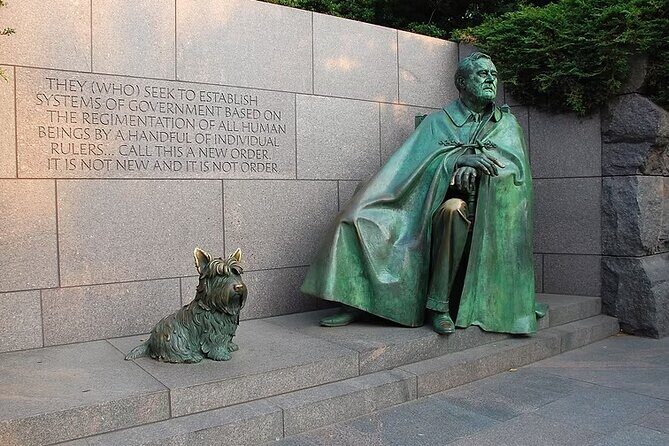
After Ford’s Theatre, you move to the Franklin Delano Roosevelt Memorial on the Tidal Basin. You’ll have about 20 minutes here, and the memorial is laid out in four sections representing Roosevelt’s four terms.
The outdoor setting matters. Sculptures and inscriptions are designed for reading while you stand still, and waterfalls add a reflective rhythm. If you’re the type who likes to pause for meaning, this is a great stop to slow down just a bit within your allotted time.
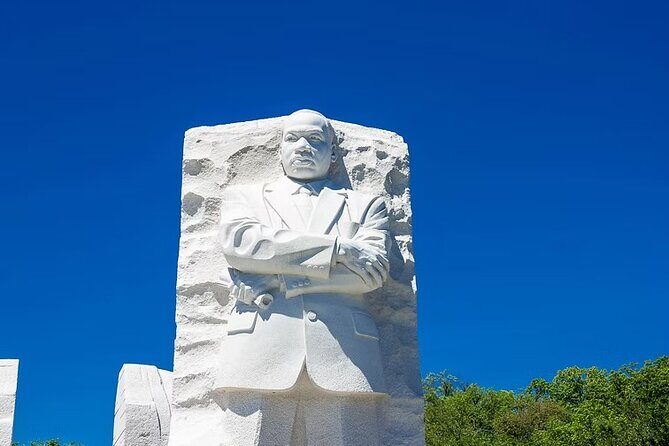
From there, the tour continues to the Martin Luther King, Jr. Memorial with around 15 minutes. The focal point is a 30-foot statue rising from granite, surrounded by tranquil gardens and quotes that speak to love and equality.
Both FDR and MLK are Tidal Basin neighbors, but they hit differently. FDR is perseverance through tough times. MLK is moral clarity tied to civil rights. Seeing them back-to-back works because the change in tone keeps your brain engaged, not overwhelmed.
Vietnam Veterans Wall: Over 58,000 Names and the Part You’ll Feel
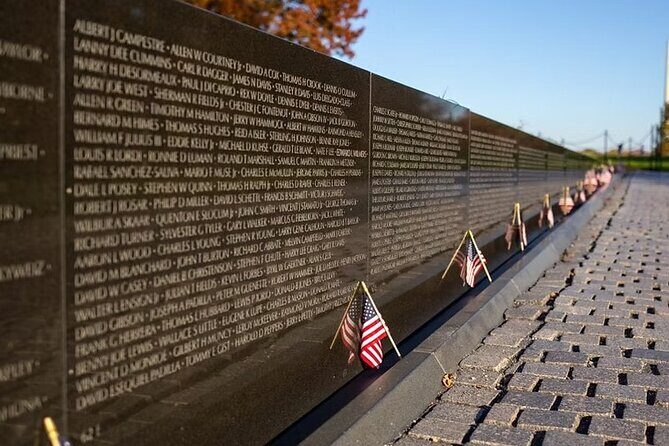
The next emotional stop is the Vietnam Veterans Memorial, with about 20 minutes. This is the place where the design is the story: a polished black granite wall engraved with over 58,000 names.
You’ll also have the chance to connect what you’re seeing with the broader memorial area, including the Three Servicemen Statue and the Vietnam Women’s Memorial. That matters because Vietnam isn’t one simple narrative. The site’s layout acknowledges complexity in a way that feels respectful rather than performative.
Practical tip: take your time with the names at eye level. If you rush, it turns into scenery. If you pause for even a couple of minutes, it becomes personal—and that personal feeling is the whole point.
Lincoln Memorial: 36 Columns, Unity, and Those Steps
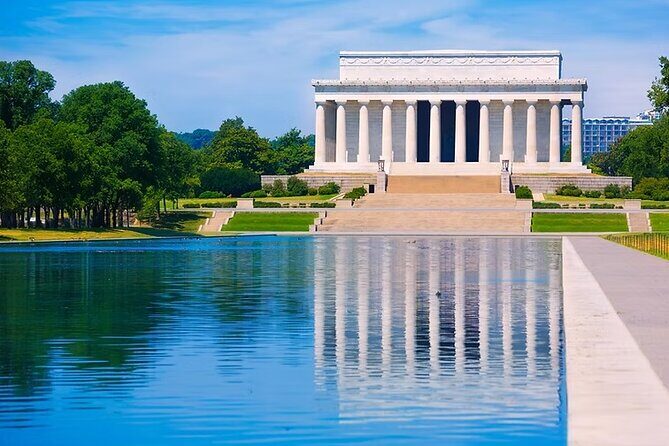
You’ll then reach the Lincoln Memorial for about 20 minutes. Expect the towering Lincoln statue, plus the classical setting and the 36 columns representing the states at his death. The steps are part of why this stop is famous: they connect directly to Dr. King’s iconic speech in the area you’ll recognize instantly.
This memorial is a good “breather” in the schedule because it’s both grand and readable. You can look up at the statue and the architecture, then shift your attention down to the columns and the sense of unity built into the design.
If you care about photos: the steps are where people naturally gather, so getting one clear shot quickly and moving a few feet away often gives you a cleaner composition.
Korean War Veterans Memorial: Stainless Steel Figures and a Quiet Wall
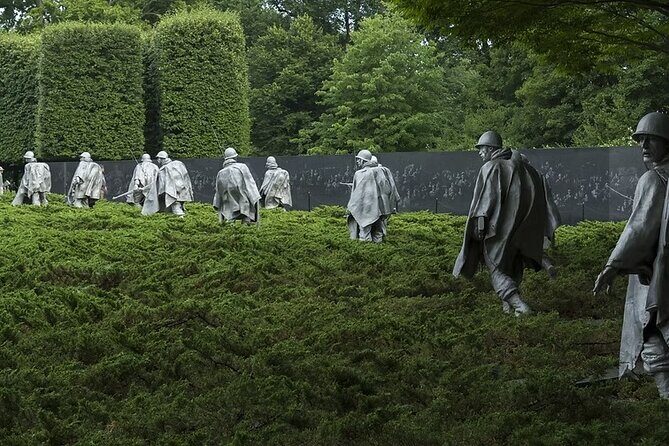
Next: the Korean War Veterans Memorial, about 15 minutes. You’ll see 19 stainless steel statues of soldiers, set against a black granite wall that mirrors their presence. The design uses materials in a very intentional way—metal that catches light and stone that holds stillness.
There’s also landscaping detail, including juniper bushes, which adds a softer edge around a memorial that otherwise feels stark and direct.
This is a good stop to slow down. The memorial isn’t built for speed reading. It’s built for noticing small shifts in how the statues are positioned and how light changes the look of the figures.
Capitol Exterior: Neoclassical Grandeur Without the Ticket-Plan Headaches
The last major sight in your loop is the U.S. Capitol exterior, specifically the west side. You’ll have about 10 minutes, and it’s all about the exterior architecture: the neoclassical elements and the dome as the centerpiece.
This stop also pairs well with your timing and your weather. The gardens and the Reflecting Pool give you natural framing, and it’s the type of place where late-day light can make the building look warmer. If your schedule allows, I’d still use your moment here to shoot one wide photo and one tighter “dome details” photo.
Even without entering, it’s worth it because the outside view gives you scale. It helps the rest of the morning’s memorials click into a bigger picture: democracy as buildings, laws, speeches, and remembrance all in the same city grid.
The Time Between Stops: Passing Major Landmarks and Using Restrooms
Between monuments, the tour does more than just drive. The schedule includes passing key historic buildings and sites, such as the Justice Department, Waldorf Historia, Willard Hotel, the WWI Memorial, and the National Archives.
There’s also time built in for practical needs, including the opportunity to stop and use public restrooms. That matters more than people think. In DC, you can lose a lot of your day if you’re constantly searching for facilities between widely separated stops.
You’ll also benefit from the guide’s on-the-fly routing. DC traffic and pedestrian flows can be unpredictable, and this is one of those tours where a flexible plan helps you actually see the sites you came for.
Why Ken’s Style Changes the Whole Day
The biggest reason this tour gets strong marks is the human factor. Ken from Heart of DC Tours is described as patient and engaged, and the details matter.
One review noted he waited when a guest was late due to traffic. Another mentioned he guided people who went to the wrong corner by staying responsive and coming to them. That kind of calm makes a difference, especially when you’re arriving from a hotel and the city is busy.
There’s also a practical kindness element: cold water on a hot day, a modern clean van, and help taking photos. If you want a few good family shots without turning it into an hour-long photo session, this guide approach helps.
And if your group ends up small, the tone can shift from “standard tour” to something closer to a personal guided walk. One booking mentioned only two people were on the trip, which made the experience feel more tailored, even including a bonus stop when timing allowed.
Who This Tour Fits Best (And Who Might Want Something Else)
This is a great match if you:
- want a high-hit, short-duration introduction to Washington DC’s major memorials
- like having a guide explain what you’re looking at, without turning the day into a classroom
- care about photo-friendly timing around iconic exteriors like the White House and the Capitol
- appreciate practical comfort: A/C, bottled water, and audio links
It may be less ideal if you:
- want deep, hour-by-hour reading time at each memorial
- prefer a completely self-paced schedule with longer stops
- don’t plan to bring headphones for the audio links
Quick FAQ About This 4-Hr Monuments Tour
FAQ
How long is the 4-Hr DC Monuments Small Group tour?
It runs for about 4 hours.
What’s included on the tour?
You get audio links for each site, an air-conditioned vehicle, and bottled water.
Do I need to bring earbuds or headphones?
Yes. Earbuds/headphones are not included, so bring your own if you want to use the audio links at each stop.
What time does the tour start and where do we meet?
It starts at 9:00 am at One CityCenter, 850 10th St NW, Washington, DC 20001.
How many people are on the tour?
The tour has a maximum of 12 travelers.
Are tickets included for the stops?
Admission is listed as included for several memorials, and Ford’s Theatre admission is free. (The tour also provides a mobile ticket.)
Is there WiFi on board?
No. WiFi on board is not included.
What memorials and landmarks are on the route?
You’ll visit or pass major sites including the Thomas Jefferson Memorial, White House, World War II Memorial, Ford’s Theatre, Franklin Delano Roosevelt Memorial, Martin Luther King Jr. Memorial, Vietnam Veterans Memorial, Lincoln Memorial, Korean War Veterans Memorial, and the U.S. Capitol exterior west side.
Will we have time for breaks and restrooms?
Yes. The schedule includes time to stop and use public restrooms, and there’s also pass-by time for other landmarks.
What kind of fitness level do I need?
The tour calls for moderate physical fitness, since you’ll be walking and standing at multiple stops.
Should You Book This Tour?
I’d book it if you want the classic DC monuments, lined up in a smart order, with the comfort pieces that keep the day pleasant—A/C van, bottled water, audio links, and a guide who’s willing to handle real-world problems like traffic and meeting-point mixups.
Skip it if you want slow, solitary contemplation at each memorial for a long time, or if you hate the idea of short, photo-friendly stops. For most first-timers and busy schedules, this is a strong way to see a lot of Washington DC without wasting your day in transit.