REVIEW · HISTORICAL TOURS
DC Monuments & History Guided E-Cart Tour-Blankets
Book on Viator →Operated by American Capital Tours · Bookable on Viator
DC monuments look different from an e-cart. This 2-hour guided ride is a smart way to cover major sights fast, from Capitol Hill to the Lincoln Memorial area, without spending the whole day standing in line or walking block after block. I like that it’s open-air e-cart sightseeing with a real guide, not just a recorded drive-by.
I also like the way the guides turn quick stops into something you can actually remember. Names that keep popping up in recent tours include Lorenzo, Feyzi, Elmira, Fernando, and others who share lots of historical context and make time for photos at each stop—plus warm blankets on cold days.
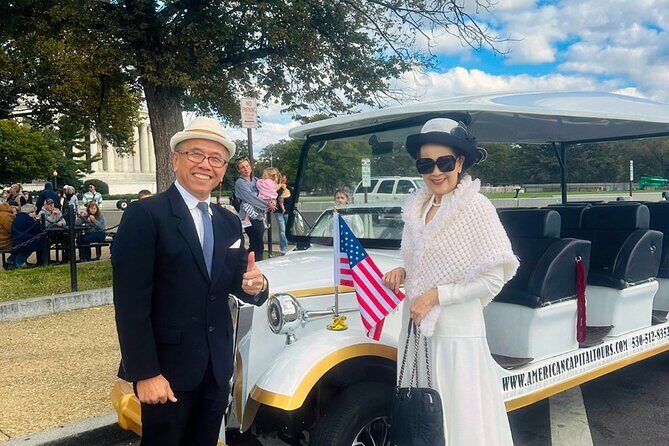
The main thing to watch: the cart setup in winter can vary. Some carts appear less covered than the promo photos suggest, and several complaints point to wind cutting through when plastic sides aren’t in place. Blankets help, but they do not replace full winter layers, so plan for cold.
In This Review
- Quick hits before you go
- Why an electric cart makes DC feel doable in 2 hours
- The route: the “Capitol-to-memorials” loop you can actually see
- Capitol Hill: government power, photo chances, and the redbrick story
- National Gallery of Art and two Smithsonian anchors
- National Gallery of Art
- National Museum of Natural History
- National Museum of African American History and Culture (Blacksonian)
- Washington Monument and the view you can picture before you go
- Thomas Jefferson Memorial and the FDR connection
- Martin Luther King, Jr. Memorial: where symbol meets message
- Lincoln Memorial: the steps, the columns, and the photo crowd control
- War memorial stops: Vietnam, Korean War, and the mood shift
- Einstein Memorial: a quick science pause in a city of symbolism
- White House drive-by: what you’ll see (and what you won’t)
- Price and value: what you get for $52.70
- Cold-weather reality: blankets help, but dress like it’s windy
- Day or night: which version fits your travel style
- Who this tour is best for
- Should you book this DC e-cart monuments tour?
- FAQ
- How long is the DC monuments e-cart tour?
- Where is the meeting point?
- Is the tour guided and in English?
- Are admissions included for the Washington Monument and the White House?
- Are there any attractions on the route with free admission?
- Do they provide blankets?
- How big is the group?
- Is free cancellation available?
Quick hits before you go
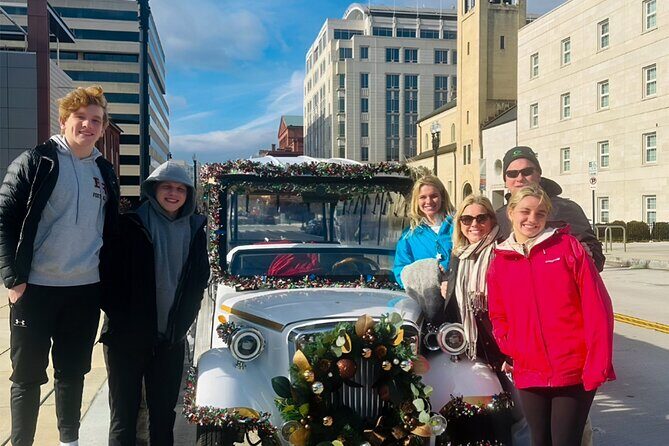
- Guides who talk history and help with photos: You get stories on the move and time at stops for pictures.
- Blankets for chilly rides: Many guests call out the comfort factor in January-style weather.
- A tight loop of iconic stops: Capitol Hill, the National Mall museums, Washington Monument, and the big memorials.
- Not every stop includes paid entry: Washington Monument and White House access aren’t included.
- Cart coverage may be weather-dependent: If you want maximum wind blocking, dress for it either way.
Why an electric cart makes DC feel doable in 2 hours
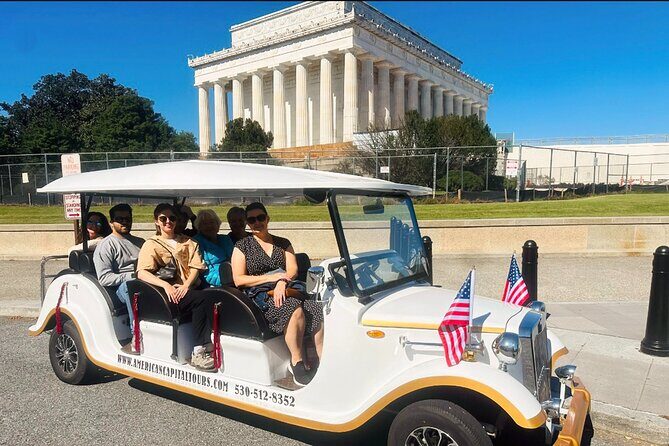
Washington, DC rewards slow travel. But most trips are not slow. This tour is built for the reality that you still want to see the big monuments even with limited time.
The key benefit is simple: the electric cart helps you get between sights without the nonstop walking that can drain your energy before you even reach the Lincoln Memorial. You’re also still outdoors, so you get real sightlines and that classic DC feeling—just with less effort.
And unlike a purely self-guided loop, you’re not stuck figuring everything out on the fly. The guide’s job is to connect the dots while you’re moving, then give you enough time at each stop to look, photograph, and ask questions.
You can also read our reviews of more guided tours in Washington DC



The route: the “Capitol-to-memorials” loop you can actually see
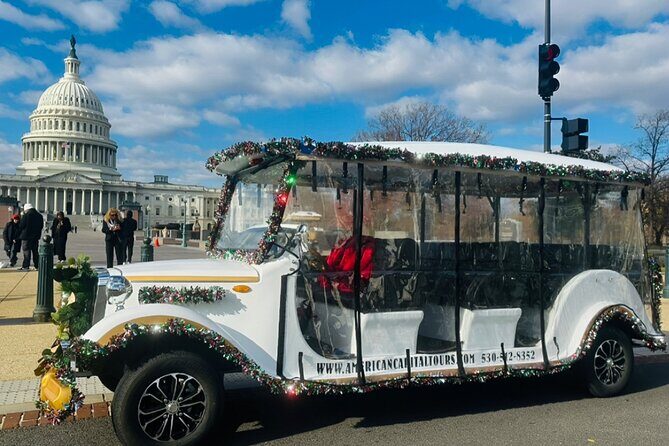
This is a guided arc across the city’s headline sights. The stops line up so you go from government power and museums on the National Mall area toward the memorial ring around the Reflecting Pool and Lincoln Memorial.
Here’s how the flow generally works in your head:
1) Capitol Hill / museum stops (start with the political heart and major Smithsonian-style culture)
2) Washington Monument + Jefferson + FDR + MLK (the memorial spine down the Mall)
3) Lincoln Memorial + war memorials + a quick Einstein moment
4) White House drive-by (a quick look, not an admission visit)
The practical win is that you’re not backtracking across town. You’re moving in a straight line for the most part, which matters when the clock is tight.
Capitol Hill: government power, photo chances, and the redbrick story

You kick off at Capitol Hill, the seat of the U.S. government. The big draw is the domed United States Capitol and the whole complex of buildings tied to the Senate and House chambers.
Even if you can’t do an inside visit, this stop is more than a quick landmark photo. You’ll get the “why it matters” context—this area is where American democracy gets staged in architecture and symbolism. The tour also references Eastern Market nearby, including the idea of what kinds of vendors show up on different days, so the neighborhood feels alive rather than just historical.
Tip for your camera: the Capitol grounds can be bright and high-contrast, especially on clear days. If it’s cold or windy, your best move is quick shots, then keep moving so you don’t spend 20 minutes fighting the weather.
National Gallery of Art and two Smithsonian anchors
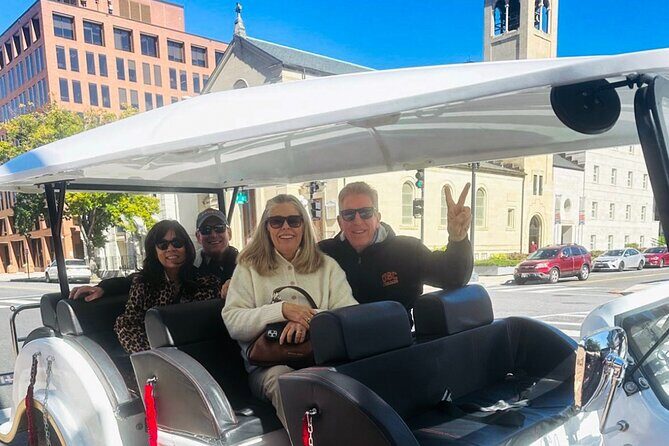
After Capitol Hill, the tour swings toward museum territory on the National Mall.
National Gallery of Art
The National Gallery of Art is framed as a gift to the nation and a major visual arts center. Expect the guide to help you understand the scope—there’s a collection size that ranges from paintings to sculpture and more, built over Western art history.
For what this means for you: this stop is likely about orientation. You’ll see the area and learn how the museum fits into DC’s culture machine, even if you’re not touring galleries for hours.
You can also read our reviews of more historical tours in Washington DC





National Museum of Natural History
Next is the National Museum of Natural History, administered by the Smithsonian. The big practical point: it has free admission and is open nearly year-round (open 364 days a year).
If you’ve got a museum-lover in your group, this stop is great because it gives you a reason to plan a return visit. You’ll leave knowing where it is and why it’s a top pick.
National Museum of African American History and Culture (Blacksonian)
Then comes the National Museum of African American History and Culture, commonly called the Blacksonian. This museum’s story includes its founding date (2003) and that its permanent home opened in 2016 with a ceremony led by President Barack Obama.
That matters because the guide can connect the museum to the modern story of DC, not just the distant past. Even a short stop gives you enough context to decide if you want more time inside later.
Washington Monument and the view you can picture before you go
Your next anchor is Washington Monument. You’ll get the big measurements and the “what it took” timeline: it’s shaped like an Egyptian obelisk and construction took decades (36 years). The guide also highlights the materials—marble, granite, and bluestone gneiss.
Two practical notes:
- Admission to go up isn’t included, so think of this stop as a chance to view and photograph the structure from outside.
- If skies are clear, the monument’s top visibility gets really impressive (the tour description cites 30 to 40 miles in clear weather). Even if you don’t climb, it helps you understand why locals treat this as a must-see.
Thomas Jefferson Memorial and the FDR connection
At Thomas Jefferson Memorial, the focus is on Jefferson’s role as author of the Declaration of Independence and a major intellectual force behind the American Revolution, plus his later political influence. This stop helps you see how DC memorializes individuals tied to founding and early national identity.
Then you’ll pass by or stop near the Franklin Delano Roosevelt Memorial, which connects to the era he represents. Even when the stop is short, this is useful because it keeps your mental timeline moving forward—from founding ideas to a later period of American life and leadership.
Martin Luther King, Jr. Memorial: where symbol meets message

The Martin Luther King, Jr. Memorial stop is timed for a quick look, with admission not required. It covers four acres and includes the Stone of Hope, described as a granite statue carved by sculptor Lei Yixin.
Why this stop is worth your attention: MLK memorials aren’t just about a person. They’re about the civil rights movement as a turning point, and you feel that from the way the memorial is built and presented. Even with limited time, you’ll get the idea of why it’s placed beside the National Mall and why it reads as a modern layer in DC’s monument story.
Lincoln Memorial: the steps, the columns, and the photo crowd control
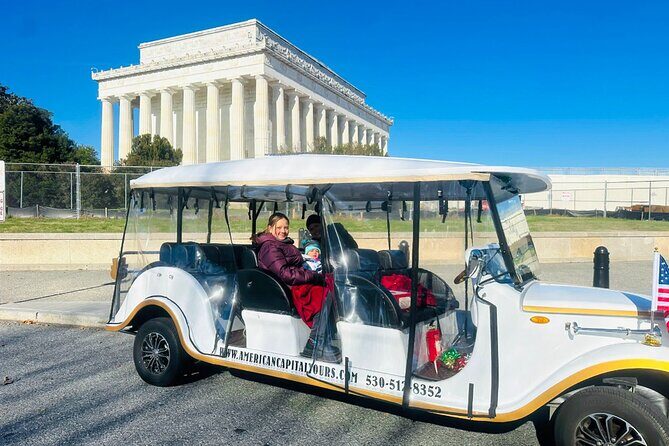
You’ll then reach Lincoln Memorial, one of the easiest places in DC to “read” just by looking.
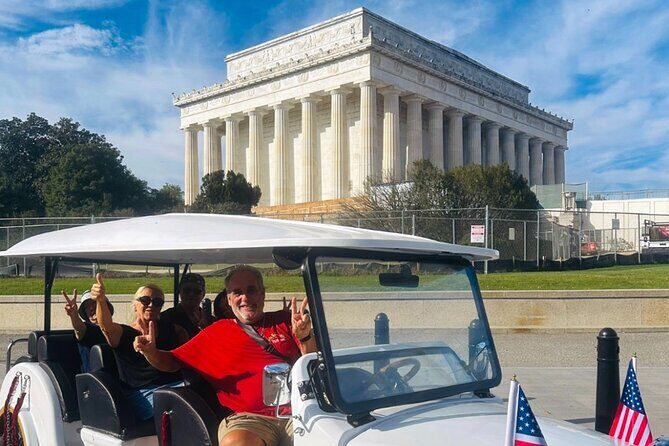
The description you’ll hear centers on the 36 fluted Doric columns—one for each of the 36 states in the Union at the time of Lincoln’s death—plus the two additional columns that show up when you walk up the steps toward the entrance. This is the kind of detail that makes your photos more meaningful because you’re not just shooting a famous building; you’re seeing design choices tied to history.
And yes, it’s busy. The tour structure helps because you’re not trying to plan your whole day around crowds. You get time for photos, then you move on while the memorial is still fresh in your mind.
War memorial stops: Vietnam, Korean War, and the mood shift
After Lincoln, the route includes major conflict memorials: the Vietnam Veterans Memorial and the Korean War Veterans Memorial. These stops are quieter by nature, and the guide’s job here is to slow your thinking down enough to notice what the memorials are doing emotionally.
If you’re the kind of traveler who usually rushes through memorials, this part of the tour helps you slow down without adding hours. You also get orientation for later: if a specific name or design element catches your eye, you’ll know where to return when you want more time.
Einstein Memorial: a quick science pause in a city of symbolism
Next is the Albert Einstein Memorial, described as a bronze statue showing Einstein seated with manuscript papers.
This stop is a nice reset. DC can feel like politics and war stories back-to-back, and Einstein gives you something different: the idea of American monument culture also honoring scientific thinking and global intellectual history.
White House drive-by: what you’ll see (and what you won’t)
The tour includes a stop outside the White House, but admission isn’t included. So think of this as a photo and perspective moment, not an official inside visit.
The tour gives you context about why it’s central—official residence and workplace of the U.S. president, and the fact that every U.S. president has lived there since 1800 when the capital moved from Philadelphia.
If you want the inside-level experience, you’ll need a separate plan. But if you just want to stand in the right area and see how it anchors the city’s layout, this stop does the job.
Price and value: what you get for $52.70
At $52.70 per person for about two hours, the best way to judge value is not just the ride. It’s the mix of time saved + guided context + comfort touches.
You’re paying for:
- Transport via electric cart so you cover major sights without the full walking day
- A guide-led narrative that explains what you’re looking at as you go
- Multiple stops where you can ask questions and take photos
- A small extra: a complimentary key chain (nice reminder, not why you book)
If you’re traveling with kids, or you simply don’t want to plan every step of your day, this is often a strong deal. One useful signal from the reviews: people repeatedly call it an efficient way to see the primary monuments without extended walking, and that matches what the tour is designed for.
Cold-weather reality: blankets help, but dress like it’s windy
This is where you should pay attention before you commit to a winter date.
The tour’s highlight notes blankets, and many reviews explicitly mention warm blankets and guides being thoughtful about comfort. On several January-style days, guides bring blankets so families can stay outside longer and keep enjoying photo stops.
But there’s a recurring warning: some carts may be uncovered or have less wind protection than expected from promo images. Plastic curtains or coverings may be used during colder conditions, and when they aren’t fully in place, wind can be brutal.
My practical advice:
- Wear a real winter coat, not a light jacket.
- Bring a hat and gloves even if the forecast looks mild.
- Treat blankets as a bonus, not your main insulation.
- If the weather is very bad, consider that enclosed options might be available, but you’ll want to confirm that detail when booking.
And one small comfort note: guides have been known to add extra touches on cold days for families, like pausing for something warm. You can’t count on every added treat, but the vibe is that guides try to keep people comfortable.
Day or night: which version fits your travel style
Your tour is offered as day or night. Day fits best if you want maximum clarity for photos and you’ll spend time looking carefully at design details.
Night can be great if you want a lighter “see the city” vibe and you’re less focused on reading every inscription. One set of experiences highlights that nighttime narration and photo stops work well, letting you cover ground while the city lights change the mood of the monuments.
If you’re unsure: I’d pick the time of day that matches your weather comfort. Cold wind is harder at night, even if the views are pretty.
Who this tour is best for
This is a strong match if:
- You have limited time and want the core DC icons
- You prefer a guided route over designing your own loop
- You travel with family and want less strain between stops
- You like asking questions and getting answers in real time
It’s also a decent fit if you want to choose future add-ons. Short stops at the major museums and memorials help you decide what deserves a longer visit later.
If you’re a super-structured planner who expects a fully enclosed heated vehicle every time, this might frustrate you. The cart experience is sightseeing in the open air, and weather matters.
Should you book this DC e-cart monuments tour?
I’d book it if you want a fast, guided way to hit DC’s headline sights in two hours and you’re okay dressing for winter wind. The comfort extras (blankets) and the guide-led storytelling make it feel more personal than a simple hop-on loop.
Skip or reconsider if your main priority is staying fully sheltered in severe weather and you’re traveling in a week where you know it will be windy and freezing. In that case, confirm what kind of cart enclosure you’ll get for your date, and plan layers anyway.
If you want a short, high-impact DC day without turning your legs into sandpaper, this tour can be a very solid choice.
FAQ
How long is the DC monuments e-cart tour?
It runs about 2 hours.
Where is the meeting point?
The tour starts at 333 G St NW, Washington, DC 20001, and it ends back at the meeting point.
Is the tour guided and in English?
Yes. It’s a guided tour and offered in English.
Are admissions included for the Washington Monument and the White House?
No. The tour notes that admission tickets are not included for both the Washington Monument and the White House.
Are there any attractions on the route with free admission?
The National Museum of Natural History is described as having free admission. Other stops are also listed with admission ticket free status in the tour details.
Do they provide blankets?
Yes. The experience and tour highlights emphasize blankets for cold weather comfort.
How big is the group?
The maximum number of travelers is 71.
Is free cancellation available?
Yes. You can cancel up to 24 hours in advance for a full refund.