REVIEW · GHOST & GEORGETOWN TOURS
Historic Georgetown: History, Gossip, & Architecture Walking Tour
Book on Viator →Operated by DC by Foot · Bookable on Viator
Georgetown whispers in story form. This walking tour mixes history, gossip, and architecture as you move from the canal to the university.
I really like the small group size (max 15) because you can hear the guide and ask questions. I also like how the tour connects the look of Georgetown—brick, cobblestones, and old homes—to the big names you associate with Washington, including Lincoln and Kennedy connections.
One thing to plan for: the ground can be uneven. Expect hills, brick sidewalks, and cobblestones, which may be tougher if you prefer flatter walking.
In This Review
- Key highlights you’ll notice fast
- Georgetown feels like DC’s older voice
- Start at C&O Canal Lock 3: where the working story begins
- Georgetown port streets and the Old Stone House moment
- Kennedy-linked homes and the shapes of Georgetown’s power
- From the Exorcist Steps to Martin’s Tavern: pop culture meets local lore
- What the guides do so well (and why it feels different)
- The itinerary flow is short—but it hits the right notes
- Price and value: what $49 buys you in the real world
- Who should book this walking tour
- Should you book Historic Georgetown: History, Gossip, & Architecture Walking Tour?
- FAQ
- How long is the Historic Georgetown walking tour?
- Where does the tour start and where does it end?
- How much does it cost?
- How big is the group?
- What’s included in the price?
- What can I expect to see during the walk?
- Is it okay for most people to participate?
- What if the weather is bad?
Key highlights you’ll notice fast
- C&O Canal Lock 3 as your starting point, so the story begins with the area’s working past
- Old Stone House (built 1766) with a National Parks Service presence and a quiet garden break
- Kennedy-era ties, including stops tied to Kennedy residences and the broader Georgetown family footprint
- Georgetown University details up close, including the Patrick Healy building spires and John Carroll statue
- Martin’s Tavern atmosphere, where local history and classic American comfort food meet
- End near the Exorcist Steps, so you can roll straight into more sightseeing afterward
Georgetown feels like DC’s older voice
Georgetown is one of those places where DC’s biggest stories started with something small: a port, a neighborhood street, a tavern, a set of steps you’d normally walk past. On this tour, you get the details that usually get missed when you’re just trying to find coffee and a good photo spot.
I like that the tour doesn’t treat Georgetown like a museum. It treats it like a real neighborhood with layers. You’ll hear what the area was built around (shipping and industry near the canal), how the buildings evolved, and how prominent families left fingerprints on the streetscape. The guide’s storytelling tone is part of the value too—this is history with personalities, including the kind of behind-the-scenes chatter that makes names feel human.
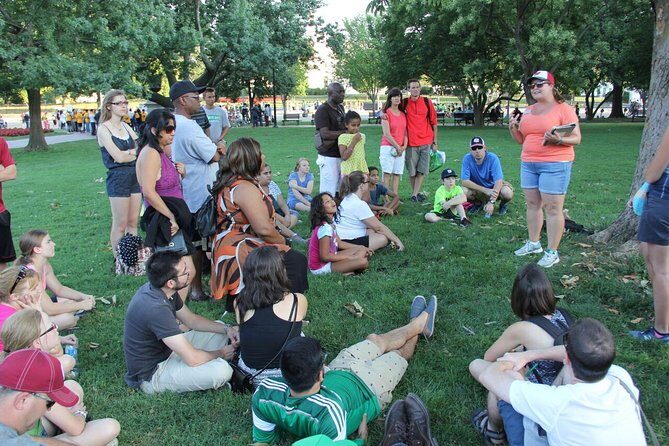
The vibe is also practical. You’re on foot for about two hours, moving between key landmarks and a few less-obvious spots. And because it’s capped at 15 people, the pace stays friendly instead of turning into a fast shuffle like many big-city “highlights” tours.
You can also read our reviews of more walking tours in Washington DC



Start at C&O Canal Lock 3: where the working story begins
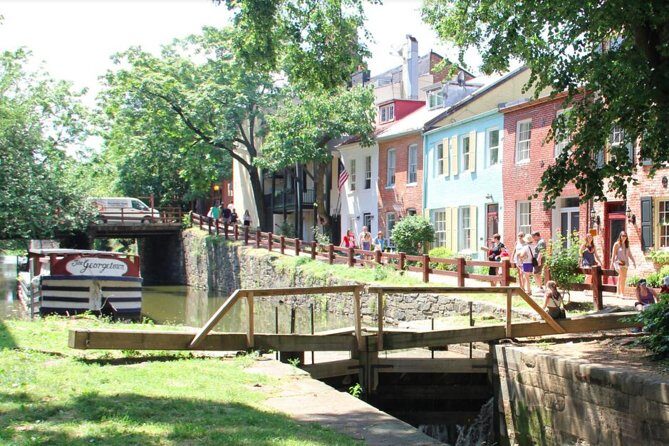
Your tour starts at the Chesapeake and Ohio Canal Historical Park, at C&O Canal Lock 3. This is a smart move because it frames Georgetown’s origin before you hit the residential elegance. The guide explains how canal boats moved through the area and what a working lock is doing in a practical, visual way.
You’ll also get a feel for why this section of Georgetown matters beyond being scenic. The canal connected commerce, jobs, and movement. You’re not just looking at old brick—you’re learning how transportation shaped where people lived, shopped, and built.
A quick note for your planning: you’ll be outdoors, and this experience is best in good weather. If conditions are rough, it may shift dates, so keep an eye on forecast and comfort.
Georgetown port streets and the Old Stone House moment
One of the best ways to understand Georgetown is to experience it on its own terms: cobblestones underfoot, brick walls, and small green pockets that soften the city. Early on, the tour heads you through the port area that helped define Georgetown for centuries and is now known for its shops and dining.
Then you’ll reach the Old Stone House, one of the oldest buildings in the city, built in 1766. The National Parks Service runs the site, and there’s a garden that gives you a breather without leaving the story. The building’s life also isn’t static. It shifted from early local use to a car dealership later on, and then into historic preservation. That arc is part of what makes the stop click: you’re seeing how a place survives by changing roles.
If you like tours that help you read buildings, this stop is a good anchor. You’ll notice how age shows up in materials and layout, and the guide will tie it back to what the neighborhood was doing nearby—tobacco trade, port life, and the everyday talk that ran through the area.
Kennedy-linked homes and the shapes of Georgetown’s power
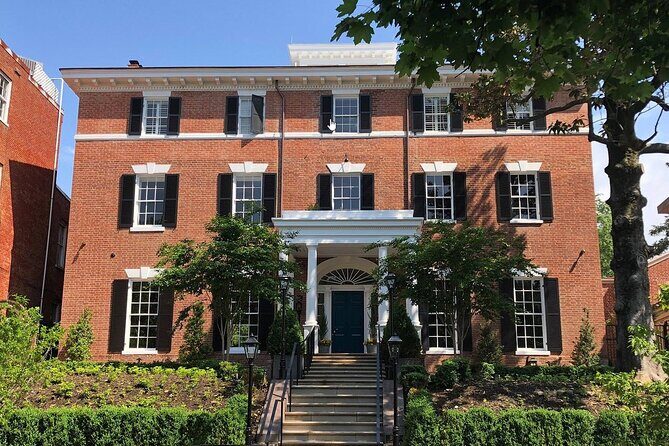
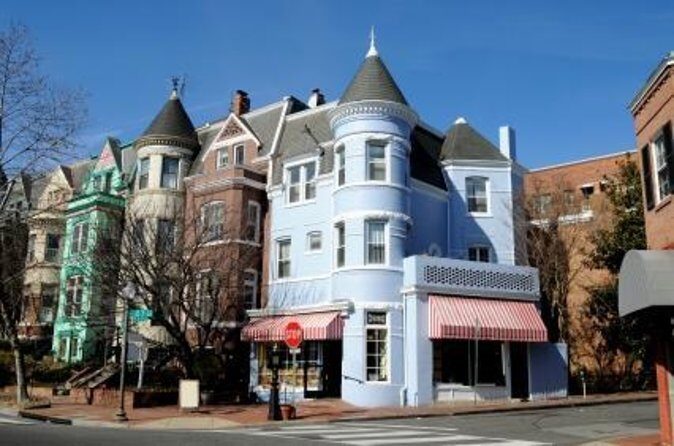
Georgetown’s architecture can look like one long postcard, but the tour keeps reminding you that these are lived-in structures with specific family connections. One highlight is the stop at Hedin House Apartments, tied to homes associated with the Kennedy family. You’ll learn that Georgetown is full of “family-era addresses,” not just one famous mansion.
This part of the walk gives you two valuable things:
- Context for why certain buildings are where they are.
- A sense of how a neighborhood becomes part of political and social life over time.
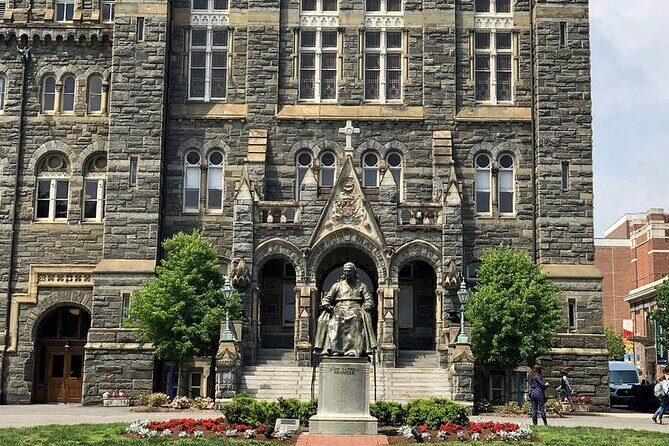
Next comes Georgetown University, founded in 1789. Even if you’re not visiting as a prospective student (or parent), the campus landmarks are worth the pause. You’ll see the Patrick Healy building and its towering spires, plus a statue of founder John Carroll. On a warm day, students may lounge on the grass nearby, reading or tossing a frisbee—an easy reminder that Georgetown isn’t frozen in the past.
Practical tip: take a slow moment at the edge of campus landmarks. The guide will point out the visual cues you’d otherwise miss, like what makes the buildings look the way they do and how their presence affects the surrounding streets.
From the Exorcist Steps to Martin’s Tavern: pop culture meets local lore
The tour ends near the Exorcist Steps, a set of stairs that became famous through the 1970s film. Even if you’re not a movie person, it’s a fun endcap because it shows how cultural fame attaches itself to real neighborhood geography. You get the step location, the story behind why it’s recognized, and then you’re released into the area on your own schedule.
Before that, you’ll stop at Martin’s Tavern, a Georgetown institution locally owned since 1933. This is where the walk turns from street-level architecture to a lived-in community landmark. The atmosphere is old-school: dark wood panels, black-and-white photos, and the feeling of regulars who know the place well.
This stop also matters because it gives you an easy next move. If you want to keep exploring after the tour, Martin’s Tavern is a simple starting point for food or a drink without feeling like you need to sprint to grab lunch somewhere else.
You can also read our reviews of more historical tours in Washington DC






What the guides do so well (and why it feels different)
This tour lives or dies on the guide, and the track record here is strong. Across the many leaders who run this walk—people like Joseph, Vicky, Becca, Wayne, Eli, and Ingeborg—the common thread is pacing plus story. They keep you moving, explain what you’re seeing, and answer questions without making you feel rushed.
A few standout patterns from real guide styles:
- Some guides bring humor and trivia alongside the facts, which keeps the walk from getting heavy.
- Many guides are good at translating architecture into human stories. Instead of only listing dates, they connect a home or building type to the people who used it.
- Guides also tend to take the group’s curiosity seriously. When someone wants a deeper explanation, you’ll usually get one without the whole tour grinding to a halt.
One small detail I especially like: some guides seem to follow up with extra suggestions afterward, like a quick text with coffee or restaurant picks. That’s useful because it saves you from “guessing” when you’re trying to continue your day near Georgetown University.
The itinerary flow is short—but it hits the right notes
The walk is built for people who want meaningful context without spending half a day standing in one spot. You’re looking at an experience that’s about two hours, and it’s paced as a true walk between landmarks rather than a series of distant photo stops.
Here’s why that matters:
- You get enough time to connect themes: port life → canal work → old homes → university presence → a tavern with staying power.
- You’re not stuck waiting at long exhibits. Most time is spent outside, looking up and around, with the guide’s commentary doing the interpretive heavy lifting.
- You end near Georgetown University, which is convenient because it keeps you close to additional sightseeing options without forcing a long transit back to the Metro.
As for what you should do after: plan on continuing your day in the same general pocket. This walk naturally sets you up to wander the streets with better instincts. When you know what you’re looking for—materials, relationships between buildings, why certain landmarks matter—you stop seeing Georgetown as “pretty streets” and start seeing it as a living map.
Price and value: what $49 buys you in the real world
At $49 per person for about two hours, this tour isn’t trying to be a budget “free walking tip.” Instead, you’re paying for three practical things that add up fast:
- A licensed guide doing on-the-spot interpretation. That’s the core value. You’re not just getting directions.
- Small-group format (max 15) so the guide can actually keep track of the questions and the pace.
- The route selection. The stops blend famous Georgetown anchors with less-automatic choices like the canal lock area and the Old Stone House garden pause.
If you’re the type who would normally read a brochure and still wonder what you’re missing, this price usually feels fair. If you’re already deeply obsessed with Georgetown architecture and want to spend hours on your own, you might prefer self-guided wandering. But for most first-timers, the guided structure is what turns “I visited Georgetown” into “I understand Georgetown.”
Who should book this walking tour
This is a good fit if you:
- Want a guided overview of Georgetown that goes beyond the obvious storefront photo spots
- Like your history told with character—facts plus gossip, in a way that keeps it readable
- Prefer a small group where it’s not chaos when you ask a question
- Are comfortable walking around hilly streets with cobblestones and brick sidewalks
It might be less ideal if you:
- Have mobility limits that make uneven sidewalks tough
- Strongly prefer flat, stroller-friendly paths
- Want a long museum-style experience with lots of indoor time
Should you book Historic Georgetown: History, Gossip, & Architecture Walking Tour?
Yes, I’d book it if your goal is to get oriented fast and then keep exploring on your own with better context. The tour is short enough to fit into a busy Washington day, but the stop choices do more than scratch the surface. You’ll walk away understanding how Georgetown’s canal work, prominent families, university presence, and tavern culture all connect.
Skip it only if you know you dislike cobblestones and hills, or if you’re already planning to spend a lot of time in museums and want a deeper indoor focus instead.
FAQ
How long is the Historic Georgetown walking tour?
It runs about 2 hours.
Where does the tour start and where does it end?
It starts at C&O Canal Lock 3 (Lock 3, Washington, DC 20007) and ends near Georgetown University at 37th and O St NW.
How much does it cost?
The price is $49.00 per person.
How big is the group?
The tour is capped at a maximum of 15 travelers, which keeps it small-group friendly.
What’s included in the price?
You get a professional, licensed guide.
What can I expect to see during the walk?
You’ll see Georgetown port streets, the C&O Canal area with a working lock gate, the Old Stone House (built 1766), Kennedy-linked homes such as the Hedin House Apartments, Georgetown University landmarks including the Patrick Healy building spires and John Carroll statue, Martin’s Tavern, and you’ll end near the Exorcist Steps.
Is it okay for most people to participate?
The tour notes that most travelers can participate. Still, expect outdoor walking on streets with hills, brick sidewalks, and cobblestones.
What if the weather is bad?
The experience requires good weather. If it’s canceled due to poor weather, you’ll be offered a different date or a full refund.