REVIEW · HISTORICAL TOURS
Embassy Row Spy History Tour with a Former CIA Officer
Book on Viator →Operated by Spyher · Bookable on Viator
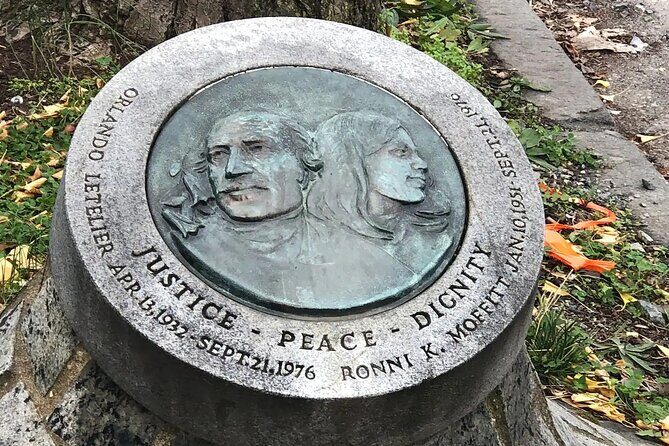
Spies walked these sidewalks, not just movies. This Embassy Row Spy History Tour turns Washington DC street corners into real spy lessons, guided by a former CIA officer style perspective and built for people who like details you can actually use. I especially liked the hands-on dead drop practice and the way the tour connects major cases—like the Orlando Letelier assassination—to specific spots you can point at on a map.
Two more reasons I think you’ll enjoy it: you get clear, story-driven context (not just names and dates), and the stops are spaced so each new topic adds a new piece of how tradecraft works. The main drawback to plan for is that the tour is only about 1 hour 30 minutes, so it moves briskly outdoors and doesn’t linger long at any one location.
In This Review
- Key highlights worth showing up for
- Embassy Row Spy History Tour: what the experience really feels like
- How your 90 minutes are structured stop by stop
- Dupont Circle Hotel: a suspicious death and the questions that follow
- Revolutionary War spy activity and a CIA pre-deploy tradition
- Sheridan Circle and the Orlando Letelier assassination
- The hands-on exercise: impersonal communication, signals, and a dead drop
- Price and value: is $75 a fair deal?
- Small-group pacing and what the size means for you
- Meeting point, transport, and getting ready for a street-side tour
- Who this tour is best for
- Should you book the Embassy Row Spy History Tour?
- FAQ
- How long is the Embassy Row Spy History Tour?
- Where does the tour start and end?
- How much does it cost?
- What language is the tour offered in?
- Do I need a ticket on my phone?
- Is there a limit on group size?
- What weather conditions are required?
- Is free cancellation available?
Key highlights worth showing up for
- Hands-on dead drop practice focused on recognizing a signal and completing an exercise
- Case-based storytelling tied to real DC locations such as Dupont Circle Hotel and Sheridan Circle
- Revolutionary War-to-CIA thread that explains how certain spy traditions evolve over time
- Small-group feel with a maximum of 25 people
- Engaging guiding style called out as personable and easy to follow
Embassy Row Spy History Tour: what the experience really feels like
This tour is for people who like their history with a twist of technique. Instead of treating espionage as vague “spy stuff,” you’re taught the logic behind it—how people communicate without giving away too much, how missions are shaped by timing, and how street-level observations can matter.
You’ll be walking through Washington DC’s Embassy Row area at a human pace, with stops that feel like chapters. Each one adds a different skill: one stop is about a suspicious death and the questions it raises, another links older conflict-era espionage to later professional habits, and another centers on a high-profile assassination. Then the tour shifts from listening to doing, with a practical exercise that makes the concepts stick.
One important note: this is an outdoor, street-side tour, so dress for weather and plan to keep moving for 90 minutes. There’s no mention of long indoor breaks, so comfort matters.
You can also read our reviews of more historical tours in Washington DC



How your 90 minutes are structured stop by stop
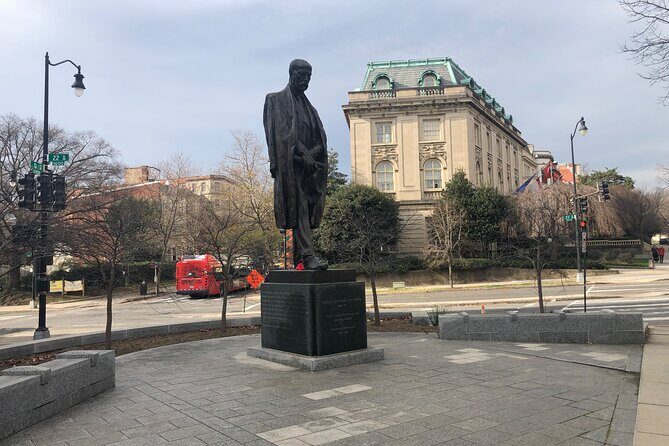
You’ll start and end at the same place: the Rear Admiral Samuel Francis Dupont Memorial. From there, the tour flows through four main segments that build on each other. Here’s the core arc and why it works:
First, you get a case study in suspicion and uncertainty. Then you zoom out to earlier spy activity during the Revolutionary War, where patterns and habits begin to show. After that, you come back to DC with the assassination of Orlando Letelier at Sheridan Circle. Finally, you switch modes and practice impersonal communication through a signal-and-dead-drop style exercise.
It’s a neat structure because you’re not only learning facts—you’re learning how to think like a collector of information. Even if you’re not a “history person,” the interactive part tends to be the moment that makes the whole tour feel real.
Dupont Circle Hotel: a suspicious death and the questions that follow
The first stop centers on a suspicious death tied to the Dupont Circle Hotel. This part works because it teaches you how intelligence work often begins: with incomplete information, conflicting interpretations, and the need to ask better questions instead of jumping to a neat conclusion.
What you can expect here is less about sensational details and more about the thinking process. You’ll likely hear why certain incidents become “case material” and how investigators—and later intelligence professionals—look for clues that don’t always fit together at first glance.
For you, the value is practical. You’re training your attention: what you notice, what you assume, and what you keep questioning. It also sets an emotional tone for the rest of the tour. After this stop, the other cases don’t feel random—they feel like part of a larger system of how people watch, communicate, and sometimes get it wrong.
Potential consideration: if you dislike unsettling or tragic topics, this stop may feel heavy. The tour frames it through context and analysis, but it’s still about a suspicious death.
Revolutionary War spy activity and a CIA pre-deploy tradition
Next, the tour shifts to spy activity during the Revolutionary War. This is where you’ll see how old methods echo forward. The Revolutionary War segment doesn’t just cover who did what; it connects the idea of espionage as a craft to how professionals later developed routine habits.
You’ll also learn about a tradition of CIA officers before they deploy. That specific focus matters because it moves the discussion from “big events” to “how people prepare.” Tradecraft isn’t only about dramatic moments—it’s about discipline before the mission, communication mindset, and the small rituals that shape behavior under pressure.
For me, this is one of the most useful parts because it translates history into process. You start to understand that espionage is often less about a single clever move and more about consistency, rehearsed habits, and staying sharp.
If you prefer strictly chronological history, you might find the theme-based jump a little different. But the payoff is that the story stays connected to what you’re learning about communication.
Sheridan Circle and the Orlando Letelier assassination
The third major stop discusses the assassination of Orlando Letelier at Sheridan Circle. This segment brings the tour back to DC street reality—where major events happen in ordinary-looking places.
What makes this part compelling is that it gives you a named event you can anchor to a location. You’re not just hearing about history in the abstract. You’re standing near the geography where a turning point occurred, and that physical connection helps the story land.
This is also the stop where the tour’s “why it matters” approach becomes clear. Assassinations aren’t only about the act; they’re about signals—who benefits, what gets destabilized, and what message is sent to power structures. Even if you’re not a specialist, you’ll walk away with a sense of how intelligence and counterintelligence can intersect with politics and public fear.
Practical consideration: this segment is likely to be emotionally intense. It’s handled through explanation, but be ready for serious content.






The hands-on exercise: impersonal communication, signals, and a dead drop
Then you do the part that most people remember: a practice session for impersonal communication, where you try to spot the signal and unload the dead drop. This is the “classroom without a classroom” moment.
Instead of hearing about tradecraft, you practice a simplified version of how communication can be structured to reduce direct contact. The goal isn’t to teach you to run a real-world operation. It’s to show you the logic: keep interactions brief, avoid clear identifiers, and rely on agreed cues.
For you, this is where the tour becomes more than sightseeing. You’ll start thinking like a watcher—how information is packaged, how signals can be missed, and why small timing or attention errors can break the whole plan.
Why I think it’s good value: lots of history walks give you facts. This one tests a concept, even if it’s game-like. When you leave having completed the exercise (or at least tried), the ideas become easier to remember later.
Price and value: is $75 a fair deal?
At $75 per person for about 1 hour 30 minutes, the value depends on what you want out of a DC tour.
Here’s what you’re paying for:
- A focused route in a compact time window (so you’re not spending half a day commuting between stops)
- A narrative that connects multiple spy-era themes rather than isolating one era
- An interactive component (the dead drop practice), which is usually the difference between a “cool story walk” and a tour that sticks
I’d call it good value if you like history that uses technique, not just trivia. If your idea of the perfect tour is mostly museums and quiet looking, you might want a different kind of DC experience. But if you want a lively walk with a former CIA officer style approach and an activity at the end, $75 feels reasonable for what you get.
Small-group pacing and what the size means for you
The tour has a maximum of 25 travelers. That matters more than it might sound.
In a group this size, guides can keep the energy up, answer questions, and run the interactive portion without it turning into a crowd scene. You’re still walking with others, but it feels manageable. You won’t be swallowed by a huge bus group, and the instructor can read the room better.
This also means you should plan to show up ready to walk and listen. The experience is designed to move from one concept to the next, and waiting too long for lagging people slows the whole flow.
Meeting point, transport, and getting ready for a street-side tour
You’ll meet at the Rear Admiral Samuel Francis Dupont Memorial in Washington DC, and the activity ends back at that same point. It’s also described as near public transportation, which is a big help in a city where parking can be painful.
As for gear: the tour lists moderate physical fitness needs, which typically means comfortable walking at a steady pace. Since the tour runs outdoors and requires good weather, I’d plan on layers. Even if it’s not snowing, DC can change fast and you’ll want to stay comfortable for 90 minutes.
Service animals are allowed, which is a good practical touch if you travel with one.
Who this tour is best for
This is a strong match if:
- You like spy history connected to real locations (Dupont Circle and Sheridan Circle are not generic backdrops)
- You enjoy interactive learning—especially anything that involves spotting cues or completing a simple task
- You want a guide who keeps things understandable and engaging, not lecture-only
It’s also a solid choice if you’re traveling with a partner or small group that likes “different” than the standard monuments loop. The route is built to give you a story you can talk about later, not just photos.
Should you book the Embassy Row Spy History Tour?
Book it if you want a walking tour that mixes case stories with a hands-on communication exercise. At $75 for roughly 90 minutes, it’s priced like a premium themed tour, but it earns that price through the practice element and the way the stops build into one coherent theme.
Skip it if you hate outdoor walking, want museum-style quiet, or strongly prefer light topics only. This tour includes serious subject matter, and it moves at a steady pace.
My take: if your ideal DC day includes a fun challenge plus solid story context, this one is worth putting on your schedule—especially since it averages being booked about 14 days ahead.
FAQ
How long is the Embassy Row Spy History Tour?
It runs about 1 hour 30 minutes (approx.).
Where does the tour start and end?
The tour starts at the Rear Admiral Samuel Francis Dupont Memorial in Washington, DC and ends back at the same meeting point.
How much does it cost?
The price is $75.00 per person.
What language is the tour offered in?
The tour is offered in English.
Do I need a ticket on my phone?
Yes. It’s listed as having a mobile ticket.
Is there a limit on group size?
Yes. The tour has a maximum of 25 travelers.
What weather conditions are required?
The experience requires good weather. If it’s canceled due to poor weather, you’ll be offered a different date or a full refund.
Is free cancellation available?
Yes. You can cancel for a full refund up to 24 hours in advance of the experience start time.