REVIEW · ARLINGTON NATIONAL CEMETERY
Veteran-Led Arlington National Cemetery Walking Tour
Book on Viator →Operated by Veteran-led Personalized Tours of Arlington National Cemetery · Bookable on Viator
Arlington hits harder with a veteran guide. This walking tour connects major memorial stops into one story you can actually feel. I especially like the small-group pace and the way the route is planned so you don’t miss the meaning behind what you’re seeing.
What I like most: I’m drawn to Eric Hommel’s style as a story-focused guide, and I appreciate how the tour helps you understand the people and traditions at Arlington, not just the monuments. One drawback to flag up front is simple: it’s a 3-mile walk in about 3 hours, so you’ll want a moderate fitness level and comfortable walking shoes.
In This Review
- Key highlights in plain terms
- Why a veteran-led Arlington walk feels different
- Starting at Fort Myer: where the tour actually begins
- Stop 1: Military Women’s Memorial (and why it changes the tone)
- Stop 2: John F. Kennedy gravesite (more than a photo stop)
- Stop 3: Arlington House (Robert E. Lee Memorial) for reflection time
- Stop 4: Space Shuttle Challenger Memorial (Christa McAuliffe’s story)
- Stop 5: Tomb of the Unknown Soldier (changing of the guard)
- What a 3-mile, 3-hour pace actually feels like
- Mobile ticket, small group, and why it’s good value
- A note about your guide: Eric Hommel’s background
- Who this tour is best for (and who should think twice)
- Should you book this Arlington National Cemetery walking tour?
- FAQ
- How long is the Veteran-Led Arlington National Cemetery walking tour?
- How far do I walk during the tour?
- Is this tour a small group or private experience?
- What language is the tour offered in?
- Do the stops require paid admission?
- Where do I meet the guide?
- Does the tour run in bad weather?
- Can I bring a service animal?
- Is there free cancellation?
Key highlights in plain terms

- Eric Hommel’s veteran perspective adds context you can’t pick up from signs alone
- Mobile ticket and free admission stops mean you’re paying for the guide time, not entry fees
- A carefully paced route covers major sites without feeling rushed
- Changing of the Guard etiquette help so you know how to watch respectfully
- A small group of up to 12 keeps questions easy and the experience personal
Why a veteran-led Arlington walk feels different
Arlington can be overwhelming fast. A self-guided visit is beautiful, but it’s also easy to just move from marker to marker without understanding what you’re looking at.
This tour is built around a different approach: you’re walking the cemetery while a military veteran tells the stories that shape the place. That matters at Arlington because the site isn’t only about famous names. It’s also about traditions, sacrifice, and the way history continues to be remembered.
You’ll also get a setup that feels efficient. The tour lasts about 3 hours, covers roughly 3 miles, and runs in a small group (max 12), so you’re not stuck in a big crowd with no time to ask why something matters.
You can also read our reviews of more walking tours in Washington DC



Starting at Fort Myer: where the tour actually begins
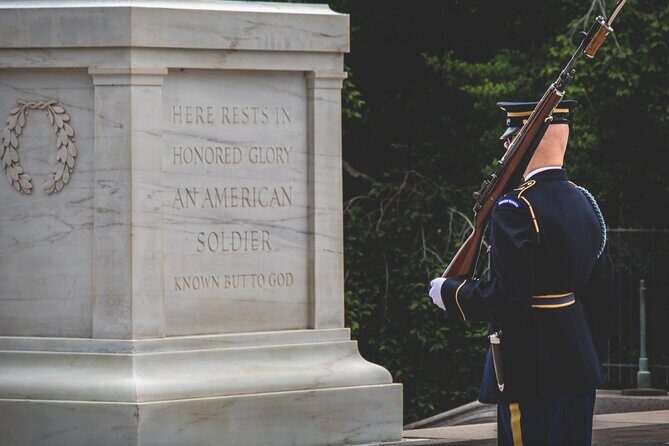
You meet at 1 Memorial Ave, Fort Myer, VA 22211. From there, the tour loops back to the same meeting point at the end.
Because the meeting point is outside the cemetery proper, I like that you get oriented right away. You don’t spend the first part of your visit scrambling to figure out logistics or where to begin. Also, the tour is listed as being near public transportation, which is helpful if you’re not driving.
A quick heads-up: the tour requires good weather. If weather gets poor, you may be offered a different date or a refund, so it’s smart to keep an eye on the forecast the day before.
Stop 1: Military Women’s Memorial (and why it changes the tone)

The walk starts at the Military Women’s Memorial, with about 15 minutes set aside. It’s described as a leading memorial and education center honoring servicewomen—commitment, contributions, and experiences of servicewomen.
I like this stop because it sets a tone that many visitors miss. If your Arlington day begins with a quick window into women’s roles in service, the rest of your visit feels less like a checklist of famous men and more like a broader picture of duty.
Also, the admission here is free, and the time allocation is short enough that it fits cleanly into the morning flow. You’re not meant to treat it like a long museum visit. You’re meant to absorb the meaning and then carry it with you as you keep walking.
Stop 2: John F. Kennedy gravesite (more than a photo stop)

Next is the John F. Kennedy gravesite, roughly 25 minutes.
At a place like Arlington, famous names draw your eyes. But what turns it from “I saw it” into “I understand it” is context: who’s there, why they’re there, and how the site relates to national memory.
This is a free stop too, which is great because it keeps your focus on the guide’s explanation rather than entry costs. You’ll also find the duration helps. Twenty-five minutes isn’t long enough to feel dragged, and it’s long enough to slow down and really look at what’s in front of you.
Stop 3: Arlington House (Robert E. Lee Memorial) for reflection time
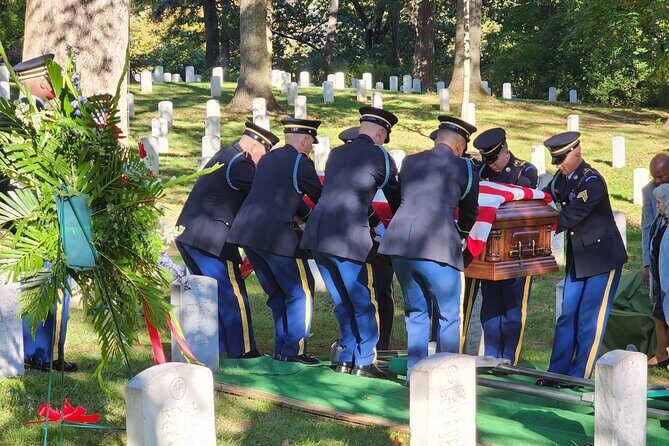
Then you head to Arlington House – The Robert E. Lee Memorial, with about 45 minutes.
This stop is framed as a place of study and contemplation about difficult aspects of American history. That language matters, because Arlington House isn’t just scenic and historic—it’s complicated. You don’t want to race through it or treat it as simple background.
I like that this portion of the tour gives you time to think. Forty-five minutes means you’re not only seeing the building and surroundings—you’re also hearing how the memorial connects to broader themes in U.S. history and how people interpret that legacy today.
If you tend to enjoy pauses on tours, this is one you’ll likely appreciate. And if you don’t like lingering, the time block is still reasonable for a walking tour day.






Stop 4: Space Shuttle Challenger Memorial (Christa McAuliffe’s story)

After Arlington House, you’ll reach the Space Shuttle Challenger Memorial, also about 45 minutes.
This memorial honors the seven crew members lost to an explosion on January 28, 1986, including high school teacher Christa McAuliffe, who was selected from more than 11,000 applicants to become the first teacher in space.
I love when Arlington expands beyond the battlefield. This stop makes the broader point that sacrifice isn’t only about war. It’s about public service, risk, and the cost of pushing forward.
Because the time here is longer than a quick roadside memorial, you can expect the story to land. You’ll be standing where the meaning is front and center, and your guide can connect why the memorial matters to people who may not have lived through 1986 but still recognize the name Challenger.
Stop 5: Tomb of the Unknown Soldier (changing of the guard)
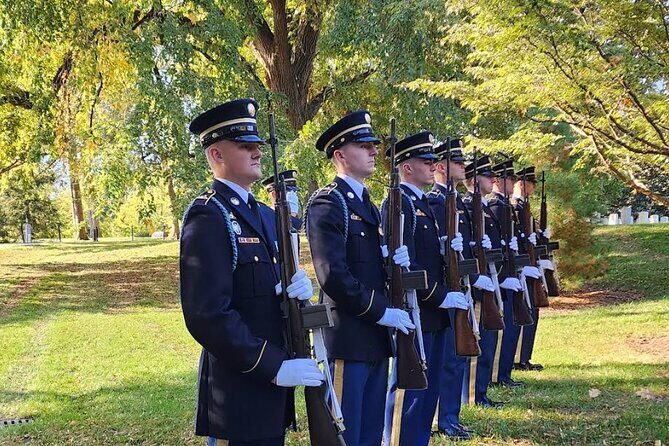
The final big stop is the Tomb of the Unknown Soldier, including the Changing of the Guard, with about 50 minutes.
This is the moment most first-time visitors picture, and it’s often the emotional peak of an Arlington visit. But the difference between watching while you’re thinking and watching while you understand is huge. The guide can help you follow the etiquette so you’re not accidentally doing something distracting during the ceremony.
I also like the pacing here. Fifty minutes gives you time to find the right vantage point, settle in, and experience the full sequence without feeling like you walked in right at the loudest part and missed the quiet build-up.
Admission is listed as free for this stop too, which means your “investment” is completely in your guide’s ability to explain what you’re seeing and why the ritual matters.
What a 3-mile, 3-hour pace actually feels like

On paper, it’s straightforward: about 3 hours and around 3 miles. In real life, the factors that matter are comfort and stamina.
Arlington involves walking on paths that can feel long even when the distance looks reasonable. If you’re the type who needs frequent breaks, plan for that. If you’re steady on your feet, you’ll likely find the route manageable, especially because it’s broken into distinct stops with their own time blocks.
The tour also isn’t marketed as a “move fast” experience. It’s small-group and private—only your group participates—so you can take questions as they come rather than constantly waiting for a group pace to catch up.
Mobile ticket, small group, and why it’s good value
Most Arlington attractions don’t charge admission, but time and guidance are what you’re really buying. This tour is built around that.
A few value points that stand out:
- Mobile ticket keeps things simple so you can focus on the walk instead of paperwork
- Small group up to 12 means you’re not shouting to be heard
- Each stop is listed as free admission, so you’re paying for interpretation and pacing, not entry fees
And that interpretation is the key. Arlington isn’t just stone and statuary. It’s a place where details—names, traditions, dates, and the meaning of rituals—change how you see the whole site.
A note about your guide: Eric Hommel’s background
The name that keeps showing up is Eric Hommel. People describe him as a retired military leader and point to a blend of experience that supports the tour style: military service, plus a professional background connected to historic preservation and government work.
That mix is part of why the storytelling seems to click. You don’t just get dates and facts; you get connections between individuals, institutions, and the traditions Arlington is built on. If you’re the type who likes to understand the why behind the what, this tour is a strong fit.
Some people also recommend reading his book, The Losing Game, before your visit if you want extra context. Even if you don’t read it, the tour still works as a standalone experience.
Who this tour is best for (and who should think twice)
This is best for you if:
- you want an Arlington visit that feels meaning-first, not marker-first
- you like asking questions and getting answers on the spot
- you’re comfortable walking about 3 miles over roughly 3 hours
It may not be the right fit if you can’t reliably walk that distance within the time frame. The tour specifically notes it isn’t recommended for visitors unable to walk 3 miles in 3 hours, and that’s a fair warning.
If you’re traveling with a teenager or older kid who likes stories and structure, the stop-by-stop pacing can work well. And if you’re a history buff, you’ll likely enjoy the connections the guide draws between memorials and the people tied to them.
Should you book this Arlington National Cemetery walking tour?
I’d book it if you want the cemetery to feel less like a self-guided stroll and more like a guided understanding of American memory. The structure is practical—five major stops, each with its own focus—and the small-group, private format makes it easier to absorb what you’re hearing.
I’d hesitate only if you know you won’t handle steady walking for 3 miles or you’re looking for a totally free-form, wander-as-you-like day. This one is guided and paced on purpose.
If you’re aiming for a first-class Arlington experience where the meaning clicks, this is the kind of tour that can turn a famous place into a personal one.
FAQ
How long is the Veteran-Led Arlington National Cemetery walking tour?
It’s about 3 hours.
How far do I walk during the tour?
The tour covers about 3 miles.
Is this tour a small group or private experience?
It’s a private tour/activity, and it’s a small group with a maximum of 12 guests.
What language is the tour offered in?
The tour is offered in English.
Do the stops require paid admission?
The listed stops are all shown as free admission.
Where do I meet the guide?
The meeting point is 1 Memorial Ave, Fort Myer, VA 22211.
Does the tour run in bad weather?
The experience requires good weather. If it’s canceled due to poor weather, you’ll be offered a different date or a full refund.
Can I bring a service animal?
Yes, service animals are allowed.
Is there free cancellation?
You can cancel for a full refund up to 24 hours in advance of the experience start time.