REVIEW · HISTORICAL TOURS
250th: National Archives & American History Museum Guided Tour
Book on Viator →Operated by DC by Foot · Bookable on Viator
A great DC plan should save time and make you look twice. This 250th National Archives & American History Museum tour does both, pairing landmark objects with guided entry so you spend less time guessing and more time understanding.
I like the small group size (max 6), because the guide can actually keep the story moving and adapt to questions. I also like that you get skip-the-line access into the National Archives, plus structured time at the Smithsonian’s American history highlights.
One thing to consider: it’s a tight, guided walking route with set start time (2:00 pm) and a 3-hour format. If you need long breaks or you strongly prefer going at your own pace, this may feel a bit structured.
In This Review
- Key things to know before you go
- Why this DC history tour feels efficient
- Getting started at 2:00 pm from the Smithsonian
- Stop 1: National Museum of American History in a guided storyline
- The Star-Spangled Banner: more than a flag
- Jefferson’s Writing Desk: the draft work behind the headline
- Gunboat Philadelphia: early naval evidence you can actually touch
- Julia Child’s Kitchen: how culture changes what people eat and watch
- John Bull Locomotive: railroads as the engine of growth
- Stop 2: National Archives skip-the-line access and the Old Post Office Pavilion
- Getting the VIP-feeling entry (without the guesswork)
- Old Post Office Pavilion: the view that makes DC click
- What the price covers (and why it’s fair)
- Who this tour fits best
- A practical pacing tip for your visit
- Should you book this 250th National Archives & American History Museum tour?
- FAQ
- How long is the tour?
- What does the tour cost?
- Where does the tour start and end?
- What time does it start?
- Is skip-the-line access included for the National Archives?
- Are tickets included?
- How big is the group?
- What language is the tour offered in?
- Are service animals allowed?
- What is the cancellation policy?
Key things to know before you go
- Skip-the-line into the National Archives with guided entrance included
- Smithsonian time with specific must-sees instead of aimless wandering
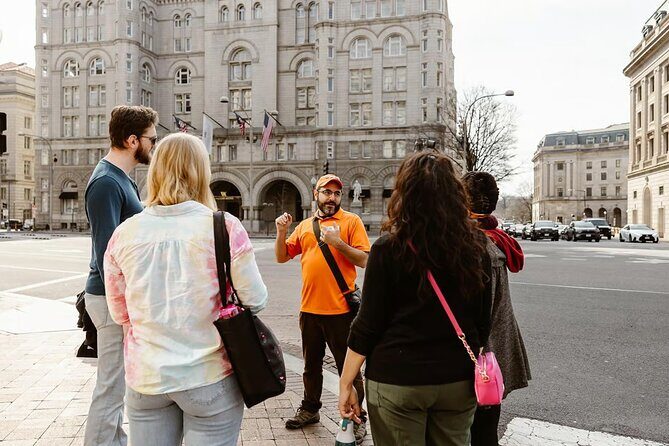
- Old Post Office Pavilion access for city views, including a look down Pennsylvania Avenue
- Focused group format (up to 6 travelers) that works well for families
- Tickets included where it matters for the Archives stop and free admission for the Smithsonian stop
- English mobile-ticket experience designed for an easy start
Why this DC history tour feels efficient
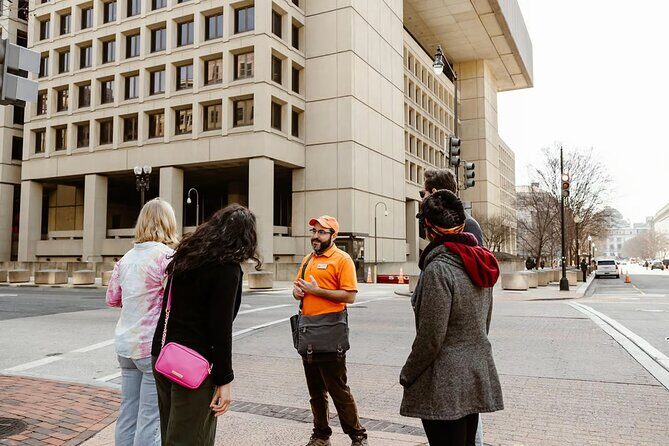
Washington DC has a lot of museums, and time can vanish fast. This tour is built around two anchor stops: the National Museum of American History and the National Archives Museum. Instead of sending you in every direction, you follow a storyline that connects artifacts to real moments in American life.
The “value” here is not just that it’s guided. It’s the way the tour reduces friction. You don’t have to decide what’s worth your time at the Smithsonian. And at the National Archives, you get guided skip-the-line entry—so your day doesn’t stall while you wait.
It’s also a good size for attention. A group capped at 6 means you’re less likely to feel like you’re competing with strangers for the guide’s focus. In the glowing feedback, the guide (Canden was highlighted by name) was praised for keeping kids engaged—meaning the explanations tend to land, not just sound like a lecture.
You can also read our reviews of more guided tours in Washington DC



Getting started at 2:00 pm from the Smithsonian
You meet at 1300 Constitution Ave. NW at the Smithsonian National Museum of American History. The start time is 2:00 pm, and the tour runs about 3 hours total.
That timing matters. Midday starts can lead to rushed museum entrances and tired legs. A 2:00 pm start is often easier to pair with a slower morning plan and lets you arrive without the full-day museum marathon feeling. Also, because the tour ends inside the National Archives Museum, you can keep exploring right after you finish the guided portion—if you want.
The tour uses a mobile ticket, so you’re not juggling paper vouchers. That helps in a city where signage and entrances can be a little chaotic at street level.
Stop 1: National Museum of American History in a guided storyline

The Smithsonian stop lasts about 1 hour 30 minutes, and admission is free for that portion. What you’re paying for is the guide’s path through the museum—focused, not random.
You’ll see headline objects that most visitors recognize, but the tour’s real strength is how it frames what you’re looking at. Instead of treating each piece like a standalone display, you get a running narrative that ties the objects together.
The Star-Spangled Banner: more than a flag
One of the first major draws is the Star-Spangled Banner, described here as the original flag that inspired the U.S. national anthem during the War of 1812.
It’s easy to treat this as patriotic iconography. The guided angle helps you notice the deeper story: this isn’t just a symbol, it’s a physical artifact linked to a specific conflict and a specific time. Standing in the presence of the original (not a replica) changes the emotional temperature. You’ll likely find yourself slowing down, because your brain shifts from reading about history to seeing it materialize.
If you care about how national identity gets formed—through war, messaging, and memory—this stop hits.
Jefferson’s Writing Desk: the draft work behind the headline
Next is Jefferson’s Writing Desk, the small portable desk where Thomas Jefferson drafted the Declaration of Independence.
This is the kind of exhibit that becomes more interesting when someone gives you context. A desk is not a dramatic battlefield object, but it’s the tool behind the document. The tour helps make that leap: the writing process, the constraints of time and movement, and the fact that revolutionary ideas were built by real people in ordinary working spaces.
This is also a great exhibit for younger visitors. A “desk” invites questions in a way that abstract political history sometimes doesn’t.
You can also read our reviews of more historical tours in Washington DC





Gunboat Philadelphia: early naval evidence you can actually touch
You’ll also see the Gunboat Philadelphia, a Revolutionary War vessel recovered from Lake Champlain. It’s presented as rare physical evidence of early American naval warfare and the push for independence.
This is a smart inclusion because it broadens the usual museum pattern. Many history tours focus on documents and speeches. A recovered ship adds a different kind of proof: technology, strategy, risk, and survival.
Even if you’re not a naval-history person, the presence of the object makes the story more concrete. You’re seeing a chapter of the Revolution that’s easy to skip over when you only skim timelines.
Julia Child’s Kitchen: how culture changes what people eat and watch
Then comes Julia Child’s Kitchen—where The French Chef was filmed. This stop represents postwar cultural change, the rise of food media, and how everyday Americans embraced new ideas and lifestyles.
This is where the tour shows good judgment. It treats everyday culture as history, not as a side quest. Food media sounds modern, but the idea of a TV personality teaching cooking is part of how media reshaped life in America. You’ll probably walk away thinking about how culture spreads: not only through politics, but through screens and habits.
John Bull Locomotive: railroads as the engine of growth
Finally, you’ll see the John Bull Locomotive, one of the oldest surviving steam locomotives in the world. The tour connects it to how railroads powered industrial growth, westward expansion, and economic transformation.
This is a strong “wrap-around” artifact. After you’ve seen documents, a ship, a kitchen, and a flag, the locomotive acts like a bridge to the larger story of how the U.S. physically expanded and moved goods and people.
If you like big systems—transport, economics, infrastructure—this is a satisfying end to the Smithsonian portion.
Stop 2: National Archives skip-the-line access and the Old Post Office Pavilion
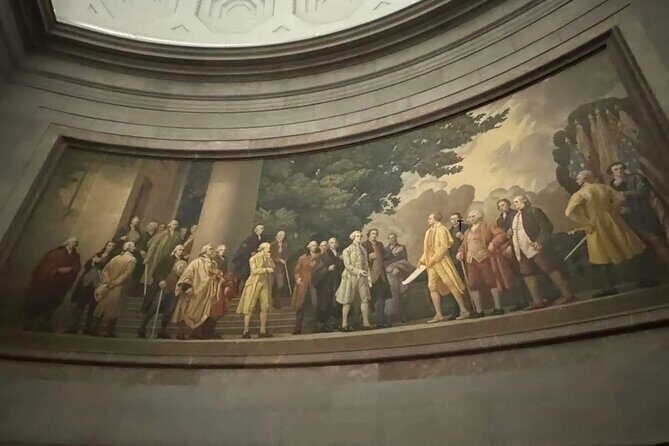
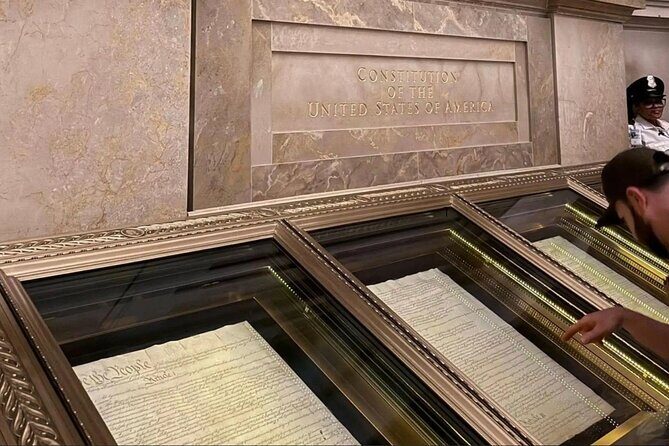
The National Archives Museum portion is about 40 minutes, and admission is included. The key benefit here is skip-the-line access into the Archives for a guided tour.
That matters for two reasons. First, it protects your time. Second, the guidance helps you understand what you’re seeing once you arrive. The Archives is one of those places where self-guided visits can feel like you’re reading labels and hoping it all clicks. With a guide, the meaning gets placed in your head in the right order.
Getting the VIP-feeling entry (without the guesswork)
One of the highlights from the feedback is that the experience felt VIP—specifically, walking right into the Archives via the exit route during the guided process.
Even if you’re not chasing a special feeling, this is practical. Less wandering means less “Where do we go now?” and more “Okay, I’m here—let’s understand what matters.”
Old Post Office Pavilion: the view that makes DC click
This tour also includes guided entrance to the top of the Old Post Office Pavilion, described as a favorite observatory deck in DC.
In the praised moments, the view down Penn Ave was called incredible, and heading to the top of the postal tower was the highlight. That matches what makes the Old Post Office Pavilion special: it gives you a sense of DC’s geometry. The city makes more sense when you can see how the streets and monumental spaces connect.
Even better: a viewpoint is a great way to reset your brain after museums. You go from reading history objects to seeing the city that grew up around them.
What the price covers (and why it’s fair)
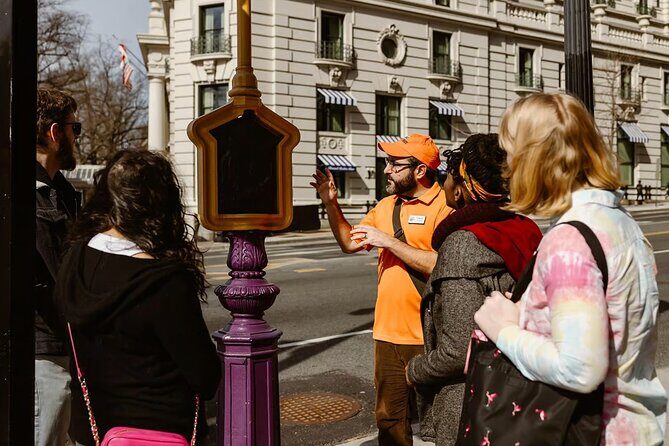
The tour costs $75 per person and runs about 3 hours. That’s not cheap for a walking tour, but the pricing is easier to justify when you look at what you’re actually getting.
- You’re paying for guided route planning through the Smithsonian’s American history highlights (about 1 hour 30 minutes).
- You get skip-the-line access and a guided entrance into the National Archives portion (about 40 minutes).
- The Old Post Office Pavilion top-access is included, which often costs extra on its own when you book separately.
- Small group size (max 6) usually raises the “cost per person,” but it also tends to improve the experience quality.
Put simply: you’re paying to reduce waiting and decision-making, and to connect artifacts to the wider DC story. If your goal is to make the day feel purposeful instead of scattered, this is strong value.
Who this tour fits best
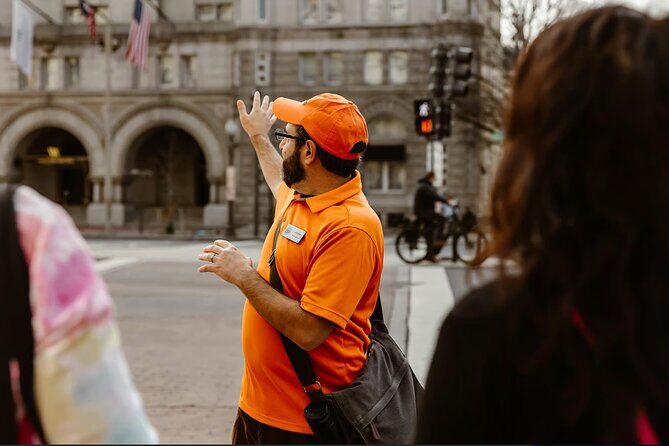
This tour is a good match if you want a structured plan but not a stuffy one.
It especially suits:
- First-time visitors who need a guided path between two major museums
- Families looking for a guide who can keep kids focused (Canden was specifically praised for this)
- People who like seeing how culture and daily life show up in history, not only wars and presidents
- Anyone who values a viewpoint stop to tie the day together
Because most travelers can participate and the group is small, it’s also a reasonable choice if you don’t want a huge crowd experience. If you’re the type who loves wandering museums for hours on your own, you might prefer a different style. But if you want to leave with your “history timeline” feeling organized, this works.
A practical pacing tip for your visit
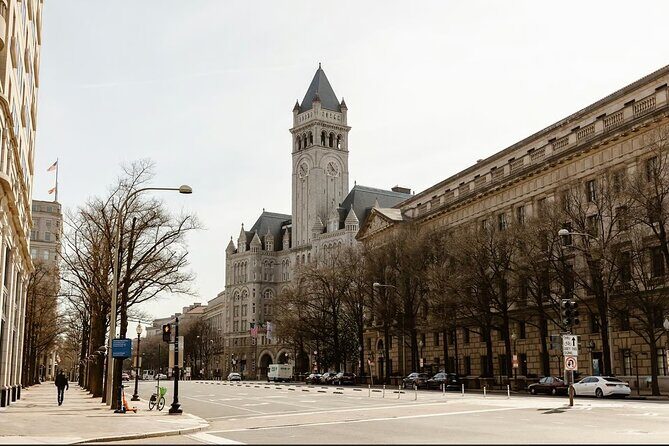
Go in expecting two gears:
1) Museum mode (listening, looking closely, asking questions)
2) View mode (quick reset from the top of the Old Post Office Pavilion)
Wear shoes you’re comfortable walking in, and keep your phone charged. The tour uses mobile tickets, and you may want to reference directions or maps if you continue exploring after you finish inside the Archives.
Also, if you plan to explore beyond the guided portion at the National Archives, decide ahead of time what you want to see most. The guided tour is only part of the museum experience, and the best way to avoid decision fatigue is to pick your personal top priorities before you’re standing in the galleries.
Should you book this 250th National Archives & American History Museum tour?
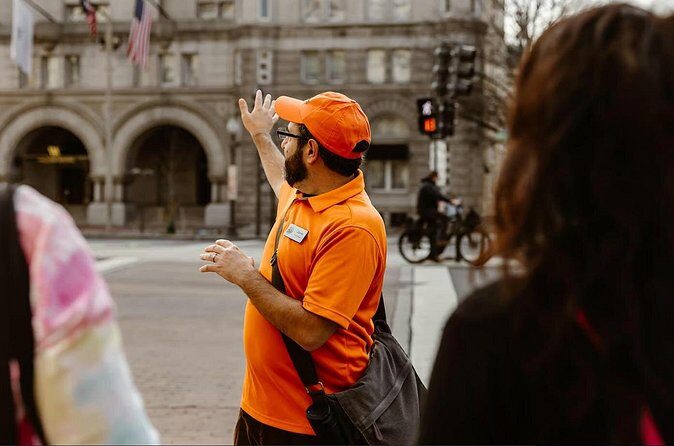
I think you should book it if you want a guided, time-saving DC history plan that hits both major institutions without turning your day into a scavenger hunt. The skip-the-line factor at the National Archives is the kind of benefit that makes the whole itinerary feel smoother.
I’d skip it (or at least compare alternatives) if you prefer total freedom, deep museum browsing at your own speed, or if you don’t care about a structured route from the Smithsonian to the Archives and onward to a top-of-tower viewpoint.
If you book, aim to arrive ready for a story-driven route. When the guide is good—and names like Canden show up as memorable in the feedback—the tour becomes more than a checklist. It turns famous objects into a connected set of ideas you can carry with you as you keep exploring DC on your own.
FAQ
How long is the tour?
The tour is approximately 3 hours.
What does the tour cost?
It costs $75.00 per person.
Where does the tour start and end?
It starts at the Smithsonian National Museum of American History, 1300 Constitution Ave. NW, Washington, DC 20560, and ends at the National Archives Museum, 701 Constitution Ave. NW, Washington, DC 20408.
What time does it start?
The start time is 2:00 pm.
Is skip-the-line access included for the National Archives?
Yes. Skip-the-line access into the National Archives for a guided tour is included.
Are tickets included?
Admission to the National Museum of American History portion is free, and the National Archives Museum admission is included.
How big is the group?
The maximum group size is 6 travelers.
What language is the tour offered in?
The tour is offered in English.
Are service animals allowed?
Yes, service animals are allowed.
What is the cancellation policy?
Free cancellation is available. You can cancel up to 24 hours in advance for a full refund.