REVIEW · HISTORICAL TOURS
Smithsonian Museum of Natural History Small Group Tour: 8ppl Max
Book on Viator →Operated by Babylon Tours DC · Bookable on Viator
One museum, 126 million years, one smart route. I love the max of 8 people, because you get real back-and-forth instead of yelling over a crowd, and I love the chance to see the Hope Diamond and real Ancient Egypt mummies in the same guided sweep. The main drawback is simple: the Smithsonian is enormous, so this is a highlights sprint, not a full museum day.
You also get the fun stuff that makes natural history feel alive. The route moves from gems and minerals to animal halls, then heads to the Ocean Hall for a live coral reef exhibit and the 45-ton whale named Phoenix (a replica tied to the museum’s tracking). With a focused guide, it’s easier to connect the dots between geology, biology, and human history.
Plan for a bit of walking and city logistics. The tour meets at 1010 Madison Dr NW and doesn’t include hotel pickup, and you’ll want to arrive with a mobile ticket ready plus a phone number (with country code) for the organizer.
In This Review
- Key highlights at a glance
- A 2-hour plan for the Smithsonian’s huge Natural History building
- Hope Diamond and gem-and-mineral galleries with a human guide
- A small heads-up
- Ancient Egypt mummies: real objects and death-ritual context
- Animals across land and the big idea of evolution-by-exhibit
- Ocean Hall: live coral reef, the Phoenix whale, and a sea-world mood
- Why the max-8 format feels different (names you might learn from)
- Price and value: what $89.67 buys in 2 focused hours
- Logistics that matter: meeting point, security rules, and quiet rooms
- Security and bag rules
- Walking and comfort
- When rules change inside the museum
- Timing realities: closures, lines, and how to stay flexible
- Who this tour fits best
- Should you book this Smithsonian Natural History small-group tour?
- FAQ
- What is the group size for this tour?
- How long is the Smithsonian Natural History small-group tour?
- Where does the tour start?
- Is museum admission included?
- Do I need to pay extra for hotel pickup or drop-off?
- What should I bring for check-in and communication?
- Are there restrictions on bags inside the museum?
- How much walking is involved?
- What if the museum is delayed or closed?
- What is the cancellation window for a full refund?
Key highlights at a glance
- Hope Diamond story featuring the famous 46-carat blue and the Marie Antoinette connection
- Dom Pedro Aquamarine stop, described as the world’s largest gem of its type
- Real Egyptian mummies with a guide explanation of death rituals
- Ocean Hall payoff: live coral reef exhibit plus the Phoenix whale replica
- Max 8-person flow that keeps questions and kid-friendly attention realistic
A 2-hour plan for the Smithsonian’s huge Natural History building
The Smithsonian National Museum of Natural History is the kind of place where you can lose an entire day and still feel like you only scratched the surface. This tour is built to prevent that problem. You’ll tour “highlights” in about 2 hours, guided through major sections rather than trying to cover every gallery.
The setting helps. The museum building is described as covering the area of 18 football fields, so having a person lead the route matters. In practice, the guided pacing helps you avoid the worst timing traps: backtracking because you missed a key exhibit, wandering through hallways that don’t connect, and spending time reading every placard when what you really want is the story behind the objects.
You should still set expectations the way you would for any serious museum highlight tour. Two hours is enough for a strong overview and a few signature stops. It’s not enough to see every hall, every collection, and every side exhibit you might notice when you’re there on your own.
You can also read our reviews of more historical tours in Washington DC



Hope Diamond and gem-and-mineral galleries with a human guide
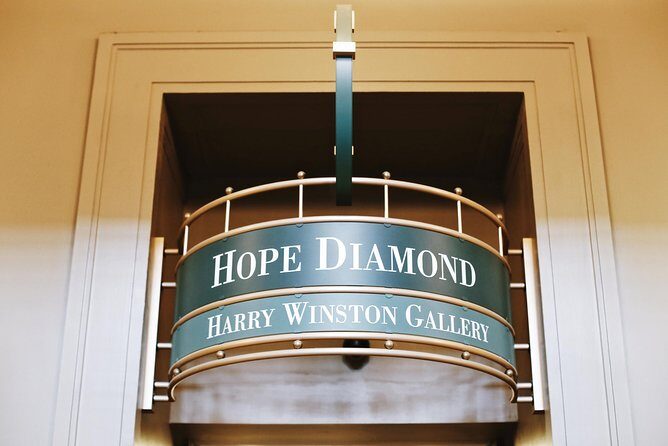
This is where the tour starts to feel like a guided storybook. You’ll get time at the museum’s world-famous Hope Diamond display. The tour route points out the gem’s brilliant blue sparkle and its famous size of 46 karats, including the note about Marie Antoinette being captivated by it in the past.
What I like about this part of the tour is that it’s not only about the sparkle. A guide can help you make sense of why gemstones matter beyond looks. You’re seeing geology made physical: how minerals form, how gems get valued, and how objects become legends over time.
Next, you’ll spend time with the gems and minerals, including the Dom Pedro Aquamarine, presented as the world’s largest gem of its type. This is the kind of exhibit that can feel like just another glass case if you’re there without context. With a guide, it becomes easier to understand what makes it special and why people stop and stare for longer than they planned.
A small heads-up
Gems and minerals halls can be visually intense. If you’re the type who loves to read every label, you’ll probably want to do a little self-guided follow-up after the tour. The guide route is designed to help you choose where to go next.
Ancient Egypt mummies: real objects and death-ritual context
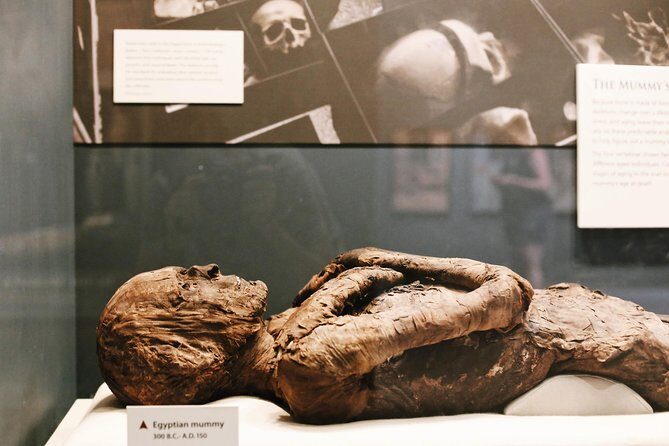
One reason this tour earns its high ratings is that it doesn’t stay in one lane. After the gem and mineral stops, you’ll step into a very different world: real mummies from Ancient Egypt.
The tour highlights death rituals as the theme, which is exactly how you want an Egypt stop framed in a natural history museum. Instead of making it feel like a random “museum oddity,” the guide focus gives you a way to connect the artifacts to beliefs, preservation, and the cultural reasons people prepared bodies the way they did.
This is also a good section for families if the guide has a style that works for kids. Some guides bring a lighter tone while still explaining the science and the meaning. Others keep it straightforward. Either way, you should expect the guide to steer you toward the most important examples rather than trying to absorb everything at once.
Animals across land and the big idea of evolution-by-exhibit
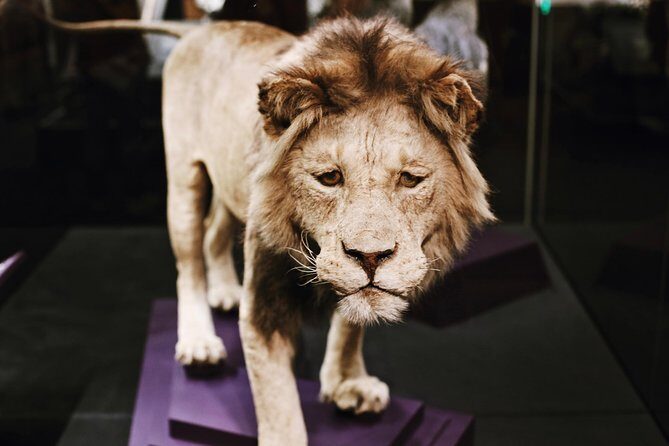
After the museum’s human history and gem highlights, the tour pivots to living and natural-world specimens. You’ll explore areas that cover animals such as polar bears, elephants, and giraffes—presented as part of the museum’s way of showing how life changes across the Earth.
The practical value here is orientation. If you walk into a museum like this on your own, you might notice the animals but miss what the museum is trying to teach with the arrangement. With a guide route, it’s easier to understand why certain halls sit where they do and what “story” the displays are aiming for.
Also, animal exhibits tend to be visually engaging, which can help if your group includes kids or anyone who gets restless during long text-heavy museum time. The guide can direct attention to key points, and you still get breaks between the science-heavy sections.
You can also read our reviews of more museum experiences in Washington DC






Ocean Hall: live coral reef, the Phoenix whale, and a sea-world mood
Then comes one of the most memorable segments: Ocean Hall. Here you’ll see a live coral reef exhibit, which is the kind of thing people don’t forget once they’ve seen it in person.
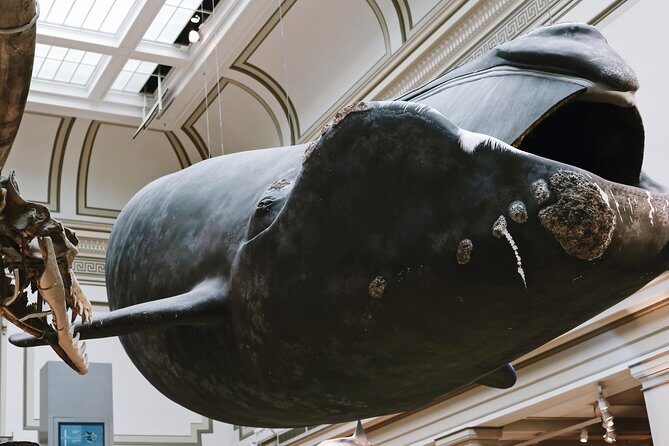
You’ll also meet the whale named Phoenix, described as a 45-ton whale and identified as a replica connected to the real whale the museum tracks. That detail matters. It helps you understand why a replica still carries weight in a scientific museum setting. You’re not just looking at a big animal skeleton—you’re seeing how museums communicate evidence, research, and conservation knowledge.
This part of the route is a nice contrast to the earlier geology and Egypt stops. It gives you a sense of scale: how Earth’s story runs from minerals and deep time to living ecosystems and the ocean habitats they depend on.
Why the max-8 format feels different (names you might learn from)
A big chunk of the success here is the max of 8 travelers setup. That cap is what makes a guided route feel personal instead of mechanical. It also explains why families report that their kids stayed engaged and why people with specific interests felt heard.
From the guide experiences included in the information you provided, you’ll likely see common strengths across different guides:
- Brenda is repeatedly praised for supporting young kids while still giving strong museum context.
- Leigh is noted for being articulate and intelligent, with entertaining delivery.
- Donna gets mentioned for spending extra time on major highlights like the Hope Diamond.
- Kate is credited with planning a route through time and even using characters/role play.
- Tony is praised for keeping a youngster interested.
- Richard is highlighted for connecting in advance by text so the meet-up and expectations were clear, plus for sharing behind-the-scenes secrets.
- Meghan gets credit for catering to what someone was interested in while answering lots of questions patiently.
- Amanda is praised for attention to a grandson and making the tour fun without losing substance.
- Rebecca is described as flexible and funny, weaving museum study into the explanation.
You shouldn’t assume any one guide will match another person’s style exactly. But you can take the pattern as useful advice: you’re booking a human-led tour where Q&A is part of the plan, not an afterthought.
Price and value: what $89.67 buys in 2 focused hours
At $89.67 per person, you’re paying for more than museum admission. This tour includes a professional art historian guide and a guided route designed to compress the museum’s main stories into about 2 hours.
The good value angle is that the museum admission ticket is listed as free for this experience, so your money is mainly buying the guided interpretation and time-saving route. That’s the key trade-off: you can always visit for free on your own, but you’re trading your time, your decision fatigue, and the chance to miss the most meaningful context.
Is it worth it? For many people, yes, because it helps you do three things at once:
- see signature objects (Hope Diamond, mummies, standout animals, Ocean Hall highlights)
- understand why they matter
- walk away with a clearer sense of what to explore next on your own
Still, manage expectations. One family feedback you shared felt disappointed because they expected a VIP-style connection and didn’t think the route justified the price for them. The fix is straightforward: treat it as a smart guided highlights tour, not a private backroom pass. If you want to roam at your own speed or linger in every room for long stretches, you’ll probably be happier with independent museum time.
Logistics that matter: meeting point, security rules, and quiet rooms
A great guide can’t fix bad planning, so it’s worth getting the logistics right.
You’ll meet at 1010 Madison Dr NW, Washington, DC 20004, and the tour ends back at the same meeting point. Hotel pickup and drop-off aren’t included, so you’ll likely want to use Uber or a taxi to keep the first and last steps stress-free.
You’ll also need a mobile phone number with country code. That’s not the kind of thing you want to scramble over on travel day.
Security and bag rules
Inside the museum, you should expect security checks and a limit on what you can carry. The notes specify no large bags or suitcases inside, only handbags or small thin bag packs allowed through security. If you’re planning to bring a tote, a backpack, or anything larger, sort that out before you arrive.
Walking and comfort
The tour calls for moderate physical fitness and includes a moderate amount of walking. Wear comfortable shoes. Dress in a way that will satisfy entry requirements for some sites on the tour.
When rules change inside the museum
A couple of rooms can be quiet or have restricted speaking. The guide will explain the rules before entering those specific areas. That’s a small thing, but it helps you avoid the awkward moment of realizing you’re in a no-talk zone.
Timing realities: closures, lines, and how to stay flexible
Washington, DC museums can shift schedules. The information you provided notes that the museum and other attractions may face occasional closures without prior warning from museum management.
If the museum opening time is delayed by more than 1 hour from the tour start time, the organizer says it will provide an appropriate alternative. In those cases, refunds or discounts aren’t guaranteed, so your best move is to plan your day with some breathing room.
Also, even with any tour-adjacent access benefits that might exist elsewhere, lines can still form due to security measures at many attractions. The practical takeaway: arrive a little early, not on the minute. Museum doors can be slow, security lines move unpredictably, and being early gives you a cushion.
Who this tour fits best
This Smithsonian small-group format is a strong match if you:
- want a structured overview in 2 hours rather than a full-day self-guided marathon
- care about story and context, not only the objects
- have kids who do better with a guided pace (several guides are praised for engaging young children)
- want help choosing what to explore after the tour
It may not be the best fit if you:
- want to spend long, quiet stretches in one room only
- dislike moving between multiple sections in a short time
- need specific accommodations for mobility support, since accommodations for walking disabilities or wheelchairs aren’t listed as provided in the information you gave
Should you book this Smithsonian Natural History small-group tour?
If your goal is to cover major museum hits with a guide who can explain what you’re seeing, I’d say this tour is a smart buy. The max of 8 keeps it interactive, and the route focuses on high-impact stops: Hope Diamond, mummies, animal halls, and Ocean Hall’s live reef and Phoenix whale replica.
Book it if you want a clean plan, help making sense of what you see, and a good chance of leaving oriented enough to explore more on your own afterward.
Skip it (or treat it as a learning primer) if you want a long sit-down museum experience, if you’re expecting a special VIP relationship with the Smithsonian beyond guided highlighting, or if you know you don’t do well with a “move through the museum” approach.
FAQ
What is the group size for this tour?
The tour has a maximum of 8 people.
How long is the Smithsonian Natural History small-group tour?
It runs for about 2 hours.
Where does the tour start?
The meeting point is 1010 Madison Dr NW, Washington, DC 20004, USA.
Is museum admission included?
The experience lists an admission ticket as free.
Do I need to pay extra for hotel pickup or drop-off?
No. Hotel pickup and drop-off are not included.
What should I bring for check-in and communication?
You must provide a mobile phone number (including country code). You’ll also have a mobile ticket.
Are there restrictions on bags inside the museum?
Yes. No large bags or suitcases are allowed inside. Only handbags or small thin bag packs are allowed through security.
How much walking is involved?
The tour includes a moderate amount of walking, so comfortable shoes are recommended.
What if the museum is delayed or closed?
If opening is delayed by more than 1 hour from the tour starting time, an appropriate alternative may be provided. Refunds or discounts aren’t mentioned as available in those cases.
What is the cancellation window for a full refund?
You can cancel up to 24 hours in advance for a full refund. Canceling less than 24 hours before start time is not refunded.