REVIEW · NATIONAL ARCHIVES
Skip-the-line National Archives Building Exclusive Guided Tour
Book on Viator →Operated by Babylon Tours DC · Bookable on Viator
Paper that changed America, up close. I love how this small-group tour gets you into the National Archives Rotunda to see the founding documents in person, and I love the way the guide connects them to real-world letters and papers in the galleries. One consideration: the flow is paced for the group, so you will not have long stretches to wander and explore everything on your own.
You’ll meet at the National Archives Museum on Constitution Ave NW, then spend about 1.5 to 2 hours moving through the museum’s key rooms with an expert guide. This is set up for people who want the highlights without the guesswork, and with a max group size of 8, it stays friendly and manageable even when the building is crowded.
In This Review
- Key highlights worth paying attention to
- Inside the National Archives Rotunda: where your guide earns their keep
- The documents tour: Constitution, Declaration, Bill of Rights, and the Federalist Papers
- Public Vaults and the letters from Washington and JFK
- The Emancipation Proclamation stop: seeing 1863 in the same building
- Magna Carta at the National Archives: why a 1297 paper matters
- Staying comfortable: timing, pacing, and what crowds can do
- Wheelchair-friendly and group-size limited: practical comfort in a big museum
- How the guide shapes the tour: storytelling you can use
- Should you book this National Archives skip-the-line guided tour?
- FAQ
- FAQ
- How long is the National Archives skip-the-line guided tour?
- Where does the tour start and end?
- What documents will I see during the tour?
- Is the admission ticket included?
- Is the tour wheelchair friendly?
- What bag can I bring into the museum?
- What is the cancellation policy?
Key highlights worth paying attention to
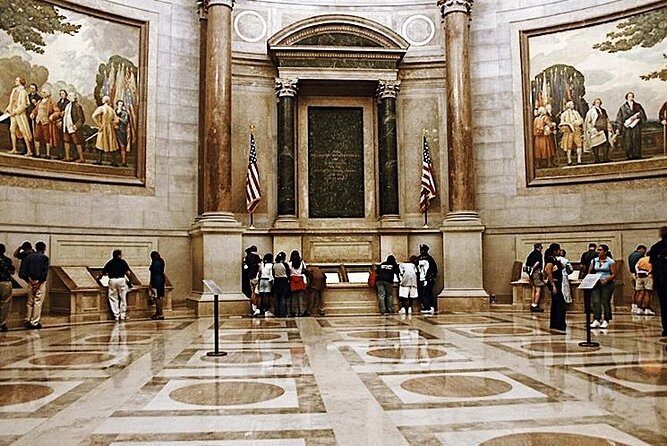
- Original documents in the Rotunda: you focus on the Declaration of Independence, the Constitution, and the Bill of Rights where they belong in the story.
- Letters from major leaders: expect to see handwritten pieces connected to Washington and JFK, plus more.
- Magna Carta context in the Rubenstein Gallery: a 1297 document that helps explain how America’s legal ideas didn’t start from scratch.
- Emancipation Proclamation viewing: you’ll also get to see it while learning what happened in 1863.
- Works for mobility needs: the tour is listed as wheelchair friendly.
- Guides who bring it alive: people rave about guides like Annemarie, Ryan, Kate, Meghan, and Donna and how they keep the tour moving.
Inside the National Archives Rotunda: where your guide earns their keep
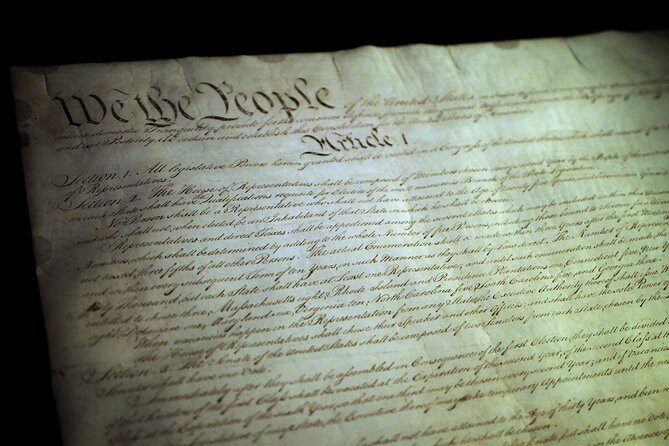
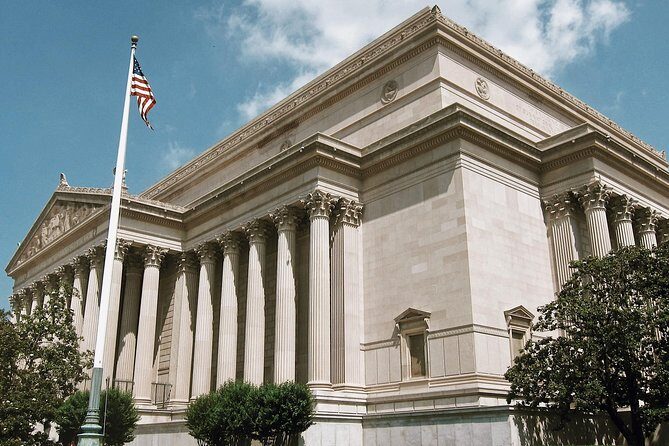
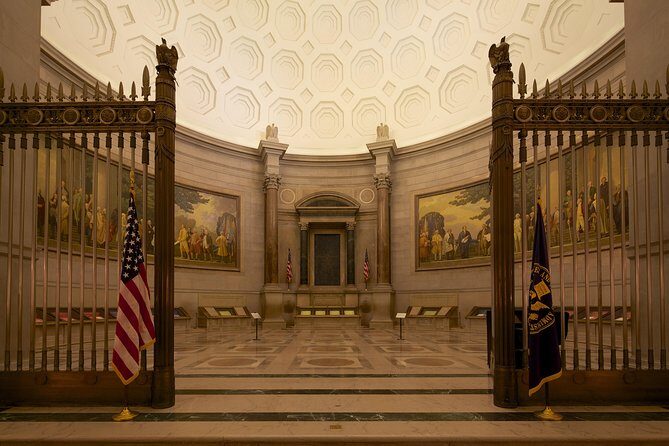
The National Archives isn’t just another DC stop. The building’s neoclassical feel makes the place seem ceremonial, like paperwork deserves a spotlight. The tour starts by getting you through the museum efficiently, then moves you into the Rotunda area so the big documents are not just names on a page.
Here’s what I think makes this part worth the ticket: you’re not hearing vague history. You’re looking at primary documents while your guide ties each one to what it changed and why people cared. You get time to absorb what you’re seeing, then you get explanation for how the documents fit together.
This is also where a small group helps. With up to 8 people, your guide can adjust the pace. In the best moments, you’re standing close enough to really register what makes an original document different from a reproduction. And if you’ve ever stood in front of something famous and thought, I have no idea what I’m looking at, this format is designed for you.
You can also read our reviews of more guided tours in Washington DC



The documents tour: Constitution, Declaration, Bill of Rights, and the Federalist Papers
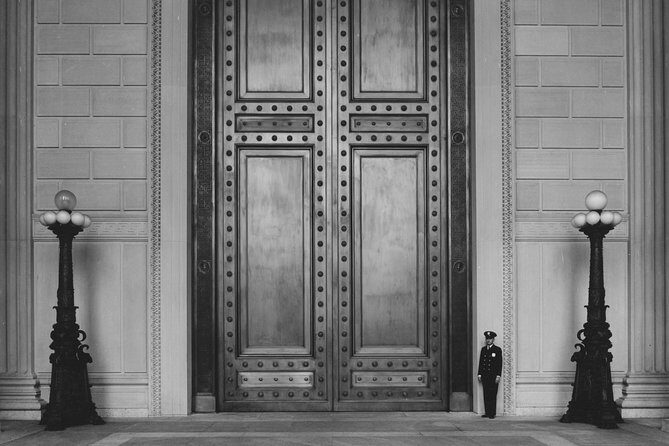
A lot of people come to the National Archives because they want the headline items. This tour does that, with the Declaration of Independence, the Constitution, and the Bill of Rights as core stops. It also includes the Federalist Papers in the learning flow, which matters if you want the logic behind how the new system worked instead of only the speeches and signatures.
You’ll hear how these documents connect to the founding statesmen. The tour mentions Alexander Hamilton and other prominent figures, and that’s important because it helps you see that America’s early governance wasn’t one lone idea. It was debate, persuasion, and legal structure.
A helpful thing to expect: your guide keeps the story moving. You’ll likely spend more time with what matters most and less time getting stuck in “look at the glass case” mode. That trade-off can feel fast, but it’s also why the tour is designed as a 1.5 to 2 hour experience rather than an all-day museum marathon.
Public Vaults and the letters from Washington and JFK
After the Rotunda focus, the tour shifts toward the Public Vaults exhibits. This is where the museum stops feeling like a textbook and starts feeling like lived history.
One highlight is the chance to see historic letters connected to major leaders, including George Washington and John F. Kennedy. Seeing letters in a museum context can be emotional in a quiet way. It reminds you these were real people writing real words, not just figures on dollar bills.
This section also benefits from having someone guide your attention. If you walk through on your own, it’s easy to skim past details that explain why a document is important. With a guide, you’re pointed to what to notice first, then you’re given the story behind it.
If you care about American political change across time, these letter stops help you feel the continuity. The nation’s debates didn’t stop after the founding. They kept evolving, and the museum shows that through the documents.
The Emancipation Proclamation stop: seeing 1863 in the same building
The tour includes a look at the Emancipation Proclamation. That’s a huge topic, and it’s also a sensitive one, so I like that the experience is framed as part of the wider document collection rather than treated as an isolated “big moment.”
What you can expect here is that the guide places the proclamation into context—specifically pointing to the year 1863 and its role in abolishment of slavery. Even if you already know the basic timeline, hearing it as a document in the National Archives helps you understand why laws and executive actions get stored, protected, and studied the way they do.
This is one reason I think the tour works well for different ages. Kids often enjoy the idea of famous signatures and old paper. Adults often appreciate the legal and historical connections. The guide’s job is to make the meaning land in the time you have.
Magna Carta at the National Archives: why a 1297 paper matters
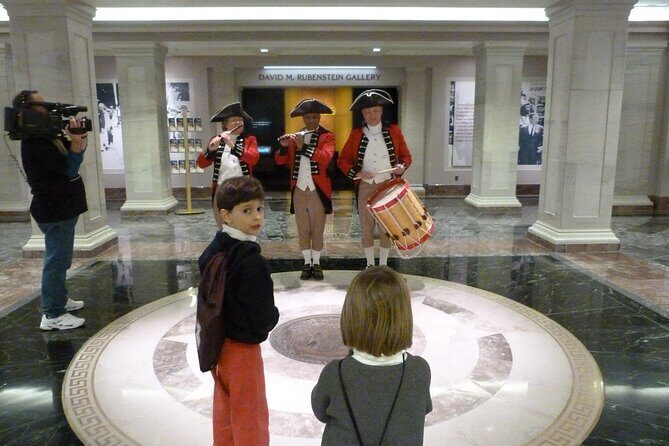
Most people don’t expect to see the Magna Carta on a US-focused tour. Yet this experience includes it, and it’s shown in the Rubenstein Gallery as the Magna Carta of 1297.
That date is the point. You’re being shown that ideas about rights and rule of law didn’t spawn fully formed in 1776. The tour frames it as influential in later legal documents you’ll experience in the Archives.
This is a smart move for your understanding. Without a bridge like this, the founding documents can feel like they dropped out of the sky. With the Magna Carta stop, the story becomes bigger and older. You start seeing how legal thinking travels through centuries, changing as societies change.
You can also read our reviews of more tours and experiences in Washington DC



Staying comfortable: timing, pacing, and what crowds can do
The total tour time is about 1 hour 30 minutes to 2 hours, and that’s a sweet spot for a major museum. In that time, you will see key rooms and hear the connections. But you still want to know what you’re trading.
Security and crowds can matter. Even with skip-the-line access, the tour notes that some lines may form due to increased security measures. So if you’re the type who hates any waiting at all, keep your expectations flexible.
Also, remember what the tour is designed to do: cover important exhibits with guide-led direction. That means your freedom to roam is limited compared with a solo visit. One of the main complaints in the experience feedback is that some guests felt there wasn’t enough time for questions and that the tour can feel exhausting if you want slower, more open exploration. If that sounds like you, go in knowing your best strategy is to ask questions when the guide pauses rather than expecting long free-for-all breaks.
Wheelchair-friendly and group-size limited: practical comfort in a big museum

This tour is listed as wheelchair friendly, and it’s capped at a maximum of 8 people. That small group size matters more than it sounds. In museums with famous artifacts, space is tight. With 8 people, your guide can steer you around bottlenecks and keep the group from turning into a conga line.
If you have mobility needs, it helps that the tour is specifically noted as wheelchair friendly. If you’re traveling with a stroller or using a mobility device, this is one of those situations where having a guide who understands the museum flow is an advantage.
One more practical detail: the museum doesn’t allow large bags or suitcases inside. It’s limited to handbags or small thin bag packs through security. So pack light. In DC, you’ll thank yourself later.
How the guide shapes the tour: storytelling you can use
What really gets praised is how the guides teach. People highlight guides by name: Annemarie, Ryan, Kate, Meghan, Donna, Brenda, and Marybeth. The repeated theme is that the best guides keep you moving and make the documents feel like a real story, not a lecture.
One reason this matters for you is that the National Archives can overwhelm you if you’re not sure where to look. You might think, I’ll just wander until I find something important. Then you realize you missed the context that makes it all click.
In the feedback you gave, guides are repeatedly described as doing three things well:
- keeping attention on the documents that matter most
- working through crowds without losing the plot
- explaining the why, not only the what
If you enjoy asking questions, look for the moments when the guide slows down. Some rooms also have very quiet or restricted speaking rules, and the tour notes that your guide will give information about those places before entering. Translation: they’re planning around the museum rules so the learning still happens.
Should you book this National Archives skip-the-line guided tour?
I’d book it if you want a high-impact National Archives visit with less stress. This is especially smart if it’s your first time in the building or you want the biggest documents and most important context packed into a short window.
Skip it—or consider another style of visit—if you want maximum freedom to wander at your own pace. The tour is structured. It’s focused. That’s a plus for most people, but it can frustrate you if your ideal museum day is slow, long, and question-heavy.
Bottom line: if you want the Declaration, Constitution, Bill of Rights, Magna Carta context, and major letters like Washington and JFK, plus the Emancipation Proclamation, all guided and time-efficient, this tour is built for that.
FAQ
FAQ
How long is the National Archives skip-the-line guided tour?
It runs about 1.5 to 2 hours, depending on the flow in the museum that day.
Where does the tour start and end?
The tour starts at National Archives Museum, 701 Constitution Ave. NW, Washington, DC 20408, USA, and it ends back at the meeting point.
What documents will I see during the tour?
The tour focuses on the Declaration of Independence, the Constitution, and the Bill of Rights, and it also includes historic letters (including George Washington and John F. Kennedy) as well as the Emancipation Proclamation and the Magna Carta of 1297.
Is the admission ticket included?
Yes. The experience includes admission to the museum as part of the tour.
Is the tour wheelchair friendly?
The tour is listed as wheelchair friendly, though this benefit does not apply if you choose the SAVE! BOOK SEMI-PRIVATE option.
What bag can I bring into the museum?
No large bags or suitcases are allowed inside. You can bring handbags or small thin bag packs through security.
What is the cancellation policy?
You can cancel for a full refund up to 24 hours before the experience’s start time. If you cancel less than 24 hours before, the amount you paid is not refunded.