REVIEW · NATIONAL ARCHIVES
National Archives Skip the Line Guided Tour Semi-Private 6ppl Max
Book on Viator →Operated by Babylon Tours DC · Bookable on Viator
Few places feel as official as the National Archives. This semi-private skip-the-line tour is built for small groups and close-up viewing of the documents that shaped the U.S., with an expert guide to connect the dots between ink, politics, and real people. If you want the headlines version, you’ll get it. If you want what those pages meant at the time, you’ll get that too.
Two things I like a lot: you get original documents up close at the heart of the building, and the tour stays compact enough (up to 8) that your guide can pace the story. I also appreciate that the route hits multiple “story chapters,” from the Rotunda to presidential papers in the Public Vaults and the Magna Carta in the Rubenstein Gallery.
One thing to consider: security rules still apply, and some groups may find the flow a bit structured, especially if you’re sensitive to pace or you’re unsure about what items you can bring through. Also, this tour isn’t for wheelchairs or those with walking disabilities.
In This Review
- Key Highlights You’ll Notice Right Away
- Why This National Archives Tour Feels Different Than Walking In Alone
- Getting Into the Building Smoothly (and What Can Still Create Lines)
- The Rotunda: Declaration and Constitution Under the Lights
- Public Vaults Exhibits: Presidential Letters and the Paper Trail of Power
- Emancipation Proclamation and Civil Rights Documents: More Than a Single Landmark
- Rubenstein Gallery: Finding the Magna Carta’s Shadow in the U.S.
- Semi-Private Pacing: What a Max-8 Group Means for Your Experience
- Who This Tour Is Best For (and Who Should Rethink It)
- Price and Value: Is $105.73 Worth It?
- Quick Practical Notes Before You Go
- Should You Book This Skip-the-Line National Archives Tour?
- FAQ
- How long is the National Archives skip-the-line guided tour?
- What group size is this tour limited to?
- Where do we meet for the tour?
- Is the tour offered in English?
- Will there be security lines even with skip the line access?
- What should I bring or avoid bringing inside the museum?
- Is this tour wheelchair accessible?
Key Highlights You’ll Notice Right Away
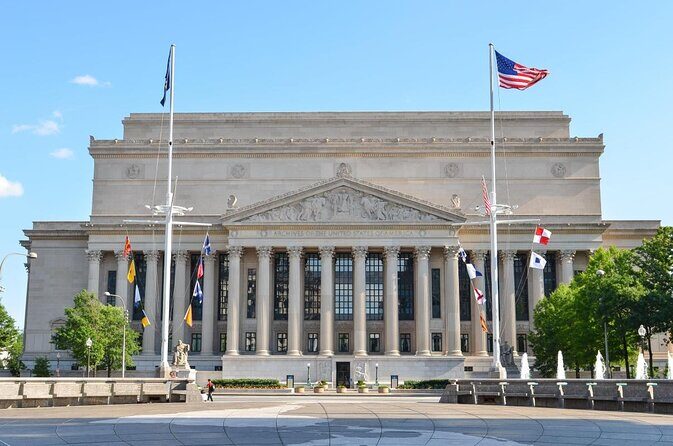
- Max 8 travelers keeps the mood more intimate than a big bus tour
- Skip-the-line entry aims to get you viewing time before crowds swell
- Declaration, Constitution, Bill of Rights, Federalist Papers shown right in the Rotunda
- Presidential letters in the Public Vaults, including items tied to Washington and Kennedy
- Emancipation Proclamation and civil rights documents with context for the long arc of change
- Magna Carta (1297) in the Rubenstein Gallery with explanation of its influence
Why This National Archives Tour Feels Different Than Walking In Alone
The National Archives can be easy to approach with enthusiasm and still leave you with a fuzzy takeaway. You see famous pages. You take photos. Then you move on. This tour fixes that by adding a guided thread that ties each document to a moment in American history—what was at stake, who pushed it, and why it mattered.
The other big difference is the size. A semi-private group capped at 8 means you’re not competing with a crowd for your guide’s attention. It also helps when you want time at the cases. In this museum, time matters because the documents are under glass and viewing is controlled. If you’re the kind of person who likes to actually read what you’re looking at (even if just a little), the pacing here is built for that.
Price-wise, you’re paying for the guide and the skip-the-line handling—not the museum ticket. Admission is listed as free, and the experience is priced around the guided access and interpretation. For many first-timers, that trade is worth it: you’re not just seeing objects; you’re getting the story behind them.
You can also read our reviews of more guided tours in Washington DC



Getting Into the Building Smoothly (and What Can Still Create Lines)
This is advertised as a skip-the-line guided tour, and the best practical value is early viewing—getting to the Rotunda and main exhibit areas when things are less packed. A small group also helps you move as a unit without constantly stopping and restarting.
That said, the tour notes flag an honest reality: even with skip-the-line or no-wait access, some lines may form due to security measures at major attractions. Translation for you: wear comfortable shoes, keep your bag situation simple, and don’t count on a totally frictionless entry.
Also plan for the museum’s rules. Large bags and suitcases aren’t allowed inside; only handbags or small thin bag packs go through security. If you travel with a tote that’s borderline too big, you’ll want to downsize before you arrive.
The Rotunda: Declaration and Constitution Under the Lights
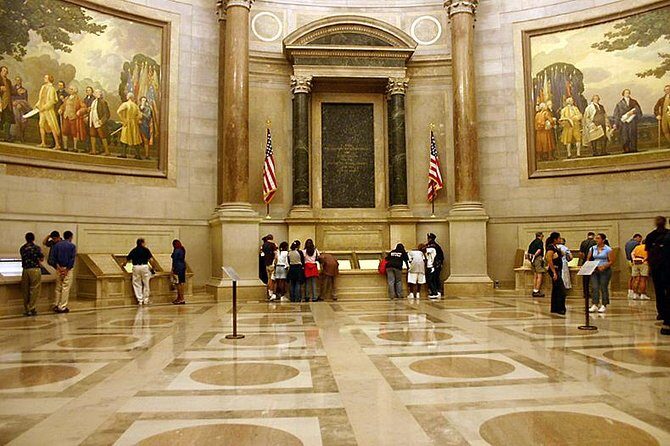
Your tour begins at the National Archives Museum, 701 Constitution Ave. NW, Washington, DC 20408, and the first stop is the National Archives Rotunda. This is where the building starts doing its job: it feels like a temple to civic identity.
Here’s what you should expect to focus on:
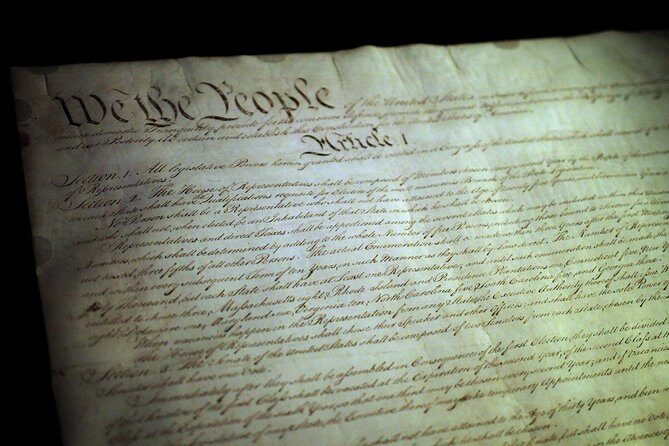
- The Declaration of Independence and the Constitution
- The Bill of Rights and the Federalist Papers
- The role of signatures from major figures, including Alexander Hamilton
The guide’s role in this room is the key value. Without interpretation, these documents can feel like museum objects—important, but distant. With a guide, you’re guided to connect them to the real power struggles they represented. The Rotunda is also a great place for people who are traveling with kids or teens because it’s visual and unmistakably “the real thing.”
One practical tip: don’t rush. The magic of the Rotunda is that it sets the tone for everything that follows. If you’re aiming to get good photos, take them, then stay longer than you think you need for the explanation.
Public Vaults Exhibits: Presidential Letters and the Paper Trail of Power

After the Rotunda, the tour moves into the Public Vaults Exhibits. This is where the National Archives stops being only about founding documents and starts becoming a story about governance and consequences.
You’ll spend time on letters and papers tied to presidents, including items connected with George Washington and John F. Kennedy. The tour also highlights the museum’s special strength: it doesn’t just show laws. It shows communications—what leaders said, what they wrote, and how the government operated in practice.
This section is also where many people realize the Archives isn’t only about triumph. One of the standout themes built into the route is how the museum presents the turbulent racial past through documents. That framing matters because it moves the story beyond a single era and makes the timeline feel real.
A small drawback to know upfront: because this is a controlled museum setting, you may encounter zones where the guide has to keep the group moving in short segments. If you’re someone who likes long solo reading time in every room, keep expectations flexible.
Emancipation Proclamation and Civil Rights Documents: More Than a Single Landmark

One of the most powerful parts of this tour is how it handles the era of emancipation and what comes after. In the Public Vaults area, you’ll learn about the Emancipation Proclamation and its role in ending slavery in the 19th century—then the story doesn’t stop there.
The tour continues into later civil rights documentation, including a citation issued to Rosa Parks. The point, as the tour presents it, is uncomfortable but important: racial inequality didn’t end with one document. It moved through time, fought for, resisted, and kept showing up in official records.
This is also where the guided approach earns its keep. If you go on your own, it’s easy to treat each display as a separate collectible moment. On this tour, you’re given context to see patterns: what changes legally, what changes socially, and what doesn’t change fast enough.
If you care about U.S. history that includes the hard parts, you’ll likely feel the most satisfied here. If you’re hoping for a purely celebratory storyline, you might find the emphasis on struggle more weighty than you expected.
You can also read our reviews of more private tours in Washington DC






Rubenstein Gallery: Finding the Magna Carta’s Shadow in the U.S.
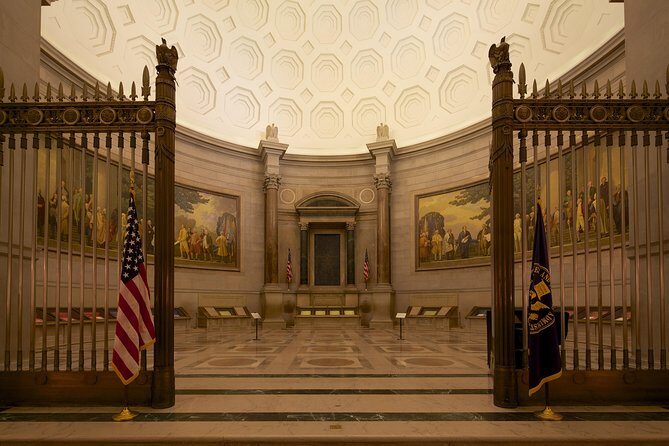
The tour’s final major stop is the Rubenstein Gallery, where you’ll examine older documents including the Magna Carta of 1297. Even though it predates European discovery of the Americas by a long shot, the guide explains its influence on the later documents and ideas you see throughout the Archives.
This part is surprisingly useful for anyone who thinks U.S. documents are “only American.” You’ll come away with a more connected view of how legal and political ideas travel. Magna Carta is often referenced in school, but the value here is seeing it in the museum context and hearing how it relates to the foundations you’re already standing near.
If you like the logic of cause and effect—how one system influences another—you’ll probably enjoy the way this gallery caps the tour. It ties the big U.S. documents into a longer tradition of rights and constraints on power.
Semi-Private Pacing: What a Max-8 Group Means for Your Experience
This tour is designed as semi-private, with a maximum of 8 travelers. That matters in a museum setting for a few reasons:
- You’re less likely to get lost in a crowd.
- Your guide can slow down at documents that need explanation.
- Questions are more realistic than on larger groups.
In the best moments of this kind of tour, the guide isn’t just reciting dates. They’re adjusting to your group’s reactions. Based on the guide styles highlighted in the provided information, people often mention standout storytelling and the ability to keep younger visitors engaged. Names that show up with strong praise include Maribeth, Meghan, Donna, Brenda, Bess, Richard, Rebecca, and Jennifer—so if you’re choosing based on guide reputation, keep an eye out for who’s assigned on your date.
Still, one practical caution from the data: guide energy and focus can vary. One less favorable experience described a guide veering into politics and modern media while also rushing participants through security without clear camera guidance. The lesson for you is simple: if you want a very museum-first approach, ask early (or be ready to redirect) if the conversation drifts.
Who This Tour Is Best For (and Who Should Rethink It)
This tour is a strong fit if you want:
- A guided explanation of original founding documents
- Context that includes later civil rights history, not just the 1700s
- A pace that works well for families, including kids who might otherwise get bored in a museum
You should also feel comfortable if you have a moderate physical fitness level. The route involves moving through museum spaces and security areas, and the tour notes clearly state it’s not available for wheelchair users or those with walking disabilities.
If you’re traveling solo and love history, the small group still gives you a social layer without drowning in a crowd. If you’re a couple, it’s easy to focus on the documents instead of splitting your attention with a large group.
If you’re the type who only wants a quick overview and doesn’t care about the meaning behind documents, a self-guided visit could feel cheaper. But if you want your time to count, the guided format is the point.
Price and Value: Is $105.73 Worth It?
At $105.73 per person for roughly 1.5 to 2 hours, you’re not paying for museum admission—you’re paying for:
- A professional guide
- A semi-private group format
- The handling of “skip the line” access
- The interpretation that turns famous papers into understandable stories
That makes the value equation simple. If you’re the sort of traveler who reads exhibits and likes context, the guide’s role becomes a time-saver. You’re buying back the hours you’d spend trying to piece together meaning from signage and partial reading.
The best outcomes in the provided information often mention up-close viewing and arriving early enough to see key documents before major crowds fully form. That’s the hidden value: you get access plus better quality viewing time, not just faster entry.
If you’re on a tight budget and you’re happy to skim, the price might feel steep. But if you care about the real documents and want guided connection between them, this is one of those tours that justifies itself by what you don’t have to figure out on your own.
Quick Practical Notes Before You Go
A few details are worth handling early so your tour stays smooth:
- You’ll be asked for a mobile phone number with country code.
- The tour is English language.
- It ends back at the starting point.
- Confirmation is received at booking.
- The meeting point is at the National Archives Museum address listed above.
- Dress matters for entry into some sites; keep your outfit museum-friendly.
- Some rooms have restricted quiet rules where speaking may be limited—your guide will brief you before entering.
One more reality check: closures can happen. Museum openings at this scale can be subject to occasional changes, and the notes say if a delayed opening impacts the start time by more than an hour, an alternative may be provided. No refund or discount is offered in those cases, so keep your schedule a bit flexible.
Should You Book This Skip-the-Line National Archives Tour?
If your goal is to see the Declaration of Independence and Constitution and actually understand what you’re looking at, I’d book it. The combination of a max-8 group, guided storytelling across multiple galleries, and the focus on original documents makes the time feel efficient rather than rushed.
I’d especially recommend it to families and first-timers who want the “don’t miss” story—Rotunda to Public Vaults to Rubenstein Gallery—with civil rights context included, not tacked on.
Skip the booking only if you know you’ll hate guided pacing, you’re uncomfortable with security flow, or you need wheelchair access. If that’s your situation, you’ll be better off planning a different format.
FAQ
How long is the National Archives skip-the-line guided tour?
It runs about 1.5 to 2 hours.
What group size is this tour limited to?
It’s semi-private with a maximum of 8 travelers.
Where do we meet for the tour?
You meet at the National Archives Museum, 701 Constitution Ave. NW, Washington, DC 20408.
Is the tour offered in English?
Yes, the tour is offered in English.
Will there be security lines even with skip the line access?
The tour is described as skip-the-line or no-wait, but the notes say some lines may still form due to security measures.
What should I bring or avoid bringing inside the museum?
You should plan for security restrictions: no large bags or suitcases are allowed. Only handbags or small thin bag packs are permitted through.
Is this tour wheelchair accessible?
No. The tour is not available for those with walking disabilities or for wheelchair users.
If you want, tell me your travel dates and whether you’re going with kids, and I’ll help you plan what time of day to choose for the best viewing flow.