REVIEW · NATIONAL ARCHIVES
National Archives Skip the Line Tour Semi-Private 6ppl Max
Book on GetYourGuide →Operated by Babylon Tours DC · Bookable on GetYourGuide
Paper decisions changed the world. This skip-the-line National Archives tour turns famous documents into something you can actually see and understand, from the Declaration and Constitution in the Rotunda to the Bill of Rights with Alexander Hamilton’s signature. I especially love the small-group feel and the way your guide connects what’s on the page to what it meant in real politics. One drawback to plan for: it’s a walking tour and it is not set up for wheelchair users.
I also like the personal energy the guides bring. People like Donna, Meghan, Maribeth, Bess, Ryan, and Brenda show up in this program, and the common thread is storytelling that makes you want to ask questions. If you hate standing around and you want the best documents-focused route in a tight time window, this format works well.
In This Review
- Key highlights to know before you go
- Why this National Archives tour beats going solo
- Skip-the-line timing and the “2-hour walking tour” reality
- Rotunda focus: the Declaration and Constitution in front of the originals
- Bill of Rights and Federalist Papers: Hamilton’s signatures up close
- Public Vaults letters: Washington and JFK in the same emotional lane
- Emancipation Proclamation and the Rosa Parks citation: rights don’t arrive overnight
- Rubenstein Gallery: Magna Carta of 1297 and the roots of rights
- The guide factor: what you’re really paying for
- Price and value: when $111 makes sense
- Who should book this semi-private National Archives experience?
- Should you book? My quick decision guide
- FAQ
- How long is the National Archives skip-the-line semi-private tour?
- Does this tour include skip-the-line access?
- What group size should I expect?
- What tour stops are included in the highlights route?
- Do I need to bring a photo ID?
- Are large bags allowed inside the National Archives?
- Is the tour wheelchair accessible?
- What is included in the price?
- Are food, drinks, and temporary exhibits included?
- What if the tour doesn’t meet the minimum number of participants?
Key highlights to know before you go
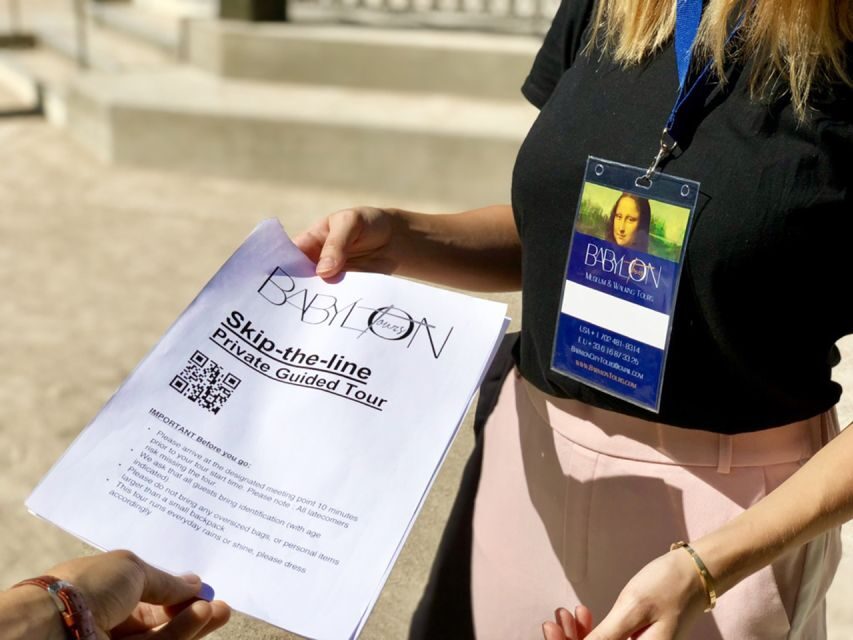
- Skip-the-line entrance helps you spend more time with documents, less time stuck at security.
- Semi-private group capped at 8 keeps it conversational, not lecture-only.
- The Rotunda first stop targets the Declaration of Independence and the Constitution right in front of the originals.
- Hamilton + the Bill of Rights gives you signatures you’ve seen in textbooks, but now you’re close enough to really study them.
- Rosa Parks citation + Emancipation Proclamation show how rights debates stretched across decades, not centuries.
- Magna Carta of 1297 in the Rubenstein Gallery adds a surprising “roots of rights” link to the U.S. story.
Why this National Archives tour beats going solo
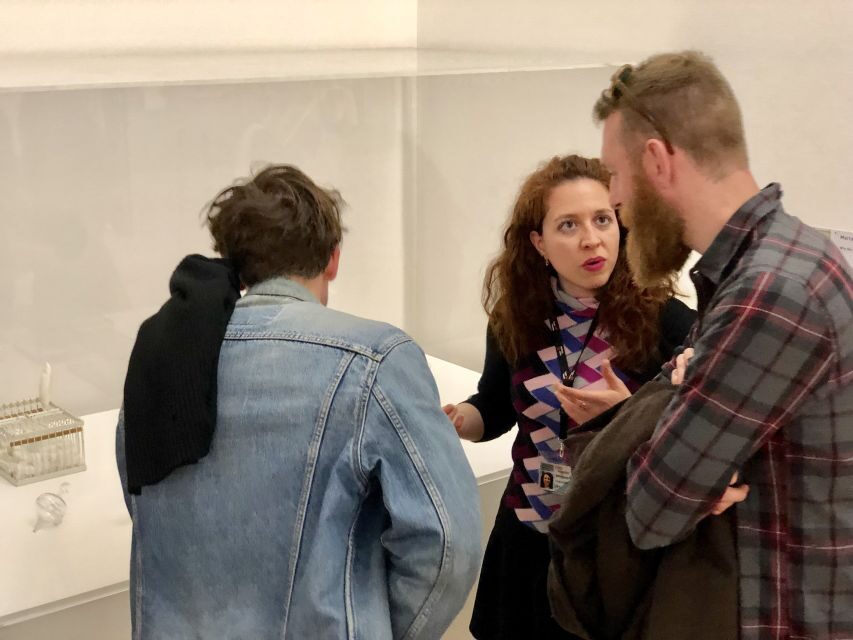
The National Archives can feel a bit like a museum maze when you arrive on your own. You’re surrounded by extraordinary papers, but without a route and context, your brain gets overloaded fast. This is why I like this tour format: it’s built around the documents that best explain how the U.S. government’s ideas—and its arguments—took shape.
A good guide also helps you “read” the building itself. You’re shown where to look and what details matter. You learn what each document is doing in the larger story, not just when it was written. That means when you stand in front of the Declaration of Independence, the Constitution, the Bill of Rights, or older sources like the Magna Carta of 1297, you understand what you’re seeing and why it mattered.
And because the group stays small, you can actually ask questions. If you’re the type who wants to know why a certain clause exists, or how a later rights struggle connects to earlier promises, this tour style fits you.
You can also read our reviews of more private tours in Washington Dc



Skip-the-line timing and the “2-hour walking tour” reality
This experience runs for about 2 hours, and it’s a walking route through major National Archives spaces. That matters because the value here is efficiency. You’re not trying to see everything the building offers—you’re seeing the highlights that explain the U.S. founding and the rights story.
The tour also includes skip the line through a separate entrance, so you start sooner and keep your momentum. You’ll still go through security rules, and large bags are not permitted. A handbag or a small thin backpack is your friend here.
One more practical note: some areas are quiet or have restricted talking rules. Your guide will tell you how to act in those rooms before you enter, which keeps the visit smooth.
Rotunda focus: the Declaration and Constitution in front of the originals
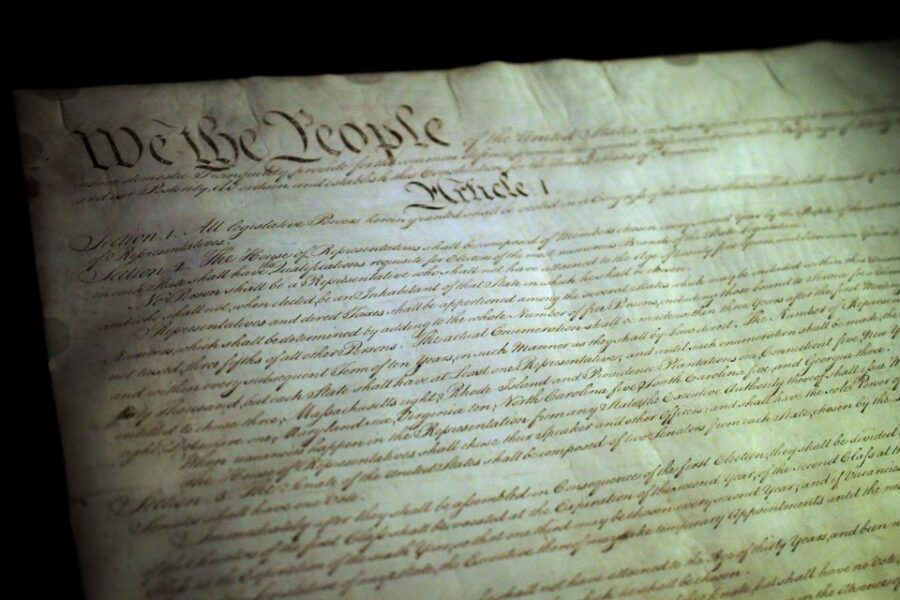
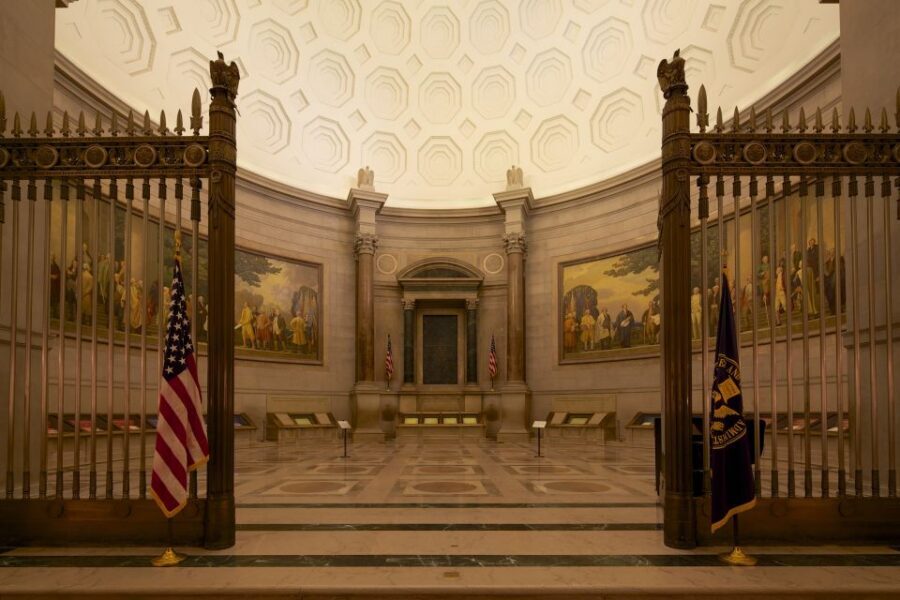
The tour’s anchor moment is the Rotunda. This is where you stand where the famous documents are displayed—specifically the Declaration of Independence and the Constitution—and you get to see them as preserved originals rather than reproduced pages.
What I like about this stop is the immediate payoff. Even if you only studied these documents in school, being in the room changes the scale. You start noticing details you’d miss in a textbook: the formality, the official tone, and the sense that this is the start of a new political experiment.
Guides also bring the room to life with context and background. One guide, Bess, was praised for helping groups get into the Rotunda first so you can see the Declaration and Constitution with less interruption. That’s the kind of practical advantage that makes skip-the-line matter.
If you want the shortest path to the most iconic documents—without spending your entire day guessing where to go—this Rotunda start is the reason to book.
Bill of Rights and Federalist Papers: Hamilton’s signatures up close
Next comes a tight cluster of documents tied directly to how the new government explained itself and protected rights.
You’ll see the Bill of Rights and the Federalist Papers, including signatures associated with world-famous statesmen like Alexander Hamilton. This isn’t just a “look but don’t touch” experience. Your guide points out what these documents were trying to settle and how the arguments behind them still shape debates today.
Here’s what makes this stop worth your time: the tour helps connect writing to power. You learn what rights were being protected (and what arguments were being made), instead of treating the Bill of Rights like a static list. When you can connect the wording to the political tension of the era, the documents stop being trivia and start being tools in a real debate.
Public Vaults letters: Washington and JFK in the same emotional lane
The Public Vaults section shifts your perspective. Instead of only focusing on founding-era papers, you get letters written by presidents, including George Washington and John F. Kennedy.
This is a smart change of pace. The U.S. story isn’t just a single founding moment. It keeps evolving through decisions, correspondence, and public leadership. Seeing letters by presidents helps you understand how official power and personal communication overlap—how policies are shaped, explained, and defended.
If you’re the kind of person who likes “how it really worked” stories, this is your stop. It’s also a good time to ask questions about process and context, because the guide’s job here is to make connections between documents you might otherwise treat as separate exhibits.
You can also read our reviews of more tours and experiences in Washington Dc


Emancipation Proclamation and the Rosa Parks citation: rights don’t arrive overnight
Then the tour moves into a darker, more honest part of the story. You’ll see the Emancipation Proclamation, a 19th-century document linked to the end of slavery, and you’ll also look at a citation issued to civil rights activist Rosa Parks.
What I like about pairing these items on one route is that it challenges the common idea that progress was clean and quick. Standing in front of these papers gives you a clear visual lesson: rights struggles stretched across eras. The Emancipation Proclamation matters, and the Rosa Parks citation matters too—because the fight didn’t end with one document.
This stop is often where tours feel most emotional, and that matches the guide style this program seems to lean into. Donna and Tao were praised for storytelling that created emotional connections. If you’re expecting something dry, this part can surprise you in the best way.
Rubenstein Gallery: Magna Carta of 1297 and the roots of rights
If you think the National Archives is only about U.S. documents, the Rubenstein Gallery changes that. You’ll examine older sources like the Magna Carta of 1297.
This is one of the most interesting parts of the itinerary because it reframes the U.S. story. It’s not just “America invented rights on its own.” It’s more like: legal and political ideas traveled, adapted, and echoed across time.
The guide helps you make the connection without turning it into a history lecture. You’ll understand why the Magna Carta belongs in the conversation about legal limits and rights—so when you finish, you see the through-line instead of a pile of unrelated documents.
The guide factor: what you’re really paying for
At $111 per person for roughly 2 hours, you’re paying for more than admission access. The real value is the human part: a guide who can explain what you’re looking at, keep you moving, and answer questions.
The standout praise across this program is consistency in delivery—guides who are engaging, organized, and easy to follow. People mentioned guides like Meghan, Ryan, Maribeth, Brenda, Donna, and Richard as being structured and friendly. One parent specifically valued the tour with a 10-year-old, which tells me the pacing and explanations can work for a wide age range.
I also like that the guides bring surprises. The tour description emphasizes background stories and surprising details, plus the guide’s own favorite anecdotes and tips as you go. That’s where the tour becomes more than a checklist.
You’ll also get a heads-up before entering quiet or restricted areas so you know when to keep things low-key. That small thing can make the difference between a stressful visit and a calm one.
Price and value: when $111 makes sense
Let’s be practical. For $111, you’re buying three big things:
- Skip-the-line entry, which saves time at a high-demand site.
- A professional guide for about 2 hours, which is where the context comes from.
- A small-group setup (semi-private max 8), which makes questions realistic.
If you’re the type who enjoys museums but hates planning, this tour can be a smart buy. The National Archives holds over half a million artifacts, so a guide essentially gives you a curated path focused on the documents that best build the story.
On the other hand, if you already have a tight self-guided plan and you’re comfortable reading interpretive panels on your own, you might not need a guided route. This tour is best when you want the documents explained in plain language and you want help choosing what to look at first.
Who should book this semi-private National Archives experience?
I’d book this if you:
- want a high-impact route through the Rotunda, Public Vaults, and key galleries in just 2 hours
- care about how founding documents connect to later rights struggles
- enjoy asking questions and getting direct answers
- prefer a small group over a crowd scene
It may not be ideal if you need wheelchair accessibility, since the experience is listed as not suitable for wheelchair users. At the same time, the booking notes say to advise if you require wheelchair accessible tour, so if accessibility is a priority for you, I’d confirm options before you pay.
Also, pack smart: no large bags, but a handbag or small thin backpack is fine, and you’ll need a valid photo ID (passport or ID card).
Should you book? My quick decision guide
Yes, I think you should book if you want the National Archives highlights with a guide who can turn the papers into a story you understand. The pricing feels more reasonable when you factor in the separate entrance, the small-group cap, and the fact that your time is limited to two hours.
Skip this if you’re mainly browsing at your own pace and you don’t want any structure. For document-focused visitors who like context, this is one of the more efficient ways to see the most important items without getting lost in the scale of the archives.
FAQ
How long is the National Archives skip-the-line semi-private tour?
It lasts about 2 hours, and the exact start times depend on availability.
Does this tour include skip-the-line access?
Yes. You go through a separate entrance to reduce waiting.
What group size should I expect?
For the semi-private option, the group is capped at 8 people maximum. Private options are also available.
What tour stops are included in the highlights route?
You’ll visit the Rotunda, see the Bill of Rights and Federalist Papers, explore the Public Vaults exhibits, view the Emancipation Proclamation, look at a Rosa Parks citation, and visit the Rubenstein Gallery to examine the Magna Carta of 1297.
Do I need to bring a photo ID?
Yes. You must bring a valid photo ID (passport or ID card).
Are large bags allowed inside the National Archives?
No. Luggage or large bags are not permitted through security. You can bring a handbag or a small thin backpack.
Is the tour wheelchair accessible?
The tour is listed as not suitable for wheelchair users. If you need wheelchair accessibility, the booking notes ask you to advise when reserving, so you’ll want to confirm your best option.
What is included in the price?
Included items are a professional guide, a 2-hour walking tour, and a private or small group experience of no more than 8 people.
Are food, drinks, and temporary exhibits included?
No. Food or drink is not included, and temporary exhibits are not included.
What if the tour doesn’t meet the minimum number of participants?
There is a minimum of 2 people required for the tour to operate. If that minimum isn’t met, you’ll be offered an alternative date or a full refund.