REVIEW · WALKING TOURS
Private White House Neighborhood Walking Tour
Book on Viator →Operated by Pintours · Bookable on Viator
Power looks different at street level. This app-tailored White House neighborhood walk lets you pause, skip stops, and follow Peter Smeallie’s storytelling without being stuck on a crowded group rhythm.
I love that the route blends official buildings with the places where power felt personal—everything from the Eisenhower Executive Office Building to Blair House and St. John’s. And several stops include admission tickets, so you’re not only looking from the sidewalk.
One thing to plan for: this is a neighborhood walk, so you should expect to see the White House area from outside, and on some days security restrictions can affect how the area is accessible.
In This Review
- Key things to know before you walk
- Why Lafayette Square feels like Washington’s front porch
- Starting at the Andrew Jackson Statue: get your bearings fast
- The north-side White House view you’ll actually enjoy
- Eisenhower Executive Office Building: from 1888 offices to a modern power center
- Renwick Gallery: James Renwick’s red-brick signature in 20 minutes
- Blair House: where Truman stayed while the White House was renovated
- Decatur House: brick townhouse, big political and social energy
- St. John’s Episcopal Church: presidents worshipped here since 1815
- Andrew Jackson statue again? It’s a point of reference, not a repeat
- United States Department of the Treasury: ending with a Hamilton-style nod
- How the app makes a private tour feel genuinely flexible
- Price and value: what $20 buys in Washington DC
- Who should book this White House neighborhood tour
- Should you book this tour
- FAQ
- How long is the Private White House Neighborhood Walking Tour?
- Where does the tour start?
- Where does the tour end?
- Is this a private tour?
- Are tickets included for the stops?
- Can I skip stops or pause during the tour?
- Can I choose different pacing because it is app-based?
- What days and times is the tour offered?
- Is there a refund if I cancel?
- Are service animals allowed?
Key things to know before you walk

- App controls your pace with pause, stop-by-stop info, and the option to skip anything you do not want.
- Peter Smeallie designed the experience, giving you a guided feel without needing to keep up with a big group.
- Included admission tickets at multiple stops mean more than street views.
- Historic lineup around Lafayette Square connects presidents, departments, and private residences in one route.
- Private group format means it is just your party, not a crowd shuffle.
Why Lafayette Square feels like Washington’s front porch
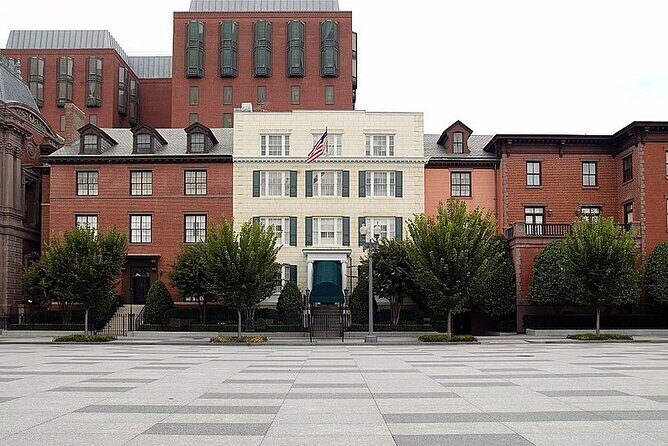
Lafayette Square sits right next to the White House, and it has always been more than a pretty lawn. It’s a kind of geographic shortcut: government offices, presidential residences-in-waiting, and major public sites all cluster close together.
That closeness is exactly why this walk works. You see how decisions and daily life braided together in Washington—who lived nearby, where officials worked, and where presidents went to worship.
If you like your sightseeing with context—names, dates, and why a building matters—this tour’s structure helps. Instead of one long, wandering stroll, you get stop-by-stop framing you can control with the app.
You can also read our reviews of more walking tours in Washington DC



Starting at the Andrew Jackson Statue: get your bearings fast
You begin at the General Andrew Jackson Statue at Washington, DC 20005. It’s a strong visual anchor, and it also sets the tone: this neighborhood is built around symbols.
From there, you move toward the White House area from the north side. The first moment is the ceremonial entrance viewpoint, which is a good way to orient yourself before you start spotting the surrounding architecture that tells the real story.
Wear shoes you can walk in. This is timed as an approx 2 to 4 hours experience, and you’ll cover ground while keeping an eye out for the next stop.
The north-side White House view you’ll actually enjoy
You cannot treat this as a go inside the White House day. This experience is about the White House neighborhood—the vantage points, the surrounding institutions, and what you can learn while staying outside.
That’s not a dealbreaker, though. The best part is that the route does not stop at the photo spot. It keeps pulling you outward to the other key buildings that shape what the White House area has meant over time.
If you are the type who gets bored when a tour repeats the same handful of pictures, you’ll like this approach. You’ll keep moving to places with their own identities.
Eisenhower Executive Office Building: from 1888 offices to a modern power center
Next up is the Eisenhower Executive Office Building, described as rising like a tiered wedding cake to the west of the White House. That quick visual comparison matters because it helps you spot it instantly as you’re walking.
This building has deep roots. It was constructed in 1888 by Alfred Mullett, and it originally housed the State, Navy, and War Departments. Even if you only catch exterior views, the story connects how Washington departments formed the backbone of national leadership.
This stop is listed at about 20 minutes, with an admission ticket included. That means you can get more than a glance—you can spend time seeing what is inside during your allotted window.
Value for you: this is where the tour shifts from famous landmark mode into real-government mode. It helps you understand that the White House is just one piece of a larger machine.
Renwick Gallery: James Renwick’s red-brick signature in 20 minutes
The Renwick Gallery is where you see how architectural names carry through Washington. The tour points you to the red-brick building completed in 1874, and it credits James Renwick—designer of St. Patrick’s Cathedral and the Smithsonian Castle on the National Mall.
That designer connection is more than trivia. It gives you a way to look at DC buildings as a set of repeating design ideas, not a random collection of sights.
This stop also runs about 20 minutes with admission included. If you’re the kind of person who likes to pause and look closely, the app flexibility helps you linger at details rather than rushing.
Possible drawback: because the tour structure moves through several stops, you’ll want to pace yourself. If you slow down too much at one site, the later stops may feel shorter than you hoped—though you can usually extend your time if you want.
You can also read our reviews of more private tours in Washington DC






Blair House: where Truman stayed while the White House was renovated
At Blair House, the tour moves from grand symbolism to a very human angle. From 1948 to 1952, Blair House served as a temporary residence for Harry S. Truman while the White House was under renovation.
That one fact changes how you view the neighborhood. You start thinking about presidential life as flexible and practical, not just ceremonial.
This stop is listed at about 20 minutes with admission included. Use that time to connect the building’s role to how the White House itself functioned as a living workspace—even when it was being fixed.
Value for you: it’s a great stop if you like presidential history that does not feel stuck in one famous photograph. This is the behind-the-scenes part.
Decatur House: brick townhouse, big political and social energy
The Decatur House is described as a modest brick townhouse on the corner that played a major role in political and social Washington. It’s named after Stephen Decatur, which gives you a clue that this was tied to notable public life well beyond one administration.
Even without turning this into a research project, the stop’s framing helps. You stop seeing Washington as only government buildings and monuments. You start noticing that politics also lived in townhouses, hosted conversations, and supported the relationships behind decisions.
This stop is shorter, about 15 minutes, with admission included. That shorter window works well because it keeps you moving while still giving you a meaningful story.
Practical note: if you like interiors, this is one to pay attention to. Short stops work best when you choose what you want to see fast.
St. John’s Episcopal Church: presidents worshipped here since 1815
Then you arrive at St. John’s Episcopal Church, with an important anchor date: it has been in place since 1815, and every U.S. chief executive has worshipped at St. John’s.
That sentence is the whole reason this stop matters. It turns a church visit into a national thread—presidents and faith, tradition and public life, all tied to one building.
This stop is listed at about 20 minutes with admission included. In that time, you can take in the setting and also let the statement about presidential worship sink in.
Value for you: it’s a breather stop that gives the tour emotional texture. Not every historical walk has a spiritual throughline, and this one does.
Andrew Jackson statue again? It’s a point of reference, not a repeat
The Andrew Jackson Statue appears as the tour’s meeting point and also as a stop anchored in the center of Lafayette Square. The tour framing emphasizes it as a key visual marker that helps you navigate the area.
Seeing it more than once might sound redundant, but it actually helps your memory. When you get back to that same focal point later, you can better understand where you’ve been and how the route loops around the square.
Think of it as your walking compass. It keeps the tour from feeling like a random lineup of buildings.
United States Department of the Treasury: ending with a Hamilton-style nod
The tour finishes at the United States Department of the Treasury. The description includes a Hamilton allusion, which is a fun way to connect modern pop-culture curiosity to the government department that handles the money side of national life.
This stop is listed at about 20 minutes with admission included. As a final scene, it gives you a tidy wrap: you start at the White House area, move through presidential-adjacent spaces, and then land at a department that shapes everything on the home stretch.
Value for you: the best tours don’t just end. They tie the last stop back to what you’ve been learning. Here, the connection is financial power and national policy—an ending that fits.
How the app makes a private tour feel genuinely flexible
One of the smartest features here is the app. The tour is described as tailored to you with the app, meaning you can pause, check locations as long as you want, and skip a stop you do not like.
That matters for real sightseeing. You might want extra time at a building that grabs you, or you might want to move faster past something that does not. Either way, the app format keeps control in your hands.
This is also a private tour, so only your group participates. That reduces the usual stress of trying to herd yourself past other people at tight spots.
Two practical tips if you’re using the app:
- Give yourself a little buffer before you start, so you are not trying to solve login issues mid-walk.
- If an area looks restricted, follow what’s happening on the ground and adjust. The app can help you keep your place and continue at a safe pace.
Price and value: what $20 buys in Washington DC
For a $20 price tag and a 2 to 4 hour walking format, the value is in two places: included admission tickets and time-saving guidance.
In DC, paying for admission separately can add up quickly. Since multiple stops list admission tickets included, you are getting more out of your money than you would with a purely exterior photo walk.
The other value is structure. Instead of walking around Lafayette Square with nothing but your own instincts, you get stop-by-stop context designed by Peter Smeallie. And because you can pause and move at your own speed, you’re not paying for a forced march.
Where this might not be the best fit: if you strongly expect a chance to go inside the White House itself, you may feel underwhelmed. This tour is set up for the neighborhood and the surrounding sites, not the interior of the White House.
Who should book this White House neighborhood tour
This tour is a good match if you:
- want a private walking experience in a famously crowded area
- like history tied to specific buildings, not just vague generalities
- enjoy using an app during sightseeing to control pace and attention
- want a balanced mix of government offices and “regular people” spaces tied to presidential life
It also works well if you have limited time and want a focused route. You can fit it into a morning or afternoon, and you can extend if you want more time per stop.
If you’re sensitive to changes caused by security or closures, you should be flexible on the day. Washington can be unpredictable, and the best approach is to plan for routes that can adapt.
Should you book this tour
Yes, I’d book it if your goal is a structured, story-driven walk around the White House neighborhood and Lafayette Square, with included admission tickets and the freedom to pause or skip.
I would skip—or at least adjust expectations—if you want to count on unrestricted access to every possible view line or if you specifically came for an inside-the-White House visit. This experience is designed for neighborhood sights and nearby sites with their own admissions, not for guaranteed interior access to the White House itself.
If you go in with flexible expectations and comfortable shoes, you’ll come away with a much clearer picture of how this pocket of DC connects presidential life, government departments, and public institutions.
FAQ
How long is the Private White House Neighborhood Walking Tour?
The duration is flexible, listed as approximately 2 to 4 hours.
Where does the tour start?
The meeting point is the General Andrew Jackson Statue in Washington, DC 20005.
Where does the tour end?
The activity ends back at the meeting point.
Is this a private tour?
Yes. Only your group participates.
Are tickets included for the stops?
Admission tickets are included for the stops listed in the tour plan.
Can I skip stops or pause during the tour?
Yes. The tour is tailored with the app, and you can pause, check out locations as long as you want, and skip stops you do not like.
Can I choose different pacing because it is app-based?
Yes. The app format is built for flexible pacing, and the tour duration can be extended if you want to spend more time per attraction.
What days and times is the tour offered?
Opening hours are listed as Monday through Sunday from 8:00 AM to 9:00 PM, for the range 02/28/2024 through 06/17/2026.
Is there a refund if I cancel?
Free cancellation is available. You can cancel up to 24 hours in advance for a full refund.
Are service animals allowed?
Yes, service animals are allowed, and most travelers can participate.
Want me to tailor a short “best time of day to go” plan for this route (morning vs afternoon light, crowd feel, and how to schedule it with other nearby stops)?