REVIEW · NATIONAL MALL NIGHT TOURS
Pedicab Sightseeing Tour on the National Mall
Book on Viator →Operated by Wheel The People Pedicab Tours · Bookable on Viator
A National Mall pedicab tour beats the usual shuffle. You’ll cruise past some of Washington DC’s biggest names with a DC-licensed guide and learn what makes each spot tick, from design choices to symbolism, all while keeping your legs un-busy. I loved the on-demand stops and the way the guide (Chris, among others) gives you clear, specific context without turning it into a lecture.
Two things I especially like: you can get close enough for real photo moments, and you set your own rhythm with flexible viewing—ride up, then step out briefly when it helps. A private setup means your group moves together and gets personalized pacing instead of feeling welded to a crowd.
One thing to consider: the whole experience is quick. You’re spending about five minutes at each stop, so if you want long, stop-and-stare time (or time for nearby museums), you’ll need to add extra hours.
In This Review
- Key highlights worth planning around
- Why a National Mall Pedicab Tour Works (and How You’ll Use It)
- Price and Value: What You’re Actually Paying For
- Your Route in Plain Terms: Eight Stops, Five Minutes Each
- Stop 1: White House South Front—Two Ways to View It
- Stop 2: Washington Monument—Design, Materials, and the Skyline Debate
- Stop 3: National World War II Memorial—A Total War Story You Can See
- Stop 4: Martin Luther King, Jr. Memorial—Relief Details and the Tidal Basin Setting
- Stop 5: Franklin Delano Roosevelt Memorial—Four Terms, One Human-Scale Visit
- Stop 6: Lincoln Memorial—Why It’s at the River’s Edge
- Stop 7: Vietnam Veterans Memorial—Minimal Forms, Maximum Scale
- Stop 8: Albert Einstein Memorial—Slightly Off the Usual Path
- Guide Quality and the Private-Tour Difference
- Getting Around: Timing, Weather, and How to Prepare
- Accessibility That’s Built for Real Use
- So…Should You Book This Pedicab Tour?
- FAQ
- How long is the pedicab sightseeing tour on the National Mall?
- Is this a private tour?
- What’s included in the booking?
- Are admission tickets required for the stops?
- Is accessibility support available?
- What happens if the weather is poor or if I cancel?
Key highlights worth planning around

- Private pedicab with a licensed guide that keeps the pace human
- Eight major National Mall stops packed into about 60–65 minutes
- On-demand stops so you can choose distance and time on your feet
- True accessibility options like a folding wheelchair on advance arrangement
- Memorial design lessons (materials, symbolism, and setting) that make the sites click
- A close look without gridlock stress compared with fighting through tour crowds
Why a National Mall Pedicab Tour Works (and How You’ll Use It)
On the National Mall, walking can add up fast, especially in warm weather or if you’re visiting with someone who tires easily. This pedicab format is built for the “see it, understand it, don’t burn out” goal. You’re not treating DC like a marathon; you’re treating it like a guided route with smart breaks.
I also like that the tour is private. That matters more than people think. When it’s just your group, the guide can slow down, offer options, and adjust when you want to linger a little longer near a particular memorial.
The other win is pacing. Each stop is short, but the ride between them keeps momentum. You get that fast sense of DC’s layout while still learning the meaning behind what you’re seeing—design elements you’d miss if you only skimmed from a distance.
You can also read our reviews of more shopping tours in Washington DC



Price and Value: What You’re Actually Paying For

The cost is $121 per person for a tour lasting about 1 hour to 1 hour 5 minutes. That’s not pocket change, so here’s the value logic I’d use to decide.
You’re paying for three things:
- A DC-licensed official tour guide with 15 years of experience
- One pedicab conveyance included in the booking
- A route designed to hit key landmarks with time-efficient stop lengths
If you’re visiting for the first time and you want the “big hits” on the Mall, this can be a high-return choice. The alternative is often walking and getting a less structured view—especially if mobility is limited, or if you’re trying to keep up with a busy sightseeing schedule.
If you’re the type who enjoys wandering without guidance for hours, you might feel rushed. But if you want a guided, efficient circuit that still feels personal, the price starts to make sense quickly.
Your Route in Plain Terms: Eight Stops, Five Minutes Each
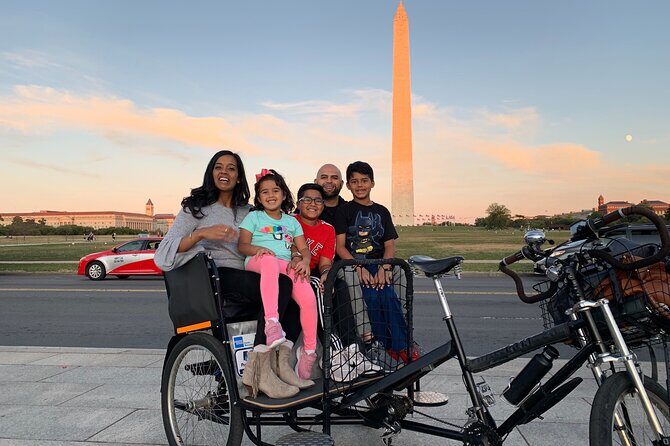
This tour is set up like a guided circuit across major Mall landmarks. You’ll hit:
- White House
- Washington Monument
- National World War II Memorial
- Martin Luther King, Jr. Memorial
- Franklin Delano Roosevelt Memorial
- Lincoln Memorial
- Vietnam Veterans Memorial
- Albert Einstein Memorial
Even though it’s brief at each stop, the guide’s goal is to give you a few concrete takeaways per location—enough to make your photos more meaningful and your next conversation in DC less clueless.
Because you get on-demand stops, the pedicab is not just transportation. It’s part of the experience: the distance you choose, when you step out, and what you look at are all yours to manage with the guide.
Stop 1: White House South Front—Two Ways to View It

At the White House, you’ll focus on the south front views. The tour gives you two options: view from the pedicab or step out and walk a bit so you can get a different perspective. That choice is practical. Sometimes photos are better at a certain distance; sometimes you want to be closer to notice details.
The guide also points out things both seen and unseen—translation: don’t assume you’ll automatically notice key architectural cues from street-level distance. A short stop works here because the goal is not to “do” the building; it’s to orient yourself and understand what you’re looking at.
Time at this stop is about five minutes, so come ready to look. If you get distracted checking your map or phone settings, you’ll lose the payoff.
Stop 2: Washington Monument—Design, Materials, and the Skyline Debate

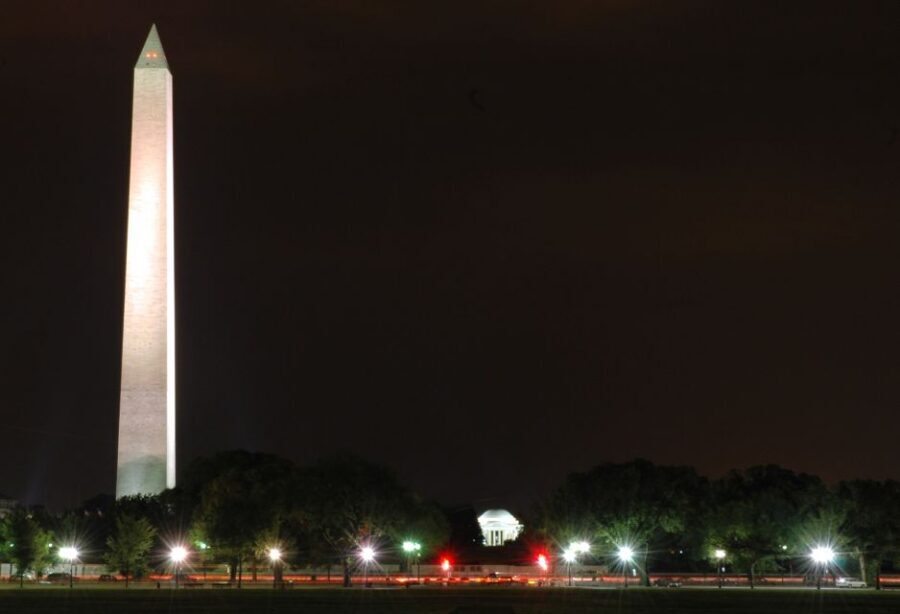
Next up is Washington Monument, where the guide talks about its design and how it changed the feel of the downtown skyline. You’ll also get context on controversial aspects of its history, plus a look at building materials and construction techniques.
I like this stop because it gives you more than trivia. A lot of monuments get reduced to a silhouette. Here, you learn why it looks the way it does and what went into making it happen.
It’s also a good “breather” stop in the route rhythm. Five minutes is enough time to absorb the key points without dragging you into a long wait.






Stop 3: National World War II Memorial—A Total War Story You Can See

The National World War II Memorial stop is all about the viewshed—how the setting works—and the idea of contributions from Americans across age groups and backgrounds. This memorial hits harder when you understand it’s built around a total war effort, not just the battlefield.
This is a good stop for groups with different interests. Even if someone isn’t into military history, the guide’s framing helps you read the memorial’s meaning from where you are.
Because the time is short, the guide’s job is to pick the most important threads. If you want the full story, you’ll still be able to do that on your own afterward—but you’ll start from a stronger foundation.
Stop 4: Martin Luther King, Jr. Memorial—Relief Details and the Tidal Basin Setting

At the Martin Luther King, Jr. Memorial, you’ll get a new perspective on the design. Expect discussion of the relief pediment of MLK and how the setting on the Tidal Basin affects how you experience the space.
I found this stop especially useful because memorial design can be hard to interpret when you only have a quick look. The guide helps you spot the components that make the artwork and layout feel intentional, not random.
Five minutes means you won’t get a full art critique, but you will leave knowing what to look for on your next visit—like where your eyes should go first.
Stop 5: Franklin Delano Roosevelt Memorial—Four Terms, One Human-Scale Visit
The FDR Memorial visit aims for a more human-scale approach. You’ll see Roosevelt and others commemorated there, and the guide helps you think about different rooms for his terms of office—four in total.
This stop also emphasizes water as a symbolic design element. That’s the kind of detail that matters because it turns a “pretty waterfront memorial” into a meaning-focused place.
One nice part of a pedicab tour is you can keep your attention on the memorial instead of constantly repositioning yourself across large open areas. The route rhythm makes it feel easier to stay engaged.
Stop 6: Lincoln Memorial—Why It’s at the River’s Edge
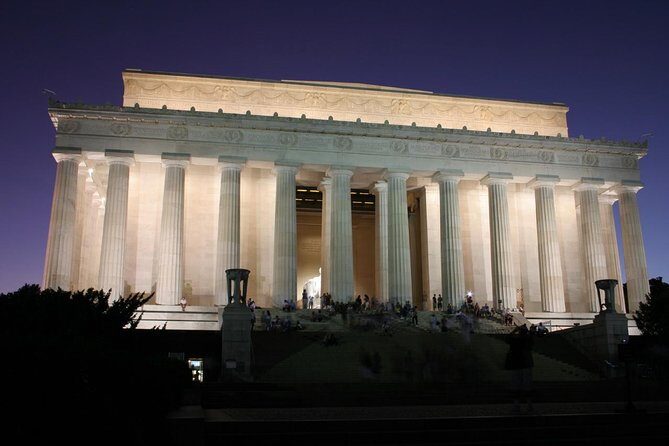
This is the most visited memorial on the Mall, and the guide helps you understand why it’s placed where it is, including the river-edge setting. You’ll also get the idea of the Lincoln Memorial’s design as a metaphor for preserving the union, plus how the grounds design supports the message and connects to historic events.
Then you get an opportunity to visit with the seated statue of Lincoln. That’s a major “moment” part of the stop—standing near Lincoln, seeing the scale, and feeling how the space is arranged for reflection.
This is also a spot where you’ll enjoy the pedicab format. The route gets you there without treating the Mall like a long obstacle course. You arrive ready to focus, not already exhausted from walking.
Stop 7: Vietnam Veterans Memorial—Minimal Forms, Maximum Scale
The Vietnam Veterans Memorial stop focuses on close-up experience with the memorial’s abstract and minimalist design. You’ll also get a different perspective on the scale of service and sacrifice—how the design forces you to confront the sheer weight of what the memorial represents.
Even in a short visit, this kind of guidance can change what you take away. Instead of just reading names or taking photos, you understand how the design choices communicate intensity and loss.
Five minutes is enough to feel the impact if you let the guide steer the first impression. If you rush through, the symbolism won’t have time to land.
Stop 8: Albert Einstein Memorial—Slightly Off the Usual Path
The final stop is the Albert Einstein Memorial. You’ll view and be able to visit Einstein, who sits just off the well-worn path on Constitution Avenue near the National Academy of Sciences.
I like finishing with this because it feels like DC rewards your attention. The Mall can dominate your whole mental map, but ending at a slightly less obvious site helps you feel like you uncovered something, even though it’s still a major landmark.
The guide’s framing makes it easier to find the right vantage points and notice how the memorial sits in its surroundings.
Guide Quality and the Private-Tour Difference
This tour is run by Wheel The People Pedicab Tours. It uses Washington DC–licensed official tour guides with 15 years of experience. In practice, that means you’re not getting a generic “here’s a famous building” walk-through. You get targeted explanations that relate directly to what you’re seeing.
It also helps that the tour is private. Your group is the only group that rides that day on the route, and your guide can coordinate pacing to your needs. One review highlight I really took seriously: a guide named Chris brings a wheelchair if you plan ahead. That’s not just a nice detail; it’s the difference between “we’ll try” and “it’s handled.”
Getting Around: Timing, Weather, and How to Prepare
The experience runs about 1 hour to 1 hour 5 minutes and you’ll spend roughly five minutes per stop. That schedule is short enough to keep things moving, long enough to learn a few key ideas if you stay present.
It also requires good weather. If conditions are poor, the tour can be rescheduled or you’ll receive a full refund. That’s a fair deal because the whole concept relies on outdoor viewing and quick repositioning.
Quick prep tips that help:
- Wear comfortable shoes or use the wheelchair option in advance if it fits your group
- Bring a hat or water if you expect sun
- Have your phone ready for the mobile ticket
If you do these things, you’ll spend less time fiddling and more time getting meaning from each stop.
Accessibility That’s Built for Real Use
A standout part of this tour is that accessibility isn’t treated like an afterthought. The booking includes complimentary no charge use of a folding wheelchair with advance arrangement. The tour notes that folding rollators and walkers are welcome, and oxygen tanks are welcome as well.
There’s also mention of steps and handrail for easier boarding, which matters for safety and comfort when you’re transferring into the pedicab.
If you’re traveling with mobility needs, this kind of support is a huge confidence boost. You’re not improvising. You’re showing up with a plan that’s already built into the service.
And yes, companion dogs and service animals are welcome. That’s helpful for anyone who depends on an animal for health and stability.
So…Should You Book This Pedicab Tour?
I’d book this if you want:
- A guided hit list of major National Mall monuments and memorials
- A pace that works for short walking distances
- Design and symbolism explanations that make photos and memories feel smarter
- A private experience where your group sets the rhythm
I wouldn’t book it as your only plan if you’re hoping for long stays at every stop, museum time, or deep study at one location. This tour is efficient by design. Think of it as a guided “first pass” that gives you a foundation—then you can go back later for the longer moments you care about most.
FAQ
How long is the pedicab sightseeing tour on the National Mall?
It lasts about 1 hour to 1 hour 5 minutes.
Is this a private tour?
Yes. It’s a private tour/activity, and only your group will participate.
What’s included in the booking?
The booking includes one pedicab conveyance, a Washington DC–licensed official tour guide with 15 years experience, complimentary no charge use of a folding wheelchair with advance arrangement, and liability insurance coverage. Service animals are also welcome.
Are admission tickets required for the stops?
The itinerary indicates admission is free at the listed stops.
Is accessibility support available?
Yes. Folding rollators and walkers are welcome. Oxygen tanks are welcome. A folding wheelchair is available with advance arrangement, and there are steps and handrail for easier boarding.
What happens if the weather is poor or if I cancel?
The experience requires good weather. If it’s canceled due to poor weather, you’ll be offered a different date or a full refund. You can cancel up to 24 hours in advance for a full refund; within 24 hours there’s no refund.