REVIEW · 2-HOUR EXPERIENCES
2 Hour Guided Bike Tour of Capitol Hill
Book on Viator →Operated by Unlimited Biking formerly Bike and Roll DC · Bookable on Viator
Capitol Hill feels different when you pedal. This 2-hour guided bike tour strings together major landmarks you’d otherwise hop between by car, starting at the White House and rolling through places like the Supreme Court and the National Archives. I really like the small-group feel, which keeps the ride from turning into a blur, and you get real explanations instead of just looking and guessing. One drawback to know up front: each stop is brief, so you’ll want to be ready to move on quickly.
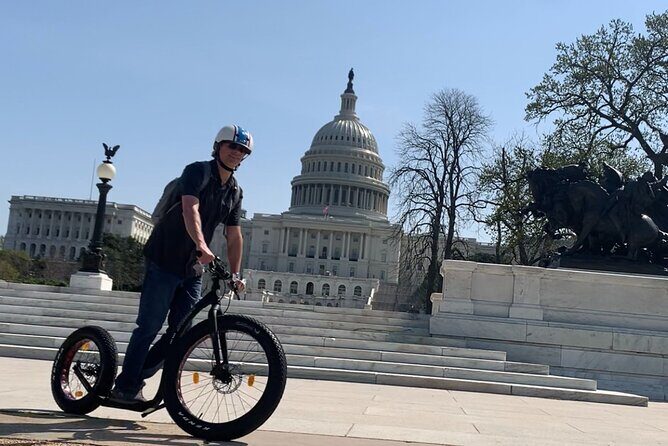
You’ll also appreciate the practical setup. Bikes and helmets are provided, and you can choose regular or electric to match your comfort level. In a city like Washington, that matters because the joy is the route itself—staying powered up while you cover a lot of ground without tiring yourself out. If your idea of a perfect sightseeing day is lingering for long stretches, this fast pace may not be your style.
In This Review
- Key things to know before you ride
- Why this 2-hour Capitol Hill ride is a smart way to see DC
- Bikes, helmets, and electric options (the comfort side of DC)
- How the route stays manageable on a busy day
- Stop-by-stop: what you’ll see from the White House to the FBI HQ
- Stop 1: White House
- Stop 2: Library of Congress
- Stop 3: Supreme Court
- Stop 4: U.S. Capitol
- Stop 5: Dwight D. Eisenhower Memorial
- Stop 6: National World War I Memorial
- Stop 7: Washington Monument
- Stop 8: Ulysses S. Grant Memorial
- Stop 9: The National Archives Museum
- Stop 10: FBI Headquarters
- What you actually get out of the guidance (not just photos)
- Price and value: is $55 a good deal for two hours in DC?
- When to book: mornings, afternoons, and timing your day
- Who this tour fits best (and who might want a different plan)
- Should you book this Capitol Hill bike tour?
- FAQ
- What does the tour include?
- How long is the bike tour?
- Can I choose an electric bike?
- Where do I meet for the tour?
- Are there any rider restrictions?
- What is the cancellation policy?
Key things to know before you ride

- Small groups (up to 15) help you keep up and get questions answered.
- Regular or electric bikes let you choose the effort level.
- Helmets and bikes are included, plus a bicycle bag.
- Fast, focused stops at big-name DC sites like the Supreme Court and U.S. Capitol.
- A guided route through the National Mall area connections, including the Washington Monument and National Archives.
Why this 2-hour Capitol Hill ride is a smart way to see DC
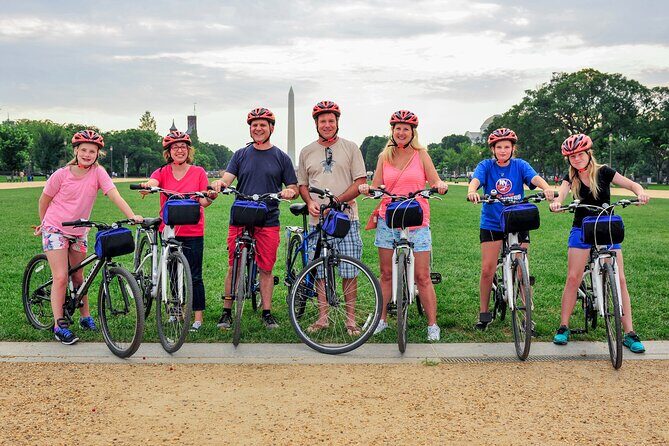
Washington, DC can be exhausting if you try to do it all on foot. This tour is built for speed with purpose: in about 2 hours, you’re guided through a cluster of iconic landmarks that sit close enough together to make biking feel efficient rather than random.
The best part is that the route isn’t just about checklists. You get a guided narrative that helps you understand what you’re looking at while you’re actually there. The tour stops at power centers and historic sites—the kind of places where it’s easy to feel like you’re standing in front of a postcard without knowing the story. Here, the guide gives you the context so your photos come out better too, because you know where to look and what details matter.
For the money—$55 per person—the value comes from three things working together:
- You don’t spend your time coordinating transportation between far-flung sights.
- You get a bike + helmet + guide, which reduces planning stress.
- You cover a lot of the core Capitol Hill/National Mall corridor in one go.
Is it a bargain? It’s priced like a solid guided activity in a major city. I’d call it a good value for anyone who wants a concentrated sightseeing hit without spending your whole day commuting around town.
You can also read our reviews of more cycling tours in Washington DC


Bikes, helmets, and electric options (the comfort side of DC)
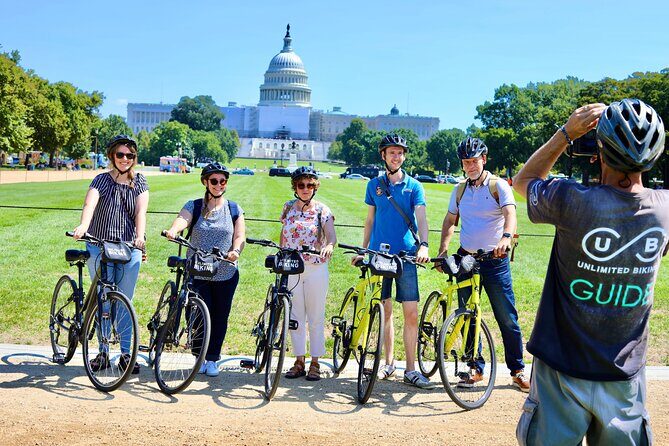
This is the kind of tour that feels easy before you even start because the essentials are handled for you. Bicycles and helmets are provided, and helmets are mandatory. That’s a good thing: it keeps the ride safer and lets you focus on enjoying the sights rather than worrying about gear.
You can also choose regular or electric bicycles. If you’re newer to biking, have limited stamina, or just want to keep the ride fun instead of hard work, the electric option can be a real quality-of-life upgrade. Even if you’re an experienced rider, having the option means you control the effort instead of the day controlling you.
A few practical limits are worth noting:
- Bike weight limit: 275 lbs
- Helmet is required
- Pregnant individuals over 7 months aren’t allowed
Those are the sort of rules that can affect planning, so check them early rather than hoping for an exception.
The tour includes a bicycle bag too, which helps you manage small essentials during the ride. And because the tour ends back at the starting area, you’re not left scrambling for a pickup after you’re done.
How the route stays manageable on a busy day
The tour runs as a small-group experience with a maximum of 15 travelers. That number matters more than it sounds. When the group is larger, you often lose time waiting for people to catch up or taking longer at photo stops. Here, the pacing is tighter, which keeps the experience smooth.
The route also helps you because it’s organized around famous stops rather than random sidestreets. You’re not trying to “figure it out” while riding. The guide keeps the flow, and that means you can relax and enjoy the movement—your brain gets a break from the logistics.
Also, the timing for each stop is short by design. Some places get about 5–10 minutes, while others are closer to 15 minutes. That makes the tour feel like a guided highlight reel. It’s ideal if you want momentum and don’t mind that you’ll get the main idea quickly rather than spending half a day in one location.
Finally, you’ll meet at 801 D St NW, Washington, DC 20004, which is a handy spot because it’s near public transportation. That’s useful if you don’t want to build your whole day around parking.
Stop-by-stop: what you’ll see from the White House to the FBI HQ

This is a “big landmarks in quick succession” route. Here’s what each stop gives you—and what to keep in mind so you don’t feel rushed.
Stop 1: White House
You start at the White House with about 15 minutes. This is the classic anchor of the day, and the tour leans into that sense of scale and relevance. You’ll learn history and pick up interesting inside facts, including the idea that there’s often activity tied to the President’s schedule—things like leaving or landing may be visible.
Why it’s worth it: even if you know the White House as an image, it’s different when you’re there with a guide who points out details that aren’t obvious at first glance.
Possible downside: it’s a high-demand spot, and 15 minutes can feel short if you want long, slow photo sessions.
You can also read our reviews of more guided tours in Washington DC





Stop 2: Library of Congress
Next up is the Library of Congress with about 10 minutes. This stop is tuned for history and photo time. It’s one of those buildings where photos can look impressive, but you get a lot more out of it when you understand what you’re looking at.
Why it’s worth it: it helps you connect DC’s symbols of power to the institutions behind the scenes.
Watch for: you’ll want your camera ready, because the time window is short.
Stop 3: Supreme Court
You’ll get 10 minutes at the Supreme Court, with the focus on where justice is served in the U.S. and why the building matters.
What makes this stop special: it’s not just architecture. The guide’s framing helps you see the Supreme Court as a living part of government, not only a famous exterior.
Tradeoff: you won’t be there long enough to do a deep, slow study. This is an overview done well.
Stop 4: U.S. Capitol
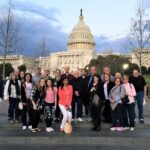
Then you roll to the U.S. Capitol for about 15 minutes. This is the meeting place of the United States Congress and the seat of the legislative branch. You’ll get explanation and photo time.
Why this works: the Capitol is where the whole Capitol Hill story clicks. After seeing the Supreme Court moments earlier, the Capitol makes the branches of government feel more connected.
Potential drawback: it’s the kind of place where people naturally want extra time, so be ready to prioritize a few key photos and then move on.
Stop 5: Dwight D. Eisenhower Memorial
At the Dwight D. Eisenhower Memorial, you’ll only have about 6 minutes. The tour frames it as a newer memorial, built in 2020, located at the base of Capitol Hill.
Why it’s worth a quick stop: it adds variety to the “big three” feeling of DC monuments. You get a modern reference point without losing too much time.
Stop 6: National World War I Memorial
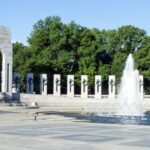
Then comes the National World War I Memorial at Pershing Park for about 10 minutes. It opened in April 2021 and commemorates U.S. Armed Forces in World War I.
What you’ll likely appreciate: the memorial’s placement and timing make it feel like a living part of DC’s ongoing story, not just old stone.
Stop 7: Washington Monument
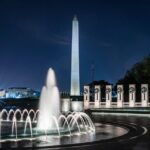
You’ll see the Washington Monument with about 15 minutes. It’s one of the most recognizable structures on the National Mall, built to commemorate George Washington.
Why it’s a highlight: from a bike, the monument’s scale hits you differently than it does in a car. It also gives you a strong visual anchor for the rest of the day.
Stop 8: Ulysses S. Grant Memorial
The Ulysses S. Grant Memorial gets about 5 minutes. It’s the General Grant National Memorial and is the official final resting place of Ulysses S. Grant.
This stop is short, but it matters: you’re not just seeing statues; you’re tying the memorial back to the person’s role in U.S. history.
Stop 9: The National Archives Museum
Next is the National Archives Museum for about 10 minutes. This is where documents shift from text on a screen to something you can stand near. The tour highlights it as home to the American Declaration of Independence, the Constitution, Bill of Rights, Emancipation Proclamation, and more.
Why you should care: these aren’t casual artifacts. This stop turns the abstract idea of American government into real, tangible documents.
Tradeoff: 10 minutes won’t make you a document scholar. It’s a quick orientation that helps you decide if you want to return later.
Stop 10: FBI Headquarters
The final stop is FBI Headquarters for about 10 minutes, framed as one of the nation’s more elusive buildings. You’ll learn history and get additional context as you wrap up.
Why it closes the loop: after seeing the legislative and judicial symbols and the founding documents, the FBI stop adds a modern enforcement and security layer to the government story.
What you actually get out of the guidance (not just photos)

The biggest quality of this tour is that the guide helps you translate landmark visuals into meaning. You’re not just going past famous buildings. You’re getting a quick set of explanations that help you understand:
- what each branch of government does,
- why the symbols on the outside matter,
- and how the founding-era story connects to modern institutions.
Guides like Ryan, Greg, and Joe are mentioned as leading this route, and the common thread is that they’re built for keeping things moving while still making the stops feel worth it for everyone in the group. If you’re bringing kids or teens, this style matters because it keeps attention from wandering.
If your travel style is “give me context so I can explore more later,” this works well. It’s also a great way to get your bearings fast—because you’ll see a lot of Washington DC’s key locations in a short, organized window.
Price and value: is $55 a good deal for two hours in DC?
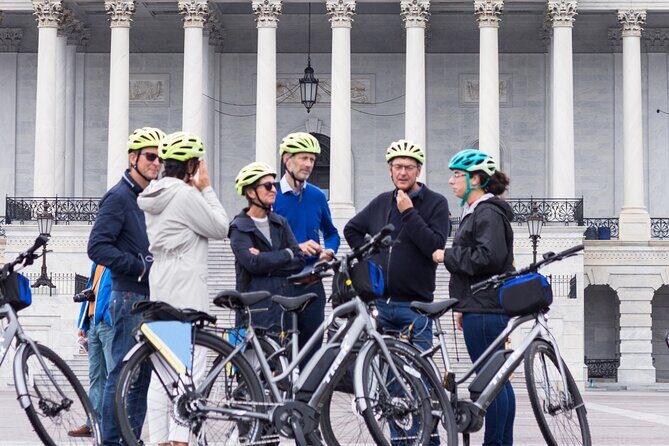
At $55 per person, you’re paying for more than a ride. You’re paying for:
- Bicycle use
- Helmet
- Bicycle bag
- A guide to keep your stops tight and meaningful
- A route that strings major sites together without you needing to plan every turn
The real value shows up when you compare it to a DIY approach. If you were to do this on your own, you’d need to line up bike rentals, handle parking/route planning, and spend more time figuring out the “why” behind each stop. Here, you get the structure and a human guide doing the interpretation.
Is it expensive? It’s not cheap, but it’s not out of line for guided activities in DC. I’d call it a good buy if:
- you’re short on time,
- you want a high-impact route,
- and you like biking as a travel tool instead of only as fun.
When to book: mornings, afternoons, and timing your day
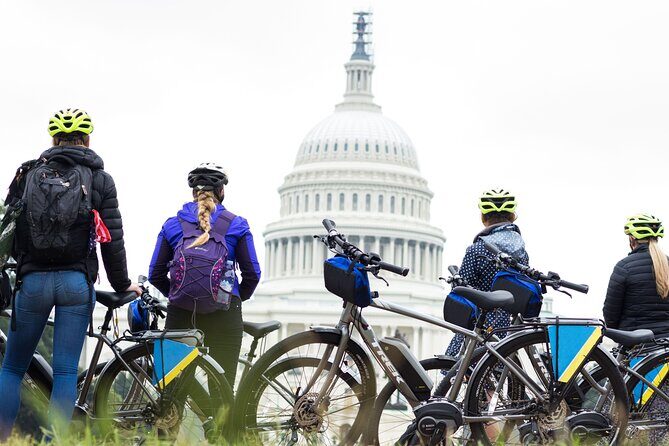
The tour is available in both morning and afternoon sessions. If you’re the type who hates rush travel, choose the time that best matches your energy level. The electric bike option helps either way, but how you feel in the first hour matters.
One planning note that’s worth your attention: this tour is commonly booked around 12 days in advance. That suggests demand is steady, so if you have specific dates (especially during busy seasons), don’t wait until the last minute to reserve.
Also, bring the basics of good sightseeing sense: wear comfortable clothing, be ready to bike continuously, and treat each stop like a quick museum preview rather than a full visit.
Who this tour fits best (and who might want a different plan)
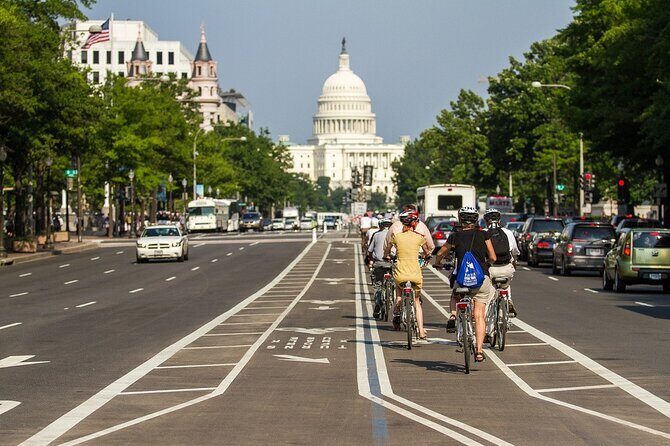
This bike tour fits best if you want:
- a fast, organized way to see major Washington landmarks,
- a small-group experience with an easy pace that still includes multiple stops,
- and a guided explanation that helps you understand what you’re looking at.
It’s also a smart choice for families. The mix of stops and the guided structure tends to hold attention better than long museum-only days, especially when kids can shift between photo moments and quick explanations.
Who might not love it? If you want long stays at one location—like sitting in a gallery for ages or taking a slow, meditative pace—this tour’s short stop times will feel limiting.
Should you book this Capitol Hill bike tour?
I’d book it if you want a 2-hour highlights route that gives you context at big-name DC sites, with bikes and helmets handled and a group size small enough that you don’t feel lost. The route is efficient, the stop order keeps the day logical, and the guided style seems built for real attention rather than nonstop lecturing.
I’d skip it if you’re determined to spend lots of time at only one or two locations. This tour is for people who like movement, photos, and clear explanations—then freedom to explore on your own after.
FAQ
What does the tour include?
The tour includes use of the bicycle, a helmet (mandatory), and a bicycle bag. Gratuity is not included.
How long is the bike tour?
The duration is about 2 hours.
Can I choose an electric bike?
Yes. You can choose between regular bicycles and electric bicycles.
Where do I meet for the tour?
The meeting point is 801 D St NW, Washington, DC 20004, USA. The tour ends back at the meeting point.
Are there any rider restrictions?
Pregnant individuals over 7 months are not allowed. The bikes have a weight limit of 275 lbs.
What is the cancellation policy?
You can cancel for free up to 24 hours before the experience starts for a full refund. Within 24 hours, the amount paid is not refunded.