REVIEW · GUIDED
Washington DC Private Guided Bus Day Tour with Step Off Guide
Book on Viator →Operated by Monumental Tours Inc. · Bookable on Viator
DC’s memorials can be moving, fast—and that’s why this works. This private guided bus day trip gives you structure for the highlights, plus a human guide to translate what you’re seeing into real context. You’ll also get practical comfort touches onboard when the weather decides to act up.
What I like most is the guided step-off approach. You stop, get oriented, then you’re back on the bus without wasting time trying to figure everything out on your own. I also really appreciate the mix of stops: big-name icons like Lincoln and the Capitol area, paired with the World War II, Korean War, and Vietnam Memorials, where the stories hit harder.
One consideration: it’s tight timing. Plan for quick viewing windows (about 15–20 minutes per stop), and note that the Capitol and the White House are exterior views only, with admission not included for inside visits.
In This Review
- Key Points You’ll Care About
- A Private Monuments Tour That Helps You See DC Without Guessing
- The Price Question: What You’re Really Paying For
- Pickup Anywhere in the DC Metro Area (and Why That Changes the Day)
- How the Timing Works in 3–4 Hours
- Stop 1: Lincoln Memorial—The Greek Temple Effect Meets American Leadership
- Stop 2: Jefferson Memorial by the Tidal Basin (and Why the Details Matter)
- Stop 3: U.S. Capitol Exteriors—The Dome on the Skyline
- Stop 4: The White House Address—Famous Front, No Entry
- Stop 5: National World War II Memorial—A Granite Picture of Many States
- Stop 6: Martin Luther King, Jr. Memorial—Strength in Stone
- Stop 7: Korean War Veterans Memorial—Soldiers and the Freedom Is Not Free Message
- Stop 8: Vietnam Veterans Memorial—Names on Black Granite
- Onboard Comfort: Umbrellas, Ponchos, and Water That Save the Day
- The Human Factor: Guides Who Make the Stops Click
- Who This Tour Suits Best (and Who Might Want Another Option)
- Should You Book This DC Private Guided Bus Tour?
- FAQ
- How long is the DC private guided bus day tour?
- Do I get admission tickets included?
- Can the group enter the U.S. Capitol or the White House during this tour?
- Do they offer pickup?
- Is this tour private?
- What is the cancellation window?
Key Points You’ll Care About
- Private group flexibility: only your group rides together, with pickup available across the DC Metro area
- Weather-proof comfort onboard: umbrellas, ponchos, and bottled water are provided
- Smart pacing: 3–4 hours that cover major monuments without long transit breaks
- Tickets included on many stops: Lincoln, Jefferson, World War II, MLK, Korean War, and Vietnam include admission
- Some stops are outside-only: Capitol and White House are showcased, but you do not enter
A Private Monuments Tour That Helps You See DC Without Guessing

Washington DC can feel like a lot of places packed into a small area. That’s great—until you’re trying to manage transit, find viewpoints, and read meaning into stone and statues while a day timer is ticking. This tour’s main value is that it turns a scattered set of landmarks into a route with a guide who explains what you’re looking at as you go.
The private setup matters. You’re not waiting around for other groups to shuffle back onto a bus. And you’re not stuck with a one-size-fits-all walking pace. Instead, your group stays together, the guide can answer questions in real time, and you step off at each stop to get the story before you move on.
If you’re the kind of traveler who likes to get your bearings fast, this style of touring is a win. You get the major monuments you came for, plus enough context to make them feel more than just photo backdrops.
You can also read our reviews of more guided tours in Washington DC



The Price Question: What You’re Really Paying For
This is priced per group, not per person. The info you’re given lists the group price as $1,149 per group with a capacity note that includes both up to 5 and up to 12 passengers. Since those caps can differ based on how the booking is configured, you’ll want to confirm the maximum headcount for your exact date before you lock it in.
So is it worth it? In my view, this kind of tour is strongest when it solves a real problem:
- Families with mixed ages: a private bus keeps everyone together and cuts down the exhausting walking between sites
- Friends who want control: you can decide how much time to spend at the curb viewpoint vs. the main vantage point while the guide keeps things flowing
- Visitors short on time: 3–4 hours can be enough to hit the “can’t miss” DC stops when you’re not juggling lines and transit logistics yourself
If you’re traveling solo or as a couple and you’d happily take transit to each monument, a private vehicle can feel expensive. But if you’re weighing the cost of time, comfort, and a guide actively explaining what matters, the value starts to make sense quickly.
Pickup Anywhere in the DC Metro Area (and Why That Changes the Day)
Getting picked up from anywhere in the DC Metro area sounds simple, but it’s a big deal. The difference between arriving stressed and arriving ready is often just one factor: not having to coordinate transportation before the tour even begins.
Also, you’ll have a mobile ticket, and confirmation is provided at booking. That combination usually means fewer last-minute worries. Add in the fact that the tour is offered in English, and you’re set up for a smooth start from the first stop.
How the Timing Works in 3–4 Hours
The loop is designed around quick, guided stops. You’re looking at about 20 minutes at most major memorials, with 15 minutes at the Korean War and Vietnam Memorials. That means you’re not going to linger for a long, unhurried hour-plus at each site.
Instead, think of this as a “guided sweep with meaning.” The guide gets you oriented in each place, you see the key visual elements, and you move on before you burn daylight.
This pacing can be perfect if:
- you want the highlights and the stories
- you’re traveling during cooler months when you can only stand outside for so long
- you prefer to keep a free evening instead of planning an all-day monument marathon
Stop 1: Lincoln Memorial—The Greek Temple Effect Meets American Leadership

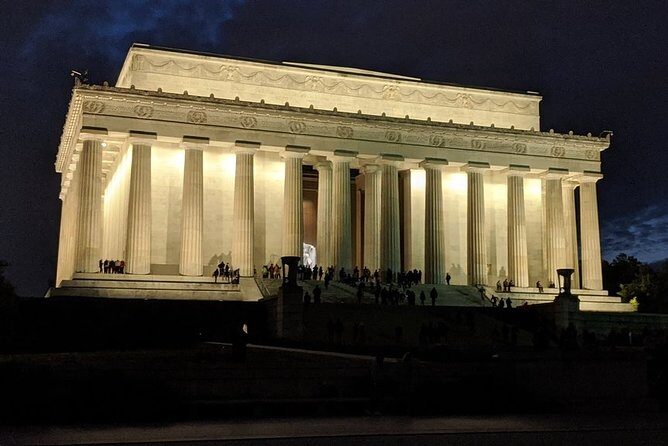
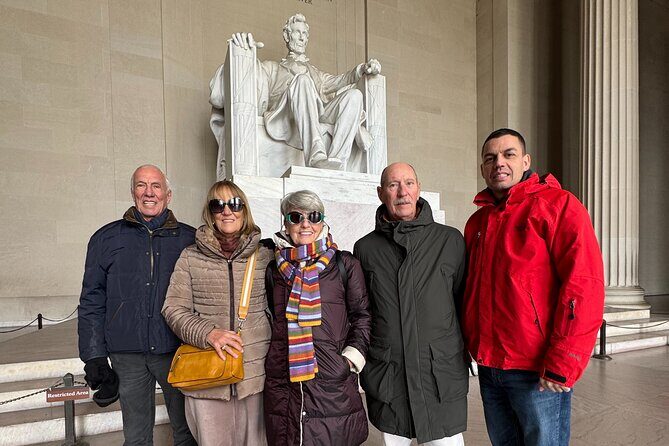
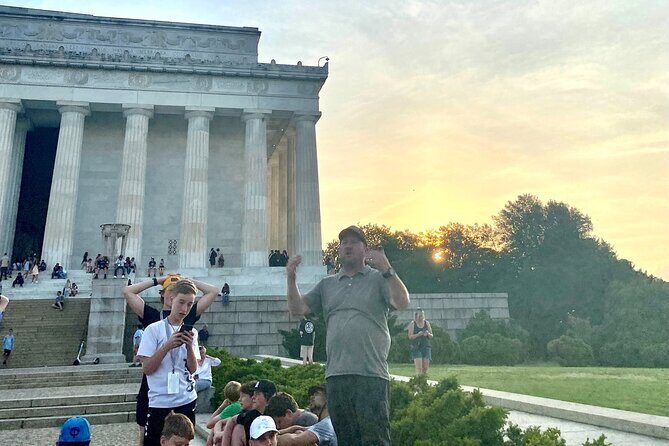
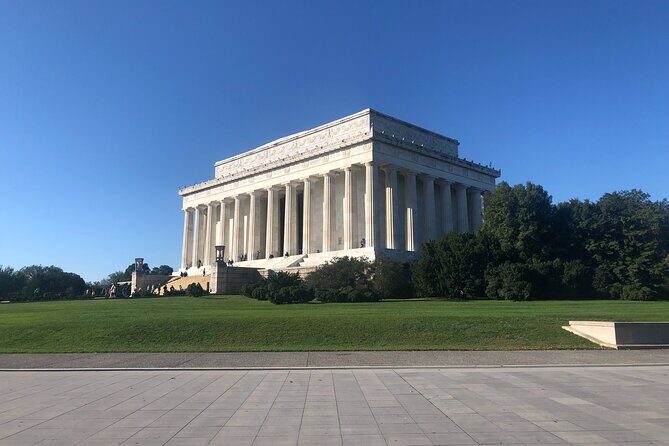
Your first stop is the Lincoln Memorial, described as a beautiful Greek temple dedicated to Abraham Lincoln. That phrasing matters. Many visitors see the building’s classical feel first, then the statues and inscriptions make the rest click: this isn’t just a landmark, it’s a statement about leadership and sacrifice for the Union.
Because the stop is around 20 minutes and admission is included, you can usually cover the main viewing angles without feeling rushed. The guide’s job here is to point out what to look for so your brain doesn’t have to do all the decoding alone.
Possible drawback: if your group wants extended time inside or wants to linger for deeper reading than fits in 20 minutes, you’ll feel the time limit. This tour is built for momentum.
You can also read our reviews of more private tours in Washington DC






Stop 2: Jefferson Memorial by the Tidal Basin (and Why the Details Matter)
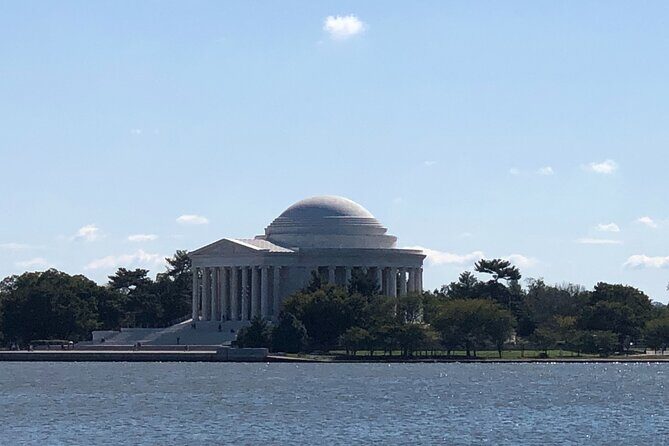
Next comes the Jefferson Memorial, set along the Tidal Basin, with the reference to the world-famous cherry trees. Even if you’re not there during cherry season, the location is part of the story: it frames Jefferson in a landscape that’s meant to feel designed and reflective.
With another 20-minute stop and admission included, you’ll get a structured look: the main sightlines, the symbolic setting, and the way the memorial connects to the broader national narrative.
Here’s how to get the most out of a short stop like this: don’t aim for every inscription. Aim for the big idea first. Then, if time allows, go back to one or two details that your guide highlights.
Stop 3: U.S. Capitol Exteriors—The Dome on the Skyline
Capitol Hill is next, with a focus on the cast iron dome you’ll see towering over the skyline. The key point is right in the experience: you do not enter the building at this time, and admission is not included.
So what should you expect? More of an orientation stop than a deep interior visit. The guide can still make it meaningful by connecting the building’s role to what you see in front of you—legislation, civic power, and the scale of government.
Why this works for some travelers: if you’re short on time or you don’t want the hassle of scheduling or entry logistics, you still get the visual impact and the context.
Why it may not work for you: if you specifically want to go inside, this tour doesn’t sell that experience. You’ll need to plan a separate inside visit if that’s a priority.
Stop 4: The White House Address—Famous Front, No Entry

Then you’re walking along the most famous address in America: 1600 Pennsylvania Ave. Again, this is a showcase moment. The experience does not include entering the building, and admission is not included.
This stop is about what DC feels like when you’re near the seat of the executive branch. The guide can help you see beyond the postcard frame by pointing out what the space communicates—distance, security presence, and the sense that government is both historic and ongoing.
A helpful mindset for this stop: treat it like a guided “look and learn” session, not an all-access visit.
Stop 5: National World War II Memorial—A Granite Picture of Many States
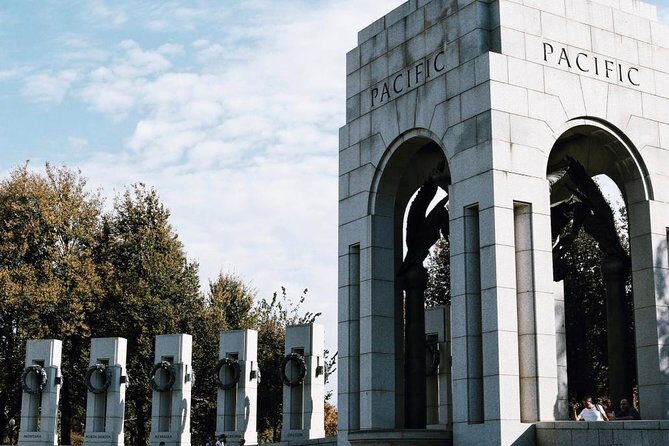
The National World War II Memorial is where the tour shifts tone. Instead of just big American icons, you get the weight of the “greatest generation” represented through granite pillars symbolizing US states and territories coming together.
This stop has 20 minutes, with admission included. The value here is that it’s more than names and dates. The guide can help you notice patterns and symbolism quickly—so you leave understanding what the design is trying to say.
Practical note: memorials like this are often emotionally intense. With limited time, it’s worth choosing whether you want photos first or reflection first. Either way, you’ll get both if you don’t try to do everything at once.
Stop 6: Martin Luther King, Jr. Memorial—Strength in Stone
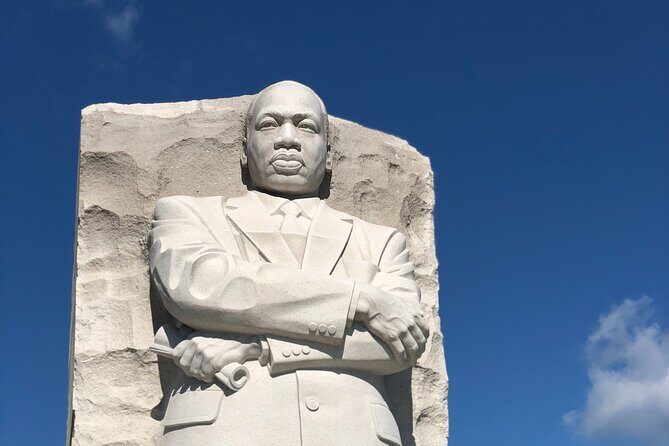
Next is the Martin Luther King, Jr. Memorial, described as carved out of granite with a focus on triumph over discrimination. This is one of those stops where the guide’s role can really change your experience. With only 20 minutes, you don’t want to spend that time trying to figure out what you’re looking at without help.
The admission is included, which helps keep the stop smooth. The memorial is presented as a powerful image of strength and integrity, and the guide can connect the symbolism to the broader civil rights story without turning it into a textbook lecture.
If you prefer a thoughtful pace, you can usually still manage it here. Just ask your guide what one or two elements they think you should prioritize.
Stop 7: Korean War Veterans Memorial—Soldiers and the Freedom Is Not Free Message
Then you hit the Korean War Veterans Memorial, where 19 stainless steel soldiers reflect onto a California granite wall with the motto: Freedom is not free. This stop is only 15 minutes with admission included, which means you’re getting the essentials: the key visual elements, the symbolism, and the meaning behind the materials.
The motto is the hook. Stainless steel and granite are doing more than looking solid; they’re reinforcing a message about cost, sacrifice, and responsibility.
If your group wants photos, this is one of the places where a quick strategy helps: decide where you want your “main shot,” then let the guide point out what to look at in between.
Stop 8: Vietnam Veterans Memorial—Names on Black Granite
The final stop is the Vietnam Veterans Memorial, described as a black granite wall listing the names of 58,000 American souls who were sent abroad to fight and stave off communism.
Another 15-minute stop, with admission included. This one is often the hardest emotionally, even for people who aren’t deep into military history. The list of names does the work. The guide’s help is usually in framing how to read the wall—what it means to approach it slowly, even if you’re on a timebox schedule.
One thing to watch: if your group gets quiet quickly here (common), the time limit might feel short. That’s not a fault of the tour; it’s how these sites tend to affect people. If you know this stop will hit you hard, you can plan to spend extra time elsewhere on a separate day.
Onboard Comfort: Umbrellas, Ponchos, and Water That Save the Day
A nice touch: umbrellas, ponchos, and bottled water are available onboard. DC weather can change fast—cloudy to wet to sunny—often within a single morning. When the tour provides rain gear and water, you don’t have to play the “will I regret packing a jacket” game.
It also keeps the stop-and-go flow intact. If someone has to run back to the hotel for basics, your whole timing plan gets messy. This tour aims to reduce that kind of friction.
The Human Factor: Guides Who Make the Stops Click
The most consistently praised part of this kind of tour is the guide impact: explaining the why behind the what, and keeping different ages engaged.
In real-world examples from this provider, guides like Edgar have been described as friendly and packed with information, while also keeping a 4-year-old engaged during a longer day. Other examples include a driver named Fawzi described as friendly, safe, and very reliable, and a guide named Ibrahim credited with making sure a family had fun while staying on the right tour.
That matters because DC memorials aren’t simple. Without context, they can turn into “I saw it, next.” With a good step-off guide, you get meaning, and the photos end up being better because you understand what you’re capturing.
Who This Tour Suits Best (and Who Might Want Another Option)
This tour is a strong fit if you:
- want a private, guided DC experience without heavy planning
- have kids, teens, or multi-generation groups who need pace control
- want the monuments and memorials in a single structured day
- prefer quick stop windows with explanations rather than long self-guided wandering
It may feel less perfect if you:
- specifically want inside access to the Capitol or White House (this is not included)
- plan to spend long stretches reading inscriptions and soaking up silence at each site
- are traveling as a party where paying for a private group setup doesn’t add much value compared with transit and walking
Should You Book This DC Private Guided Bus Tour?
If you want to see the big DC landmarks and the memorials that carry real weight, in a tight 3–4 hour format with a step-off guide, this is a smart booking. The included admission at many stops reduces friction, and the onboard rain gear is genuinely useful. The private setup is ideal for families and small groups who don’t want to spend the day managing logistics.
My advice: book it if you’re aiming for orientation plus meaning, not for an all-day deep dive. And before you decide, confirm your group size details since the capacity note appears in more than one way. If you do that, you’ll likely end the day with the landmarks you wanted—and a clearer sense of what they stand for.
FAQ
How long is the DC private guided bus day tour?
It runs about 3 to 4 hours.
Do I get admission tickets included?
Admission is included for the Lincoln Memorial, Jefferson Memorial, National World War II Memorial, Martin Luther King, Jr. Memorial, Korean War Veterans Memorial, and Vietnam Veterans Memorial. Admission is not included for the U.S. Capitol and the White House stops.
Can the group enter the U.S. Capitol or the White House during this tour?
No. The U.S. Capitol and the White House are shown from the outside, and entering the building is not included.
Do they offer pickup?
Yes. Pickup is offered from anywhere in the DC Metro area.
Is this tour private?
Yes. It’s a private tour/activity, and only your group participates.
What is the cancellation window?
You can cancel up to 24 hours in advance for a full refund.