REVIEW · EVENING EXPERIENCES
Washington DC: Multilingual Private Day or Evening SUV Tour
Book on GetYourGuide →Operated by Black Hawk Sedans · Bookable on GetYourGuide
Four hours, fewer headaches in Washington DC. This private SUV tour takes you through the city’s top monuments and landmarks, with options in English, Spanish, or Portuguese, plus a daytime or nighttime route that keeps things moving. You also get that “ride like a local” feeling, because you’re shown both the famous sights and real neighborhoods.
Two things I especially like: first, the curbside drop-offs. The driver positions you so you spend your time looking, not walking from far-away lots or fighting traffic. Second, I like the flexibility of an open stop style—your guide can adapt the pacing, and on family trips it can turn into a lively, kid-friendly history session (Jorge Mesquita and Pedro are names that come up often, and they’re the kind of guides who adjust to the group).
One drawback to plan around: the driver does not escort you inside any monument area. You’ll get essential context from the vehicle, then you’re responsible for returning on schedule for the next leg. With so many stops, you’ll get great views fast—but if you want long museum hours or long conversations inside visitor centers, you’ll need to pair this with a separate time block.
In This Review
- Key points for your Washington DC SUV tour
- Day vs. night: pick morning, afternoon, or the illuminated route
- How curbside drop-offs and the no-escort rule shape your timing
- Capitol Hill to the White House: the DC core in a tight loop
- Mall masterpieces: Washington Monument, Smithsonian sights, and the Tidal Basin
- Memorial row: Jefferson through MLK, plus Korean, Vietnam, and WWII
- Kennedy Center to Watergate and Rock Creek Parkway: the city beyond the Mall
- Embassy Row and Georgetown: neighborhoods with real texture
- Virginia highlights: Arlington Cemetery, Iwo Jima, and the Pentagon
- Night tour: illuminated monuments on a shorter highlight list
- Languages and guides in practice: English, Spanish, Portuguese support
- Price and value: what $500 per SUV really buys
- Who should book this private SUV tour (and who might want another plan)
- Should you book this Washington DC SUV tour?
- FAQ
- What is the duration of this Washington DC SUV tour?
- Is this tour private?
- What languages are offered?
- Where does pickup happen?
- Does the driver escort you at the monuments?
- Are bottled water and other comfort items provided?
- What sights are included on the daytime route?
- What sights are included on the night tour?
- Is this tour available daily, including weekends and holidays?
- Can I request a wheelchair for a senior or someone with a disability?
Key points for your Washington DC SUV tour
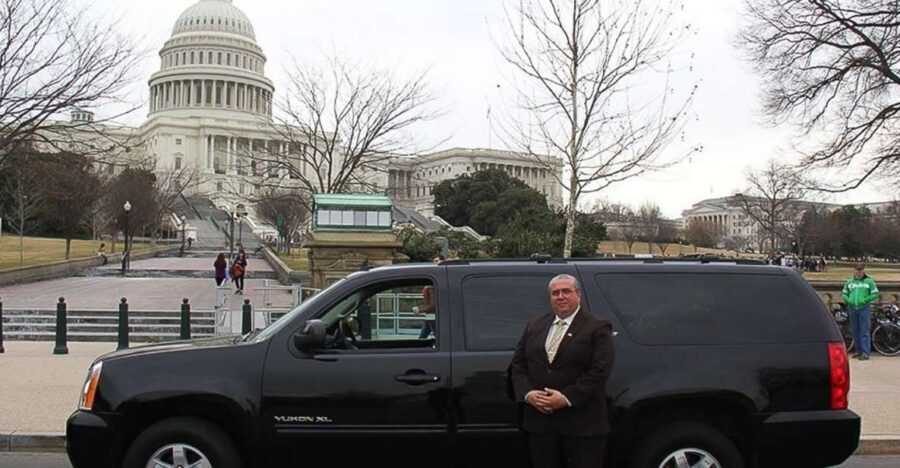
- Private SUV, up to 6 people: your group sets the tone, not the schedule of a big bus.
- Multilingual narration: English, Spanish, and Portuguese are all supported.
- Photo-and-walk stops: you’ll step out for quick appreciation, then regroup at the car.
- Curated highlights, including Virginia: Arlington Cemetery, Iwo Jima, and the Pentagon are part of the plan.
- Day or night options: illuminated monuments give a totally different feel with a shorter highlight list.
Day vs. night: pick morning, afternoon, or the illuminated route
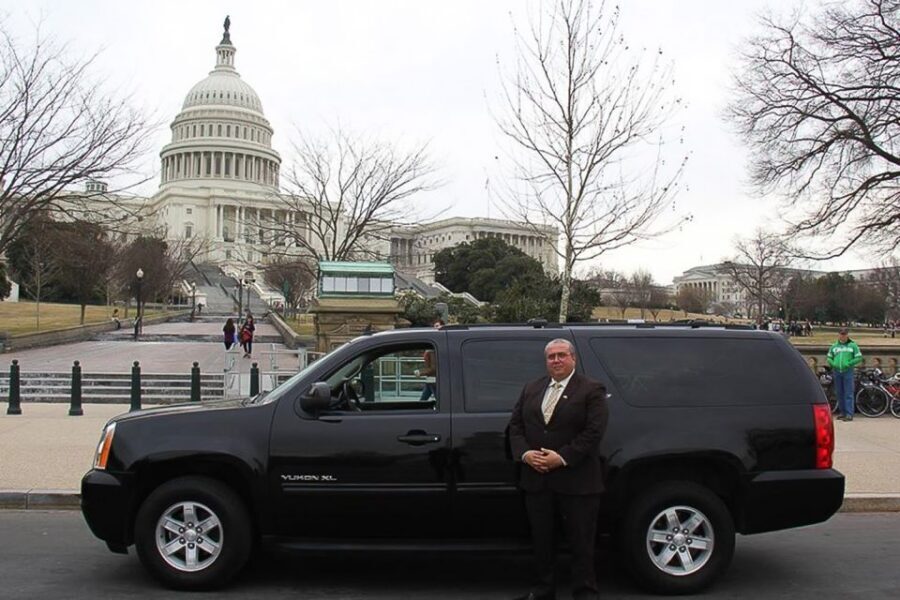
This is a 4-hour private tour with daily departures, and you can choose a day or night experience. For the daytime version, you can usually go in the morning or the afternoon, depending on what works best for your day in town. For nighttime, the route focuses on the monuments and memorials that look extra dramatic under lights.
If you’re visiting DC for the first time and you want the “greatest hits,” the daytime tour is the cleaner choice. You’ll see major structures in daylight and get enough context while you’re in the SUV to understand what you’re looking at. If you already know the basics and you want atmosphere, the night tour can be a strong add-on—especially if you’re tired of daytime walking.
You can also read our reviews of more private tours in Washington Dc

How curbside drop-offs and the no-escort rule shape your timing
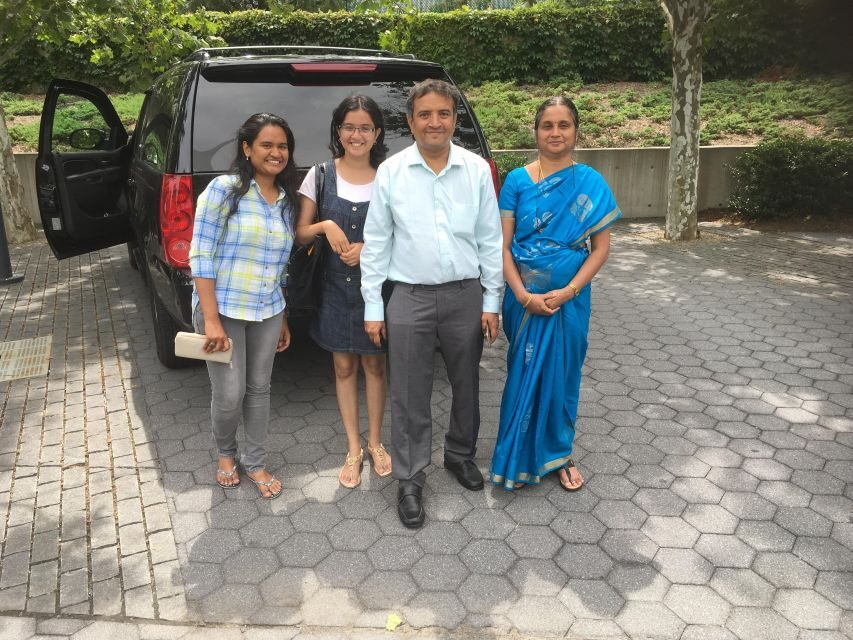
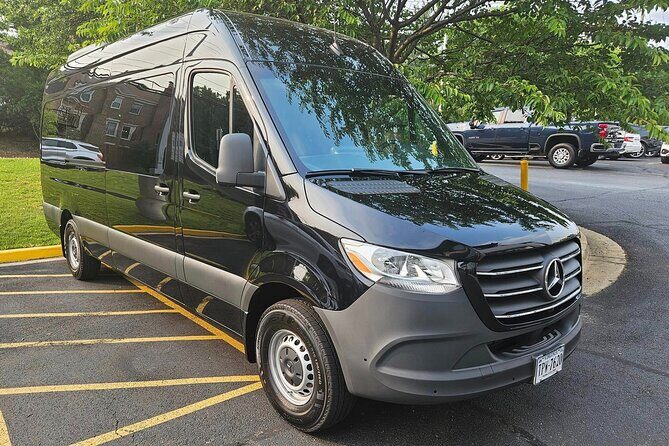
Here’s how this works in real life: you’ll ride in a luxury SUV, and the driver makes stops mainly for photos and short walks. The narration and essentials are shared from the vehicle. Then you head out, appreciate what you can, and return to the car when it’s time to go.
That no-escort rule matters for two reasons. One, it’s why you can see so much in just four hours—you’re not stuck waiting while everyone goes in and out. Two, it means you should plan your priorities. If your group has anyone with limited mobility, ask about the close parking strategy ahead of time and consider the wheelchair rental option (you can request one wheelchair upon request for an additional fee).
I also like that the ride includes bottled water and mints, because DC sightseeing can get surprisingly tiring, even in mild weather.
Capitol Hill to the White House: the DC core in a tight loop
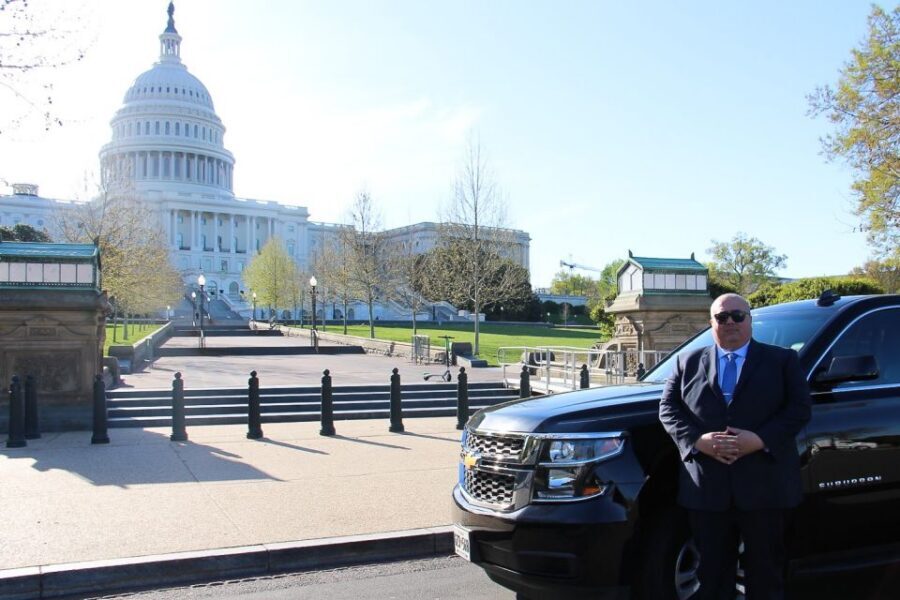
The daytime route kicks off with DC’s power center, starting around U.S. Capitol. From here, you’ll get a sense of the layout that shapes the entire city—wide avenues, ceremonial views, and how Washington “aims” you toward memorials and government buildings.
Next comes the Supreme Court and the Library of Congress area. These stops work best when you treat them like quick orientation points. You’re not just snapping photos; you’re learning how the city’s institutions connect to the broader story DC tells.
From there, you’ll roll through Union Station and along Pennsylvania Avenue. This stretch is where DC starts feeling less like a list of buildings and more like a designed corridor. If you like architecture or just want a strong mental map, this is a helpful part of the tour.
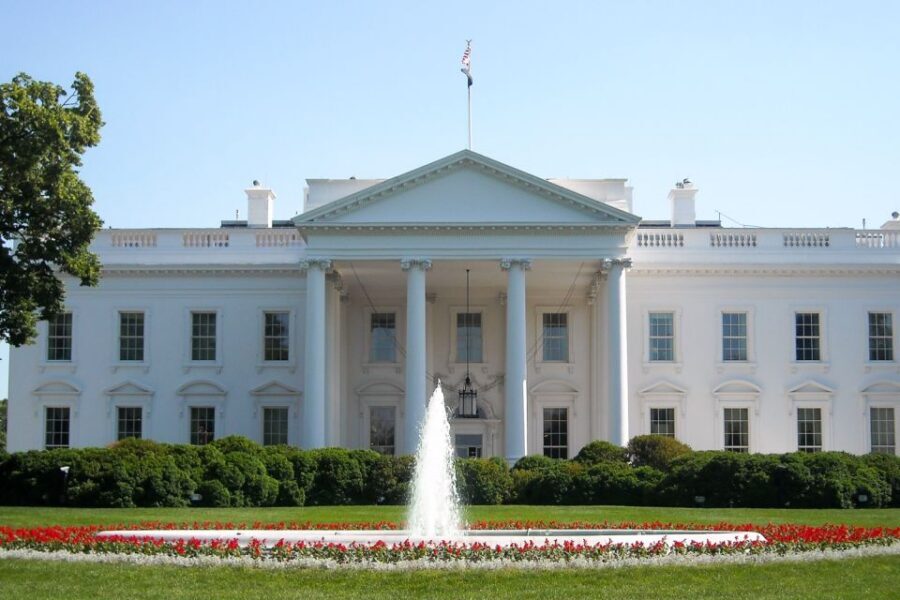
Then it’s on to the White House and the viewpoint areas around it. This is usually the kind of stop where people instantly start making comparisons to photos they’ve seen. The real win is seeing it as a live landmark—plus getting context while you’re still inside the vehicle, before you step out.
Finally, you’ll reach the Washington Monument zone and the Smithsonian Museums area. Even if you don’t go inside, you’ll understand why the National Mall is laid out the way it is and how many of DC’s best moments cluster in one radius.
Potential consideration: because this is a fast loop, you won’t get “deep study” time at each institution. But you will come away with a route you can revisit later at your leisure.
Mall masterpieces: Washington Monument, Smithsonian sights, and the Tidal Basin
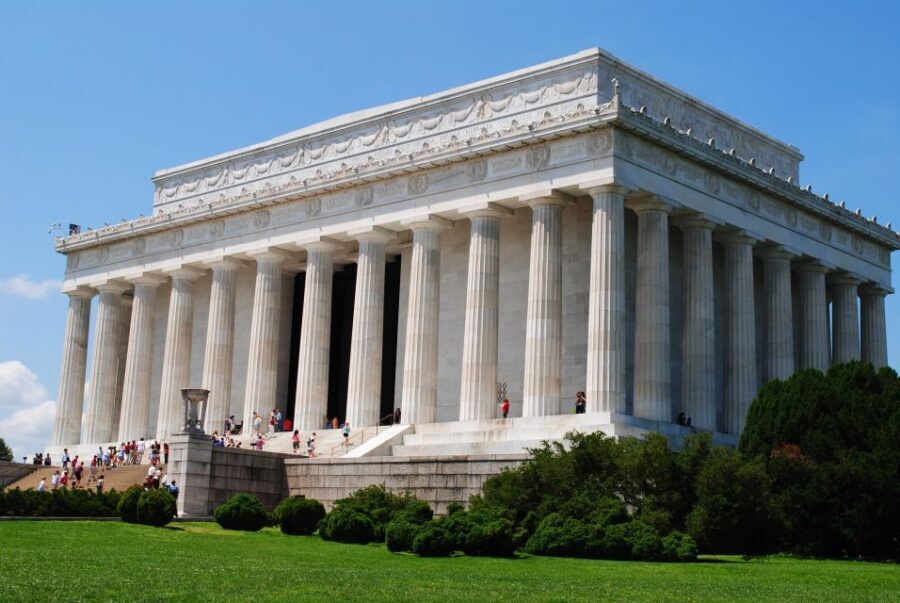
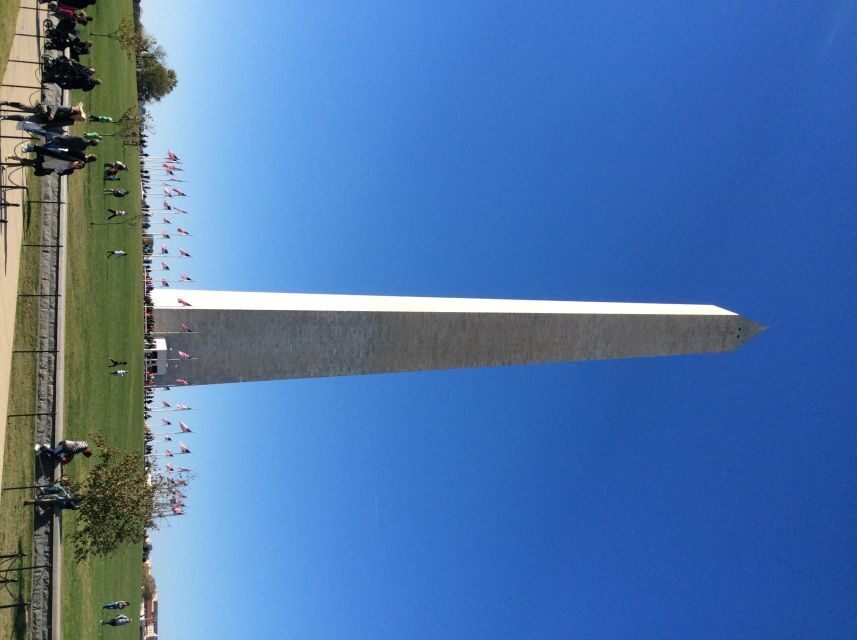
Once you’re near the Mall, the tour leans into DC’s most iconic scenery. You’ll see the Washington Monument area again from the right angles, which helps if you’re trying to understand the sight lines between major memorials.
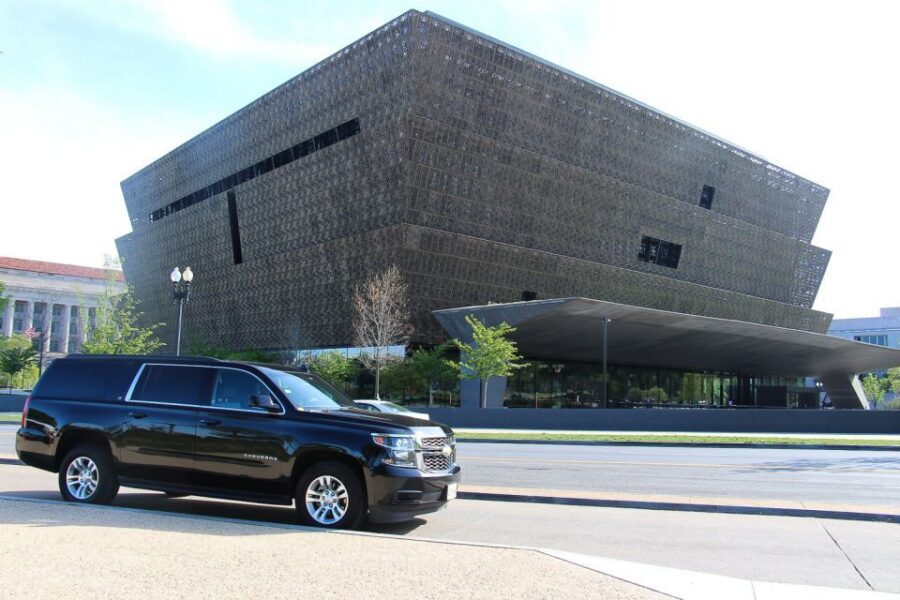
The Smithsonian Museums stop is a quick hit. Think of it as a visual anchor—enough to orient you to what kind of museum area you’re looking at. If you’re planning your own museum visit later, this step helps you decide what’s worth the ticket and what’s worth skipping.
Then the route heads toward the Tidal Basin area, where DC’s memorial style really shows. The tour continues in a way that keeps the walking manageable while still letting you experience those “you’re standing in history” moments.
One small practical tip: if it’s busy or windy, you’ll often appreciate the SUV’s warmth and your guide’s pacing even more. The ride keeps you moving between photo stops without the downtime of constant public transportation changes.
Memorial row: Jefferson through MLK, plus Korean, Vietnam, and WWII
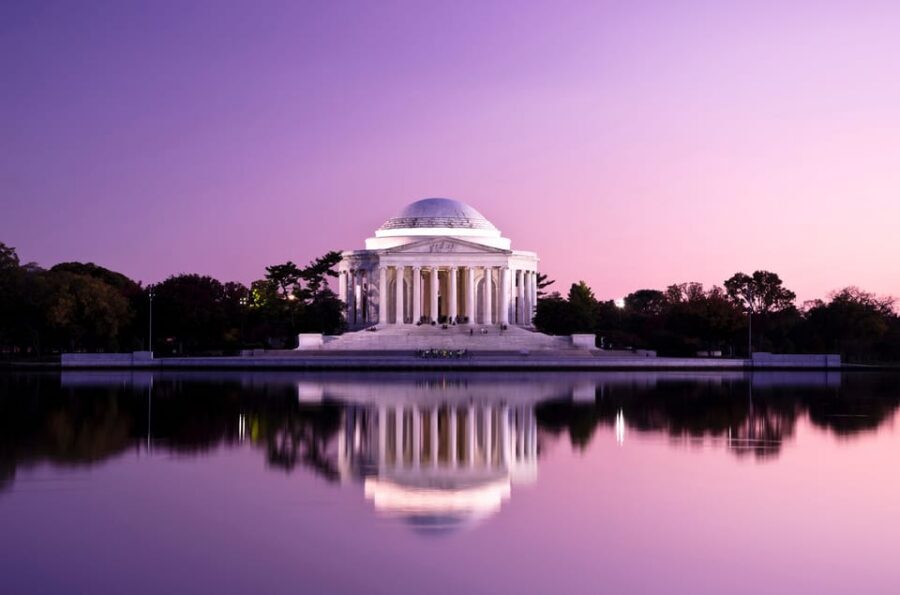
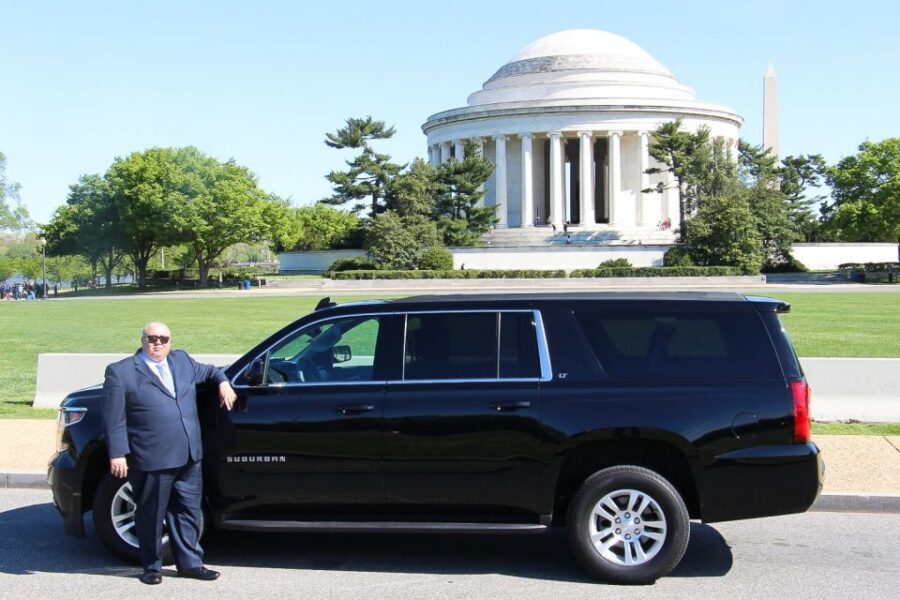
This is where the tour feels most meaningful. After the Tidal Basin, you’ll visit the Jefferson Memorial, followed by the FDR Memorial and the Martin Luther King Jr. Memorial. These three stops are different in tone, which is why the order matters. You start with Jefferson’s calm gravitas, then you move into FDR’s more intimate storytelling style, and then you reach MLK’s powerful focus on civil rights.
Then comes the Lincoln Memorial, one of the hardest landmarks in DC to forget. If you’ve only seen it in pictures, seeing it in person can feel like DC is suddenly bigger than your expectation. The key here is timing and vantage: the tour structure helps you get there during your four-hour window without wasting time figuring out logistics.
After Lincoln, you’ll continue through a series of memorials that many first-time visitors rush past on their own. You’ll see the Korean Memorial, the Vietnam Memorial, and the World War II Memorial. These are the places where the tour’s in-vehicle explanations pay off, because the design choices are part of the emotional impact.
What I like about stacking them this way is that you get variety in one sweep. Instead of one major stop followed by nothing for an hour, you move through a set of memorials that each adds a new layer to the story DC tells.
Potential drawback: because you’re moving quickly, you might want to choose just a couple of these stops for slower photos. If you try to do everything at full pace, your legs will let you know by hour three.
You can also read our reviews of more evening experiences in Washington Dc




Kennedy Center to Watergate and Rock Creek Parkway: the city beyond the Mall
Not all the best moments in DC are in the monument zone. The daytime tour includes major sights that show the city’s character outside the most photographed core.
You’ll pass by or stop near Kennedy Center, then head toward Watergate Complex. Watergate is a reminder that DC’s story isn’t only about presidents and wars. It’s also about politics, scandal, and consequences—visible right there on the waterfront side.
Next is Rock Creek Parkway. This stretch helps you understand how DC blends grand civic spaces with parkland and residential edges. It’s also one of those parts of town that can feel more local, even while you’re still in “tour mode.”
Then you’ll see the National Cathedral area. Cathedrals change the whole mood of a city, and this one does it by adding height and stone texture to the skyline.
These stops are valuable because they help you stop thinking of DC as only one neighborhood. DC is a patchwork, and you should feel the patchwork by the end of four hours.
Embassy Row and Georgetown: neighborhoods with real texture
After the cathedral stop, the tour heads through Embassy Row and toward Dupont Circle. This is a good pairing because it gives you a sense of the city’s diplomatic identity on one side, and its stylish urban life on the other.
Then you’ll go toward Georgetown. Even when you only get a quick stop, Georgetown’s streets and river-adjacent vibe make it feel like a different city daydream compared to the monument axis.
I like including neighborhoods because it changes how you remember your trip. If all you see are buildings in the same architectural style, DC can blur together. Here, the tour adds contrast: stone monuments, wide avenues, then lively neighborhood energy.
Virginia highlights: Arlington Cemetery, Iwo Jima, and the Pentagon
One of the strongest value points in this tour is crossing into Virginia. The daytime experience includes Arlington Cemetery, the Iwo Jima Memorial, and the Pentagon viewpoint area.
This is a major reason the SUV format works so well. DC traffic and parking can be a headache, and when you try to do these stops on your own, you can lose time fast. With a private driver, you stay in a smooth flow and get to these sites with a plan.
Arlington Cemetery especially benefits from having context before you get out. It’s not just a place to look. It’s a place where design, names, and layout carry emotion. The vehicle narration gives you a framework, and your brief time on foot lets you absorb the atmosphere.
Practical reality: four hours is still four hours. If this Virginia portion is the top priority for your group, plan your expectations around quick stops and photos rather than long on-foot exploration.
Night tour: illuminated monuments on a shorter highlight list
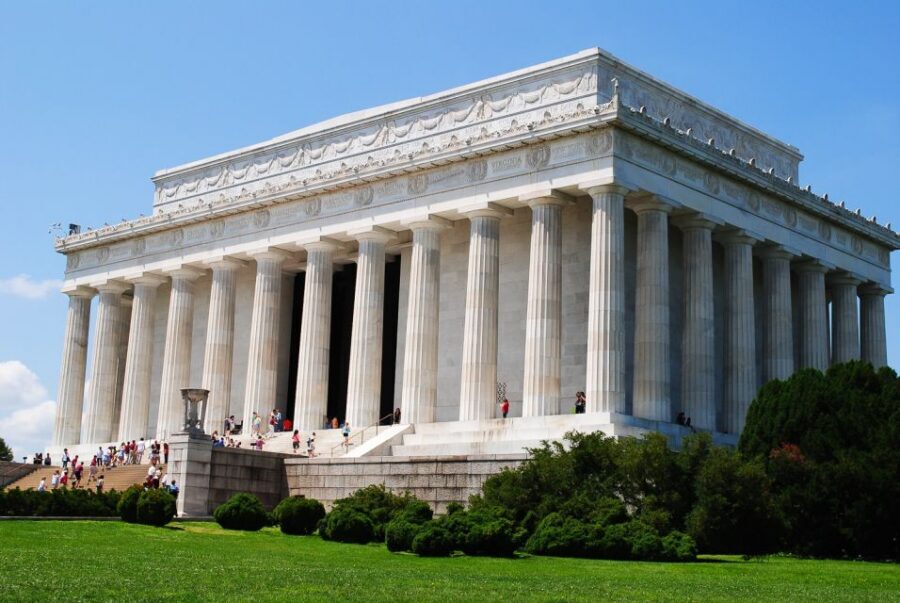
The night option is built for people who want the feel of DC more than the step-by-step education. You’ll see a reduced set of sights after dark, including the White House, the U.S. Capitol, the Iwo Jima Memorial, the Lincoln Memorial, the Jefferson Memorial, and the Martin Luther King Jr. Memorial.
At night, the memorials tend to look more cinematic. You can often stand in the same place and feel like you’re inside a movie set. And because the list is shorter, you’re less likely to feel like you’re sprinting to keep up.
One smart approach: if you’re only in DC for a short trip, do the daytime tour first for orientation, then consider the night tour to revisit the ones that struck you the most.
Languages and guides in practice: English, Spanish, Portuguese support
The tour supports English, Spanish, and Portuguese, and that alone can change the experience. When you’re hearing context in a language you understand, monuments stop being vague silhouettes. They become clear stories.
Guides can bring different styles. I’ve seen examples where Jorge Mesquita was described as fluent in multiple languages and able to handle an open agenda. I’ve also heard about Pedro stepping in with professional, friendly driving and helpful pacing, including support that makes the day easier for older visitors.
If you travel with kids, the best guides don’t just talk at you. Some guides turn explanations into interaction—quizzes, questions, and lively responses that keep young attention focused.
Price and value: what $500 per SUV really buys
This costs $500 per group up to 6 for four hours. That pricing can sound steep until you translate it into what private sightseeing often costs in DC.
Here’s the value logic I use: you’re paying for three things at once—transport in a comfortable SUV, someone who knows how to place you for curbside viewing, and multilingual narration so you’re not relying on guidebooks you’ll ignore while juggling kids or weather.
If you have a family of four or a small group of friends, the per-person cost can feel reasonable compared to taxis and the time lost driving yourself between far-flung stops. And unlike crowded buses, you control the pacing. You also avoid the pain of parking in places where it’s legal but never convenient.
Bottled water, plus mints, is a small perk, but it’s part of the comfort package that makes four hours feel doable rather than exhausting.
Who should book this private SUV tour (and who might want another plan)
I’d book this if you:
- want big highlights without wasting energy on navigation
- travel with a mix of ages and mobility levels
- want history context in English, Spanish, or Portuguese
- prefer a private car over crowded tour groups
This might not be the best fit if you’re the type who wants hours inside museums, long guided museum talks, or slow wandering with no schedule pressure. This tour is about covering the city well and leaving you with a list of what to return to.
For seniors or anyone with disability, the wheelchair rental option (one wheelchair, upon request, for an additional fee) can help. Still, plan on walking a bit for photos and short appreciation stops, since the driver does not escort you.
Should you book this Washington DC SUV tour?
If you want a high-success DC day—less stress, more landmarks, and better context—this is an easy yes. The biggest strengths are the private SUV comfort, the multilingual narration, and the way the route blends the monument axis with neighborhoods and even Virginia.
Book it if your priority is seeing a lot, getting your bearings fast, and leaving with a DC mental map you can use for future self-guided exploring. Skip it only if your idea of a perfect trip is slow museum time, because this is a four-hour circuit built for photos and quick walks, not long interior visits.
FAQ
What is the duration of this Washington DC SUV tour?
It runs for 4 hours.
Is this tour private?
Yes. It’s a private group experience in an SUV.
What languages are offered?
You can choose English, Spanish, or Portuguese.
Where does pickup happen?
Pickup is included from hotels in Washington DC downtown.
Does the driver escort you at the monuments?
No. The driver shares essential information inside the vehicle, makes stops for photos, and you return to the SUV on the established schedule.
Are bottled water and other comfort items provided?
Yes. Bottled water and mints are provided.
What sights are included on the daytime route?
The tour includes major DC landmarks such as the U.S. Capitol, Supreme Court, Library of Congress, Union Station, Pennsylvania Avenue, the White House, Washington Monument, Smithsonian museums area, Tidal Basin, Jefferson Memorial, FDR Memorial, MLK Memorial, Lincoln Memorial, Korean Memorial, Vietnam Memorial, World War II Memorial, Kennedy Center, Watergate Complex, Rock Creek Parkway, National Cathedral, Embassy Row, Dupont Circle, Georgetown, and also Arlington Cemetery, Iwo Jima Memorial, and the Pentagon.
What sights are included on the night tour?
The night option includes the White House, U.S. Capitol, Iwo Jima Memorial, Lincoln Memorial, Jefferson Memorial, and Martin Luther King Jr. Memorial.
Is this tour available daily, including weekends and holidays?
Yes, it’s available daily, including weekends and holidays.
Can I request a wheelchair for a senior or someone with a disability?
You can rent one wheelchair upon request for an additional fee.