REVIEW · CAPITOL & LIBRARY OF CONGRESS
DC: Capitol and Library of Congress Guided Small-Group Tour
Book on GetYourGuide →Operated by Unscripted Tours · Bookable on GetYourGuide
Washington’s big ideas start here. I love how this 3-hour small-group walk turns famous DC buildings into a clear story of American democracy, and the inside access is the real payoff. I also like the lively guides people name again and again, from James to Laurel to Meg. One thing to factor in: there’s a fair bit of walking and security rules are strict, so go light.
You’ll begin outside the Library of Congress at the Neptune Fountain, then move through Capitol Hill with an expert guide. Expect reserved entry to the Capitol and docent-led time inside, plus a focused look at the Library of Congress beyond the photo spots. If you’re hoping for a sit-down museum marathon, this pace may feel quick.
In This Review
- Key Highlights You’ll Feel Immediately
- Start at Neptune Fountain: A Simple Walk-On Way to Find Your Rhythm
- The 3 Hours Plan: How You See More Than the Postcard Stuff
- Supreme Court Stop: See How Authority Looks in Stone
- U.S. Capitol Inside Access: Rotunda, Crypt, and Old House Chambers
- Library of Congress Thomas Jefferson Building: More Than a Pretty Facade
- The Role of the Guide: Personality That Makes Democracy Human
- Price and Value at $89: Where This Tour Earns Its Money
- What to Wear and Bring: Make Security and Walking Easy
- Who Should Book This Tour (and Who Might Skip It)
- Should You Book DC’s Capitol and Library of Congress Tour?
- FAQ
- Where does the tour start and where does it end?
- How long is the DC Capitol and Library of Congress tour?
- What is included in the price?
- Is entry to the Capitol Building included?
- Is the Library of Congress entry included?
- Is there a guided portion inside the Capitol?
- Is the tour wheelchair accessible?
- Does the tour provide a live guide, and what language is it in?
- Is hotel pickup and drop-off included?
- Can I bring food, drinks, or luggage?
- Is reserve now and pay later available?
- What is the cancellation policy?
Key Highlights You’ll Feel Immediately

- Neptune Fountain meeting point right by the Library of Congress Thomas Jefferson Building
- Reserved entry into the U.S. Capitol with a docent-led route through major rooms
- Library of Congress access and context for how it was founded and why it matters
- Supreme Court stop on the same walk, so the three branches connect in your mind
- Guides with personality (you’ll often hear names like James, Laurel, Meg, and Kirsten)
Start at Neptune Fountain: A Simple Walk-On Way to Find Your Rhythm

Neptune Fountain is a smart place to start because it’s obvious and close to where the action begins. You meet your guide there right outside the Library of Congress Thomas Jefferson Building, so you’re not wasting the first 10 minutes hunting down your group.
This tour is built like a focused Capitol Hill loop. In about three hours, you’ll walk, stop, and then go inside for guided touring where allowed. The payoff is that you’ll get orientation fast—DC can feel like a lot of stone and signage until someone stitches it into a story.
One practical note: there’s no hotel pickup. You’ll want to arrive on time and ready to move, since the itinerary is tight and the stops are specific. Wear shoes you can handle for a couple hours of walking on uneven city surfaces.
You can also read our reviews of more guided tours in Washington Dc



The 3 Hours Plan: How You See More Than the Postcard Stuff

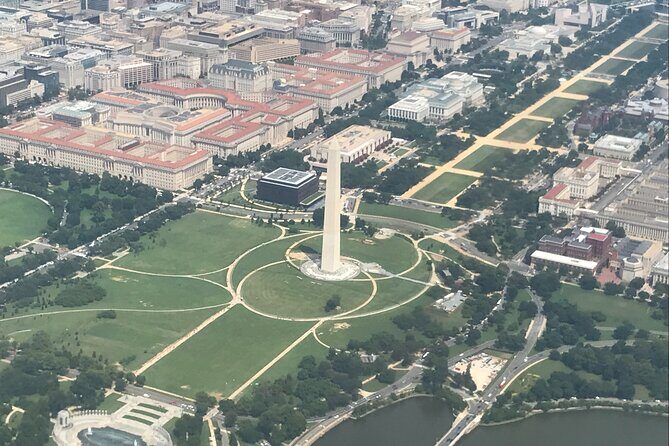
The route is designed for momentum. You start at Neptune Fountain, then you head to the Supreme Court for a guided stop, followed by the U.S. Capitol and the Library of Congress, and you end back where you started.
What makes the time work is the balance between outside views and inside access. You get to appreciate the big architecture on Capitol Hill—plus you don’t have to “just look from the outside” at the two heavy hitters on the list.
You’ll also notice the tour’s structure has built-in meaning. The Supreme Court stop helps you frame law as one pillar of democracy. Then the Capitol and Library of Congress fill in the other pillars: decisions and records.
If you’re the type who gets more out of context than trivia, this is a good match. The guide helps connect people, events, and the purpose of each building, instead of treating it like a photo scavenger hunt.
Supreme Court Stop: See How Authority Looks in Stone
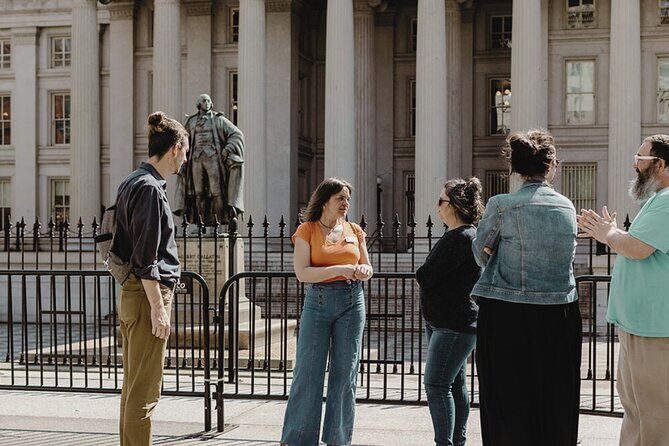
You’ll have a guided tour stop at the Supreme Court of the United States. Even without going too deep into courtroom details, this stop matters because it anchors the walk in the judicial branch’s role.
This is the point where the tour usually clicks for people who know the Court from headlines but haven’t really clocked the setting. The guide’s job here is to make the building’s symbolism make sense—why it’s designed the way it is, and how that design supports the idea of public authority.
Drawback to consider: you don’t get the whole building experience described in your materials. It’s listed as a guided tour stop, so you can expect instruction and context, but not the same length of interior time as the Capitol and Library of Congress stops.
U.S. Capitol Inside Access: Rotunda, Crypt, and Old House Chambers

The Capitol is where reserved entry pays off. Instead of spending your time trying to line up or figure out what you can realistically see, you’re handed an entry path and then guided through key spaces.
The highlights you’ll cover inside include the Rotunda, the Crypt, and the Old House Chambers (and more along the way). That set of stops is smart because it covers different “moods” of the building: the ceremonial grandeur above, the solemnity below, and the political history in the chambers.
The Rotunda is the headline moment for a reason. It’s big, detailed, and meant to communicate national significance without a single lecture slide. Having a guide talk you through what you’re looking at helps you move past “wow” into actual understanding.
Then the Crypt adds a different kind of weight. It’s one of those spaces where you feel the idea of memory and permanence in the architecture. You’ll likely hear how the Capitol is not just a building where things happen, but where decisions and legacies get preserved.
Old House Chambers brings the story closer to the everyday reality of legislation. This is where you can start picturing how the government functioned in earlier eras, and how the physical space shapes how people gathered, argued, and voted.
Tip: if you like taking photos, plan to do it while the guide gives you a moment to look—not while you’re mid-walk. The tour pacing is designed to keep the group together and the experience coherent.
Library of Congress Thomas Jefferson Building: More Than a Pretty Facade

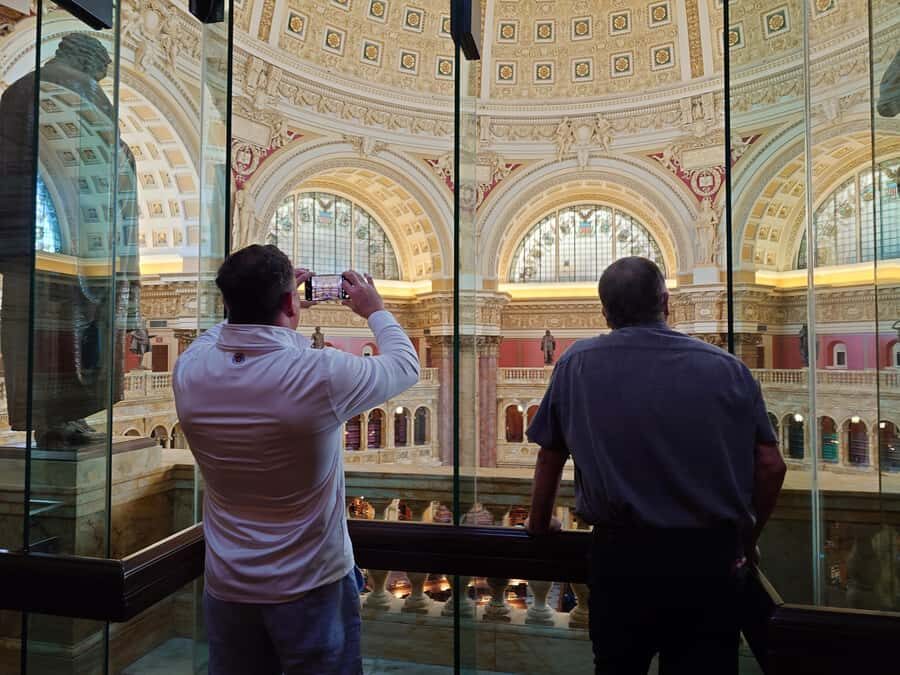
After the Capitol, you shift gears to the Library of Congress, the world’s largest public knowledge collection. The tour is designed to explain what that means in practice and how the institution was founded, not only what it looks like.
You’ll explore the Library of Congress with guided attention and then step into the Thomas Jefferson Building experience from a “why does this exist” angle. That perspective changes how you view the architecture. It stops being just classic grandeur and becomes part of a system meant to store, organize, and share knowledge.
The best kind of tour here is the kind that helps you see details you would otherwise miss: why the building’s character matters, and how its purpose connects to democracy. In a country where laws get made in one place and debated elsewhere, the library is the record-keeper that makes continuity possible.
Also, this stop has a natural emotional payoff. People often feel proud seeing the machinery behind the scenes—how a public institution supports learning and civic life. If you love books and public service, you’ll likely leave with a grin you can’t explain.






The Role of the Guide: Personality That Makes Democracy Human

This tour has a reputation for guides who bring the buildings to life. Names come up again and again—James, Laurel, Meg, Kirsten, and Andrew—plus each one seems to bring their own mix of humor and clarity.
I like this approach because DC is full of big facts that can become background noise. A good guide gives you a way to hold those facts in your head. The difference is how it’s told: clear pacing, fun side notes, and answers to questions without rushing you.
You’ll also notice the “insider energy” some guides have. For example, guides like James are described as locals with a feel for the city’s treasures and stories. That matters because Washington isn’t only monuments—it’s a functioning place with layered meaning.
What to watch for on your end: stay curious and ask at least one question as you go. The tour format is small-group and guided, so you get more interaction than you would on a huge bus-style tour.
Price and Value at $89: Where This Tour Earns Its Money

$89 for three hours is not bargain-basement, but it also isn’t overreaching for what you get. The key value drivers are reserved entry to the U.S. Capitol and the Library of Congress access with guided touring.
Instead of paying just for someone walking beside you, you’re paying for the “permission and structure” that makes the inside experience possible. In DC, that’s often the difference between a quick look and a real visit.
You also get a tight itinerary with multiple major landmarks covered in one go. You’re not juggling separate tickets or building your own plan with uncertain timing. For many people, that saves energy, not just money.
One more value point: it’s a walking tour with an expert guide. At a certain point, the buildings become crowded with other people’s captions. A good guide helps you see what matters in the real spaces, in the time you have.
What to Wear and Bring: Make Security and Walking Easy
This tour has clear “keep it simple” rules. You should not bring weapons or sharp objects, and you should plan to avoid food and drinks during the tour. Luggage or large bags aren’t allowed either, so think light.
That affects what you pack. If you’re the type who carries a heavy daypack, you might need to rethink it. A small bag you can manage is usually the safest bet, since the tour doesn’t want big baggage slowing people down.
Wear comfortable walking shoes, since Capitol Hill sidewalks can be steep or uneven depending on where you’re standing and how the group moves. Also dress for weather. DC can shift quickly, and you’ll be outside at times between stops.
If you’re worried about forgetting something, remember this: the tour’s rules are about safety and keeping the group flowing through key points.
Who Should Book This Tour (and Who Might Skip It)
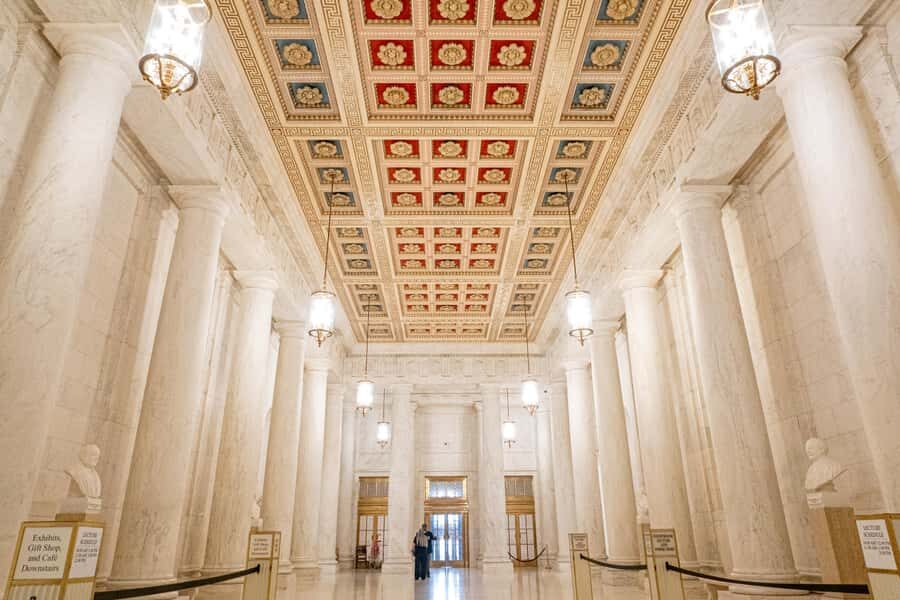
I’d book this tour if you want a structured, guided DC experience without spending your trip time figuring things out. If you like the big institutions but want them explained in human terms, this one tends to land well.
It’s also a strong choice if you care about seeing inside both the U.S. Capitol and the Library of Congress. The “inside with guidance” factor is the difference between a good day and a memorable one.
You might consider skipping if:
- you prefer long, unhurried museum time
- you don’t want to follow security and no-food/no-large-bag rules
- you need hotel pickup or a car-based tour format
Wheelchair accessibility is listed, so if mobility is a concern, this may be a better fit than tours that rely entirely on lots of stairs and uncontrolled pacing.
Should You Book DC’s Capitol and Library of Congress Tour?
If you’re choosing between a quick “see it from outside” day and a guided inside experience, book this. The reserved entry and docent-led touring are what make it worth your attention, and the guides’ humor and clear storytelling are the reason people keep bringing up the experience afterward.
I’d recommend it especially for first-time DC visitors who want democracy explained through the buildings themselves. You’ll leave with a better sense of how the judicial branch, the legislative branch, and the public record-keeping behind them all connect in real space—not just in textbooks.
If you’re coming on a day when you want to see major highlights without stress, this is a solid pick.
FAQ
Where does the tour start and where does it end?
The tour starts at the Neptune Fountain and ends back at the same location.
How long is the DC Capitol and Library of Congress tour?
The duration is 3 hours, with starting times shown when you check availability.
What is included in the price?
The tour includes a tour guide, a walking tour, entry tickets to the Library of Congress, and entry tickets to the Capitol Building.
Is entry to the Capitol Building included?
Yes. Entry tickets to the Capitol Building are included.
Is the Library of Congress entry included?
Yes. Entry tickets to the Library of Congress are included.
Is there a guided portion inside the Capitol?
Yes. With reserved entry passes, you venture inside for a docent-led tour of key areas such as the Rotunda, Crypt, Old House Chambers, and more.
Is the tour wheelchair accessible?
Yes, the tour is wheelchair accessible.
Does the tour provide a live guide, and what language is it in?
Yes, it includes a live English-language tour guide.
Is hotel pickup and drop-off included?
No. Hotel pickup and drop-off are not included.
Can I bring food, drinks, or luggage?
Food and drinks are not allowed. Luggage or large bags are also not allowed.
Is reserve now and pay later available?
Yes. You can reserve now and pay later.
What is the cancellation policy?
Free cancellation is available up to 24 hours in advance for a full refund.