REVIEW · CAPITOL & LIBRARY OF CONGRESS
Capitol Hill Guided Tour with Entry Tickets (Early Access)
Book on GetYourGuide →Operated by Empire Tours and Productions LLC (DC) · Bookable on GetYourGuide
Beat the lines with a smart morning route.
This 3-hour guided walk links three major DC landmarks with reserved entry, so you spend your time inside the places that matter most. I love the chance to skip the crowds and step into key Capitol rooms with a docent, and I also love the behind-the-scenes feel of the underground tunnels that connect the historic complex. One thing to consider: the Library of Congress is closed on Mondays, so Monday tours swap in the U.S. Botanic Garden instead.
From the Supreme Court to the Capitol’s interior, this tour is built around stories you can actually see in the space—Rotunda, Crypt, and Statuary Hall included. Guides like Evelyn (and other instructors such as Robert or Paul) make the facts easier to hold onto, with clear pacing and lots of group Q&A energy. And if you’re the type who likes DC history that feels human—survival stories, symbolic details, and real artifacts—this is a strong match.
In This Review
- Key moments you’ll remember most
- Why this early-access Capitol Hill tour is built for real sightseeing
- Meet at the Supreme Court: start where the Marble Palace does its work
- Inside the U.S. Capitol: Rotunda, Crypt, and Statuary Hall
- The underground tunnel portion is the surprise you didn’t know you wanted
- Library of Congress: Main Hall mosaics and the Jefferson-to-Lincoln trail
- The Sound of Music lyrics and other unexpected treasures
- Mondays: what to expect if the Library is closed
- Price and time: where the $70 feels like value
- How the pacing feels (and who this tour suits best)
- Booking advice: who should say yes
- FAQ
- Where do I meet the guide?
- What time should I arrive?
- How long is the tour?
- What does the price include?
- What if I’m visiting on a Monday?
- Does this tour skip the ticket line?
- Are pets allowed?
- Is there free cancellation?
- Should you book this Capitol Hill early-access tour?
Key moments you’ll remember most
- Reserved early access to the U.S. Capitol and the Library of Congress so you’re not stuck in long lines
- Docent-led Capitol time in the Rotunda, Crypt, and Statuary Hall
- Hidden underground tunnels that were built to protect lawmakers and keep government running
- Library treasures in the Main Hall, including items tied to Jefferson and Lincoln
- Odd-and-fun artifacts you might not expect to see in a library, like The Sound of Music lyrics
- Monday swap: the Library is closed, and the tour shifts to the U.S. Botanic Garden
Why this early-access Capitol Hill tour is built for real sightseeing
For $70 and about 3 hours, you’re buying a lot of time back. DC’s top sites are popular for a reason, but waiting outside with everyone else is a fast way to lose your morning. This tour focuses on reserved entry and guided access to the U.S. Capitol and the Library of Congress, so you can spend your energy actually looking and listening.
The route also makes sense. You start near the Supreme Court, then move to the Capitol, then finish at the Library of Congress. That progression helps you connect the story of American governance—from court cases and law, to the legislature’s symbol-filled spaces, to the Library’s role as the country’s memory.
You can also read our reviews of more tours and experiences in Washington Dc


Meet at the Supreme Court: start where the Marble Palace does its work
Your tour starts at the bottom of the front steps of the Supreme Court, near the sidewalk. It’s on the west side of the building, and you’ll want to arrive about 15 minutes early to check in and get grouped up.
If you’re picturing the Capitol Visitor Center as your starting point, don’t. This experience begins at the Supreme Court, which is easy to spot: large marble façade, big steps, and iconic columns. You’ll also be in the right neighborhood—this building sits directly east of the U.S. Capitol and across the street from the Library of Congress.
The first stop matters because it sets the tone. The Supreme Court is often called the Marble Palace for a reason: its white marble neoclassical style makes it feel ceremonial, almost like a temple for law. Your guide brings landmark cases to life at the start, so you’re not just looking at architecture—you’re using it as a lens for how the nation’s rules have evolved.
Inside the U.S. Capitol: Rotunda, Crypt, and Statuary Hall
Reserved access to the U.S. Capitol is the centerpiece here, and you go beyond the quick photo stops. With a docent-led tour, you get inside the Rotunda, the Crypt, and Statuary Hall—the kind of Capitol time most visitors can’t pull off on their own as easily.
In the Rotunda, you’ll hear how symbolism works in real space. The dome and statuary aren’t just decoration; they’re political messages, visual shorthand for national identity. One of the standout stories focuses on the Survival during the Burning of Washington, which helps you understand why certain elements are emotionally charged and historically loaded.
The Crypt adds a different mood—less grand, more urgent. It’s a place where the building’s backstory comes into focus, and your guide connects the architecture to how government functions under pressure. Then Statuary Hall shifts you back to people and representation: how the U.S. chooses what to display, and what those statues signal over time.
If you like DC history with cause-and-effect—what happened, why it mattered, and how it’s still visible—this Capitol portion is where you’ll feel the biggest payoff.
The underground tunnel portion is the surprise you didn’t know you wanted
One of the most memorable parts is the underground tunnels that connect Capitol Hill landmarks. This is not a general-statement sightseeing stop; you’re getting access to a rarely seen feature that explains how the complex works behind the scenes.
Your guide explains that the tunnels were built to protect lawmakers and allow smoother operations. That detail changes how you look at the whole area. Instead of thinking of buildings as stand-alone monuments, you start thinking about movement, logistics, and safety—how decisions get made when the building is more than just a public stage.
This section also adds variety to the tour rhythm. If the daylight rooms feel like history in public view, the tunnels feel like history working out in real time.
Library of Congress: Main Hall mosaics and the Jefferson-to-Lincoln trail
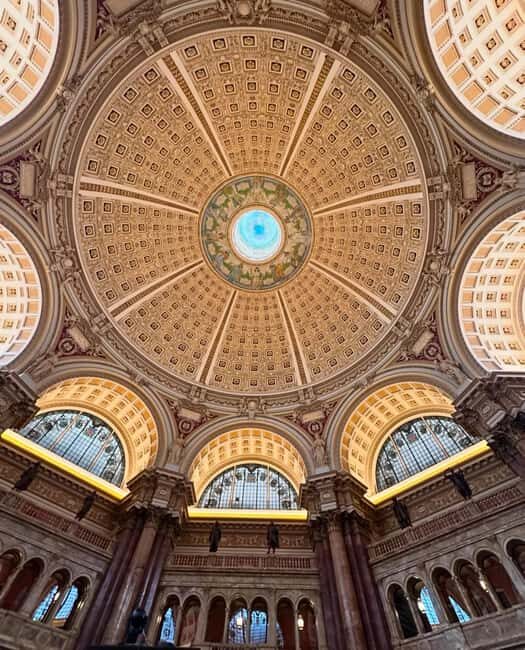
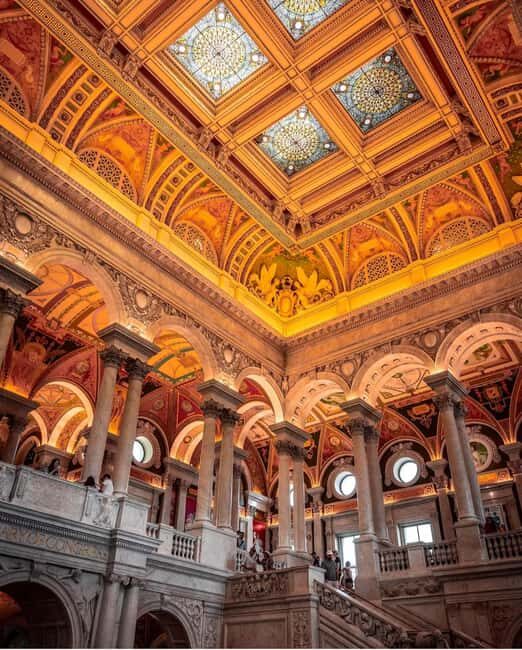
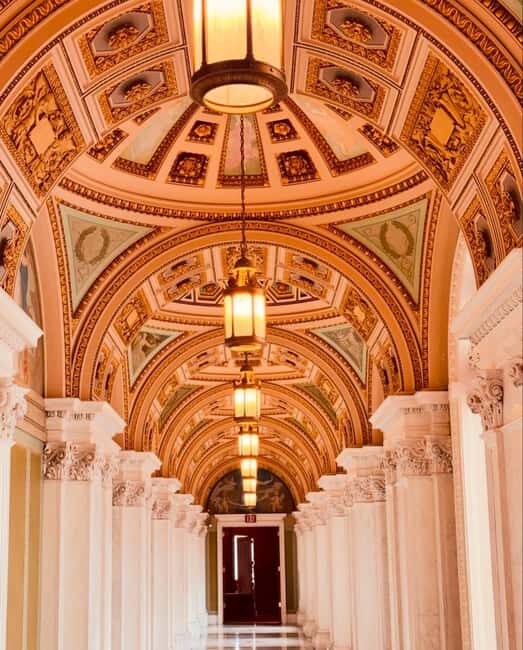
You end at the Library of Congress, and the focus is specific: the ornate Main Hall and the kind of rare items you can’t fake with a brochure. The tour highlights the Main Hall’s intricate mosaics and sculptures, which is a good reminder that this isn’t only about books—it’s about art, craftsmanship, and national storytelling in physical form.
You’ll also explore Jefferson’s personal library, and that sets up a smart arc. Jefferson is tied to ideas, but seeing an actual personal collection helps you understand he wasn’t just writing opinions—he was building a working world of references.
Then comes the roster of famous artifacts: the Gutenberg Bible and Abraham Lincoln’s draft of the Gettysburg Address. If you’ve read these names for years, this is where your brain stops treating them like museum titles and starts treating them like real documents.
You can also read our reviews of more guided tours in Washington Dc






The Sound of Music lyrics and other unexpected treasures
The Library portion is extra fun because it includes objects that look surprising for a place associated mostly with serious research. You’ll get to see items connected to:
- The rotating Treasures exhibit
- Original handwritten lyrics from The Sound of Music
- James Madison’s crystal flute
- Spider-Man comic artwork by Stan Lee and Steven Ditko
That combination may sound whimsical, but it actually makes the Library feel more human. It shows how the Library of Congress doesn’t just preserve government records; it preserves culture across genres and generations.
For practical value: if you’re traveling with mixed interests, this helps you keep everyone engaged. Even if one person is all-in on politics, the unexpected artifacts give the group a second entry point—something visual and immediate that doesn’t require a background lecture to enjoy.
Mondays: what to expect if the Library is closed
The one calendar issue you should know up front: the Library of Congress is closed on Mondays. On those days, the tour doesn’t leave you empty-handed. Instead, you’ll visit the U.S. Botanic Garden, including the glass-domed conservatory and tropical canopies, plus the First Ladies Water Garden.
You’ll also pass the Bartholdi Fountain, created by the Statue of Liberty designer, located right by the Capitol. So even with the swap, you still get a morning anchored in the Capitol Hill area rather than switching to an unrelated neighborhood.
If your priority is seeing Jefferson’s Library and Lincoln’s Gettysburg draft in person, plan your day accordingly. But if you want a different side of DC—plants, glass architecture, and a calm pause between monuments—the Botanic Garden option can still be a good fit.
Price and time: where the $70 feels like value
At $70 per person for 3 hours, the biggest question is value: what are you getting that you’d struggle to replicate without help?
You’re paying for:
- Reserved access to the U.S. Capitol
- Reserved access plus guided time at the Library of Congress
- A docent-led format that turns rooms into stories
- The practical win of skipping the ticket line
For me, the value isn’t only in “seeing famous places.” It’s in the order, the access, and the interpretation. DC monuments are easy to walk past. This tour is designed to keep you moving through the most important interiors with someone explaining why those interiors matter.
And since the tour is described as small-group, you’re more likely to get your questions answered rather than being swallowed by a huge crowd. That can make a big difference if you like dialogue more than lectures.
How the pacing feels (and who this tour suits best)
This tour is structured like a guided morning sprint: Supreme Court first, then Capitol interiors, then finishing at the Library. That pace works well because every segment has a different “type” of reward—architecture and cases, symbolic rooms and survival stories, behind-the-scenes tunnels, and then artifact-focused Library time.
It also works nicely for families with older kids and teens. One family of five with young adults found the guide’s approach engaging enough that everyone left feeling they learned something. If you’re traveling with a mix of history lovers and “I’ll try it” companions, the Library’s unexpected treasures can help your group stay interested.
If you’re the kind of visitor who enjoys stopping for ten minutes of photos but doesn’t want a full-day plan, this is a strong match. On the flip side, if you crave lots of free time to wander independently inside each building, you might feel time-compressed—3 hours is focused, not casual.
Booking advice: who should say yes
I’d book this tour if you want inside access to the Capitol’s key rooms plus a guided Library visit that includes major artifacts and the rotating Treasures exhibit. It’s also a great choice for first-timers who want a smart DC morning that ties together court, legislature, and the country’s stored knowledge.
I’d think twice if Monday is your only day and seeing Library artifacts is the main reason you’re coming. The Botanic Garden swap is pleasant, but it’s not the same goal as Jefferson and Lincoln documents.
Finally, make the meeting point easy on yourself. Arrive early at the Supreme Court steps and give yourself buffer time to find the exact spot where the guide is waiting. That small move prevents the stress that can sour a history-heavy tour.
FAQ
Where do I meet the guide?
Meet at the bottom of the front steps of the Supreme Court, near the sidewalk. The tour starts on the west side of the Supreme Court and does not begin at the Capitol Visitor Center.
What time should I arrive?
Arrive 15 minutes before the scheduled start time to check in.
How long is the tour?
The tour lasts about 3 hours.
What does the price include?
The price includes an expert tour guide, first access to beat crowds, reserved entry for a docent-guided tour of the U.S. Capitol, and reserved entry with a guided tour of the Library of Congress (when open).
What if I’m visiting on a Monday?
The Library of Congress is closed on Mondays. On Monday tours, you visit the U.S. Botanic Garden instead, and you’ll also pass the Bartholdi Fountain.
Does this tour skip the ticket line?
Yes, it includes skip-the-ticket-line entry.
Are pets allowed?
Pets are not allowed. Assistance dogs are allowed.
Is there free cancellation?
Yes. You can cancel up to 24 hours in advance for a full refund.
Should you book this Capitol Hill early-access tour?
If you want a smart, guided Capitol Hill morning with reserved entry, interior access, and stories that connect the Supreme Court, Capitol rooms, tunnels, and Library artifacts, I’d say yes. The $70 price feels reasonable because you’re paying for access, interpretation, and time efficiency—especially the skip-the-line and the guided interiors.
If your travel calendar only allows a Monday and your top priority is the Library of Congress collections, you’ll want to weigh the Botanic Garden swap. For everyone else, this is an efficient way to see DC’s most meaningful government symbols and its preserved national treasures in just a few hours.