REVIEW · TOUR REVIEWS
The Escape Game DC: Epic 60-Minute Adventures in Penn Quarter
Book on Viator →Operated by The Escape Game In Downtown DC · Bookable on Viator
A locked door, a countdown, and teamwork. This Penn Quarter escape game turns part of your Washington DC evening into a 60-minute mission with a dedicated guide and a lively, problem-solving vibe. I also love the location near the White House, because it’s easy to roll straight into dinner or drinks before or after your session.
The setup is friendly and not scary or dark, so it feels more like an action-adventure game night than a haunted-house stunt. One possible drawback: if you’re trying to stay germ-free, plan for close contact with shared surfaces. There’s at least one report of getting sick a few hours later, so I’d bring hand sanitizer and use it often.
In This Review
- Key highlights you’ll feel right away
- Where you start in Washington DC (916 F St NW)
- Four mission themes: pick the vibe your group wants
- How the 60 minutes works (and why the time feels fair)
- What you do during the mission
- The guide experience: help when you need it
- Location perks: make it part of an easy Penn Quarter evening
- Group size, sharing, and why that can help—or annoy
- Ages and adult rules: planning for families without headaches
- Health and comfort: small habits that prevent big annoyances
- Value for $43.45: what you’re actually paying for
- Practical tips to solve faster (and have more fun doing it)
- Should you book The Escape Game DC?
- FAQ
- Where is The Escape Game DC located?
- How long does the experience take?
- What game missions are available?
- Is the escape room scary or dark?
- Can I leave the room during the game?
- What are the age requirements?
- Are service animals allowed?
- Can I cancel for free?
Key highlights you’ll feel right away

- Penn Quarter base (916 F St NW): easy to combine with sightseeing near the White House
- One hour in the room: a focused, time-boxed challenge that keeps energy high
- Four different missions: Prison Break, Special Ops: Mysterious Market, The Heist, The Depths
- Helpful game guide support: you’re not left guessing in the dark
- Not scary, not gloomy: exciting and adventurous, designed for broad enjoyment
Where you start in Washington DC (916 F St NW)
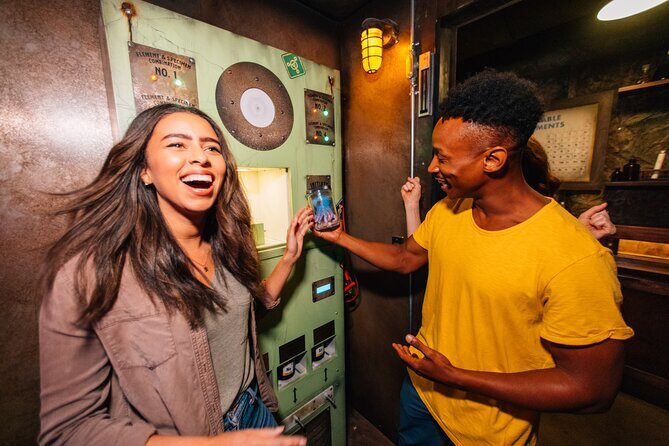
Your session begins at 916 F St NW, Washington, DC 20004. That matters more than it sounds, because Penn Quarter is one of those areas where you can easily stitch the escape game into a bigger DC plan.
Practically, I like that you’re close to major sights without being in a super-remote “you need a taxi to exist” part of town. The game also ends back at the meeting point, which makes it simple to continue your evening on foot.
You’ll get a mobile ticket, so have it ready on your phone. If your battery is one of those always-on-the-edge situations, bring a charger. It’s not a big problem—until it is.
You can also read our reviews of more tours and experiences in Washington DC.



Four mission themes: pick the vibe your group wants

You choose one of four uniquely themed adventures, and that choice affects the feel of the whole hour. The games are:
- Prison Break: escape a warden
- Special Ops: Mysterious Market: detective-style work as a secret agent
- The Heist: recover a stolen masterpiece
- The Depths: an underwater submarine mission
Here’s the useful way I think about it: each theme gives you a different “story flavor,” which changes what you pay attention to while you’re solving. If your group likes mysteries and clues, Special Ops will likely land well. If you want fast-moving, classic problem-solving energy, The Heist and Prison Break can feel more like a chase. If you want something conceptually different, The Depths gives you a fresh setting.
Also, there’s no need to worry that you’re signing up for something scary. The experience is designed to be exciting and adventurous, not dark or fear-based.
How the 60 minutes works (and why the time feels fair)

Plan for about 1 hour 15 minutes total. The flow is built around three chunks:
- About 15 minutes before: preparation and mission briefing
- Exactly 60 minutes to complete the mission: the timed escape
- About 15 minutes after: debrief and photos
That timing is one of the best parts. Many escape rooms feel like a sprint where you’re either rushed or underutilized. Here, the extra pre-brief time helps you get oriented, so you can spend your real minutes solving rather than figuring out the rules.
What you do during the mission
You’ll be in a room with locked doors. But you’re not trapped in the “panic room” sense. Every door has an exit button, and you can leave the room any time if you need to. That’s a comfort factor if you’re the type who hates tight spaces or just wants control.
The mission itself depends on clues and puzzles that require:
- teamwork
- communication
- quick thinking
- and, yes, you actually participating
If your group is the kind that talks during movies and argues about board games, you’re going to do well.
The guide experience: help when you need it
Once you arrive, a dedicated game guide brings you into your adventure and helps you as needed. That guidance is part of what makes this feel more like an event than a puzzle penalty.
In practical terms, the guide doesn’t just stand in the corner. They’re there to keep your team moving when you get stuck. So if you’re worried you might be “bad at escape rooms,” I’d relax. You’re not being graded on your puzzle IQ.
One of the stand-out elements is the support staff helping you match the experience to your group. That matters for mixed teams—like couples, friend groups with different play styles, or families with varying attention spans.






Location perks: make it part of an easy Penn Quarter evening
This is a rare activity that plays well with Washington DC logistics. Since you’re only a few blocks from the White House, you can plan the night without complicated transit puzzles.
I’d think about it like this:
- Before your game: grab pre-game dinner or a late snack nearby
- After your game: walk off the adrenaline with a stop for drinks or dessert
Also, you’re near public transportation, which helps if your whole plan isn’t built around one ride-share trip. The whole point is to keep the experience fun, not stressful.
And because the game ends at the meeting point, you don’t have to rebuild your route afterward. You’re already where you started.
Group size, sharing, and why that can help—or annoy
There’s a maximum of 8 travelers for the experience. That’s a small group by Washington standards, and it generally means you can stay focused.
One important wrinkle: unless you book all spots in your game, the experience has the potential to be shared. That means other people could join your team.
For me, shared play can be a good thing. It turns the hour into a bigger social game—people trade hints, laugh at near-misses, and suddenly you’re all on the same team. But if your group wants a totally private experience, check how your booking is set up so you know what you’re walking into.
Ages and adult rules: planning for families without headaches

These are games recommended for ages 13 and up. Younger players are allowed, but some content may be too difficult for them. That’s a real-world issue: if the puzzles are above a child’s comfort level, the session can feel more like waiting than playing.
There’s also an adult participation rule you should know:
- An adult (18 or older) must participate with anyone 14 and under.
- Any participants under 18 will need an adult to sign their waiver.
So yes, it’s family-friendly in spirit, but it’s not a “drop kids off and stroll away” kind of activity. If you’re going with teens, you’ll likely get a great mix of focus and energy. If you’re going with younger kids, make sure an adult is actively engaged.
Health and comfort: small habits that prevent big annoyances

A big theme from one experience report is getting sick a few hours later—described as a stomach bug. I can’t connect cause and effect with certainty from a single story, but I can tell you what’s smart.
During escape rooms, you touch shared buttons, handles, and surfaces. If you want to reduce the chance of passing germs around, do the simple stuff:
- bring hand sanitizer
- sanitize right before you start
- sanitize again mid-game if you took a lot of shared-hand contact
- avoid touching your face while you’re thinking
It’s not paranoia. It’s just basic travel common sense.
Also, because the doors have an exit button and you can leave anytime, it’s easier to stay comfortable. You’re not stuck if you need a quick break.
Value for $43.45: what you’re actually paying for
At $43.45 per person, you’re paying for more than an activity. You’re paying for:
- a guided, structured game flow (briefing, mission time, debrief)
- a timed challenge that creates focus
- themed rooms that are designed to be understandable and fun
- and a group entertainment experience that gets everyone talking
If you’re traveling as a couple or a small friend group, it can feel like solid value. You get a memorable “we did this together” story, not just a ticket to sit quietly.
Also, note that it’s commonly booked about 13 days in advance on average. That doesn’t guarantee availability, but it does suggest this is one of those activities people plan into their itinerary. If your dates are fixed, book early so you can choose your mission theme.
Practical tips to solve faster (and have more fun doing it)
You don’t need special puzzle talent here. You need good team habits. Here’s what I’d do if I were walking in today:
- Assign roles quickly. One person calls out clues. Another checks puzzle panels. Another keeps time and tracks what’s been tried.
- Communicate like you mean it. Say what you see, not just what you think. If you spot something odd, share it immediately.
- Don’t all hammer the same spot. If one puzzle stalls, split up and test different areas. Teamwork beats brute force.
- Treat the guide as part of the game. If you’re stuck, ask for help so you can get back to problem-solving rather than spinning.
And here’s the slightly humorous truth: most escape room teams lose time not because they can’t solve puzzles, but because nobody is talking. So talk.
Should you book The Escape Game DC?
I’d book it if you want an entertaining, not-scary challenge that’s easy to fit into a DC day near the White House. It’s a great choice for friend groups, couples, and families with teens—especially if you like activities where conversation and teamwork are part of the fun.
I’d think twice if your group is strongly private-only, because the game can be shared unless you book all spots. And if you’re extra health-conscious, bring sanitizer and practice basic hygiene, since close-contact games can spread germs.
If your goal is a memorable evening built around puzzles and teamwork, this hits the mark.
FAQ
Where is The Escape Game DC located?
The start (and end) point is 916 F St NW, Washington, DC 20004, USA.
How long does the experience take?
The activity runs about 1 hour 15 minutes total, with 60 minutes to complete the mission inside the room and additional time for briefing and debrief/photos.
What game missions are available?
You can choose one of four games: Prison Break, Special Ops: Mysterious Market, The Heist, or The Depths.
Is the escape room scary or dark?
No. The games are designed to be exciting and adventurous, not scary or dark.
Can I leave the room during the game?
Yes. You will be in a room with locked doors, but each door has an exit button, and you can leave at any time if you need to.
What are the age requirements?
Games are recommended for ages 13 and up. Younger players are allowed, but some content may be difficult. An adult 18 or older must participate with anyone 14 and under, and participants under 18 need an adult to sign their waiver.
Are service animals allowed?
Yes, service animals are allowed.
Can I cancel for free?
Yes. You can cancel for a full refund up to 24 hours in advance. Canceling less than 24 hours before the start time is not refunded, and changes made less than 24 hours before the experience’s start time are not accepted.