REVIEW · MUSEUMS
Washington DC Museums self-guided walking tour & scavenger hunt
Book on Viator →Operated by Tourist Scavenger Hunt · Bookable on Viator
A scavenger hunt turns the Mall into a game. This self-guided walk has you roaming the east side of the National Mall at your own pace while solving 30+ challenges tied to major landmarks and museums.
I like that it works well for mixed groups, especially if you’ve got a teen who needs a reason to keep walking. I also like that you can start when you want, so you can match your day to the light and crowds. One possible drawback: the hunt needs internet access/WiFi, and the clue text can be imperfect, so you may need to use your common sense when something looks off.
In This Review
- Key highlights worth knowing
- How the game-style National Mall hunt really works
- Price and value: $44.85 per group can be a sweet deal
- Starting at 1500 Constitution Ave NW: set up before you walk
- Your east National Mall loop: the stops that shape the route
- Stop 1 to 2: National Museum of African American History and Culture, then American History
- Stop 3 to 4: Andrew W Mellon Auditorium and the Robert F. Kennedy Department of Justice Building
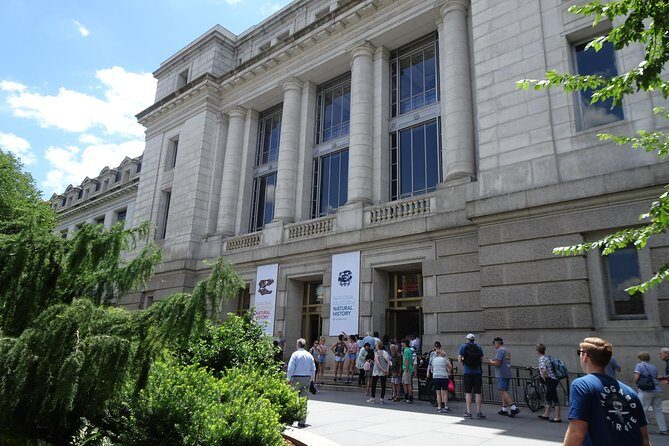
- Stop 5: The National Archives Museum
- Stop 6 to 7: National Gallery of Art (listed twice)
- Stop 8: Embassy of Canada to the United States
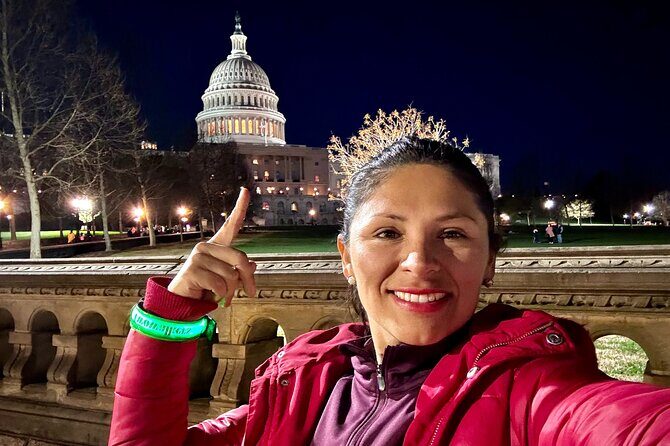
- Stop 9 to 10: Ulysses S. Grant Memorial and the U.S. Capitol
- Stop 11: The National Mall loop area
- Stop 12: United States Botanic Garden
- Stop 13 to 14: National Museum of the American Indian, then Hirshhorn Museum and Sculpture Garden
- Stop 15 to 16: Smithsonian Arts + Industries Building, then Smithsonian Castle
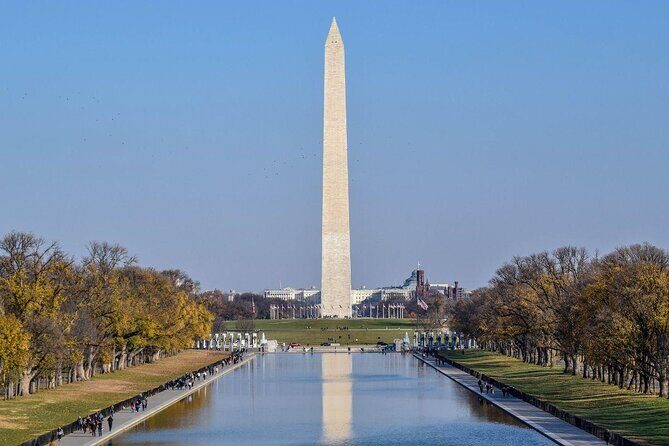
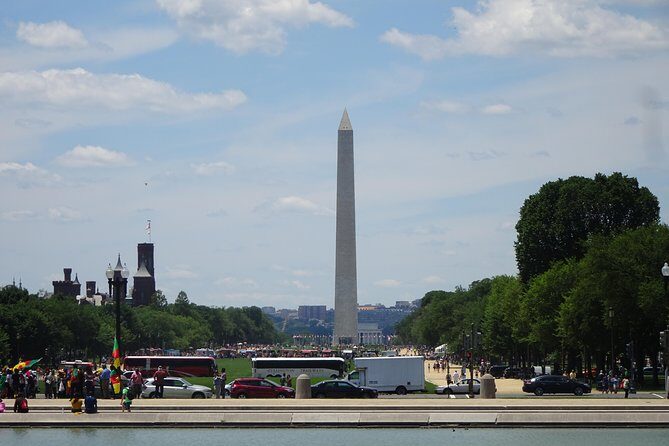
- Stop 17: Washington Monument to the finish
- The puzzles: fun factor, but watch for typos and tricky clues
- Major film locations: why that bonus changes your eyes
- Walking pace, timing, and staying comfortable
- Who should book this scavenger hunt—and who might not love it
- Should you book Washington DC Museums self-guided walking tour & scavenger hunt?
- FAQ
- How long does the Washington DC museums self-guided walking tour take?
- What does the tour cost?
- Where does the scavenger hunt start?
- When does the tour end?
- Do I need internet access to complete the challenges?
- How many challenges are included?
- Are there film-related stops included?
- What languages is it available in?
- Is this a private experience?
- Can I cancel for free?
Key highlights worth knowing
- Self-guided National Mall pace so you can slow down at the places you care about
- 30+ challenges that turn museum landmarks into a puzzle route
- A loop from the National Mall museums to the Washington Monument with a clear finish back at the start
- 6 major film locations adding a fun “look again” layer to famous stops
- WiFi required to complete the puzzles on your phone
How the game-style National Mall hunt really works
This is not a guided talk where someone leads you from stop to stop. It’s a self-guided route built around a scavenger hunt feel: you follow the clues, answer challenges, and keep moving along a set path across the east half of the National Mall.
In practice, that means you get control. If your group wants to linger near a museum facade, you can. If you’re in a hurry, you can keep it moving. The route is designed to take you from the National Museum of African American History and Culture across to the Smithsonian museum cluster, then down toward the National Mall loop and out to the Washington Monument area—ending back where you started.
Plan on about 3 hours of active walking. That’s long enough to feel like you saw a lot, but short enough that you’re not stuck for half a day if the weather turns.
One more thing I’d treat as non-negotiable: this experience requires internet access. If your phone battery is low or you have spotty signal, the puzzles can stall. Bring a charged phone and be ready to start with enough power to finish.
You can also read our reviews of more walking tours in Washington DC


Price and value: $44.85 per group can be a sweet deal
The price is $44.85 per group, for up to 6 people. That group pricing is the main value lever here. If you’re a solo traveler, it’s usually best suited when you can join as a group purchase (or you’re traveling with a small family). If you’ve got a couple adults plus teens, it can be a bargain compared with per-person guided tours.
Also, you’re paying for a lot more than the walk itself. You’re getting:
- 30+ challenges (so you’re not just sight-seeing)
- 6 major film locations markers (so the route has extra “game” meaning)
- museum learning prompts across a dense stretch of major DC sites
And the payoff is often emotional: when the hunt clicks, it turns “I guess we have to see museums” into problem-solving together. One of the strongest signals from real use is that the best reward was a teenager’s smile—and that tracks with the whole game approach. Teens often engage faster when there’s a goal.
Starting at 1500 Constitution Ave NW: set up before you walk
Your start point is 1500 Constitution Ave. NW, Washington, DC 20004. The experience also ends back at the meeting point, which is helpful if you don’t want to worry about getting to a different finish location.
Before you head out, do the boring stuff well. Here’s what matters:
- Charge your phone fully (puzzles rely on it)
- Make sure you have internet working before you begin
- Read the first clue slowly and then move
This kind of scavenger hunt only feels smooth when you avoid rushing early. A small mistake at the start can snowball into confusion later, especially in the DC museum district where multiple entrances and paths can look similar.
If you’re traveling with kids or teens, I’d also tell them upfront: you’ll sometimes need to walk a bit to match a clue to what you see in front of you. That expectation keeps frustration down and helps them stay in the game.
Your east National Mall loop: the stops that shape the route
This route is built like a long, logical walk across the east side of the National Mall. It starts with a museum anchor, then keeps threading through major landmarks until the end goal becomes the Washington Monument area.
Here’s how the path feels, stop by stop, and what to watch for.
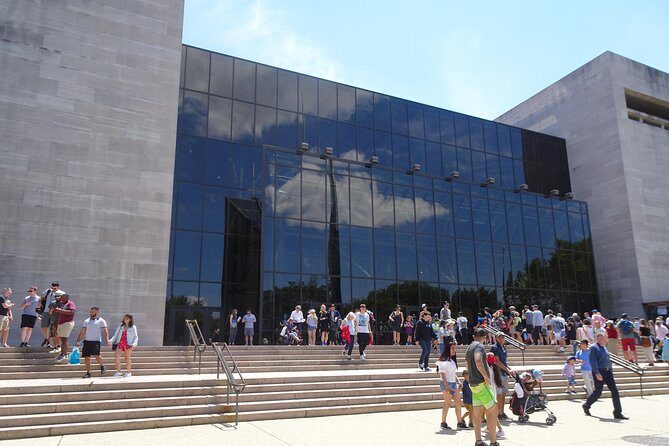
Stop 1 to 2: National Museum of African American History and Culture, then American History
You begin at the National Museum of African American History and Culture. Even if you’re not spending time inside, the exterior setting matters because the hunt begins there and uses the area as your first puzzle start.
From there, you move toward the National Museum of American History. This is a great early momentum point: it’s easy to see how the hunt connects museums and landmarks without feeling like you’re wandering blindly.
Tip: Early on, don’t try to multi-task too much. Focus on the next challenge first, then enjoy the sights while you’re walking between clue points.
You can also read our reviews of more guided tours in Washington DC






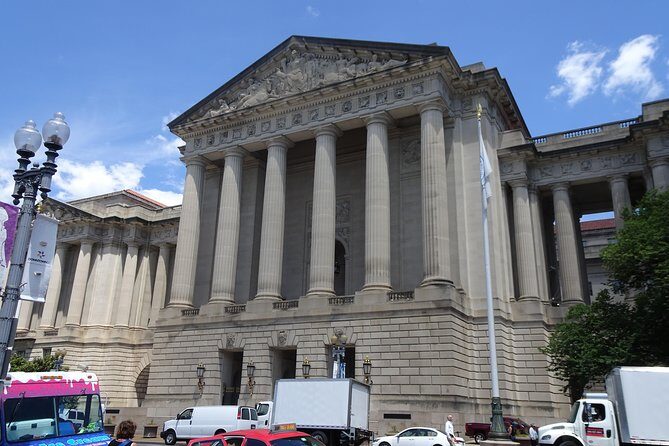
Stop 3 to 4: Andrew W Mellon Auditorium and the Robert F. Kennedy Department of Justice Building
You’ll pass the Andrew W Mellon Auditorium and then the Robert F. Kennedy Department of Justice Building. These stops matter because they add variety to the walk—less “museum entrance” and more “major government architecture” energy.
This is also where the route can feel like it changes gears. If your clues push you closer to federal buildings, take a breath and read carefully. One snag can happen when a clue is vague or the navigation feels counterintuitive.
Stop 5: The National Archives Museum
Next up is the National Archives Museum. This is one of those landmark zones where the area itself makes it easy to orient yourself: you know you’re in the right DC concentration of big sites.
If your group starts to drag, this stop often works as a morale boost. It’s a recognizably important building area, and it helps people feel like the hunt is delivering on big-name DC.
Stop 6 to 7: National Gallery of Art (listed twice)
You hit the National Gallery of Art, shown twice in the stop list. On a self-guided route, that can simply mean the hunt passes through multiple clue points connected to the same general complex.
What’s valuable here is the pace of the route. You’re not just rushing from one famous entrance to another. You’re also getting small puzzle turns that force you to pay attention to what’s around you.
Stop 8: Embassy of Canada to the United States
The Embassy of Canada to the United States is an interesting contrast. It breaks up the museum-heavy rhythm and keeps you from feeling like you’re stuck in the same kind of streetscape for the entire route.
If you like seeing DC as a living capital—where diplomacy sits right beside monuments—this is one of the more satisfying “unexpected” stops.
Stop 9 to 10: Ulysses S. Grant Memorial and the U.S. Capitol
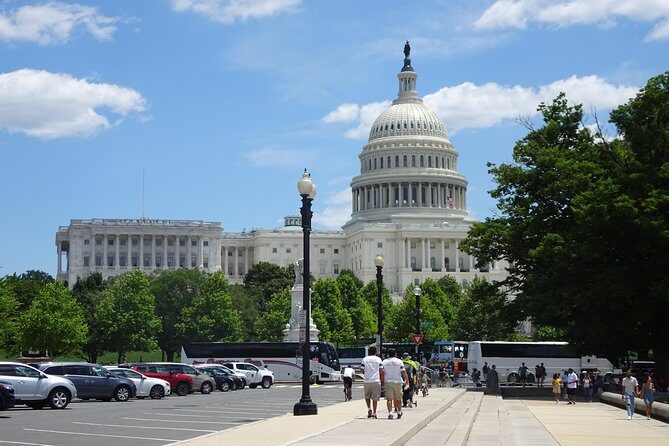
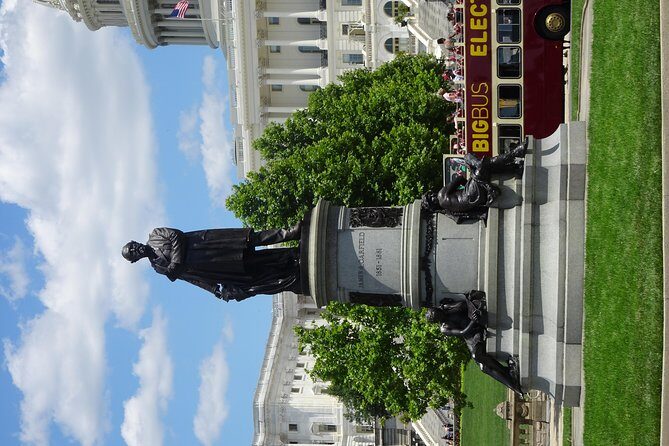
You then pass the Ulysses S. Grant Memorial and move toward the United States Capitol area. This is where the route becomes more iconic. Even if you’ve seen photos of these places a thousand times, the hunt framing makes you slow down and look again.
Also, it’s a good stretch for group dynamics. If someone is getting bored, the idea of “find the next answer” often re-engages them.
Stop 11: The National Mall loop area
The National Mall stop acts like a reality check: you’re in the wide open heart of it all. This portion is where the walking becomes more about flow and less about squeezing into tight puzzle areas.
If you’re trying to finish on time, this is also where you can gauge how many challenges you have left, because the space around you tends to make navigation easier.
Stop 12: United States Botanic Garden
Next you go to the United States Botanic Garden. It’s a welcome change of scenery in the middle of a route that’s otherwise heavy on big institutional buildings and museum names.
This stop can be a good place to reset: grab water, stretch legs, and get everyone back into puzzle mode.
Stop 13 to 14: National Museum of the American Indian, then Hirshhorn Museum and Sculpture Garden
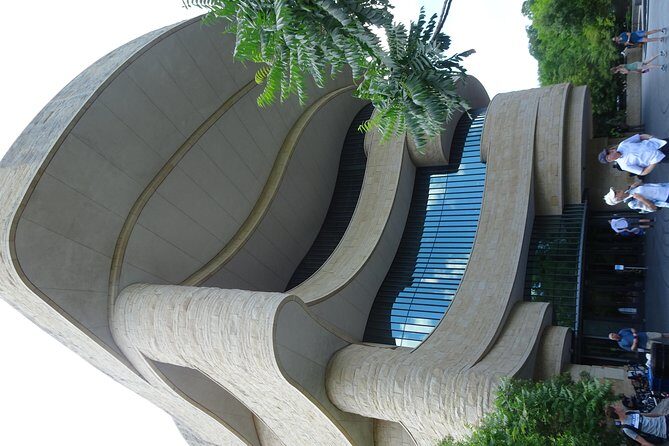
Now you’re back into major museum territory with the National Museum of the American Indian and the Hirshhorn Museum and Sculpture Garden. These are strong “DC museum district” anchors, and they help the hunt feel like more than just a photo-walk.
One practical note: museum areas can be busy, and clue hunting is easier when your group moves as a unit. If you split up, you’ll lose time—especially if you need to compare what you’re seeing to solve a challenge.
Stop 15 to 16: Smithsonian Arts + Industries Building, then Smithsonian Castle
You’ll visit the Smithsonian Arts + Industries Building, then the Smithsonian Castle. I like this segment because it feels like you’re moving through the Smithsonian ecosystem rather than hopping from random site to random site.
If your group enjoys architecture and identity—how DC’s museum campus signals itself—this part is likely to feel more satisfying.
Stop 17: Washington Monument to the finish
The route ends at the Washington Monument area. That makes a lot of sense for a scavenger hunt: the end goal is instantly recognizable and it lets you feel like you actually completed something, not just walked around.
Since the experience ends back at the start point, you still have to wrap up smartly. Keep an eye on your timing so you don’t spend the final part scrambling instead of finishing.
The puzzles: fun factor, but watch for typos and tricky clues
This is where the experience can split into two different kinds of days.
When it goes well, it stays fun. One standout theme was the way the hunt kept a teen engaged while clues were being solved together. That’s what you want from a scavenger hunt: it creates a shared mission.
But there are real-world snags you should know about so you can plan with confidence:
- Some clue text can have typos or incorrect details, like mixing up dates (examples reported include 1858 vs 1958) or confusing names (like Teddy Roosevelt vs FDR).
- A clue may have navigation direction problems, so you might get pointed the wrong way for a moment.
- Clues can feel obscure, especially if you don’t already know the area. One account described the clues as too minute and not ideal for first-timers who expected a broader “get to know the Mall” overview.
Here’s how to handle it without ruining the mood:
- Treat clue text as a hint, not a law of physics. If something doesn’t match what’s in front of you, pause and look around.
- If you backtrack, do it early. Late backtracking wastes time and heat, especially in cold weather.
- If you’re stuck, there is a way to get help. One review mentioned calling and getting a helpful response from someone on the other end.
Also: because you’re moving outside, the hunt changes with weather. Cold air makes people rush and miss clues. One review specifically noted that it was freezing, so they couldn’t spend much time searching.
Major film locations: why that bonus changes your eyes
Your hunt includes 6 major film locations. Even if you’re not a movie superfan, this kind of twist works because it gives you a reason to look past the postcard view.
The practical effect is simple: instead of scanning for the next puzzle spot randomly, you start looking for the same kind of angles filmmakers love—views, sightlines, and landmark positioning. It turns “I recognize this” into “I can see how this scene would work.”
And if you’ve got people in your group who tune out when something feels too educational, the film angle can bring them back into the game.
Walking pace, timing, and staying comfortable
This is a long, straight walking experience across a classic DC corridor. That’s great because it’s efficient, but it also means you should dress for movement.
Two things that matter most:
- Time pressure: with about 3 hours total, you don’t want long stops that kill the puzzle momentum.
- Temperature: if it’s cold, reading clues carefully takes patience. One account mentioned freezing weather making it hard to spend time searching.
I’d aim for layers and comfortable shoes. If your group runs warm fast, bring something light you can shed. If your group runs cold, don’t assume “it will be fine once we start walking.”
Who should book this scavenger hunt—and who might not love it

This is best when you want structure without a live guide.
You’ll likely enjoy it if:
- you’re traveling with teens or curious kids who like puzzles
- you like exploring at your own pace and don’t need someone talking nonstop
- you enjoy self-directed learning, where the prompts keep you looking closely
- your group includes at least one person willing to keep solving when the clues get odd
It might be less satisfying if:
- you don’t want puzzle searching and prefer straightforward sightseeing
- your group expects super clear, beginner-friendly directions all the way through
- you’re visiting with limited patience for typos or unclear clues
Think of it this way: this is not a museum ticket with a checklist. It’s a timed-in-feel walking game across famous DC spaces.
Should you book Washington DC Museums self-guided walking tour & scavenger hunt?
I’d book it if your group likes the idea of turning the National Mall into a mission with real movement and a fun finish near the Washington Monument. The group price for up to 6 is a big plus, and the fact that it’s structured around museum landmarks plus film-location moments gives it variety.
I would hesitate only if you know your group hates puzzles, or if you’re traveling without reliable internet and fully charged phones. And if your group is brand-new to DC and wants an easy, broad “see everything” experience, the hunt can feel more challenging than expected because the clue difficulty can run obscure.
If you’re flexible, bring layers, and treat clues like clues (not commandments), this can be a really memorable way to experience the Mall—especially if you’ve got a teen ready to solve something.
FAQ
How long does the Washington DC museums self-guided walking tour take?
It takes about 3 hours on average.
What does the tour cost?
It costs $44.85 per group, up to 6 people.
Where does the scavenger hunt start?
The meeting point is 1500 Constitution Ave. NW, Washington, DC 20004, USA.
When does the tour end?
It ends back at the meeting point.
Do I need internet access to complete the challenges?
Yes. Internet access is required to complete the activity.
How many challenges are included?
There are 30+ challenges to solve.
Are there film-related stops included?
Yes. The experience includes 6 major film locations.
What languages is it available in?
It is available in English and French.
Is this a private experience?
Yes. Only your group participates.
Can I cancel for free?
Yes. You can cancel for a full refund up to 24 hours in advance of the experience start time.