REVIEW · EVENING EXPERIENCES
DC Monuments Day or Night American History Electric Cart Tour
Book on Viator →Operated by American Capital Tours · Bookable on Viator
DC hits fast from a moving cart. This 2-hour electric cart tour threads past Washington DC’s biggest landmarks without the usual parking and traffic headaches, and you can do it in the daytime or after dark. I like how comfortable and efficient the ride feels for a tight schedule.
The real win is the guided storytelling that makes the monuments easier to remember (and a few guides, like Fernando and Elmira, bring humor without turning the tour into a comedy club). The tradeoff is time: most stops are short, so plan for photos and key viewpoints, not long linger sessions.
In This Review
- Key things I’d watch for on this cart tour
- Why an electric cart beats the usual DC scramble
- Meeting at 333 G St NW: what the timing feels like
- Capitol Hill, art, and gardens: the “government to human story” warmup
- The Mall’s headline monuments: Washington Monument to Lincoln
- Jefferson and FDR: when timing and entry details matter
- White House area and Chinatown: the last mile of your DC “loop”
- Day vs night: pick your experience like you’re choosing a soundtrack
- Sound, weather, and photo logistics: the stuff that makes or breaks it
- Price and value: is $59 a good deal?
- Who this e-cart tour is best for (and who should skip)
- The guides make the difference
- Should you book this DC cart tour?
- FAQ
- How long is the DC Monuments Day or Night American History Electric Cart Tour?
- What does the tour cost?
- Is this tour offered during the day, at night, or both?
- What language is the tour in?
- Where do we meet for the tour?
- What’s included in the price?
- Are admission tickets included for all stops?
- How big is the group?
- Can I get a full refund if I cancel?
Key things I’d watch for on this cart tour
- Small group size (up to 20) keeps the vibe relaxed and helps with photo moments
- Quick stops across the National Mall so you get a lot of highlights in a short time
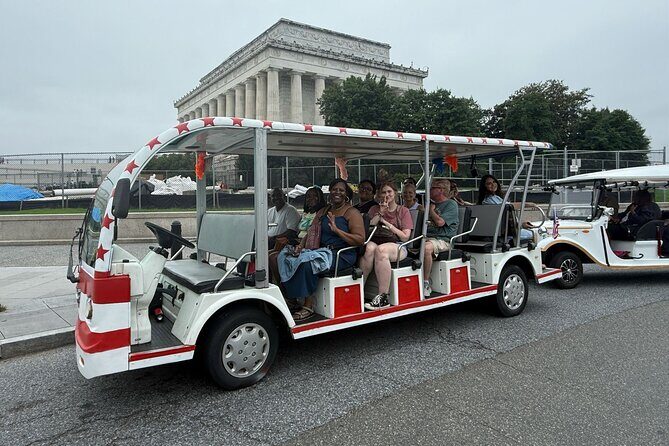
- Open-air carts give good sightlines, but you’ll want to dress for wind and cold at night
- Memorials with mixed entry details: some are free, while the Jefferson and FDR memorials aren’t included
- Guides who explain the “why” behind government buildings and memorial design
- A fixed, easy start point at 333 G St NW with the tour ending back there
Why an electric cart beats the usual DC scramble
Washington DC can be amazing and exhausting in the same afternoon. The streets around the National Mall are busy, sidewalks can feel like a funnel, and you’ll lose time just moving between stops. This e-cart format cuts that friction.
The cart also helps you see monuments from the right angles without playing leapfrog across crowds. Even when you’re not right next to every statue or wall (some sites are simply set up so you view them from the approach), you still get clear sightlines and a steady rhythm. It’s the kind of tour that gets your bearings fast, then leaves you free to return on your own for the deeper stuff later.
You can also read our reviews of more historical tours in Washington DC



Meeting at 333 G St NW: what the timing feels like
You meet at 333 G St NW (Washington, DC 20001) and the tour returns you to the same spot. Expect a smooth start and a guided ride that keeps moving rather than “stalling” while people regroup.
The tour runs about 2 hours. That matters because you’ll feel the tempo at each stop. You’ll get enough time for a couple photos, a quick look, and a short explanation, but you shouldn’t plan on reading every plaque. If you’re the type who likes to linger, this will still work—you’ll just want to pick one or two places to revisit later.
The tour uses a mobile ticket, and confirmation comes at booking. The group stays capped at 20 travelers, which usually helps with the flow when you hop on and off for photos.
Capitol Hill, art, and gardens: the “government to human story” warmup
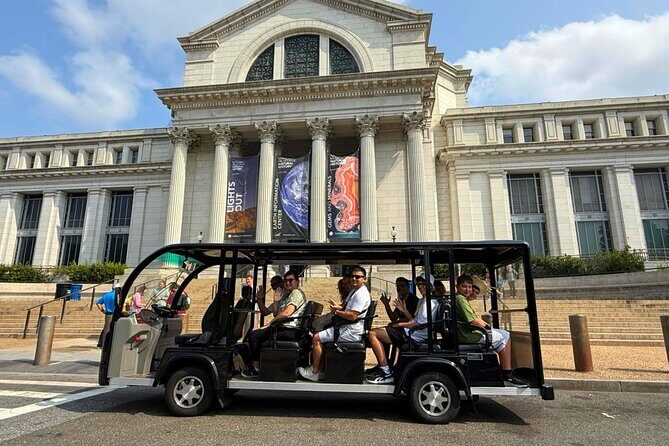
The tour begins with Capitol Hill, a smart starting point because it immediately frames the whole trip. In a few minutes you’ll be looking at the political heart of the country—home to the U.S. Capitol, plus nearby power-bolts like the Supreme Court and the Library of Congress area. Even if you’re not big on civics, the architecture and layout click once a guide explains what each building is for.
Right after that, you’ll roll into the area where you can pair “institutions” with “culture”:
- National Gallery of Art (noted as free admission). This is a great contrast to politics: the message becomes, America doesn’t only legislate—it also collects, teaches, and preserves.
- U.S. Botanic Garden (right near the Capitol area). You get that rare DC break: a calmer patch of plants and themed garden space that feels like a breath of air in the middle of monument time.
- National Museum of African American History and Culture. This stop tends to stick in your mind because it shifts from physical monuments to lived experience—history you can feel in the exhibits and themes.
For these stops, the value is less about “full museum visit” and more about setting your mental map. You’re learning what’s around you and why it matters, so when you do choose to go back later, you know where to aim your time.
The Mall’s headline monuments: Washington Monument to Lincoln
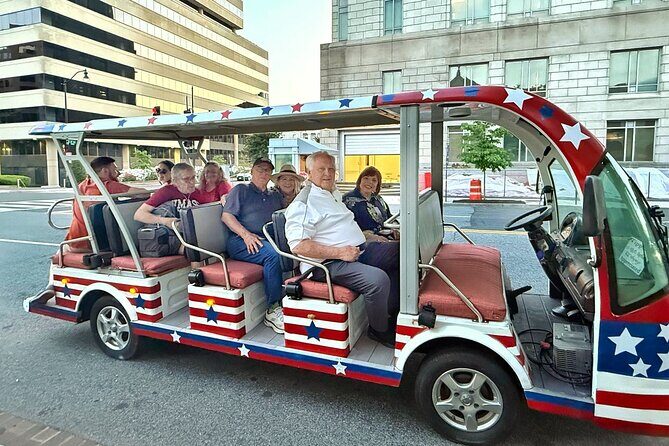
After the Capitol area, you’ll head to the iconic National Mall sights.
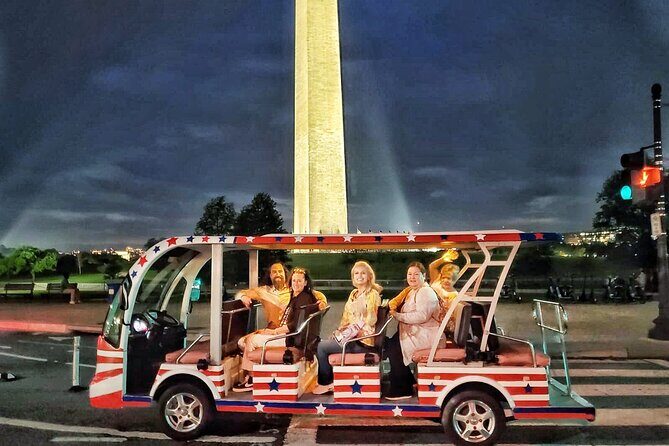
Washington Monument is next, and it’s a big one: an obelisk dedicated to George Washington with the kind of clean geometry that makes DC feel like a plan someone actually drew on purpose. You’ll have about 5 minutes—enough for a solid look and photos, not enough to treat it like a full-day stop.
Then the tour moves into memorial country, where the design does the heavy lifting:
- Martin Luther King, Jr. Memorial (about 10 minutes). Expect quotes and a statue that turn the area into a place for reflection. It’s often the moment where the tour shifts from “tourist sightseeing” to “I should slow down.”
- Lincoln Memorial (about 10 minutes). Lincoln’s legacy is front and center here, and the inscriptions and sightlines are what you’ll notice first—especially the way people photograph themselves against the steps and columns.
From there, you’ll pass through two more heavy-hitter memorials:
- Vietnam Veterans Memorial: reflective black granite walls with names carved in.
- Korean War Veterans Memorial: lifelike statues and a reflective wall.
These two aren’t just “see it once” stops. Even with short time, they help you understand what DC does well: it makes national memory physical. If you feel like you need more time for the names, save that for a second visit—this cart tour gives you orientation and context, not a full remembrance session.
Jefferson and FDR: when timing and entry details matter
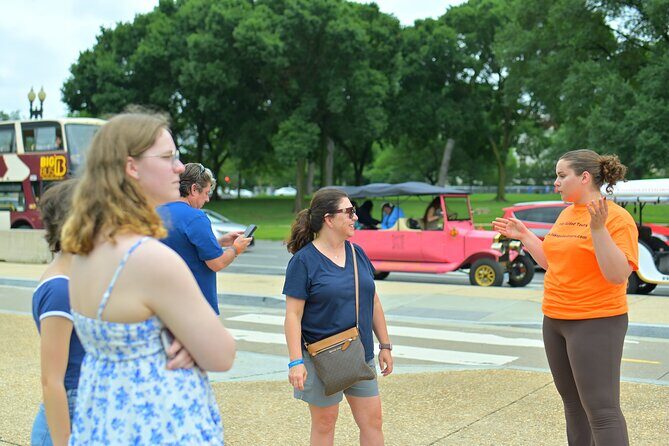
Two stops on the tour are flagged as having admission not included:
- Thomas Jefferson Memorial (not included)
- Franklin Delano Roosevelt Memorial (not included)
That doesn’t mean you’ll be shut out. It means your tour ticket doesn’t cover potential entry costs for these sites (and some visitors prefer to know that upfront so they aren’t surprised later). If you’re doing the tour on a tight budget, it’s worth keeping those two in mind.
Both memorials sit near water and open space themes—so they often feel different depending on the time of day. Daylight gives you broad views and an airy feel. At night, the surfaces and surrounding lights can make the walk feel more dramatic, even if the stop length is the same.
The practical takeaway: since your time at each place is limited, decide what you want from Jefferson and FDR. If you’re primarily after photos and a quick read of the key messaging, this tour format works. If you want to linger, plan to come back for a longer visit when you can slow your pace.
You can also read our reviews of more evening experiences in Washington DC






White House area and Chinatown: the last mile of your DC “loop”
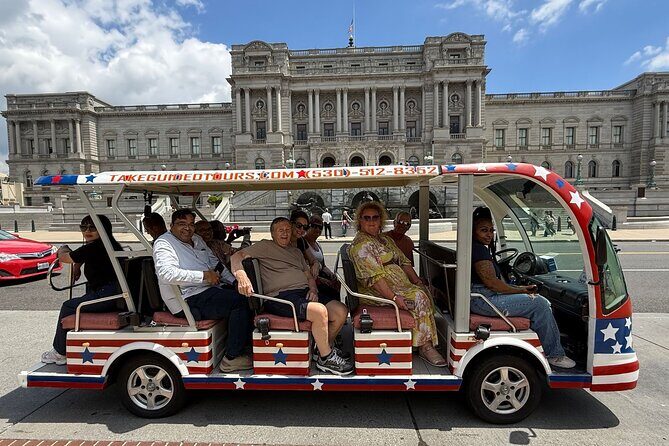
You’ll finish with the White House area (noted as free) and then head toward Chinatown.
The White House stop (about 5 minutes in the tour info) is the classic DC photo magnet. Even if you can’t do a long walk around the perimeter, you’ll get the look people come for and the context from the guide on how it fits into the larger government story you’ve been building since Capitol Hill.
Chinatown is then a fun counterpoint. After memorials and marble, the change in streetscape and food energy makes DC feel like a living city again, not just a collection of landmarks. If you’re hungry, this is a good cue to plan your next meal after you wrap.
Day vs night: pick your experience like you’re choosing a soundtrack
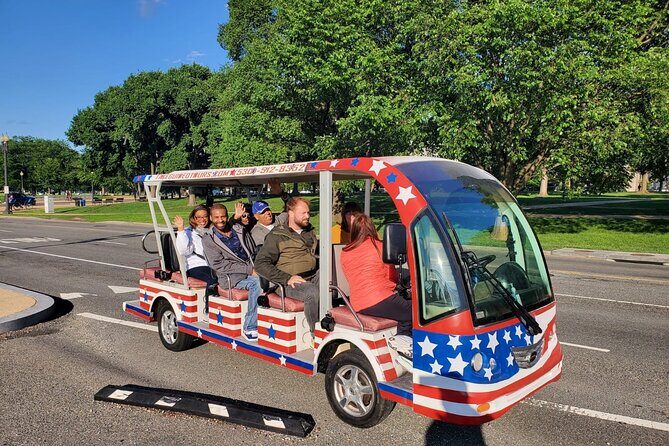
This tour is offered day or night, and the difference is more than just lighting.
Night tends to feel magical because monuments look more dramatic after dark and the Mall can feel less crowded in motion (you’re still dealing with people, but the atmosphere shifts). Reviews also highlight the “see it lit up” factor—exactly what you want if your trip includes a special evening.
Daytime is better if you want clearer visibility, easier walking outside the cart for photos, and less stress about cold. Day also makes it easier to read and notice details when you stop.
If you’re debating: for most first-timers, I’d lean night if weather is decent and you don’t mind dressing warm. For families with kids or anyone who gets cold quickly, day may be the calmer choice.
Sound, weather, and photo logistics: the stuff that makes or breaks it
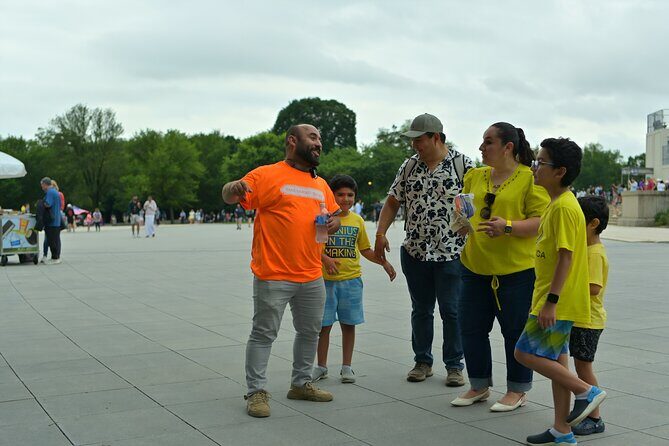
A few practical points can help your tour feel smooth.
Open-air carts mean wind is part of the plan. If you book a night tour, layers aren’t optional. Even when the cart is comfortable, the exposure can turn “pleasant” into “why am I shivering.”
Audio can be tricky depending on where you sit. One experience note flagged that the audio was harder to hear from the back of the cart. If you can, try to position yourself where you’ll hear the guide clearly. It’s not about being snobby—it’s about catching the stories that make the stops worth it.
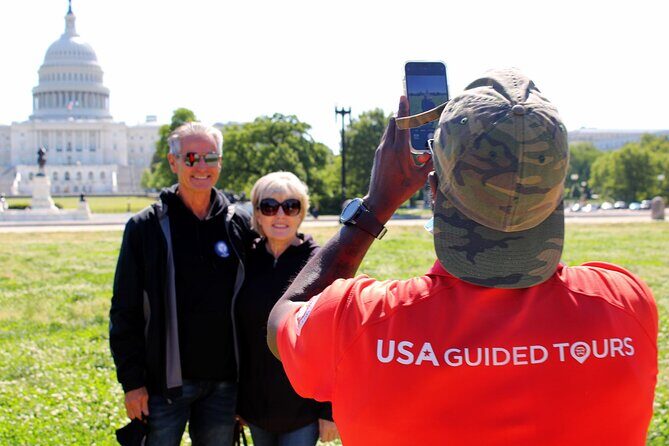
For photos: the tour format includes multiple short stops for pictures. Some guides also help by taking photos for small groups, which is a big deal if you’re traveling as a couple or family and don’t want to beg a stranger every time. When you arrive at a monument stop, take a second to line up and ask your guide to coordinate timing for the best shot.
One more real-world tip from a guest: there’s an Arrel’s restaurant nearby that can work as a restroom option before you start (not an official part of the tour, just a helpful heads-up if you’re caught without time).
Price and value: is $59 a good deal?
At $59 per person for about 2 hours, you’re paying for two things at once:
1) guided narration from a professional tour guide
2) the transportation that moves you efficiently between widely spaced monuments
That value gets stronger in DC because a lot of the major sights are free or low-cost once you’re there. The tour info calls out free admission for stops like Capitol Hill, Washington Monument, National Gallery of Art, MLK Jr. Memorial, Lincoln Memorial, and White House area. You’re also getting your time protected—your guide keeps the route moving so you’re not spending your limited daylight stuck in transit.
The main financial “watch item” is the two memorials where admission isn’t included (Thomas Jefferson Memorial and FDR Memorial). If you strongly want those as your priority stops, plan for potential extra costs on the day.
Overall, $59 feels like a fair bargain when you want a guided sampler that also solves the logistics problem DC creates.
Who this e-cart tour is best for (and who should skip)
This tour fits best if:
- you want to see a lot fast and you’re short on time
- you’d rather learn the context from a guide than read every sign
- you prefer comfort and less walking between stops
- you’re traveling with kids, couples, or anyone who’d rather ride than hoof it the whole time
It’s less ideal if:
- you want long museum visits and extended quiet time at every memorial
- you’re very sensitive to cold weather and don’t want open-air exposure
- you expect to be right next to every monument for extended time
The guides make the difference
The tour is only as good as the person telling the story, and the guide experiences here are a major strength. You might meet guides like Fernando, who comes through as engaging and funny while keeping facts clear, or Elmira/Elvira, noted for being friendly and easy to understand, or Saul, who shared lots of memorable facts on an evening ride.
You can’t control which guide you’ll get, but you can control how you show up: arrive a few minutes early, listen for the stop-by-stop overview, and ask a quick question if something sparks your curiosity. That’s when the tour turns from “a loop” into a personal education.
Should you book this DC cart tour?
If you’re doing DC for a day or two and you want the big-name monuments plus the context behind them, this is an excellent way to start. It’s also a smart choice if you’re trying to avoid the “we saw stuff, but we’re not sure what we saw” problem.
I’d book it if you:
- want a guided first look at the Mall and memorials
- prefer short photo stops over long independent wandering
- want easy transportation and a small group setup (up to 20)
I’d think twice if you:
- want to spend lots of time reading and lingering at memorials
- plan to do it on a bitterly cold night without layers
- need deep museum time, because this tour is structured for movement and highlights
Done right, this tour gives you something that’s hard to build on your own quickly: a clear sense of how DC’s landmarks connect, and which places you’ll want to revisit once you’re back in control of your time.
FAQ
How long is the DC Monuments Day or Night American History Electric Cart Tour?
It’s listed as about 2 hours.
What does the tour cost?
The price is $59.00 per person.
Is this tour offered during the day, at night, or both?
It’s offered as a Day or Night American History electric cart tour, depending on the option you book.
What language is the tour in?
The tour is offered in English.
Where do we meet for the tour?
The meeting point is 333 G St NW, Washington, DC 20001, USA, and the tour ends back at the meeting point.
What’s included in the price?
The tour includes a guided e-cart tour and a professional tour guide.
Are admission tickets included for all stops?
Some are listed as free (including Capitol Hill, Washington Monument, National Gallery of Art, MLK Jr. Memorial, Lincoln Memorial, and the White House area). Thomas Jefferson Memorial and Franklin Delano Roosevelt Memorial are listed as admission not included.
How big is the group?
The tour has a maximum of 20 travelers.
Can I get a full refund if I cancel?
Yes. It offers free cancellation up to 24 hours in advance for a full refund.