REVIEW · HISTORICAL TOURS
Washington DC History of Slavery Walking Tour
Book on Viator →Operated by DC Slavery Tours · Bookable on Viator
DC slavery history sits in plain sight. This 1-hour private Washington DC History of Slavery walking tour strings together real street-level locations where the story of slavery and African American life shows up in the city’s layout, not just in textbooks. You’ll also get free access at each stop, so the money you pay goes to the guide and the way the route is explained, not to side fees. The catch: it’s fast paced, so each place is more of a focused visit than a long stay.
I like the way the teaching is tied to named experts, including guides such as Dr. Koura and Dr. Gibson, who use story, context, and frequent questions to keep you thinking while you walk. Expect a guided route that ends at the National Museum of African American History and Culture area, with plenty of time to reset your bearings and keep exploring after the tour.
In This Review
- Key reasons this tour is worth your time
- Price and logistics: what $40 buys you (and what it doesn’t)
- Lafayette Square stop: why the “pretty” square matters
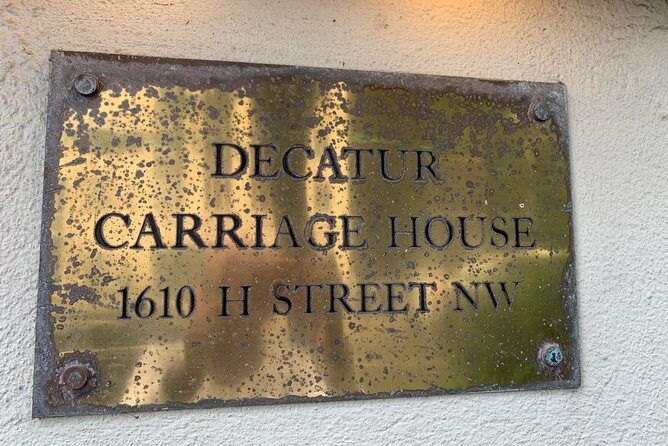
- Decatur House Slave Pen: where the story turns concrete
- National Mall quick stop: using the Washington Monument area as context
- C&O Canal stop at Constitution and 17th: history tied to work and infrastructure
- National Museum of African American History and Culture: why the exterior stop works
- Your guide matters: what Dr. Koura and Dr. Gibson bring to the walk
- What to expect from the pacing: short stops, big connections
- How to make the most of your first visit to slavery history in DC
- Who this tour is best for (and who should consider alternatives)
- Should you book this Washington DC History of Slavery walking tour?
- FAQ
- How long is the Washington DC History of Slavery walking tour?
- How much does it cost?
- Is this tour private?
- Where does the tour start and end?
- What landmarks are included on the route?
- Are there admission fees at the stops?
- What is included in the tour price?
- Is transportation included?
- What language is the tour offered in?
- What if the weather is bad?
Key reasons this tour is worth your time
- Private and personal: only your group walks together with an academic-style guide.
- Free entry at each stop: you pay once, and you don’t get nickel-and-dimed for sites along the way.
- A route that links ideas to streets: Lafayette Square, Decatur House Slave Pen, the National Mall area, the C&O Canal lock site, and the museum grounds.
- Guide-led engagement: you’re not just listening; you’re guided through questions and quick checks as you move.
- Ends right where you’ll want to keep exploring: National Museum of African American History and Culture (outside, at first).
Price and logistics: what $40 buys you (and what it doesn’t)
This tour runs about 1 hour and costs $40 per person. For DC, that price makes sense when you factor in that it’s private (only your group) and that all fees and taxes are included. You’re not paying separate admission costs for the stops either—each featured location is set up as free entry during the tour.
What’s not included is private transportation. So you’ll want to plan your own way to the start point at Lafayette Square (Pennsylvania Ave NW and 16th St NW) and then finish near the National Museum of African American History and Culture, at the southeast corner by 15th St. Because the experience is outdoors most of the time, good weather really matters.
Finally, this is offered in English and uses a mobile ticket. If you like smooth check-in and fewer steps, you’re in good shape.
You can also read our reviews of more walking tours in Washington DC



Lafayette Square stop: why the “pretty” square matters
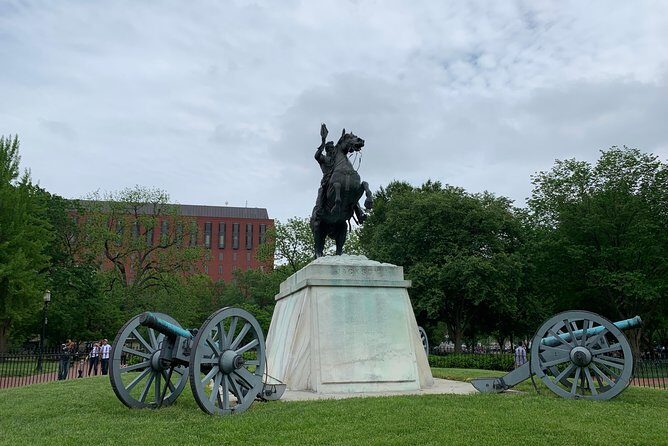
You start at Lafayette Square, a high-visibility spot that most people associate with classic DC views and big-photo moments. Here, the focus is different. You’ll look at how slavery and its aftermath connect to the very geography of power—how a public space can hide layers of suffering in plain sight.
The timing is tight—about 10 minutes—so you won’t get a long lecture in one spot. Instead, you’ll get a targeted framing that helps the rest of the walk click. If you’ve only ever heard broad slavery history, this is the kind of start that changes how you read the city’s symbols.
One practical note: it’s a popular area with plenty of foot traffic. Your best move is to stand where the guide can point clearly without you having to crane your neck. If you do that, you’ll get far more from the short stop than you’d expect.
Decatur House Slave Pen: where the story turns concrete
Next comes Decatur House, specifically the area known as the Slave Pen. This is one of the most direct “history in the bones of the place” moments on the route, because the stop is centered on a location tied to how enslaved people were held and controlled.
Again, you’re there about 10 minutes, and that may sound short until you realize the tour is building toward a chain of locations. In a short time, you should expect to understand the site’s purpose, how it fits into DC’s broader systems, and how that system shaped everyday life.
A potential drawback to keep in mind: this isn’t a slow museum-style visit. It’s a walking tour format. So if you want time to read every sign or linger for photos, plan to do that on your own after the tour. The value here is the guide’s “connect-the-dots” storytelling, not long unassisted browsing.
National Mall quick stop: using the Washington Monument area as context
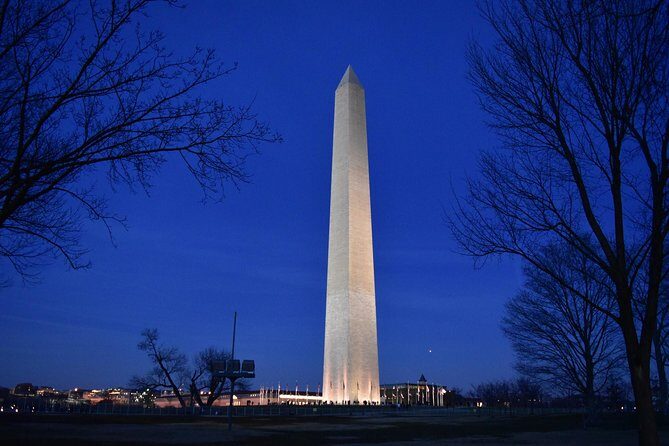
From there, you shift to the National Mall for a brief stop near the Washington Monument area. That sounds like an odd pairing if you’re used to thinking of the Mall as separate from difficult chapters of history. The point here is the opposite: you’re shown how the national story and the African American story ran side-by-side in the making of the federal city.
You’ll get about 10 minutes here, which means the guide will likely focus on a few key connections rather than trying to cover everything. Think of it as a “mental sticky note” moment. It helps you walk forward with better context when you look at official-looking spaces and ask what else was happening under the surface.
If you’re the type who wants to photograph every monument, you’ll still get chances, but the tour’s priorities are historical interpretation and understanding. Treat the monument area like a reference point, not your main photo stop.
C&O Canal stop at Constitution and 17th: history tied to work and infrastructure
The next stop is the C&O Canal area, specifically the lockhouse site at Constitution and 17th. This is where the tour adds a different flavor: instead of focusing only on individual sites of holding or monument symbolism, you’ll see how infrastructure and work shaped life in Washington, DC.
You’ll spend about 10 minutes here. In that window, the guide can connect labor, movement of goods, and the ways enslaved and free Black communities were impacted by the city’s systems. You may not feel like you’re in a traditional “slavery museum.” That’s the point. You’re learning how to spot the mechanisms behind the story.
One more practical angle: canal-adjacent spots can be breezy or uneven. Wear shoes you’re comfortable standing and walking in. The tour is short overall, but the ground is real and you’ll appreciate traction.
You can also read our reviews of more historical tours in Washington DC





National Museum of African American History and Culture: why the exterior stop works
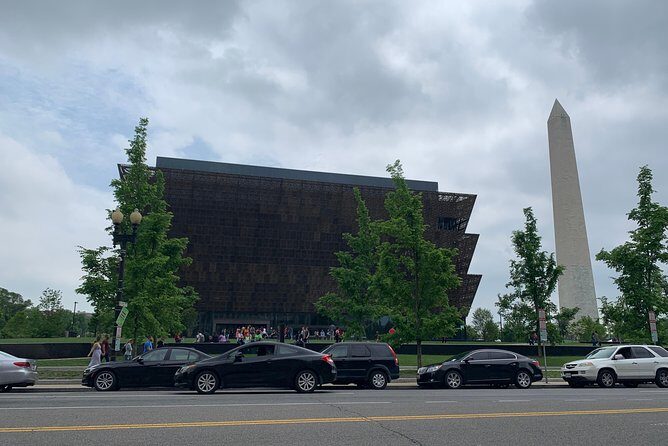
The tour ends at the National Museum of African American History and Culture area, but it’s specifically an outside stop focused on the building’s architecture. You’ll have about 10 minutes here, finishing on the southeast corner near 15th St.
For many people, this is a smart ending. You’re not pushed into a full museum visit during the 1-hour tour. Instead, you get a guided “starting lens” for what you’ll see if you choose to go inside later. You also leave the tour with the feeling that you understand the museum’s meaning before you ever cross a threshold.
If you’re doing this as a first DC trip, the ending spot is a big win because you’ll likely want to explore further. And because the tour finishes right there, you don’t waste time retracing steps across the city.
Your guide matters: what Dr. Koura and Dr. Gibson bring to the walk
The biggest praise for this tour centers on the guide experience. Names that come up often include Dr. Koura and Dr. Gibson, and both are described as being passionate, engaging, and willing to teach in a way that sticks.
In practice, that usually means you’re not getting a dry timeline. You get story plus explanation, and you’ll likely be asked questions during the walk. One review-style detail you might find yourself experiencing: quick interaction and even short quizzes to keep everyone alert, including teens and families.
Another thing you may notice is the use of visuals shared during the tour, including supplemental images sent to your phone. That helps when the stops are brief. Instead of trying to remember every detail from standing outside, you can refer back to the visuals later.
A small consideration: because the tour is delivered in a walking format, the guide’s style affects your experience. If you enjoy learning by conversation and street-level storytelling, you’ll probably love it. If you only want one-way lectures, you may find the back-and-forth style less your thing.
What to expect from the pacing: short stops, big connections
This tour is built like a sequence, not like one long lecture. Five main stops, each around 10 minutes, plus a brief Mall moment, adds up to roughly an hour total.
That structure means you’ll get:
- a clear framing at each location
- enough context to connect the place to the larger story
- momentum moving you from point to point quickly
It also means you won’t have time to slow down for every side question. If you want extra detail, you’ll likely need to ask during pauses or plan a museum visit afterward to extend the learning.
Because it’s a walking experience, it’s also smart to think about your comfort. I’d treat it like light walking plus standing at stops, not like a sit-down talk. Bring water if the weather is warm, and plan to pause afterward for a snack near your next destination.
How to make the most of your first visit to slavery history in DC
If this is your first time doing this subject in Washington, DC, I’d recommend you come with one simple mindset: you’re learning how to read the city. Don’t just look for what’s obvious. Ask what each stop reveals about power, labor, and memory.
Here are a few practical moves that fit the tour format:
- Use your mobile ticket so you’re not scrambling at the start.
- Arrive a few minutes early at Lafayette Square so you can get oriented before the walking begins.
- Wear comfortable shoes and be ready for a short, focused route.
- Take notes on what surprises you most at each stop, since you only get a few minutes to lock in the meaning.
- If you want to continue exploring, plan to head right to the museum after you finish.
Also, this tour is private, so your group can set the tone. If you want to ask questions, you usually have more room to do it than on a larger public group walk.
Who this tour is best for (and who should consider alternatives)
This walking tour is a good fit if you:
- want African American history connected directly to DC landmarks
- prefer short stops with an expert framing instead of a huge museum day
- like a guided route where you learn from conversation
- are visiting DC for the first time and want context beyond typical sightseeing
It can also work well for families. One review-style theme highlights that it kept interest even for teens and that it can be manageable for families traveling with an infant. That said, it’s still a walking tour, so if your child or your group needs frequent downtime, you’ll want to be realistic about standing outdoors.
If you’re looking for a long, inside-only experience with lots of reading time, this may feel like you’re scratching the surface. The tour is designed for interpretation-on-the-go, then giving you a springboard for what to explore next.
Should you book this Washington DC History of Slavery walking tour?
If you want a concentrated, respectful way to connect Washington DC’s visible landmarks to the hidden chapters that often get skipped in school lessons, this is a strong choice. The route is short enough to fit into a travel day, and the private, guide-led format helps the stops land with meaning. I especially like that each featured location is free to enter, because it keeps the value focused on the instruction and the connections.
Book it if you’ll enjoy walking, asking questions, and turning monuments and street corners into learning. Consider skipping it if you want long museum time at indoor exhibits during the tour itself. For most people, though, finishing near the National Museum of African American History and Culture is a smart payoff, and it makes it easy to keep your momentum going after the walk.
FAQ
How long is the Washington DC History of Slavery walking tour?
It runs for about 1 hour (approx.).
How much does it cost?
The price is $40.00 per person.
Is this tour private?
Yes. It’s a private tour/activity, and only your group participates.
Where does the tour start and end?
It starts at Lafayette Square (Pennsylvania Ave NW & 16th St NW). It ends at the National Museum of African American History and Culture area on the southeast corner near 15th St.
What landmarks are included on the route?
Key stops include Lafayette Square, Decatur House (Slave Pen), a brief stop near the Washington Monument area on the National Mall, the C&O Canal lockhouse area at Constitution and 17th, and the outside architecture of the National Museum of African American History and Culture.
Are there admission fees at the stops?
The tour’s listed stops are set as admission ticket free, and all fees and taxes are included.
What is included in the tour price?
All fees and taxes are included.
Is transportation included?
No. Private transportation is not included.
What language is the tour offered in?
The tour is offered in English.
What if the weather is bad?
This experience requires good weather. If it’s canceled due to poor weather, you’ll be offered a different date or a full refund.