REVIEW · MUSEUMS
DC: National Archives & Optional Museum Add-On
Book on GetYourGuide →Operated by Unscripted Tours · Bookable on GetYourGuide
Paperwork never looked this important. This 2-hour tour gives you reserved entry to the National Archives and Washington D.C.’s American history highlights, with built-in time for big-ticket documents. You’ll get guided context for what you’re seeing, not just photos and quick glances.
I like that the payoff is direct: you get an up-close look at the original Declaration of Independence and the Constitution, the two documents people travel across the country to see. I also love the pacing through the National Mall area, where the views help you understand how the whole city layout supports the story.
One consideration: two hours is tight. If you want to linger in galleries on your own, you may feel a bit rushed once the guided time is done.
In This Review
- Key things that make this tour worth your time
- Why this National Archives tour hits so hard
- Meeting point and group size: the day stays easy
- The walk along the National Mall: views that make context click
- Reserved entry to the National Archives: the main event
- Museum time at the National Museum of American History (Smithsonian)
- What the guides add (and why it shows in the reviews)
- Timing and pace: a good sprint, not a slow museum day
- Price value: what you’re paying for at $79
- Where you’ll finish: drop-off options
- Practical tips for getting the most out of a short window
- Who should book this tour
- FAQ
- FAQ
- How long is the tour?
- What does the tour include?
- Is there reserved entry or skip-the-line access?
- Where do I meet the guide?
- Where does the tour end?
- Are there drop-off options after the tour?
- What are the guided times at each stop?
- How large is the group?
- What language is the tour guide?
- What should I bring?
- Should you book the DC National Archives and American History tour?
Key things that make this tour worth your time
- Reserved entry and skip-the-line access through a separate entrance
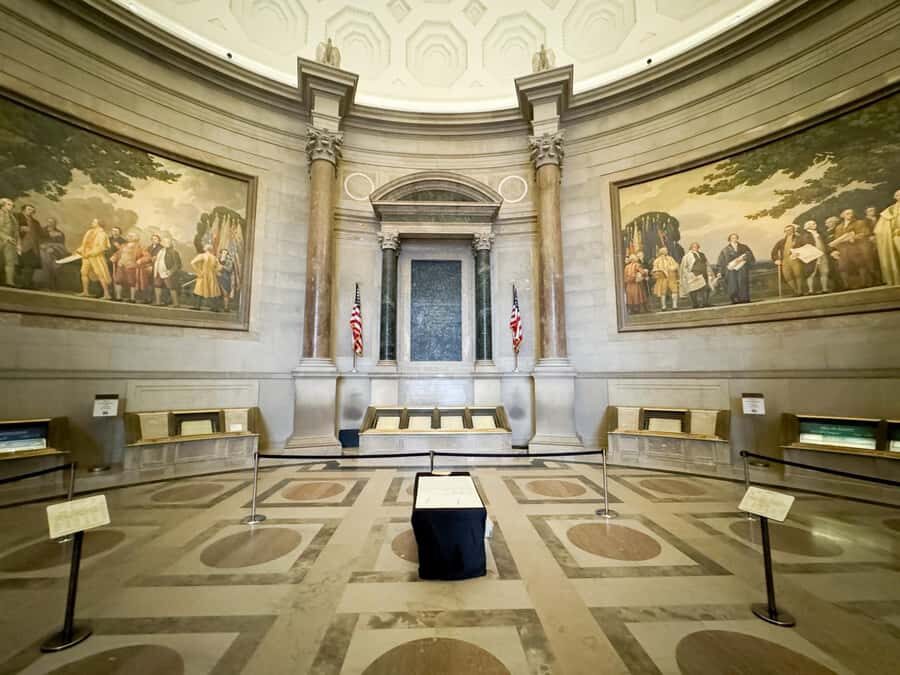
- 45 minutes inside the National Archives with a guide focused on the big documents
- 75 minutes at the Smithsonian National Museum of American History with artifact stories tied to U.S. milestones
- National Mall viewpoints that line up the Washington Monument and U.S. Capitol with what you’re learning
- Small group of up to 6 people, so questions don’t get lost in the crowd
Why this National Archives tour hits so hard
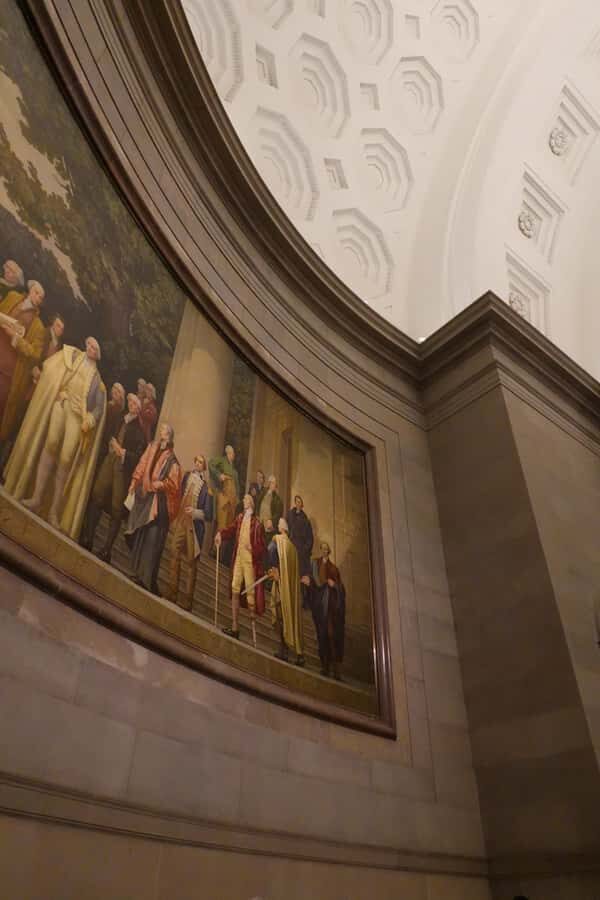
Washington, D.C. can feel like museum overload. This tour fixes that problem with a focused route and a guide who knows how to connect buildings, artifacts, and turning points into one clear storyline. You’re not just collecting stops—you’re learning how the pieces fit.
The big win is the National Archives access. Seeing the Declaration and the Constitution is the kind of moment that’s hard to replicate later in any other format, because the physical presence matters. A guided visit also helps you notice details that most people miss when they’re trying to read quickly and take photos at the same time.
Then you roll straight into the Smithsonian world, where the guide shifts from documents to objects and personal stories. That contrast—paper text versus real items—helps make American history feel less like a textbook and more like something people lived through.
You can also read our reviews of more museum experiences in Washington Dc


Meeting point and group size: the day stays easy
You meet your guide at the Unscripted Welcome Center at 400 7th Street NW. Look for a sign that says Unscripted and Tour Starts Here. The tour ends back at the same meeting point, which is helpful if you don’t want to worry about navigating right away.
This is a small group limited to 6 participants. That matters in museums, because small groups move more smoothly and make it easier to get answers to the questions that pop up while you’re standing in front of something important.
You should wear comfortable shoes and dress for the weather. The tour includes outdoor viewing along the National Mall, and if your shoes hurt after 15 minutes, your attention will go downhill fast.
The walk along the National Mall: views that make context click
Between indoor stops, you’ll get time with the National Mall views—the kind of scenery that turns the city into a map. The guide points out sightlines toward the Washington Monument and the U.S. Capitol, plus the cluster of major museums that make this stretch of Washington feel like a single outdoor exhibit.
For me, that’s not just sightseeing. It’s orientation. When you can visually connect the landmarks, the history in the museum starts to feel like it belongs to a real place, not an abstract timeline.
Also, the tour frames the Smithsonian as the largest museum complex in the world. Even if you’ve heard it before, putting it in the flow of your day makes it clearer why the Smithsonian area is where so many stories of American life get told.
Reserved entry to the National Archives: the main event
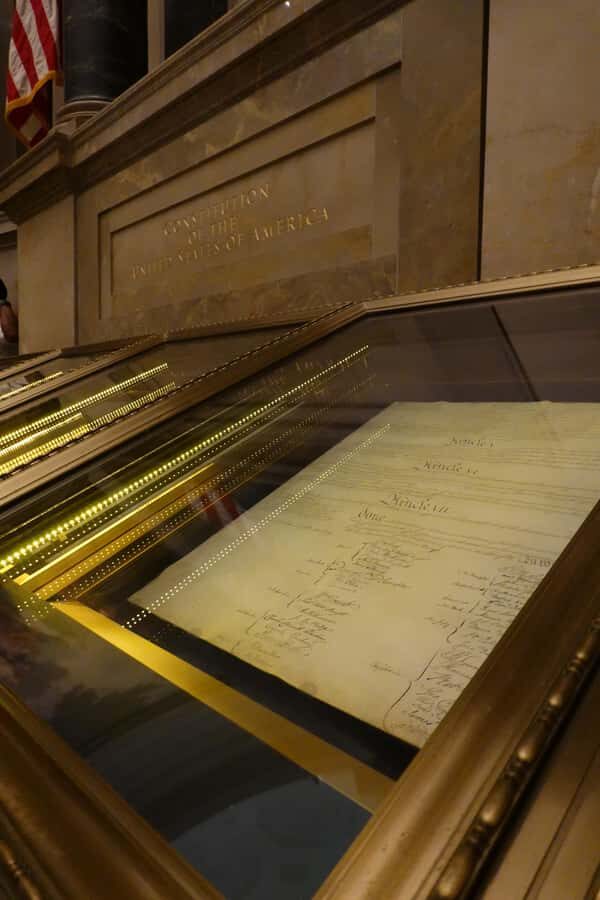
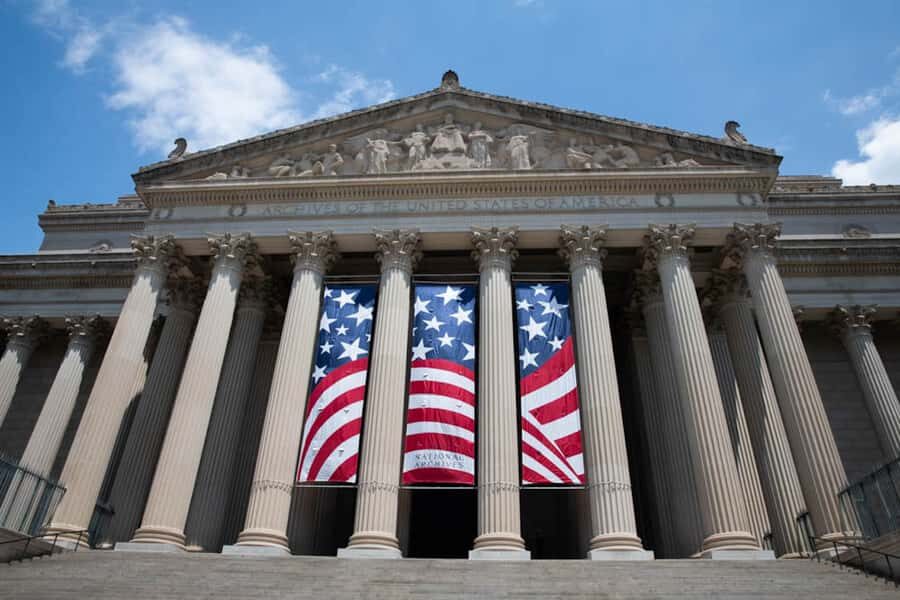
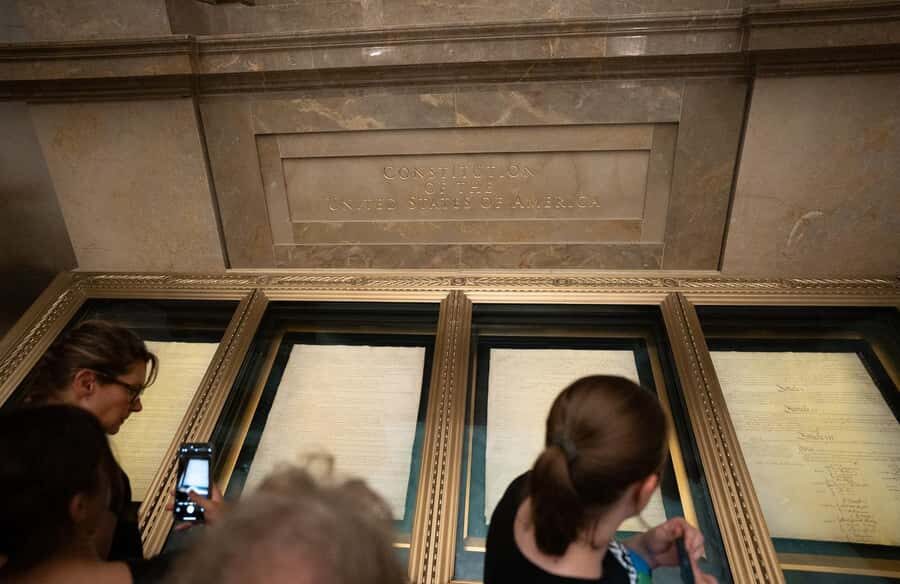
The schedule gives you a 45-minute guided visit inside the National Archives. This is where the tour earns its name and your attention. You’ll see the original documents that shaped the country’s language and direction.
The guide’s job here is to help you understand what you’re looking at, not just point at it. With a good guide, those documents stop being distant symbols and start being readable as historical artifacts—created, debated, and preserved by people who cared about what they meant.
The Declaration of Independence and the Constitution are the highlight, but the guide’s real value is in the context. You’re more likely to walk away knowing what the documents represent and why their survival matters than if you had visited on your own with a quick look and a photo.
Museum time at the National Museum of American History (Smithsonian)
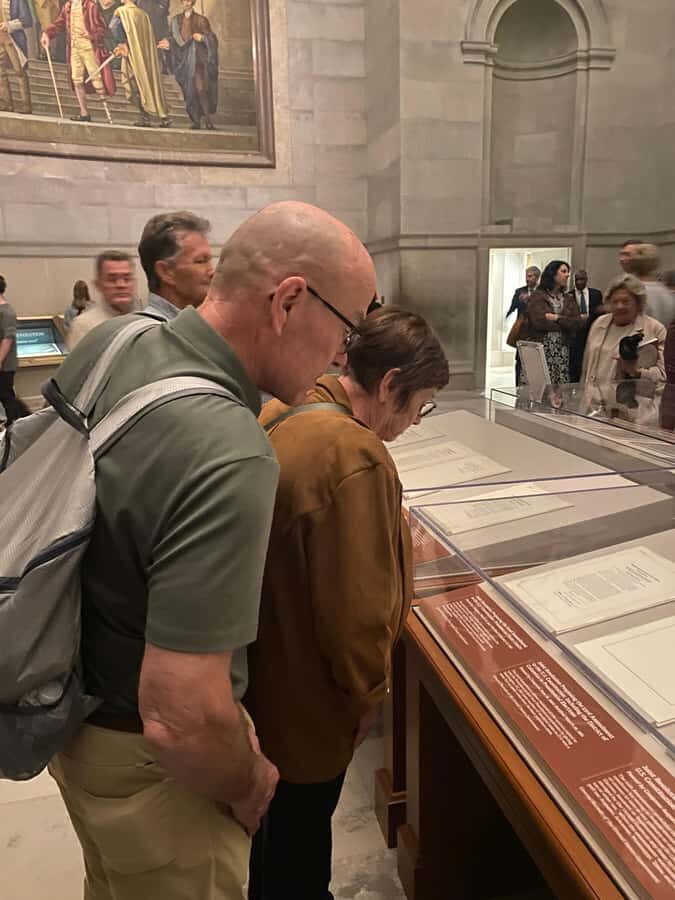
Next you head to the National Museum of American History for 75 minutes of guided time. This is the longer stop, which makes sense: it’s where you learn to think about history through objects, not just words.
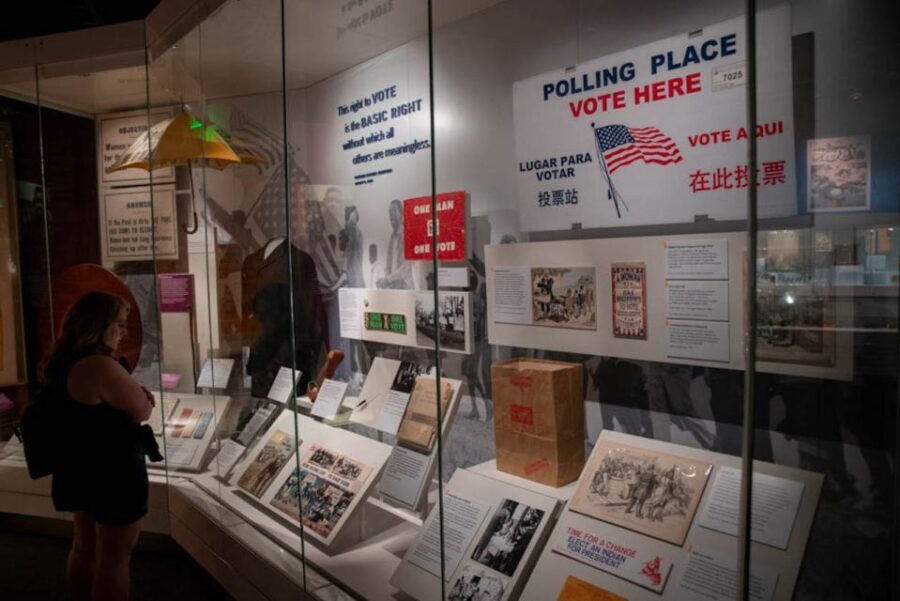
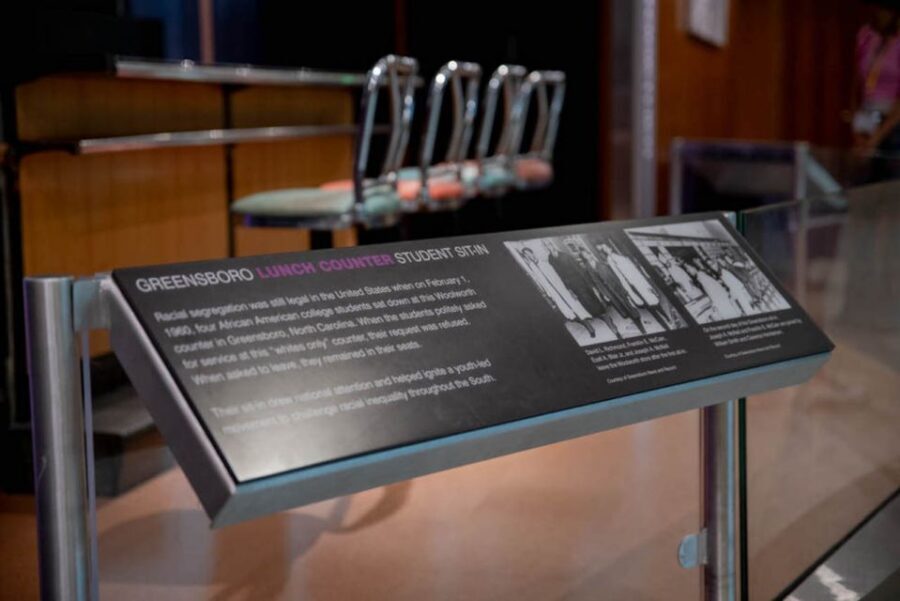
You’ll hear stories connected to famous figures and moments. The guide highlights items such as George Washington’s uniform and sword, Abraham Lincoln’s famous hat, and a flag that inspired our national anthem. You also get perspective on Civil Rights and Suffrage history through significant artifacts tied to those eras.
This part works especially well for people who love meaning, not just dates. When the guide points out why an object matters—who used it, what it represented, how it connects to broader change—you start seeing the museum as a set of clues. It’s less about memorizing facts and more about learning how history gets shaped and remembered.






What the guides add (and why it shows in the reviews)
The quality of this tour comes down to the guide. Names mentioned in past groups include Shane and Andrew, and the consistent theme is context. These guides don’t treat the sites like checkboxes. They connect what’s in front of you to the bigger story you came for.
You can expect professional guidance throughout, and the tour is described as live and in English. That matters because museums can be confusing on your own. A guide gives you a path to follow, and you waste less time guessing what you should focus on.
If you’re the type who likes to ask questions—why a particular object was kept, how a document was understood at the time, what changed after a major moment—this format makes it easier. Small group size keeps the conversation from getting lost.
Timing and pace: a good sprint, not a slow museum day
A 2-hour tour is designed to be efficient. You’ll spend 45 minutes at the Archives and 75 minutes at the American History Museum, with the rest of the time spent moving and getting the National Mall viewpoints. That’s a workable pace for a first visit, especially if you also have other D.C. plans.
The main tradeoff is depth versus speed. You’ll get guided structure, but you won’t have the luxury of browsing every gallery without direction. If your ideal museum day is hours of wandering, you might prefer a longer, self-paced day after this tour.
That said, for most people, a focused introduction is exactly what makes the next museum stop more enjoyable. You’ll arrive with better questions and clearer goals.
Price value: what you’re paying for at $79
At $79 per person, the key value isn’t the museums themselves. You’re paying for the human help and the access advantage: reserved entry and skip-the-line entry through a separate entrance. In Washington, time is part of the cost, and waiting can quietly drain your day.
For me, this price makes sense if you care about seeing the big documents and you want the guided context that turns a quick visit into a meaningful one. It also helps if your schedule is tight and you want a plan that doesn’t depend on lining up first.
If you’re the type who enjoys museums without a guide, you may decide the cost isn’t worth it. But if you want your stops to connect—National Mall layout, Smithsonian collections, and the two foundational documents—this is a solid use of money for a short visit.
Where you’ll finish: drop-off options
The tour ends back at the meeting point, which is reassuring if you want to reset your plans. Still, the activity includes two drop-off locations: the Smithsonian National Museum of American History and the National Portrait Gallery.
That’s a practical detail. You may be able to keep exploring right after the tour without backtracking as much, depending on what you want to do next.
Practical tips for getting the most out of a short window
- Go in with one or two questions, like what you want to understand about independence, the Constitution, or civil rights milestones. A good guide can tailor the stories you hear.
- Bring water and expect some outdoor time while viewing the National Mall. The route includes street-level walking and sightlines.
- If you’re visiting with kids, this tour can work well because the guide turns famous artifacts into stories. But keep expectations realistic: it’s a 2-hour introduction, not a full museum day.
Who should book this tour
This tour is a great fit if you want:
- A high-impact first visit to the National Archives and the Smithsonian area
- A small-group experience with a guide who can explain what matters
- Clear structure for a short D.C. day
It may be less ideal if you already know you want hours of unguided wandering. In that case, you might mix a shorter guided visit with extra time afterward on your own.
FAQ
FAQ
How long is the tour?
The duration is listed as 2 hours.
What does the tour include?
It includes a professional tour guide, entry to the National Archives, and entry to the Smithsonian National Museum of American History.
Is there reserved entry or skip-the-line access?
Yes. The tour includes skip-the-line access through a separate entrance, plus reserved entry to the National Archives and American History Museum.
Where do I meet the guide?
Meet your guide in front of the Unscripted Welcome Center at 400 7th St NW. Look for a sign that says Unscripted and Tour Starts Here.
Where does the tour end?
The activity ends back at the meeting point.
Are there drop-off options after the tour?
Yes. It lists two drop-off locations: the Smithsonian National Museum of American History and the National Portrait Gallery.
What are the guided times at each stop?
The National Archives guided tour is 45 minutes, and the Smithsonian National Museum of American History guided tour is 75 minutes.
How large is the group?
The group is small and limited to 6 participants.
What language is the tour guide?
The tour is live in English.
What should I bring?
You should bring weather-appropriate clothing and comfortable shoes.
Should you book the DC National Archives and American History tour?
If you want a tight, high-impact introduction that gets you into the National Archives with reserved access and a guide who connects artifacts to major U.S. moments, I’d book it. The documents-focused visit plus the American history museum stop is a smart pairing for first-timers and repeat visitors alike.
If you hate schedules and need lots of unstructured time to roam, consider balancing this with extra solo time afterward. But for most people planning a short D.C. stay, this is one of the best ways to turn famous landmarks into an understandable story.