REVIEW · MUSEUMS
The Smithsonian National Air & Space Museum Exclusive Guided Tour
Book on Viator →Operated by Babylon Tours DC · Bookable on Viator
Two and a half hours, zero aimless wandering. This exclusive guided tour is built for people who want the big-name Air and Space moments without getting stuck in museum logistics, and it works even though the museum is under major renovation. You follow your guide past crowds and straight to the artifacts that carry the stories of flight and the Moon.
I love the focus on original, on-display breakthroughs like Buzz Aldrin’s spacesuit, Apollo 11 hardware, moon rocks, and the Wright brothers’ Wright Flyer (when available in the current renovation layout). I also like the way your guide stitches it all into one readable story, from early flight to the Space Race to what it’s like to be an astronaut today, with room for questions along the way.
One consideration: the museum is in massive construction, so some exhibits described may not be on display during your visit. You should check the Smithsonian’s updated exhibit list (airandspace.si.edu/exhibitions/now-view) before you set expectations.
In This Review
- Key Highlights You’ll Actually Feel in the Museum
- Why the Construction-Locked Museum Still Feels Like a Win
- Price and Timing: What $89.67 Buys You (and What It Doesn’t)
- Meeting at 600 Independence Ave SW: How the Tour Flow Feels
- Stop 1 at Air and Space: The Highlights That Carry the Whole Story
- Buzz Aldrin and Apollo 11 Spacesuit: Space History You Can See
- Apollo Hardware and Lunar Rocks: Proof, Not Just Posters
- Wright Flyer: Where Flight Becomes a Real Human Project
- Other Originals That Anchor the Timeline
- What Astronaut Life Feels Like Today
- The Big Story Your Guide Builds: Flight, the Space Race, and the Moon Landings
- What to Know About Exhibit Changes During Renovation
- Practical Tips That Make Your Visit Smoother
- Small-Group vs Private: Picking the Right Comfort Level
- Who Should Book This Tour
- Should You Book the Smithsonian Exclusive Guided Tour?
- FAQ
- How long is the Smithsonian National Air and Space Museum exclusive guided tour?
- Where is the meeting point and where does the tour end?
- Is the tour offered in English?
- Is museum admission included?
- What is included in the tour price?
- Does the tour include hotel pickup or drop-off?
- Are large bags allowed inside the museum?
- Can I buy freeze-dried astronaut ice cream?
- Is there free cancellation?
- What if the museum exhibits are closed due to construction?
Key Highlights You’ll Actually Feel in the Museum
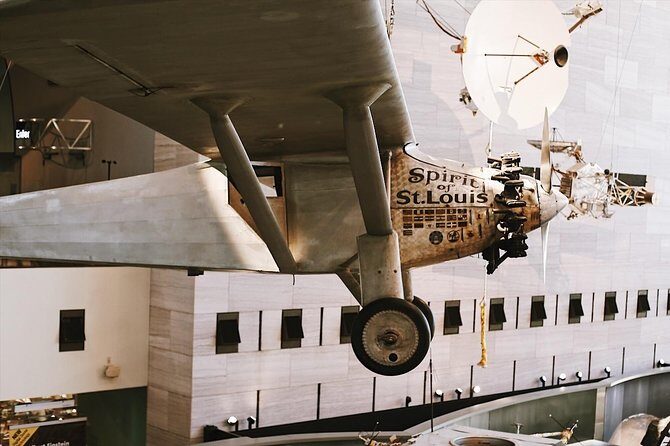
- Guaranteed entry to one of DC’s most popular attractions, even when timed access is tight
- A guided route that skips the crowd maze, so you spend your time looking not searching
- Major artifacts when available, including Apollo-era objects, spacesuits, moon rocks, and more
- Story-driven stops that connect flight milestones to the Moon landings and modern astronaut life
- Flexible start times with morning or afternoon options, plus small-group or private choices
Why the Construction-Locked Museum Still Feels Like a Win
The Smithsonian National Air and Space Museum is going through long-term renovation, and that changes what you can see. The smart part is that this tour is designed for that reality. Your guide adjusts your route based on what’s open right now, so you are not just paying for a lecture in a half-empty building.
Instead of wandering at your own speed, you get a planned path that points you toward the museum’s best “wow” moments. That matters here because the museum is huge, and with construction shifting entrances and gallery access, an unguided visit can turn into a lot of backtracking.
You can also read our reviews of more guided tours in Washington DC



Price and Timing: What $89.67 Buys You (and What It Doesn’t)
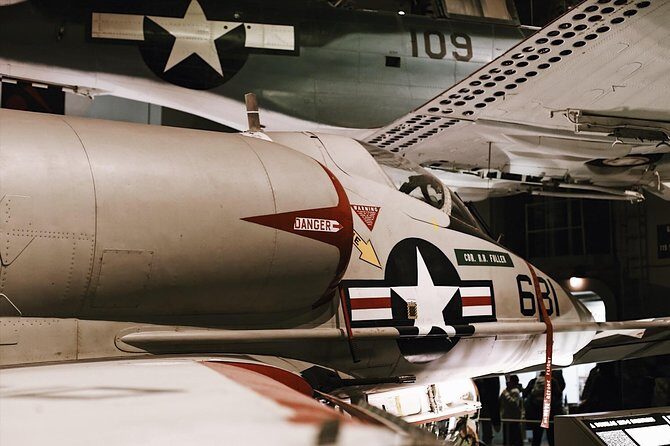
At $89.67 per person for about 2 hours 30 minutes, you’re paying for three things that are hard to replicate alone: guided navigation, expert interpretation, and reliable access. The museum’s own admission is free, but free admission does not always mean effortless entry on busy days. This tour is built to handle that friction.
What you do not get is the “full museum at your pace” experience. The route is intentionally fast and focused, because the value is in efficiency. If you love lingering in exhibits for long reads and deep photo sessions, you’ll still be able to roam after the tour, but the guided portion is not meant to replace a slow day.
You also do not get hotel pickup or drop-off, so you’ll want a taxi or ride-share to get to 600 Independence Ave SW. And gratuities are optional but not included.
Meeting at 600 Independence Ave SW: How the Tour Flow Feels
You’ll meet your guide at the museum, then return to the same meeting point at the end. You can choose morning or afternoon start times, which is great if you’re planning the rest of your day around other DC stops.
This tour is offered in English and uses a mobile ticket. You’ll also need to provide a mobile phone number (with country code). That sounds mundane, but it’s important here because updates or confirmations can depend on it.
Most of the time, your group moves efficiently through security and the main halls. Still, remember: museums and major attractions can have security lines even when timed entry exists. Your guide helps you keep momentum when the pace slips.
Stop 1 at Air and Space: The Highlights That Carry the Whole Story
The Air and Space museum tour centers on one stop, but it feels like several chapters because your guide builds a sequence. You start with the museum’s wide mission: not only space, but also the entire history of flight and the technology that got humans off the ground.
Here are the headline artifacts and what they represent in a way that’s easy to remember.
Buzz Aldrin and Apollo 11 Spacesuit: Space History You Can See
Your tour includes chances to view Buzz Aldrin’s spacesuit (the real deal). When you see a spacesuit like this up close, it makes the Moon landing feel less like a distant event and more like a set of real engineering choices.
This is the kind of exhibit where your guide’s explanation matters, because it helps you understand what you’re looking at: the mission context, how spacesuits supported survival and function, and why Apollo-era gear looks the way it does.
You can also read our reviews of more museum experiences in Washington DC






Apollo Hardware and Lunar Rocks: Proof, Not Just Posters
You may also see the Apollo 11 module and moon-related items like moon rocks and lunar modules (listed as backup options). Even when not every piece is available during renovation, the tour is structured so the story stays intact.
Moon rocks are special because they are not symbolic. They are physical samples that brought the Moon into a lab. Your guide’s job is to translate that into something you can grasp in minutes, not something you need hours of reading to understand.
Wright Flyer: Where Flight Becomes a Real Human Project
Your guide also routes you to the Wright Flyer (original) when available. The early aircraft story is often easy to skim on your own. During a guided stop, it clicks because you get the context: what made powered heavier-than-air flight possible and why it mattered so much.
This is one reason the tour feels balanced. You go from first flight energy to the Space Race endgame without the usual mental whiplash.
Other Originals That Anchor the Timeline
Depending on what’s on display, your route may include several iconic objects tied to major milestones in aviation and space:
- Neil Armstrong Apollo 11 spacesuit (original)
- John Glenn’s Mercury capsule (original)
- Charles Lindbergh’s Spirit of St. Louis (original)
- Chuck Yeager’s Bell X-1 (original)
- Hubble Telescope (test vehicle)
- Skylab, America’s first space station (backup)
- Space Shuttle’s mid deck (model)
Your guide uses these to create cause-and-effect, not just a parade of names. That’s the key value: you learn how each step led to the next step, and you start connecting the technology across eras.
What Astronaut Life Feels Like Today
You’ll also hear what astronaut life is like now. That can be surprisingly practical. You get a sense of training, mission roles, and day-to-day constraints rather than just “space is cool” trivia.
Your guide may also mention freeze-dried ice cream astronauts enjoy. If you want the full prop experience, you can buy it in the gift shop (own expense). It’s small, but it turns a lesson into a memory you’ll actually smile about later.
The Big Story Your Guide Builds: Flight, the Space Race, and the Moon Landings
The best part of a museum guide is not the facts. It’s the structure. This tour does that by framing what you see as chapters in one larger narrative.
You start with early flight, where progress depends on repeatable experiments and practical problem-solving. Then the story shifts into the Space Race, where progress depends on systems thinking, testing, and nerves of steel. Finally, you end at the Moon landings and the realities of living and working in space.
One thing I like about the pacing is how it avoids turning the visit into a march of plaques. The guide stops at famous exhibits, explains what matters, and keeps you moving so you don’t get stuck reading everything while the best stuff passes you by.
And in practice, it seems like guides handle variety well. Families with kids have an easier time staying engaged when the guide asks questions and uses short, clear explanations. Adults who love aviation history get enough detail to feel satisfied without drowning in jargon.
What to Know About Exhibit Changes During Renovation
Because the museum is under massive construction for multiple years, some of the described exhibits may not be visible when you arrive. This is not a small “maybe.” It’s baked into how your tour is managed.
Do this before you go:
- Check the Smithsonian’s updated list at https://airandspace.si.edu/exhibitions/now-view
- Plan to be flexible with expectations about exact display availability
Your guide adjusts based on what’s open, so the tour still aims to hit the core artifacts and the story arc. But it’s fair to say you might see fewer items than the full list if certain galleries are closed that day.
Practical Tips That Make Your Visit Smoother
This museum has security rules, and they can slow you down if you show up unprepared.
- No large bags or suitcases: only handbags or small thin bag packs through security.
- Appropriate dress is required for entry into some sites.
- You may encounter quiet or restricted areas where speaking is limited. Your guide will flag those spots before you enter.
- Moderate physical fitness is recommended since you’ll walk and move through galleries.
If you’re coming from your hotel, it’s easiest to use a taxi or Uber type ride since hotel pickup or drop-off is not included. You’ll also be near public transportation, which helps if you’re pairing this tour with other DC sights.
Small-Group vs Private: Picking the Right Comfort Level
You get options. You can pick a small-group tour or a private tour, and the size choice can make the experience feel either lively or more personal and quiet.
A helpful detail: if you choose the SAVE! BOOK SEMI-PRIVATE option, some perks do not apply. In that case, tour guide exclusivity and wheelchair-friendly accommodations are not guaranteed the same way. If you need those benefits, choose the option that explicitly includes them.
If you’re traveling with kids, a smaller group can be easier to manage because the guide can keep attention and pace. If it’s just you or you and a couple friends, private can be great for asking more questions without watching group dynamics.
Who Should Book This Tour
This tour is a strong fit if:
- You want the museum highlights without spending your whole day solving museum logistics
- You have limited time in Washington, DC
- You love aviation and space and want context, not just objects
- You’re traveling with kids and want a guide to keep everyone moving and interested
- You’re visiting during renovation and want someone to adjust on the fly
It might be less ideal if you’re the type who wants to read every label slowly, take long breaks, and linger at each exhibit for photos. In that case, you can still enjoy the museum, but you’ll want a slower add-on after the guided portion.
Should You Book the Smithsonian Exclusive Guided Tour?
I think you should book it if your priority is getting the big-name Air and Space story in a short window, with a guide handling crowd flow and renovation changes. The guaranteed entry plus the guided path usually makes it feel like a practical investment rather than just a museum ticket upgrade.
Skip this only if you’re a low-energy museum wanderer who wants total freedom from schedules, or if you plan to spend most of your day quietly reading plaques and taking many long breaks. Since this is designed for a focused 2.5-hour run, you’ll likely want extra time in DC either before or after to slow down.
FAQ
How long is the Smithsonian National Air and Space Museum exclusive guided tour?
It lasts about 2 hours 30 minutes.
Where is the meeting point and where does the tour end?
The tour starts at 600 Independence Ave SW, Washington, DC 20560, USA, and ends back at the meeting point.
Is the tour offered in English?
Yes, the tour is offered in English.
Is museum admission included?
The tour includes an admission ticket (admission is listed as free with the activity).
What is included in the tour price?
You get a guided museum tour with a tour guide (duration listed as 2.5 hours). Some options also note the guide exclusively for you and wheelchair-friendly access.
Does the tour include hotel pickup or drop-off?
No. Hotel pickup or drop-off is not included.
Are large bags allowed inside the museum?
No. Large bags or suitcases are not allowed inside. Only handbags or small thin bag packs are allowed through security.
Can I buy freeze-dried astronaut ice cream?
You can buy freeze-dried ice cream in the gift shop, but it is not included in the tour price.
Is there free cancellation?
Yes. You can cancel up to 24 hours in advance for a full refund.
What if the museum exhibits are closed due to construction?
The museum is under major construction for multiple years. Some exhibits described may not be on display, and your guide adjusts the tour based on what’s available.