REVIEW · HISTORICAL TOURS
Smithsonian Natural History + Air and Space Museum Private Tour
Book on Viator →Operated by Babylon Tours DC · Bookable on Viator
Two top Smithsonians, wrapped into one smart plan.
You’ll move through world-famous exhibits with a guide who helps you get your bearings fast, plus you’ll hear the stories behind the artifacts that people usually race past. I really like the focus on crowd navigation and smart timing, and I also like that museum entry for both stops is free, so your money mostly goes to the guide and the route.
One thing to keep in mind: the Smithsonian security process is real life. Expect bag rules (no large bags) and the chance of occasional closures, and there’s less flexibility if you need a guaranteed exact clock-for-clock museum experience.
This tour works especially well if it’s your first DC trip, or you only have half a day and want the must-sees without the stress. It’s also offered in English, and you’ll start at 10:00 am near Madison Drive and finish at the Air and Space Museum.
In This Review
- Key highlights worth caring about
- How this 5.5-hour DC combo actually helps you
- Smithsonian National Museum of Natural History: Henry, Hope Diamond, and Fossil Hall
- Henry the elephant sets the tone
- The Hope Diamond: famous artifact, loaded stories
- Fossil Hall renovation: big bones, bigger wow
- The practical side: 2.5 hours goes fast
- Air and Space Museum: Wright Flyer to the space collection
- Wright Brothers: the jump from idea to flight
- From aviation records to space artifacts
- Renovations don’t erase the value
- Crowd control, guide storytelling, and how you’ll spend your time
- A gentle warning: privacy expectations need to match your booking option
- Lunch break and the realities of museum days
- What to pack, wear, and know about security
- Value for money: what you’re paying for, and what you’re not
- Where this tour fits best (and who should skip it)
- Should you book this Smithsonian Natural History + Air and Space private tour?
- FAQ
- How long is the Smithsonian Natural History and Air and Space combo tour?
- What’s the price per person?
- Is museum admission included?
- Where do we meet for the tour?
- Where does the tour end?
- What’s included in the tour price?
- What isn’t included?
- Are there any bag or dress rules?
- What if a museum has an occasional closure?
- Is the tour physically demanding?
Key highlights worth caring about

- Small-group routing through crowds: Your guide helps you hit the big rooms without wandering.
- Free admission to both museums: You pay for the tour direction and narration, not separate tickets.
- Natural History stop with major crowd magnets: Henry the elephant, Hope Diamond, and Fossil Hall.
- Air and Space stop with the classics and the real artifacts: Wright Brothers and space collections in one sweep.
- Quiet-room etiquette handled for you: Your guide tells you before you enter restricted spaces.
- A real lunch break in the schedule: You get a reset period even though lunch isn’t included.
How this 5.5-hour DC combo actually helps you
Washington, DC has a lot going on, and the Smithsonian museums can swallow entire days. This tour is designed to fight that problem in a practical way: two huge museums, one morning/early afternoon flow, and an expert guide steering the experience so you don’t burn time guessing what to see first.
The structure is simple. You start at the Smithsonian National Museum of Natural History for 2 hours 30 minutes, then you cross the National Mall area to the National Air and Space Museum for about 2 hours. There’s also a break built in so you’re not dragging yourself through two mega-museums back-to-back.
And because museum admission is free for the ticketed entry on these stops, the value is mainly in the guide work: finding the best sequence, explaining what matters, and keeping you on track. I like tours like this because they treat your time as the scarce resource.
That said, it’s still museums and security. You’ll want to arrive prepared, keep bags small, and accept that you may deal with lines inside major attractions even with any skip-the-line options you might see advertised.
You can also read our reviews of more private tours in Washington DC



Smithsonian National Museum of Natural History: Henry, Hope Diamond, and Fossil Hall
The Natural History Museum stop is where the tour earns its reputation for making a huge building feel doable. You’re starting with one of the most iconic collections in the world, and the route is built around the things people naturally stop for—then the guide connects those stops with the bigger context.
Henry the elephant sets the tone
You’ll be greeted by the largest taxidermied elephant in the world, Henry, who practically functions like an icebreaker. For first-timers, it’s a friendly moment before you hit the deeper displays. For families, it tends to work like a magnet, and the tour description makes it clear that this museum is meant to keep curiosity active.
The Hope Diamond: famous artifact, loaded stories
Next up is the Hope Diamond, described as the (supposedly) cursed centerpiece people come to see. What you get from a guided pass is more than the object itself—you get the narrative angle and the why-behind-the-legend style of storytelling. Even if you’ve heard basic facts before, you’ll usually learn something that changes how you look at it.
Fossil Hall renovation: big bones, bigger wow
A major recent draw is the renovated Fossil Hall, with oversized dinosaurs looming along your path—Mastodon, T-Rex, and Diplodocus. What’s smart here is that Fossil Hall is visually loud. When you’re short on time, “high-impact” rooms are where a guided plan pays off. Instead of circling and hoping you end up at the best angle, you get guided timing that pulls you through the highlights while you still have energy.
You can also read our reviews of more historical tours in Washington DC






The practical side: 2.5 hours goes fast
Two and a half hours is tight for Natural History, even with a guide. You won’t see everything. You’ll see the most famous anchors and enough surrounding detail to feel like you spent your time well—especially if you care about big-name artifacts and showpieces. If you want a slower, full-exhibit sweep, you’ll need a longer day at this museum.
Air and Space Museum: Wright Flyer to the space collection
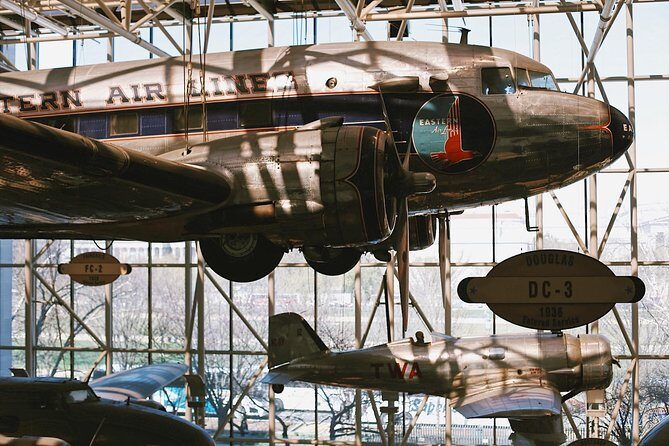
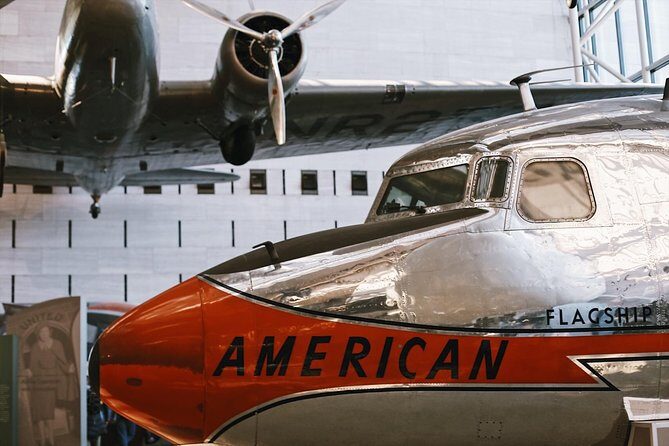
After a break to recharge, you’ll cross the National Mall area to the Air and Space Museum. This is the second half of the combo, and it has its own rhythm: early aviation breakthroughs, then the jump to space, then the imagination factor that ties it all together.
Wright Brothers: the jump from idea to flight
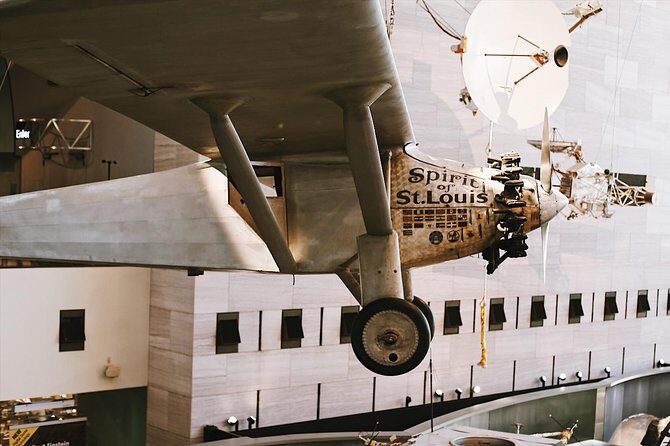
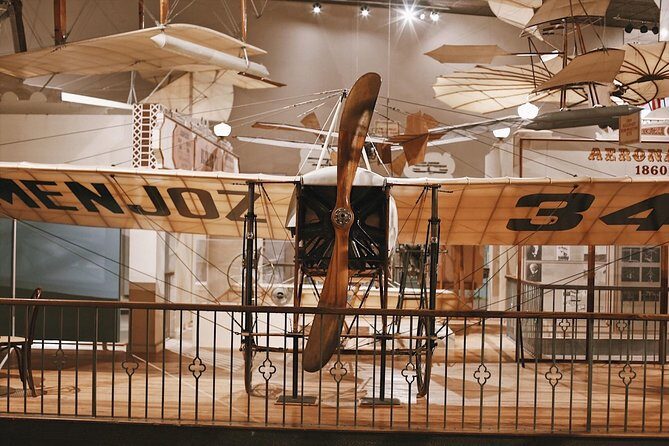
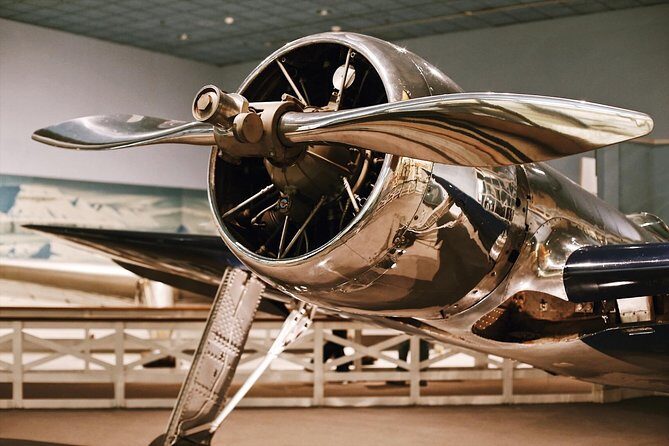
This stop starts with the Wright Brothers, including the original Wright Flyer from 1903, now in its own exhibition gallery. It also references the first military flyer from 1909, again linked to the Wright Brothers. The tour framing is about guts and risk—what it meant to trust a new technology with your life.
If you’re the type who likes “how did they even think of that” questions, this part of the tour tends to work well. It’s not only about what you see, but why it mattered.
From aviation records to space artifacts
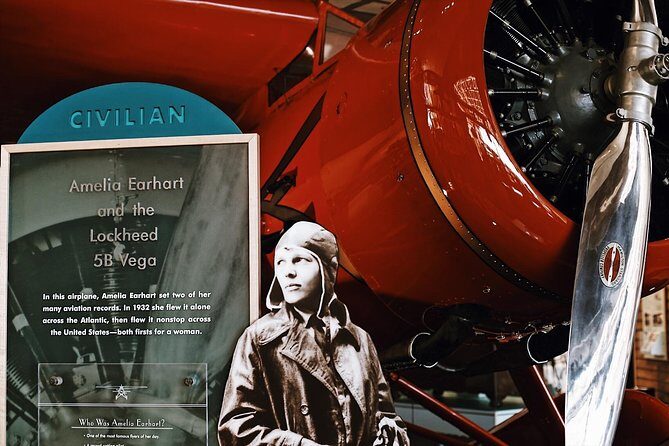
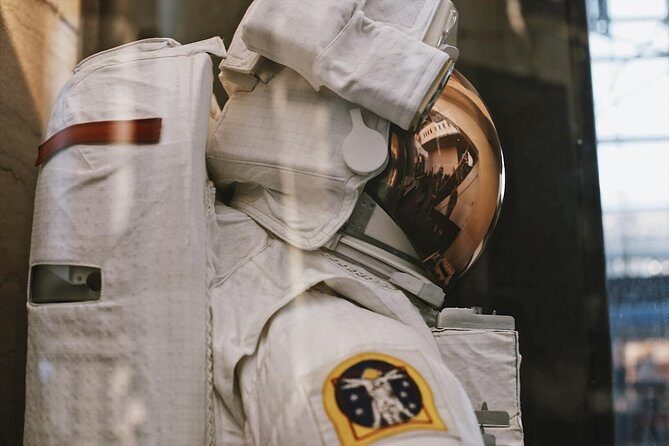
Once you move into the space exhibits, the tour focuses on the actual artifacts created for a mission in an inhospitable environment. That physical reality—real objects built for real challenges—is what makes museums like this hit harder than a documentary.
And then there’s the emotional turn: after the technical feats, the tour description emphasizes imagination and inspiration. That’s useful, because it helps you connect the displays to the human story, not just the dates.
Renovations don’t erase the value
The Air and Space Museum is also undergoing renovation, but the plan says there is still plenty to see. For you, the key takeaway is that you’re not booking this expecting a perfectly smooth experience. You’re booking it for the guided highlights, which should still be rewarding even when rooms are adjusted.
Crowd control, guide storytelling, and how you’ll spend your time
Here’s the real reason combo tours can feel worth it: a good guide doesn’t just point. They sequence. They help you decide what matters now and what can wait for later.
Across the Natural History and Air and Space stops, the tour is designed around the idea that you’ll follow your guide through the crowds and straight to the most important exhibits. That matters because these museums get busy, and wandering costs time. Even if you love exploring, you’ll still appreciate the structure when you only have about 5 hours 30 minutes.
The guide component is also where your day changes from “I walked through exhibits” to “I understood what I saw.” The experience is described as story-heavy—your guide shares in-depth context behind the sights, and the tour feedback you can use to guide your expectations includes multiple guide names tied to very positive outcomes. For example, guides such as Rebecca, Brenda, Richard, Tim, Amanda, Christopher, Maureen, Leigh, Donna, Jennifer, and Glennyce were mentioned in feedback, and that pattern signals something important: the narration is a big part of the value.
A gentle warning: privacy expectations need to match your booking option
The tour info says it can be private, but it also notes that a tour might not be exclusively for you if you choose a certain semi-private option. One caution I’d give is simple: if you truly need space and low social pressure, confirm you booked the fully private version and say so in advance. Otherwise, you can end up frustrated even when the itinerary itself is solid.
Lunch break and the realities of museum days
The schedule includes a lunch break, but lunch itself is not included. That means you’ll want a simple plan: bring something small if that works for you, or plan to buy food near where your day pauses.
This matters because Smithsonian days can get food-delayed. When you’re between two huge museums, hunger is the enemy of good pacing. A lunch break in the program is a smart inclusion because it stops you from spending the Air and Space portion in a “just survive this” mindset.
What to pack, wear, and know about security
This tour operates in two busy Smithsonian buildings, and the tour notes are very clear about what can slow you down.
- No large bags or suitcases inside the museums. Only handbags or small thin bag packs are allowed through security.
- Appropriate dress is required for entry into some sites.
- Some areas are subject to very quiet or restricted right to speak rules, and your guide will tell you before you enter those spaces.
- Due to increased security measures, some lines may form even if you see skip-the-line or no-wait language connected to tours.
So for you, the best prep is: travel light, keep your bag small, and wear shoes that can handle walking. The tour is listed for moderate physical fitness, which usually means you should be comfortable with steady walking and museum floors.
Value for money: what you’re paying for, and what you’re not
At $166.15 per person for about 5 hours 30 minutes, the ticket price can feel high or fair depending on how you travel.
Here’s the value logic that makes it work:
- You get a guide-led combo across two major museums in one day.
- Admission for both museums is free (so you’re paying for the tour experience, not museum entry fees).
- You’re paying for time saved: getting to the right exhibits, knowing how long to spend, and avoiding the “we’ll figure it out inside” trap.
What you’re not paying for:
- Hotel pickup or drop-off (you’re meeting at a specific address).
- Lunch (you only get the break).
- There’s no guarantee of zero lines anywhere, since security and museum operations can change.
If you’d rather DIY, DC’s transit and the museum layouts can be navigated on your own. But if you want your limited time to turn into real learning instead of aimless walking, the guide cost starts to make sense fast.
Where this tour fits best (and who should skip it)
You’ll likely be happiest with this tour if:
- It’s your first DC trip and you want the top Smithsonian hits without planning every hour.
- You’re short on time and still want more than surface-level viewing.
- You enjoy museum storytelling and want the “why this matters” context behind big artifacts.
You might want to skip (or at least consider adding time) if:
- You want to see every gallery in depth. This combo is built for highlights, not completion.
- You’re extremely sensitive to crowds and need a very controlled environment. Choose the right private option and set expectations early.
- You want a leisurely pace with long sits and deep reading. This itinerary is structured to keep moving.
Should you book this Smithsonian Natural History + Air and Space private tour?
Yes, if your goal is a high-impact DC museum day without the planning pain. The biggest reasons are the combo format, the free museum admission, and the guide-led sequence that helps you cover major exhibits in a realistic amount of time.
Before you book, do two quick checks: confirm you picked the version that matches your privacy needs, and pack according to the museums’ bag rules so security doesn’t steal your momentum. If you do those two things, this is a strong way to see the Smithsonian heavyweights in one day and leave with more than just photos.
FAQ
How long is the Smithsonian Natural History and Air and Space combo tour?
It’s about 5 hours 30 minutes.
What’s the price per person?
The price is $166.15 per person.
Is museum admission included?
Yes. Admission tickets for the Natural History Museum and Air and Space Museum are listed as free.
Where do we meet for the tour?
You start at 1010 Madison Dr NW, Washington, DC 20004, USA, with a 10:00 am start time.
Where does the tour end?
The tour ends at Smithsonian’s National Air and Space Museum, 650 Jefferson Dr SW, Washington, DC 20004, USA.
What’s included in the tour price?
Included features are a guided combo museum tour, a lunch break, and a tour guide exclusively for you (but this does not apply if you choose the SAVE! BOOK SEMI-PRIVATE option).
What isn’t included?
Hotel pickup or drop-off and lunch are not included.
Are there any bag or dress rules?
Yes. No large bags or suitcases are allowed inside the museums—only handbags or small thin bag packs. Appropriate dress is required for some sites.
What if a museum has an occasional closure?
The tour notes say museums may be subject to occasional closures. If the opening time is delayed more than 1 hour from the tour start time, the operator provides an appropriate alternative, but refunds or discounts aren’t available in those cases.
Is the tour physically demanding?
It lists moderate physical fitness as the expectation, so you should be comfortable with walking in museum environments.