REVIEW · GHOST & GEORGETOWN TOURS
Socialites and Spies of Georgetown Walking Tour
Book on Viator →Operated by Off the Mall Tours · Bookable on Viator
That quiet Georgetown street vibe is hiding big stories. This walking tour strings together homes, embassies, and late-20th-century power moves, with a focus on the women behind American politics. You’ll explore on foot so the neighborhood itself feels like part of the lesson—calm sidewalks, close-up architecture, and real addresses tied to real events.
Two things I like a lot: the tour’s women-first angle (not the same old talking points), and how it connects the Cold War era to specific places you can point at. You also get free stops at important landmarks, so most of the value is the human story and the context—not extra admissions and ticket math.
One consideration: this is a moderate walking experience. Expect steady time on your feet for about two hours, plus an outdoor route that needs decent weather to run as planned.
In This Review
- Key highlights I’d build my day around
- Entering Georgetown on Foot: The 2-Hour Route That Actually Feels Doable
- The Story Behind the Streets: Socialites, Spies, and Power in Georgetown
- Stop-by-Stop: The Georgetown Addresses That Tell the Cold War Plot
- Stop 1: Polly and Frank Wisner’s Former Home (3327 P St NW)
- Stop 2: Mary Pinchot Meyer’s House (1523 34th St NW)
- Stop 3: Evangeline and Ambassador David Bruce’s Residence (1405 34th St NW)
- Stop 4: Martin’s Tavern (JFK, Journalism, and Madeleine Albright)
- Stop 4 (Kennedy Senator Era): John and Jackie Kennedy’s House
- Stop 5: Pamela and Averell Harriman’s Former Residence (3014 N St NW)
- Stop 6: Ann Caracristi, Codebreaker-Era Home (1222 28th St NW)
- How the Guide Makes It Stick (And Why Katie Kirkpatrick Is Mentioned So Often)
- Value Check: Is $30 Worth Two Hours of Georgetown Storytelling?
- Logistics That Actually Affect Your Comfort
- Who This Tour Fits Best (And Who Might Prefer Something Else)
- Should You Book Socialites and Spies of Georgetown?
- FAQ
- How long is the Socialites and Spies of Georgetown walking tour?
- How much does the tour cost?
- Is the tour offered in English?
- Where does the tour start and end?
- What stops and topics are included?
- Do I need to buy tickets for the stops?
- What happens if the weather is bad?
Key highlights I’d build my day around
- Women who shaped policy: you’ll learn the role of figures who often get footnotes, not headlines
- Cold War at street level: codebreakers, diplomats, and embassy-facing stories tied to actual addresses
- Entertaining, detail-heavy guiding: a style that uses history like a story, with vivid place-based context
- Martin’s Tavern stops the plot: JFK-Jackie, journalism lore, and later political ties in one location
- Small group feel: a maximum of 20 travelers helps questions stay personal
- End near Oak Hill Cemetery: you can keep exploring after the last stop
Entering Georgetown on Foot: The 2-Hour Route That Actually Feels Doable
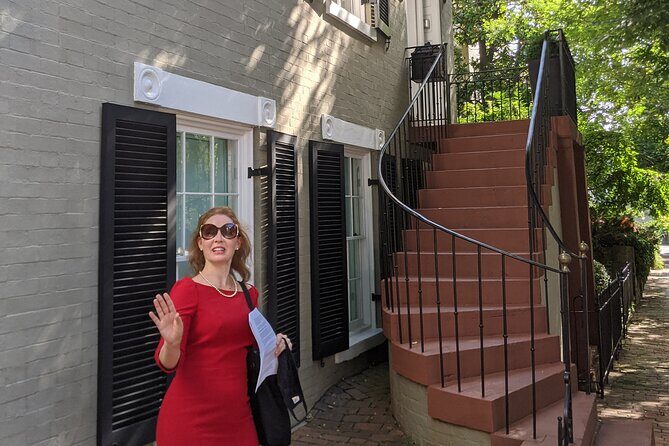
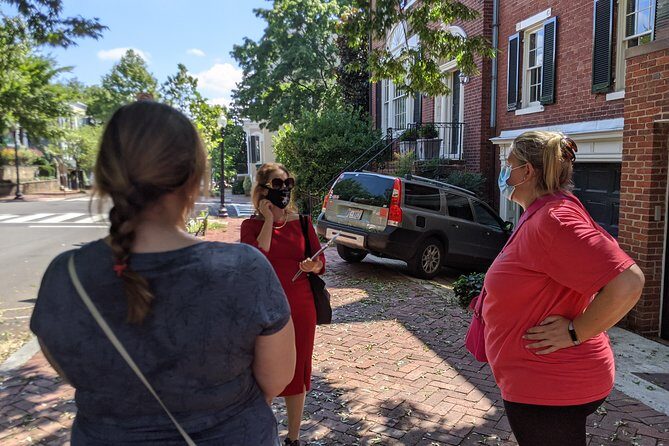
This is a 2-hour walking tour (about), priced at $30 per person, led in English, with a mobile ticket you can use right away. The group size caps at 20 travelers, which matters more than you’d think in a neighborhood like Georgetown—smaller groups mean you’re not constantly stalled at every corner.
The meeting point is at Thomas Sweet (3214 P St NW), Washington, DC. You finish at 1222 28th St NW, across the street from Oak Hill Cemetery, where participants are welcome to enter the cemetery after the tour.
What I like about the pacing is the mix of short stops and focused explanations. Several stops are around 10 minutes, with Martin’s Tavern getting about 5 minutes. That keeps it from turning into a slow sightseeing crawl where you forget half the names by the time you reach the next block.
You’ll also want to think ahead about comfort. The tour notes moderate physical fitness, and it stays outdoors. Plan for uneven sidewalks and a bit of walking stamina. If you’re traveling with service animals, they’re allowed, which is a real plus for flexibility.
Weather is a factor: the tour requires good weather. If conditions are poor, you’ll be offered a different date or a full refund.
You can also read our reviews of more walking tours in Washington DC



The Story Behind the Streets: Socialites, Spies, and Power in Georgetown
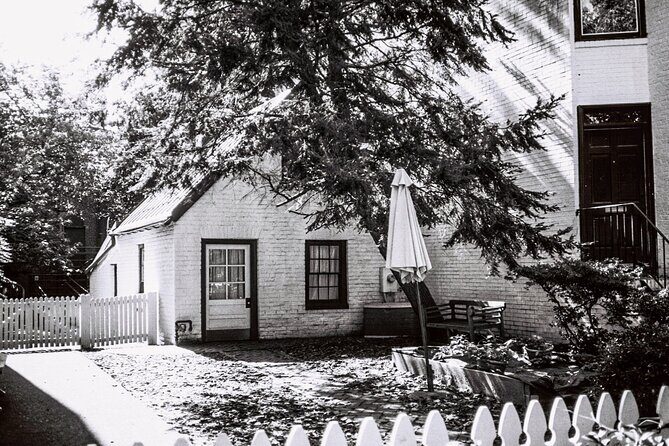
This tour is built around a simple but refreshing idea: the major political moments of the mid-20th century didn’t happen in abstract places. They happened in living rooms, at dinner tables, at embassies, and in networks where charm and access mattered as much as credentials.
Instead of treating history like a museum label, the guide points you to real houses and then connects those homes to the kinds of influence that shaped U.S. decisions—supper clubs, diplomacy, fundraising, journalism connections, and Cold War intelligence work. It’s one of those themes that makes the streets feel less like scenery and more like evidence.
A big part of the tour’s pull is that it puts the spotlight on women who were central to those systems: organizers, artists, diplomats’ spouses, codebreakers, and social power players. You come away with a clearer sense of how networks worked when formal authority wasn’t the only lever.
And yes, Georgetown helps. The neighborhood’s architecture and scale give you the feeling of time travel without any staged sets. It’s a walking tour where the geography does some of the storytelling for you.
Stop-by-Stop: The Georgetown Addresses That Tell the Cold War Plot
Here’s what to expect as the tour moves house to house, with each stop designed to connect one person’s story to a broader political moment.
Stop 1: Polly and Frank Wisner’s Former Home (3327 P St NW)
You start at 3327 P St NW, the former house of Polly and Frank Wisner. The tour links this home to the Sunday Night Supper Clubs, gatherings that became a stage for critical policy making during the 1950s through the 1970s.
This stop works because it reframes social life as infrastructure. Supper clubs aren’t just dinner; they’re relationship-building machines—quiet spaces where conversations can move from personal to political fast. The tour notes the stop is free for admission and takes about 10 minutes.
Stop 2: Mary Pinchot Meyer’s House (1523 34th St NW)
Next is 1523 34th St NW, associated with Mary Pinchot Meyer. The tour highlights her as an artist and bohemian figure and as someone connected to JFK. It also tells the darker part of her story: she was brutally murdered on the C&O Canal, and the killer remains a mystery.
This is one of those stops where you’ll feel the shift from glamour to danger. The location-based storytelling helps you keep the timeline straight—who she was, where she moved through society, and how the mystery lingers in the public imagination. Again, this stop is free for admission and runs about 10 minutes.






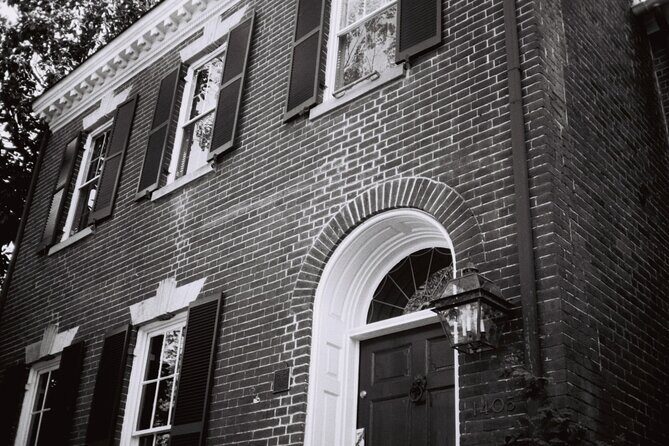
Stop 3: Evangeline and Ambassador David Bruce’s Residence (1405 34th St NW)
At 1405 34th St NW, you’ll hear about Evangeline Bruce, often called Vangie, and her husband, Ambassador David Bruce. The tour presents her role as the ultimate Ambassador’s wife, including her function as the face of embassy life in key Cold War posts.
Even if you don’t usually care about diplomatic history, this stop makes the role tangible. It’s about proximity and presence—what it meant to represent the U.S. socially while decisions were being made politically nearby. The stop is about 10 minutes, and admission is ticket-free for the tour.
Stop 4: Martin’s Tavern (JFK, Journalism, and Madeleine Albright)
Then you shift from houses to a place where history gets louder: Martin’s Tavern. The tour frames it as the era’s watering hole, including stories that:
- JFK proposed to Jackie there
- Bob Woodward would go there to find the latest story
- Madeleine Albright still shows up occasionally
This is the stop that gives you momentum. You’re not just hearing about influence—you see how a public gathering place becomes part of the political ecosystem. It’s a shorter stop at about 5 minutes, and the tour treats it as an admission-free stop.
Tip: since you’re in Georgetown, you’ll probably pass other tempting spots nearby, but Martin’s is the one designed to connect the personalities to the place.
Stop 4 (Kennedy Senator Era): John and Jackie Kennedy’s House
There’s also a stop for the house where John and Jackie Kennedy lived while JFK was a senator. The exact address isn’t provided in the tour info you shared, but the story purpose is clear: it places the Kennedys in Georgetown during a formative political phase, before the presidency is the headline.
This stop helps you avoid the common mistake of treating the Kennedys as only a presidential story. Here, they’re still building their political orbit.
Stop 5: Pamela and Averell Harriman’s Former Residence (3014 N St NW)
At 3014 N St NW, you’ll visit the former home of Pamela and Averell Harriman. The tour spotlights Pamela Harriman as the “Greatest Courtesan of the Century” and notes her fundraising role that stretched all the way to Bill Clinton’s presidency.
This stop is fascinating because it connects different eras of power. It’s not just mid-century history; it’s the idea of continuity—networks forming and reforming over decades. Like several other stops, it lasts about 10 minutes and is admission ticket free.
Stop 6: Ann Caracristi, Codebreaker-Era Home (1222 28th St NW)
You end at 1222 28th St NW, tied to Ann Caracristi, described as one of DC’s most famous Cold War-era codebreakers.
This closing stop gives the tour emotional structure. After all the social and diplomatic stories, you land on intelligence work—the part of the Cold War that runs on hidden messages, not visible status. It’s about 10 minutes, and the tour ends here. Then you can cross the street toward Oak Hill Cemetery for further exploration if you want.
How the Guide Makes It Stick (And Why Katie Kirkpatrick Is Mentioned So Often)
A major reason this tour earns a perfect score is how it’s delivered. The guide is credited with having a deep store of researched detail and sharing it in an entertaining way, with a strong emphasis on how the houses look and where key people fit in their historical timing.
One guide name that shows up in the strongest feedback is Katie Kirkpatrick. People highlight her ability to:
- explain the physical presence of the subjects in Georgetown, not just the names
- use supporting material like pictures and time context
- keep the delivery engaging and welcoming
- dress according to the historical period being covered
That matters because on a tour like this, the risk is getting a list of names with dates attached. A strong guide turns the list into a connected story you can remember when you’re walking back to your hotel.
If you’re the type who likes your history with real texture—where the important information is tied to a specific doorway—this tour’s style is a big match.
Value Check: Is $30 Worth Two Hours of Georgetown Storytelling?
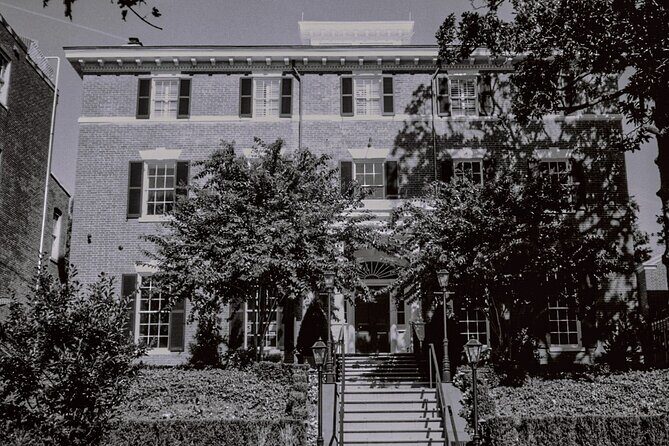
For $30 per person and about two hours, you’re paying for guided interpretation and place-based storytelling. The tour’s stops are described as admission ticket free at the key addresses and locations, which means you’re not paying extra to access the sites.
The value isn’t just the number of stops—it’s the connections the guide builds between those stops. The tour uses a unifying theme (women in power networks and Cold War influence) to keep the route from feeling like disconnected trivia.
You also get a small group size (up to 20), plus the convenience of a mobile ticket. And there’s a built-in break: the tour stops at a local cafe for a bathroom break, where you can buy water or other refreshments if you want.
So my take is simple: at $30, this is a good deal if you like your sightseeing with context and you enjoy learning how social networks and politics overlapped during the mid-20th century.
Logistics That Actually Affect Your Comfort
A few practical notes help you have a smoother walk:
- Shoes matter: plan for sidewalk walking over two hours.
- Bring a little patience: short stops mean you’ll move regularly, but the pacing stays manageable.
- Plan your water: you’ll have a cafe bathroom break with optional drinks, so you can pick up what you need then.
- Public transit nearby: the tour is noted as near public transportation, helpful if you don’t want to park.
- English-only: the tour is offered in English.
- Service animals allowed: if you need that, it’s supported.
Also, since the route ends by Oak Hill Cemetery, it’s a nice add-on if you want to keep learning after the tour.
Who This Tour Fits Best (And Who Might Prefer Something Else)
This tour is a great fit if you:
- like Georgetown but want more than postcard views
- want history tied to specific houses and real locations
- enjoy stories about how influence worked behind the scenes
- care about women’s roles in politics and diplomacy
- prefer guided commentary over self-paced reading
You might choose a different tour if you:
- dislike walking outdoors for about two hours
- want mostly broad, general DC highlights rather than concentrated character stories
- prefer fewer stops and longer time at each place
For me, the biggest selling point is that it’s not just about big names—it’s about the social and intelligence systems that carried the era forward.
Should You Book Socialites and Spies of Georgetown?
If you enjoy history that feels like it’s happening in place, I’d book this. It’s focused, short enough to stay energetic, and it gives you a clear theme: women in power networks, Cold War diplomacy, and the stories attached to Georgetown’s streets.
The value is strong for the money: $30 for about two hours, small group size, free-access stops, and an engaging guide approach. The one real caveat is physical comfort and weather—so check the forecast and wear walking shoes.
If you’re pairing it with other DC plans, this works best as a midday or afternoon activity when you can still enjoy Georgetown afterward on your own.
FAQ
How long is the Socialites and Spies of Georgetown walking tour?
It’s listed as about 2 hours.
How much does the tour cost?
The price is $30.00 per person.
Is the tour offered in English?
Yes, it’s offered in English.
Where does the tour start and end?
It starts at Thomas Sweet, 3214 P St NW, Washington, DC 20007. It ends at 1222 28th St NW, Washington, DC 20007, across the street from Oak Hill Cemetery.
What stops and topics are included?
You’ll visit a series of locations tied to figures such as Polly and Frank Wisner, Mary Pinchot Meyer, Evangeline and Ambassador David Bruce, a house where John and Jackie Kennedy lived while JFK was a senator, Pamela and Averell Harriman, and Ann Caracristi. The tour also includes Martin’s Tavern and references stories connected to JFK, Jackie, Bob Woodward, and Madeleine Albright.
Do I need to buy tickets for the stops?
The tour info notes admission ticket free for the listed stops, and it includes the walking tour experience and guidance.
What happens if the weather is bad?
This tour requires good weather. If it’s canceled due to poor weather, you’ll be offered a different date or a full refund.
If you want, tell me your travel month and your walking comfort level, and I’ll suggest the best time of day to do this route in Georgetown.