REVIEW · CAPITOL & LIBRARY OF CONGRESS
Iconic Capitol Hill Architectural Walking Tour
Book on Viator →Operated by DC Design Tours · Bookable on Viator
Architecture grabs you before you leave Union Station. This Capitol Hill architectural walking tour connects big-name buildings to the people and politics that shaped them, with a local guide (Sam is one of the standouts) sharing story-size nuggets alongside design details. I especially like the focus on restored Union Station—vaulted interiors, classical façade, and artwork—and the way you’re invited to look up for the dome and the Statue of Freedom. One downside to plan for: crowds and security around the Capitol can make it harder to hear the guide and get close on protest days.
You’ll cover about a 1-mile route in roughly 2 hours, moving briskly between key sites. The small group format (up to 20) helps the pacing feel personal, and you end at the U.S. Capitol Visitors Center where you may be able to join a free interior building tour, depending on timing.
In This Review
- Key Things to Know Before You Go
- Union Station Great Hall: the easiest way to find your meeting point
- Supreme Court steps and Columbus Memorial Fountain: quick stops, clear takeaways
- Capitol Hill’s U.S. Capitol: east-side photo moments and the Statue of Freedom story
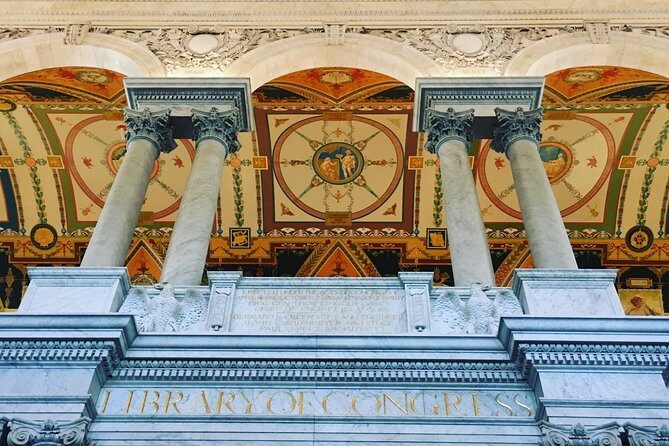
- Library of Congress Thomas Jefferson Building: symbols, design, and included interior time
- U.S. Capitol Visitors Center finish: where your tour can keep going
- Pacing and walking reality: can you handle the 2-hour rhythm?
- What your money buys: $48 and where the value really is
- The biggest potential snag: Capitol-area crowds and hearing the guide
- Who this tour is best for (and who should choose something else)
- The guide experience: small group energy and story-driven explanations
- Should you book DC Design Tours’ Capitol Hill Architectural Walking Tour?
- FAQ
- Where does the tour start?
- Where does the tour end?
- How long is the tour?
- How much does it cost?
- Is the tour offered in English?
- How many people are in the group?
- What’s included in the price?
- Does it include a mobile ticket?
- Is the tour dependent on weather?
Key Things to Know Before You Go
- Union Station starts the show: You meet in the Great Hall under the big clock, in a restored space with major architecture energy.
- You’ll learn to look up at the Capitol dome: The tour highlights the Statue of Freedom and the controversies around her unveiling.
- Supreme Court and Capitol stops stay quick and useful: Short, well-timed views that focus on what matters visually and historically.
- Library of Congress time is the centerpiece: The Thomas Jefferson Building is included and runs long enough to actually absorb it.
- Tickets are included for the two most important interiors: Library of Congress and the Capitol Visitors Center are covered.
- Weather and crowds can change the feel: Good weather is required, and Capitol-area security can affect access and sound.
Union Station Great Hall: the easiest way to find your meeting point
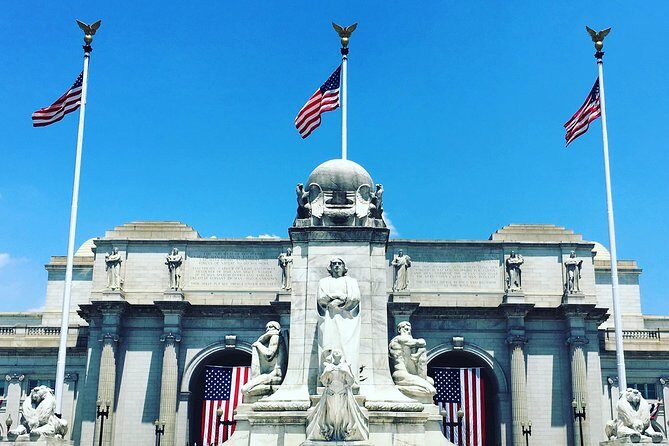
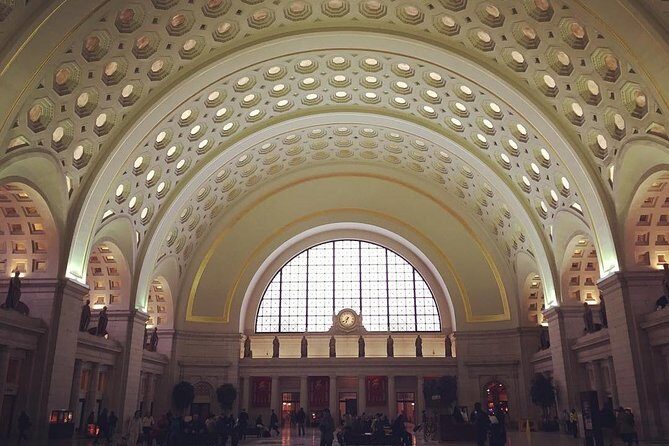
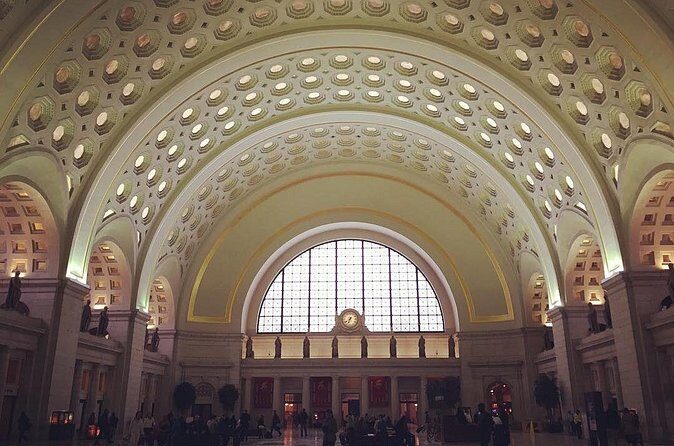
This tour begins inside the Great Hall of Union Station, under the big clock. When you enter from the main entrance, turn right and look up at the clock—this is the spot. Even before you step outside, the building sets the tone: classical façade details, vaulted interior space, and restored artwork that make Union Station feel like a real civic monument again.
If you like your history with a sense of human drama, you’ll enjoy how the guide frames Union Station as a crossroads for presidents, diplomats, and politicians. The station’s story includes big eras of change, from inaugurations and world events to the kind of chaos that turns into local legend (including a runaway-train tale, since DC loves a good dramatic subplot).
Practical tip: Union Station is big. Give yourself a few extra minutes so you can find the clock calmly and not during the pre-departure rush.
You can also read our reviews of more walking tours in Washington DC



Supreme Court steps and Columbus Memorial Fountain: quick stops, clear takeaways
Your route moves past the Freedom Bell and the Columbus “fountain” area toward the Supreme Court steps. The whole point here is to get an architectural read fast—what you’re seeing, why it was designed that way, and how it connects to the judicial branch as a physical statement.
The Supreme Court stop is short (about 5 minutes), which might sound like a lot if you’re expecting a slow museum pace. But for most people, it’s exactly right for an exterior architecture walk. You’ll get the facade and overall design context without getting bogged down, and then you’ll move on while you’re still fresh enough to notice details at each next building.
This is also where the pacing starts to feel like a real city walk rather than a bus tour. You’ll be standing, shifting positions for views, and listening in layers—great if you can handle a bit of urban noise.
Capitol Hill’s U.S. Capitol: east-side photo moments and the Statue of Freedom story
Next comes the U.S. Capitol Building. You’ll get photo opportunities on the east side and time to look up at the dome. It’s one of those views that can feel instantly familiar even if you’ve only seen it in photos. The guide’s job is to make it feel newly specific by explaining what the building’s history has been through—and why the details matter.
You’ll also focus on the Statue of Freedom who tops the dome. The tour doesn’t treat her like background decoration. You’ll hear about the controversies tied to her original unveiling, which adds friction (in a good way) to what could otherwise be a smooth postcard moment.
The Capitol stop runs about 10 minutes. That gives you enough time for photos and for the guide’s main points, but it’s not designed for long lingering. If your ideal sightseeing style is slow and unhurried, you might wish you had more time—still, the trade-off is that you’ll keep moving and cover the full architecture arc.
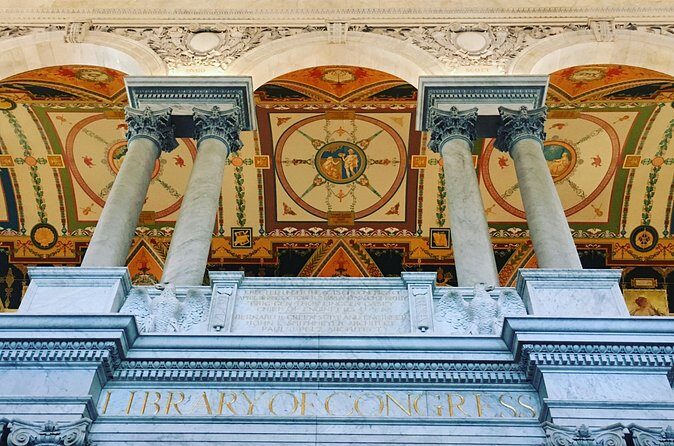
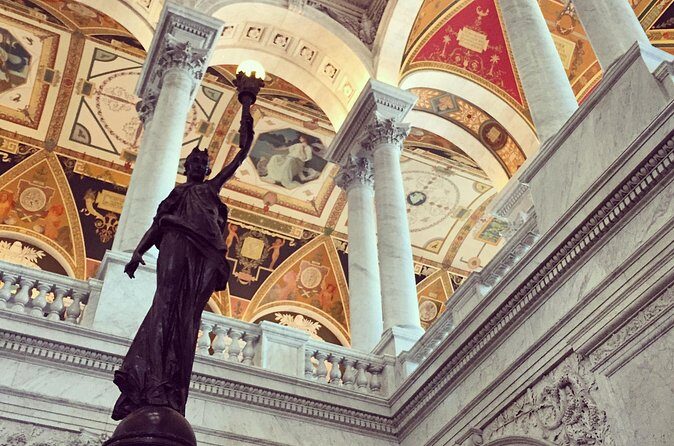
Library of Congress Thomas Jefferson Building: symbols, design, and included interior time

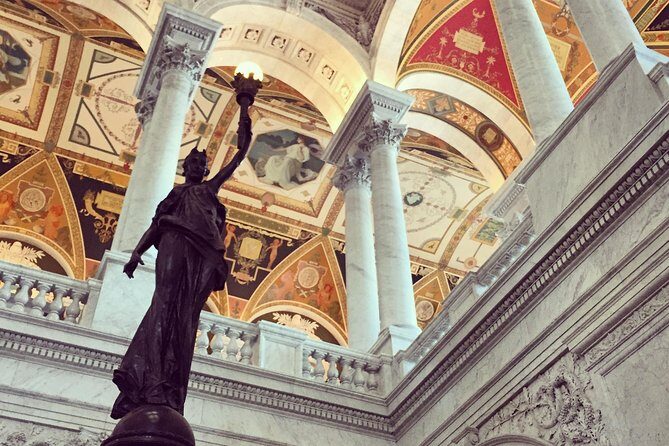
This is the tour’s big interior payoff. You’ll go inside the Library of Congress Thomas Jefferson Building for about 30 minutes, and admission is included. If you like architecture that rewards close attention, this stop is where the tour shines.
Expect ornate design, plus a focus on symbols and meaning rather than just saying the building is pretty. The guide points out the kind of details that most people miss when they walk past a grand building looking only for the headline view. You’ll also learn why this institution matters in DC’s day-to-day life, not just as a pretty landmark.
Then there’s a clever bonus: you take an underground tunnel to the Capitol area. It’s an efficient way to transition between major sites without losing momentum to long outside transfers. It also changes the atmosphere for a bit—suddenly you’re not battling open-air crowds while you move between highlights.
One note: this is a real interior stop, so you’ll likely experience normal rules of indoor public spaces (quiet voice expectations, slower movement, and the general feel of a major civic building). The guide keeps you moving, but not rushed.
U.S. Capitol Visitors Center finish: where your tour can keep going
Your final segment ends inside the U.S. Capitol Visitors Center, about 15 minutes. Admission is included here too. This ending location is useful because it’s close to National Mall sightlines and public transportation, so you’re not stuck far from your next plan.
What makes this finish extra valuable is that the guide can help you join a free building interior tour, depending on timing and availability. That means your ticket doesn’t just get you a guided walk; it can potentially connect you to a second layer of access if the schedule allows it.
If you’re a first-timer in DC, this is a smart way to reduce decision fatigue. You finish near the center of everything, with help figuring out what to do next rather than wandering around guessing.






Pacing and walking reality: can you handle the 2-hour rhythm?
The tour is about 2 hours and covers roughly 1 mile. That combination usually works well for people who want to see a lot without feeling like they need marathon training.
The stop times break down roughly like this: a quick start in Union Station, then short exterior views of the Supreme Court and Capitol, and longer interior time at the Library of Congress and at the Visitors Center. In other words, the walking isn’t the bulk of the experience—listening and looking are.
Because you’re in and out of security-adjacent areas, you’ll want to dress for practical movement. Good shoes matter. Also, you’ll be standing at key moments for photos, so a light layer helps if the weather swings.
The tour also requires good weather. If it’s raining or too foul, the plan can change, and you’ll be offered another date or a refund. That’s part of keeping the experience safe and enjoyable.
What your money buys: $48 and where the value really is
At $48 per person, this tour isn’t trying to be a bargain basement sightseeing deal. Instead, it’s priced like what it is: a guided architecture route with included entry at two major interiors and a local guide who interprets what you’re seeing.
You’re paying for three things that actually save you time and mental effort:
- A local guide who explains how the designers shaped DC and why their ideas caused controversy and friction, not just admiration.
- Included admission for the Library of Congress Thomas Jefferson Building and the U.S. Capitol Visitors Center.
- A structured route that helps you connect Union Station, the judiciary, the Capitol dome, and the library into one coherent architectural story.
This also explains why it’s popular. You’re not paying only for access. You’re paying for understanding, especially around the design symbolism and the names behind DC’s built identity. The tour specifically references major figures like Thomas Jefferson, Robert Mills, Frederick Law Olmstead, and Daniel Burnham—and the guide ties their contributions to what it took to get ideas approved, from bureaucracy to chaos.
If you’re the type who likes to appreciate buildings without needing a textbook, this pricing makes sense.
The biggest potential snag: Capitol-area crowds and hearing the guide
One real-world issue can come up in DC: crowds and security around the Capitol. On days with protests, marches, or heavy enforcement, it can be hard to get close to the buildings and harder to hear the guide over noise and movement. This can also mean more jostling and more frequent stopping than you’d prefer.
That’s not the tour’s fault. It’s simply DC operating in real time. The best way to handle it is to show up mentally flexible. Come with patience, keep your expectations realistic for exterior proximity on busy days, and accept that your view might be shaped by security setup.
If you’re planning for the most comfortable experience, pick a day when you expect calmer crowds. If you’re coming during a known high-activity period, you’ll still likely get value from the design explanations—it’s just that the logistics can be messier.
Who this tour is best for (and who should choose something else)
You’ll get the most from this Capitol Hill architecture walk if you:
- Want a tight introduction to major institutions around the Capitol in about two hours.
- Prefer walking plus commentary over scrolling photos later.
- Like architecture details with story context, especially around the Capitol dome and what it represents.
- Want at least one major interior (Library of Congress) without having to plan separate tickets and timing yourself.
You might look elsewhere if you:
- Can’t tolerate crowd noise, or you need guaranteed close viewing at the Capitol exterior no matter what.
- Are hoping for a slow, unstructured wander with lots of independent exploration time.
Because it’s well-paced and guided, the experience works best as a first or second DC architecture plan—not as your only plan if you want long solo time at each building.
The guide experience: small group energy and story-driven explanations
This tour runs as a small group with a maximum of 20. That matters more than it sounds. You don’t just stand in a line—you can actually hear the main points, and the guide can keep everyone on track when the route gets crowded.
The reviews you’ll find for this company highlight guides who mix serious information with humor, including one guide named Sam who’s praised for being personable and fun while still delivering clear explanations. I like that style because it keeps architectural facts from sounding like homework. You remember things better when the guide makes the story land.
The guide also offers historical “nuggets” alongside architecture notes, so you’re not only learning what the buildings look like—you’re learning why they got built and how they were received.
Should you book DC Design Tours’ Capitol Hill Architectural Walking Tour?
If you want a guided architecture route that starts in one of DC’s most impressive civic interiors, includes the Library of Congress as a real centerpiece, and finishes in the right place to keep exploring, I’d say this is a strong bet.
This tour is a particularly good choice when:
- You’re short on time but want a coherent DC overview.
- You care about architecture details like domes, façades, vaulted interiors, and symbols—not just the postcard view.
- You’d rather pay for structure than piece together multiple stops on your own.
I’d be a bit more cautious if you’re visiting during a period when protests are likely. The design story still matters, but crowd conditions can affect sound and access.
With a 4.9 rating and strong recommendation rates, it’s clear this format works for most people. Just go in knowing it’s a walk through a real, active capital—so bring good walking shoes, a flexible mindset, and look up at the dome when you get your chance.
FAQ
Where does the tour start?
The tour starts inside Union Station at 50 Massachusetts Ave NE, Washington, DC 20002, in the Great Hall under the big clock.
Where does the tour end?
It ends inside the U.S. Capitol Visitors Center on Capitol Hill, near National Mall sights and public transportation.
How long is the tour?
The tour lasts about 2 hours (approx.).
How much does it cost?
It costs $48.00 per person.
Is the tour offered in English?
Yes, it’s offered in English.
How many people are in the group?
The tour has a maximum of 20 travelers, with a small-group format for personal service.
What’s included in the price?
A local guide is included, plus admission tickets are included for the Library of Congress Thomas Jefferson Building and the U.S. Capitol Visitors Center.
Does it include a mobile ticket?
Yes, the tour uses a mobile ticket.
Is the tour dependent on weather?
Yes. It requires good weather. If it’s canceled due to poor weather, you’ll be offered a different date or a full refund.