REVIEW · EVENING EXPERIENCES
Epic Evening e-Scooter Tour
Book on Viator →Operated by BiPartisan Tour Company · Bookable on Viator
Glide through DC after dark. This evening e-scooter tour is built for small-group sightseeing, with a guide steering you past the city’s most famous illuminated landmarks without the usual hassle of big-vehicle tours.
I love that you cover serious ground in about four hours, with short stop-and-photo moments plus a little time to look around on your own. I also like that Brian, the guide, turns each stop into something more than just a photo backdrop with stories and context. One possible drawback: you’ll want to feel comfortable riding an e-scooter and following the rules (like closed-toe shoes and the stated height/weight limits).
In This Review
- Key things to know before you go
- 7:00 pm in DC: cooler air and fewer crowds
- Riding the e-scooter: what to wear and how the guide trains you
- Small group of six: why the pace feels personal
- US Capitol and White House grounds: big sights without the long lines
- Eisenhower to Washington Monument: the night memorial circuit
- Memorial stop times: planning your photos and breaks
- What the guide adds: Brian’s stories and photo help
- Price of $89: getting value from speed and night-time sight power
- Should you book this Epic Evening tour or choose something else?
- FAQ
- How long is the Epic Evening e-Scooter Tour?
- What time does the tour start, and where is the meeting point?
- What is the group size?
- Does the tour include entering the US Capitol, the White House, or the Washington Monument?
- Are there any admission fees for the memorials?
- What are the age, size, and shoe requirements?
- What happens if weather is bad?
Key things to know before you go
- Small group up to six keeps the ride from turning into a bottleneck.
- 7:00 pm start means you see monuments lit up while the day crowds thin out.
- Brian’s guiding style mixes practical riding help with stories at each stop.
- No building interiors: you see the US Capitol, White House, and Washington Monument from the grounds only.
- Memorial stops include free admission (when listed) and built-in photo time.
- E-scooters are easy to handle and the guide helps you get used to them before you roll out.
7:00 pm in DC: cooler air and fewer crowds
There’s something about Washington DC at night. The monuments look sharper, the streets feel calmer, and the whole city seems more relaxed for moving around. A 7:00 pm start is a smart compromise: you’re not fighting the worst daytime heat, and you still get plenty of darkness for those classic lit-up views.
This tour is also designed around time efficiency. You’re not bouncing between far-apart sites by bus. Instead, you glide between major areas and spend your energy on the sights, not on aching feet or waiting at the curb.
The other quiet win is pacing. With about four hours, you get a full sweep without the all-day drain. It’s the kind of evening plan that works well when you’re juggling museums in the daytime and want one memorable “see DC” moment after.
One more thing: because the itinerary is built for night visibility, your best photos usually come from where the guide positions you and the short, intentional viewing windows at each stop. If you like photography, this is the kind of route that makes it easy to grab shots without needing a full itinerary spreadsheet.
You can also read our reviews of more evening experiences in Washington DC



Riding the e-scooter: what to wear and how the guide trains you
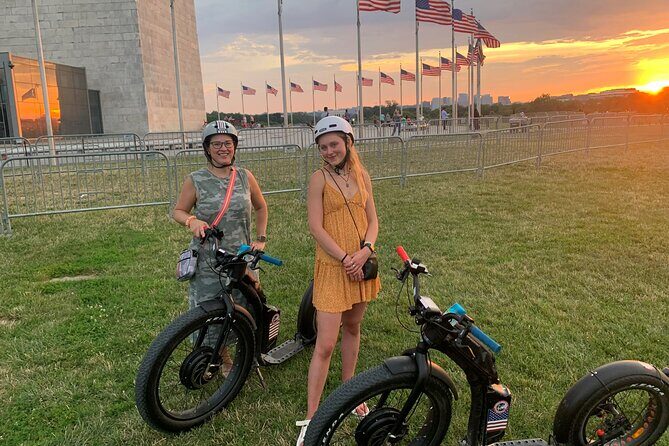
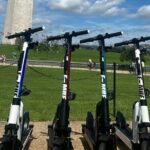
Let’s talk comfort and control, because that’s the whole point of an e-scooter tour. The scooters used on this experience are described as easy to ride, and the guide provides a getting-used-to-it orientation before you take off. That matters if you’re new to scooters or you’re just not sure how you’ll feel once you’re moving in a city at night.
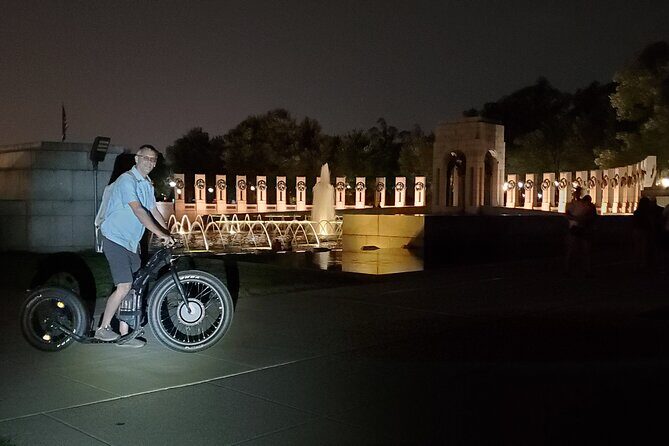
From the ride experience itself, the scooters are reported to be smooth and stable, with huge tires for comfort and multiple gears for getting between stops without drama. You’ll also want to be ready for the scooters to feel fairly quick once you’re underway, so if you’re cautious, take the practice time seriously and follow the guide’s instructions.
What you wear matters here. The rules are clear: no flip flops and no open-toed shoes. Closed-toe footwear isn’t just a suggestion; it’s part of what keeps your feet protected and stable on the deck. And if you’re tall or heavy, check the limits ahead of time—there’s a weight limit of 275 pounds and a height limit of 6’7″.
Age also matters: you must be 16 or older. And if you’re traveling with teens or parents, you’ll likely appreciate how the guide keeps the group moving without treating anyone like dead weight.
Small group of six: why the pace feels personal
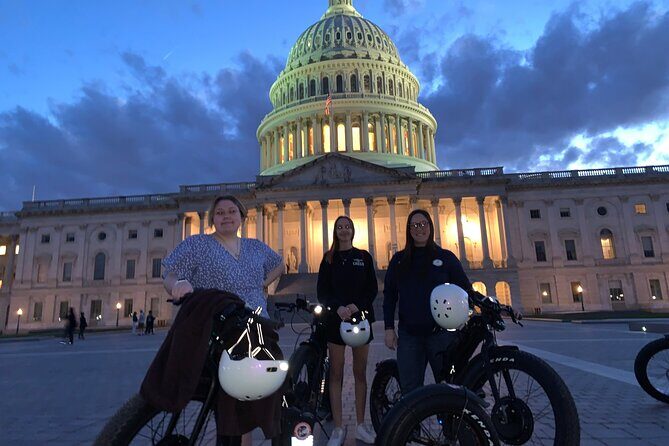
A maximum group size of six changes everything. With big tours, you’re always squeezing in, always waiting for someone to catch up, and always stuck listening to explanations from way too far away. Here, the group stays tight enough for the guide to keep an eye on you and for you to get answers when you want them.
That personal pace shows up in how stops are managed. At each landmark, you get time to park your scooter, listen to the quick stories, and then take photos and/or do a brief self-guided look. It’s not rushed in the sense of sprinting through everything, but it is structured so the night doesn’t run away from you.
Brian’s style is also a big part of the experience. Multiple people highlight his friendliness, how he keeps things interesting, and how he’s attentive—especially with first-timers who might be nervous about riding. If you ask questions, you’re not just getting a one-line answer. You get context tied to what you’re seeing.
Another practical benefit of small-group touring: you can usually get the photo help you need. The guide is there to assist with pictures at the grounds and along the route, and the group size makes it easier to gather, pose, and move on without chaos.
If you want a night tour that feels like a guided walk that just happens to run on wheels, this structure delivers.
US Capitol and White House grounds: big sights without the long lines
This is the part of the evening that hits you right away. You start at 325 7th St NW and then roll into the heart of DC’s political landmarks. The good news: you’re seeing the scale and the setting without wasting your time in long entry lines.
First up is the US Capitol grounds. You’ll get stories tied to what’s around you, help taking pictures, and a few minutes to explore on your own. Important expectation check: this tour does not enter the building and doesn’t do a building tour. So if you’re hoping for an interior look, you’ll need a different activity for that.
Next comes the White House grounds. Same general setup—stories, photo assistance, and short self-exploration time. Also important: the tour does not include a visit inside the White House. This means the focus stays outside where you can see the surroundings and viewpoints instead of spending your night standing in controlled access lines.
Why these grounds stops work so well at night: the buildings read differently in the dark. You get strong lighting, cleaner sightlines, and a calmer atmosphere for photos. And because you’re on a scooter, you’re not stuck watching the clock while you wait for public transit.
These two stops set the tone for the rest of the evening. Once you’ve seen the DC power center up close, the memorials feel more meaningful, not just scenic.
Eisenhower to Washington Monument: the night memorial circuit
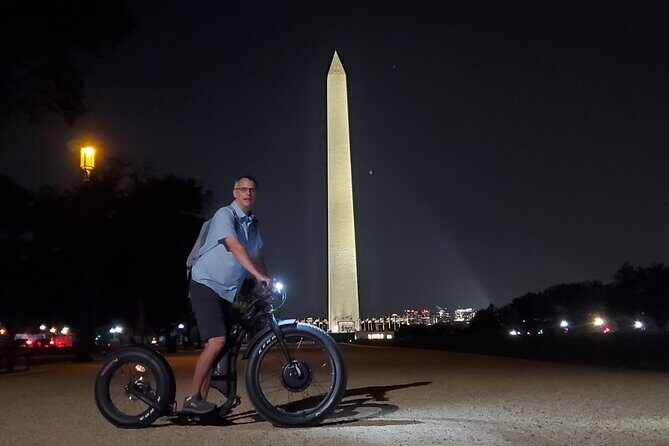
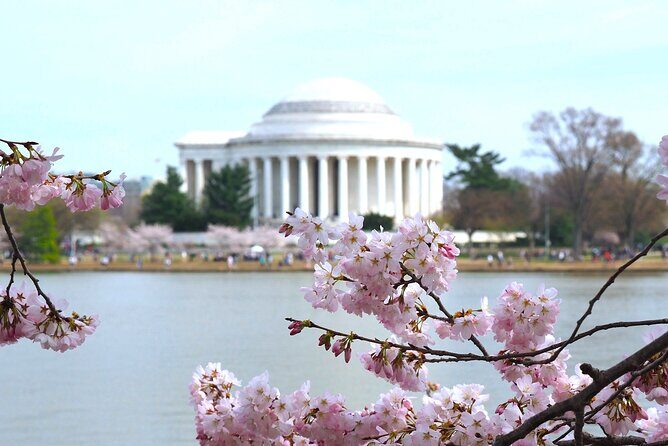
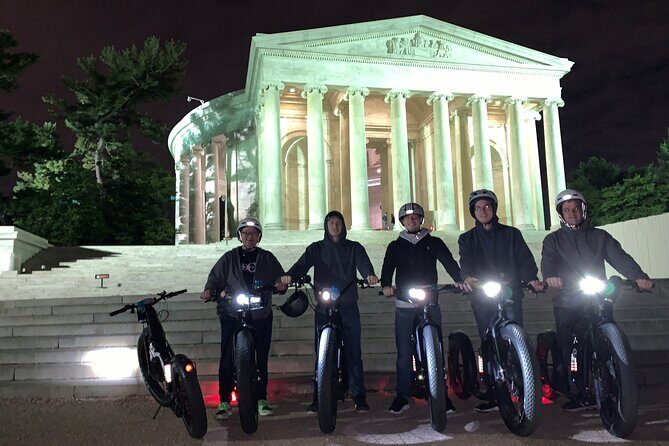
After the Capitol and White House grounds, the tour shifts into the memorial loop—where the big emotional DC moments happen. You’ll visit Dwight D. Eisenhower Memorial, Jefferson Memorial, Franklin Delano Roosevelt Memorial, Martin Luther King Jr. Memorial, Korean War Veterans Memorial, Lincoln Memorial, Vietnam Veterans Memorial, and World War II Memorial, then finish with the Washington Monument grounds.
Here’s what each stop gives you, in the way the tour is structured—short guide stories, photo help, and a few minutes on your own:
- Dwight D. Eisenhower Memorial (about 10 minutes)
Expect a focused stop. It’s long enough for a quick walk-around and photos, not long enough for a slow, deep wandering session.
- Jefferson Memorial (about 15 minutes)
A bit more time to pause, look around, and reposition for better shots.
- Franklin Delano Roosevelt Memorial (about 20 minutes)
The longer window helps here, because this stop benefits from a little extra viewing time.
- Martin Luther King Jr. Memorial (about 10 minutes)
Short and purposeful. You’ll want to pay attention during the story portion so you’re not just treating it as another photo op.
- Korean War Veterans Memorial (about 10 minutes)
A compact stop with quick context and space for pictures.
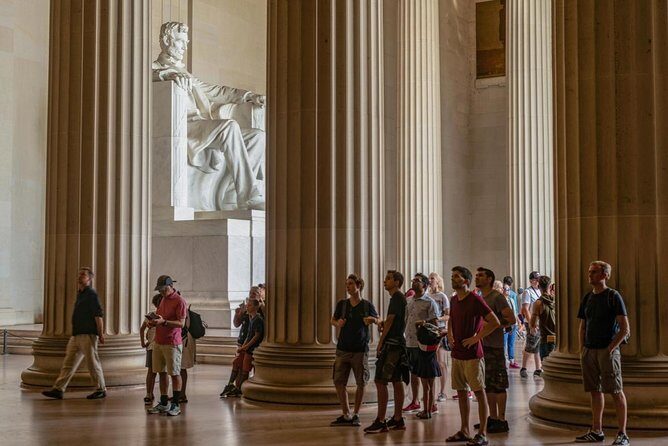
- Lincoln Memorial (about 15 minutes)
Another time-balanced location: enough for the “I’m here” moments and photos, with time for a brief self-guided look.
- Vietnam Veterans Memorial (about 20 minutes)
This one gets extra time, which is helpful for taking it in without rushing.
- World War II Memorial (about 15 minutes)
Similar rhythm: guide stories, photos, and time to look around.
- Washington Monument grounds (a few minutes)
You see it from the grounds and get a short explore time, but the tour does not go inside the Washington Monument.
The sequence is built so you don’t lose the thread. The guide’s stories help you connect what each memorial is honoring, and that’s what turns the ride into something more than just sightseeing.
Also worth noting: people consistently say the guided tour covers a lot of major monuments efficiently. At night, that efficiency is the whole magic.
You can also read our reviews of more tours and experiences in Washington DC




Memorial stop times: planning your photos and breaks
Because each stop has a set window, you should think of the tour as a rhythm, not a freestyle. You’ll get a short listening period while the guide shares stories and helps with photos, and then you have a brief personal window to roam nearby and take your own images.
This matters if you’re the type who likes to linger for the perfect shot. A good approach is to take your first round of photos quickly, then use your remaining time for repositioning. With limited minutes at each stop, you’ll get better results if you don’t overthink shot location at the first second.
The tour’s overall structure also keeps you moving. You’re not waiting around for everyone to gather. And because there are only up to six people, the guide can adjust pacing for slower riders without turning the whole night into a stop-and-go shuffle.
One more practical point: the guide is carefully watching the group while you ride. That’s especially helpful when the scooters are moving between areas and when you’re switching from riding mode to picture mode.
If you’re planning a DC night that includes dinner afterward, this tour’s 4-hour length is a good anchor. It gives you a clear end point where you can move on without getting stuck in a half-day of wandering.
What the guide adds: Brian’s stories and photo help
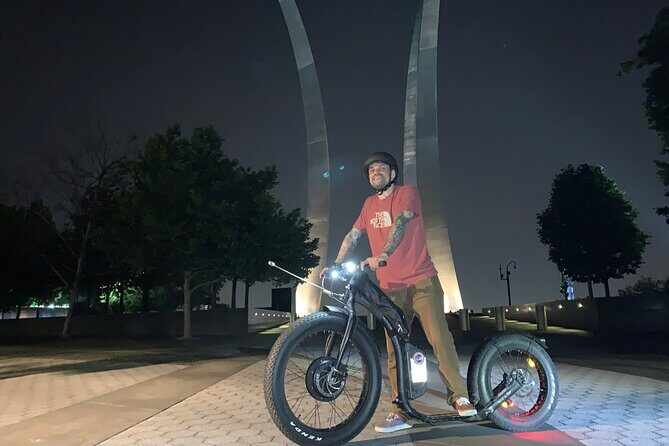
A lot of DC tours show you places. This one tries to give you a sense of what those places mean. The guide, Brian, is repeatedly praised for being friendly and for delivering stories that make each stop feel connected rather than random.
You’ll hear history and context tied to the monuments you’re seeing, and Brian also helps with practical things like photos at the grounds and quick guidance when you’re learning the scooter. In a city like Washington DC, where each landmark has layers, a guide who can explain what you’re looking at makes a big difference.
I also like the way this format invites questions. When you’re close enough to talk to the guide, you’re more likely to ask what you actually want to know: how the memorials fit together, or what to notice as you stand there.
Several people mention that Brian even shares dinner suggestions. You shouldn’t plan your meal purely on that, but it’s a nice perk if you want a simple next step after the tour ends back where you started.
If you care about photos, the guide’s photo help is also part of the value. You’re not constantly swapping phones with strangers in the background scramble. The timing feels built for getting a clean shot.
Price of $89: getting value from speed and night-time sight power
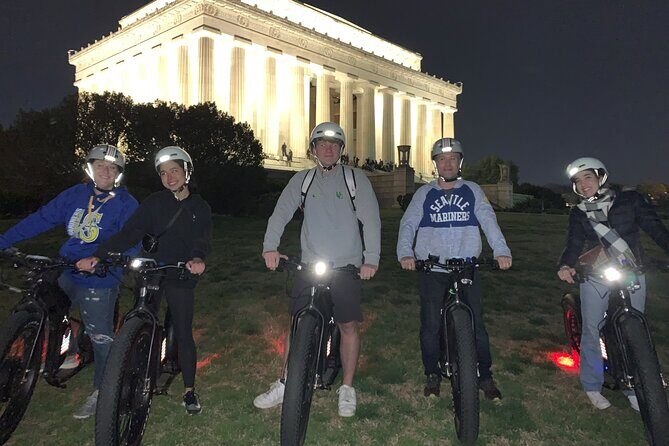
At $89 per person for about four hours, the price only feels worth it if you’re using the core advantage: scooter speed plus a night route that packs in major landmarks without wasting time.
Walking all those stops in one evening would be a leg-buster. Bus tours can help, but they still come with waiting, boarding lines, and limited access around certain viewpoints. This tour avoids some of that friction by letting you roll directly between locations and spend time at the sights instead of commuting.
The small-group setup also supports the price. When you’re not stuck in a crowd, the guide can spend a bit more time with each stop, which makes the night feel more intentional.
There’s another value angle: you get the iconic DC “lit monuments” look. Night illumination is a big part of what people love about Washington after dark, and this tour is structured around that.
One more practical signal: it’s commonly booked about 15 days in advance on average. That doesn’t mean you can’t find space later, but it does suggest it’s smart to plan ahead if you’re traveling at peak times.
If you want one high-impact thing to do in DC that’s different from standard museum days, this tour checks that box well.
Should you book this Epic Evening tour or choose something else?
Book it if you want a guided, photo-friendly night route that gets you close to major DC landmarks without long indoor tours. It’s a great fit if you like the idea of seeing the Capitol, White House grounds, and a full set of memorials in a single evening, and you’re happy to do quick stops rather than slow, deep exploration.
Skip it (or pair it with other activities) if you specifically want interior access to the US Capitol, the White House, or the Washington Monument. This one keeps you on the grounds and around the sites, which is perfect for a scooter evening but not the right match for people chasing building entry.
Also, be honest with yourself about riding comfort and footwear. If you can’t follow the closed-toe shoe rule, or you’re near the height/weight limits, you’ll want to rethink.
My take: if you’re doing DC on a tight schedule, or you want your night to feel like a highlight instead of a slog, this is an easy yes. The combo of night scenery, small-group pacing, and Brian’s storytelling support makes the time feel well spent.
FAQ
How long is the Epic Evening e-Scooter Tour?
The tour is about 4 hours (approx.).
What time does the tour start, and where is the meeting point?
It starts at 7:00 pm. The meeting point is 325 7th St NW, Washington, DC 20004, USA, and the tour ends back at the meeting point.
What is the group size?
The experience has a maximum of 6 travelers.
Does the tour include entering the US Capitol, the White House, or the Washington Monument?
No. The tour visits the grounds of the US Capitol and the White House, and it does not include visits inside either. It also does not go inside the Washington Monument.
Are there any admission fees for the memorials?
For the memorial stops listed, admission is listed as free.
What are the age, size, and shoe requirements?
Guests must be 16 years old or older. There is a weight limit of 275 pounds and a height limit of 6’7″. You also must wear closed-toe shoes (no flip flops or open toed shoes).
What happens if weather is bad?
This tour requires good weather. If it’s canceled due to poor weather, you’ll be offered a different date or a full refund.