REVIEW · MUSEUMS
Smithsonian Air & Space Museum Guided Tour Semi-Private 8ppl Max
Book on Viator →Operated by Babylon Tours DC · Bookable on Viator
Eight people. One tight story through aviation and space.
This semi-private Smithsonian Air and Space Museum tour is built around original exhibits and a guide who helps you move through a huge museum without wasting time. I like that the route starts with the very first era of flight and then jumps straight into U.S. space hardware. And because the group max is 8 people, you get real back-and-forth instead of shouting over other tour groups.
Two things I especially liked: you’re shown big-name objects like the Wright Flyer (original) and Buzz Aldrin’s spacesuit and moon boots, plus the Apollo 11 Command Module and real moon rocks. You also get the human side—what it means to be an astronaut today—so it’s not just case labels. One possible drawback: the Air & Space museum is in major construction, so some exhibits may not be on display, and the route can change with what’s open.
In This Review
- Smithsonian Air & Space Museum Semi-Private Tour: The Main Idea
- Key Stops and What Makes Them Worth Your Time
- Getting There: Independence Ave Meets Real DC Planning
- How a Small Group Changes Everything (Up to 8 People)
- Stop One: Launching the Story at the National Air and Space Museum
- Early Aviation Highlights: Wright Flyer and the First Big Leap
- The Lindbergh Moment: Spirit of St. Louis and Human Courage
- Apollo 11 Close-Ups: Aldrin’s Suit, Moon Boots, and Command Module
- Moon Rocks and the Astronaut Question: What It Means Now
- The Renovation Factor: Managing Expectations Without Dimming the Magic
- Price and Value: Is $89.67 Worth It?
- Timing, Pacing, and the Quiet Rooms Detail
- Who This Tour Suits Best
- Should You Book This Semi-Private Air & Space Museum Tour?
- FAQ
- How many people are in the tour?
- Where do we meet, and how long is the tour?
- What’s included in the price?
- Does this tour include museum admission?
- What if some exhibits are closed due to construction?
- Can I cancel for a refund?
Smithsonian Air & Space Museum Semi-Private Tour: The Main Idea

This tour is for people who want to see the museum’s headline artifacts but still enjoy the story. The National Air and Space Museum is enormous, and even if you like reading, you’ll miss too much if you wander aimlessly. This guided route gives you a logical flow: early aviation → legendary flights → Moon landing hardware → what astronaut life looks like now.
The semi-private size matters. With up to 8 people, you’re not packed in shoulder-to-shoulder. That makes a difference in rooms where you might need to slow down, and it also helps your guide tailor the pace when someone has questions.
The big-picture value: you’re paying for guided direction in a museum where the shelves are endless and the best highlights are spread across different wings.
Key Stops and What Makes Them Worth Your Time
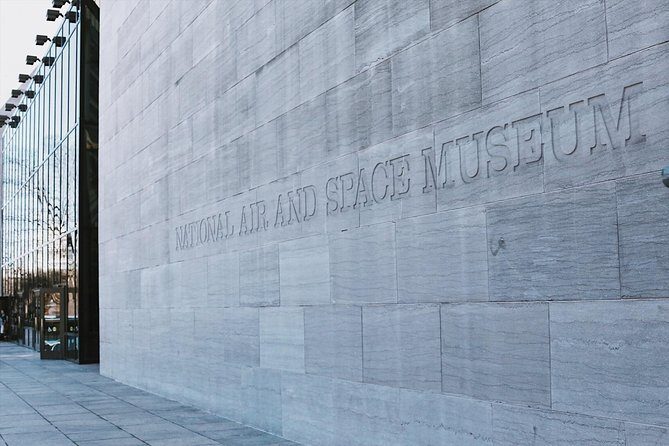
- A smart “greatest hits” route that connects early flight to the U.S. space program
- Wright Flyer (original) and other signature aviation pieces like Chuck Yeager’s Bell X-1
- Apollo 11 artifacts including Buzz Aldrin’s spacesuit and moon boots, plus the Apollo 11 Command Module
- Real moon rocks and hardware that turns the Moon landing from a headline into a physical experience
- Real space-program context with the astronaut question front and center
- Guide-led pacing designed to reduce the time you’d otherwise spend stuck in line
You can also read our reviews of more guided tours in Washington DC



Getting There: Independence Ave Meets Real DC Planning
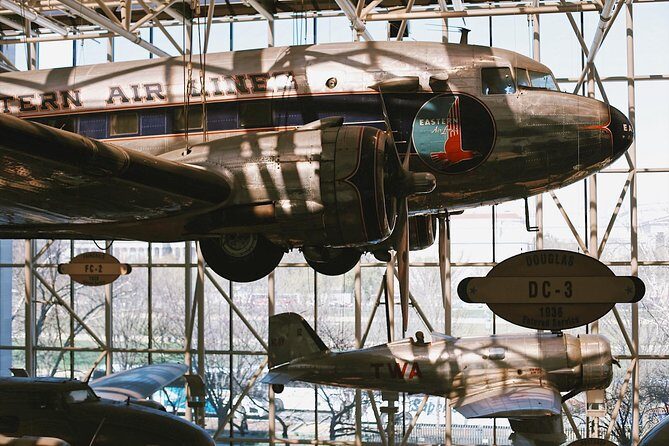
The meeting point is at 600 Independence Ave SW, Washington, DC 20560. It’s a solid location on the National Mall, so you’re close to public transit and other top sights. If you’re stacking this with other museum time, the National Mall is the right place to be—everything is walkable or a short ride away.
One practical note: the tour uses a mobile ticket, and you’re asked to provide a mobile phone number with country code. In practice, that’s how the operator can reach you quickly if your group gets rerouted by crowd flow or temporary closures.
How a Small Group Changes Everything (Up to 8 People)
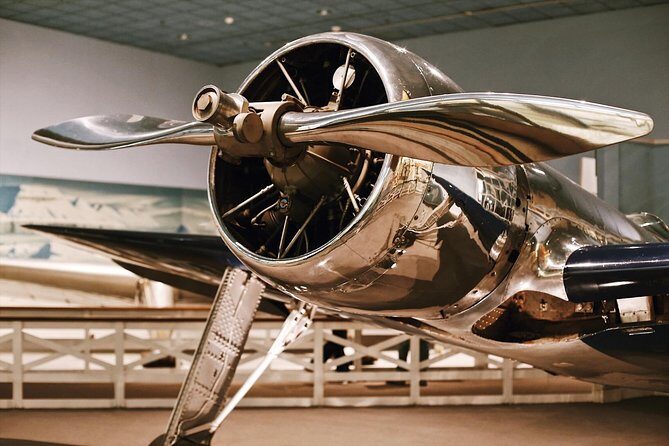
A max of 8 travelers isn’t just a comfort perk—it changes your museum outcome. In a big museum, the problem isn’t seeing objects. The problem is deciding what matters first. With a small group and a dedicated guide, you get a plan that prioritizes the most important rooms and the key artifacts tied to the story of flight and space.
I also like the way the tour is structured to keep people moving. A few guides named in past outings (like Ryan, Brenda, Tim, Leigh, Rebecca, Amanda, Christopher, and Maureen) are praised for turning the museum into a guided narrative rather than a checklist. You’ll feel that difference when you’re not spending 20 minutes trying to figure out where to go next.
Stop One: Launching the Story at the National Air and Space Museum
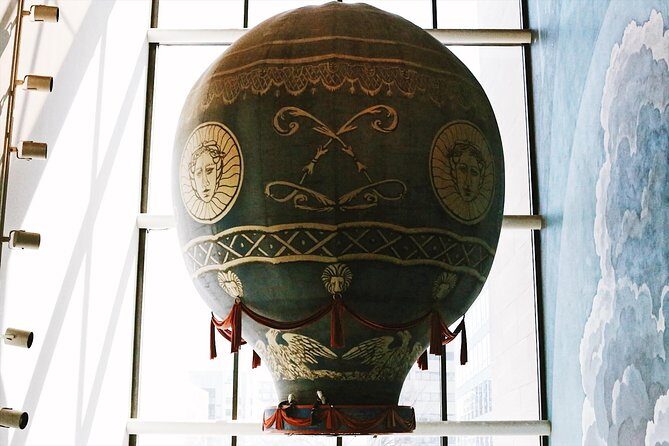
You start at the Smithsonian National Air and Space Museum and follow a specially-designed route. The tour begins at the beginning—focused on the first moments of powered flight—then works forward to the era of major leaps.
Here’s what this approach does for you:
- It gives you context before you see the famous stuff
- It helps you connect aviation engineering to later space technology
- It keeps the museum from turning into random walking and photo-taking
Also, plan around the fact that the museum is under massive construction. The tour is adjusted based on what’s actually available during your visit, and the operator says you can check the museum’s updated exhibit list at:
https://airandspace.si.edu/exhibitions/now-view
That matters. If you’re coming in expecting every classic display to be open, you’ll be happier if you go in knowing the route can shift.
Early Aviation Highlights: Wright Flyer and the First Big Leap
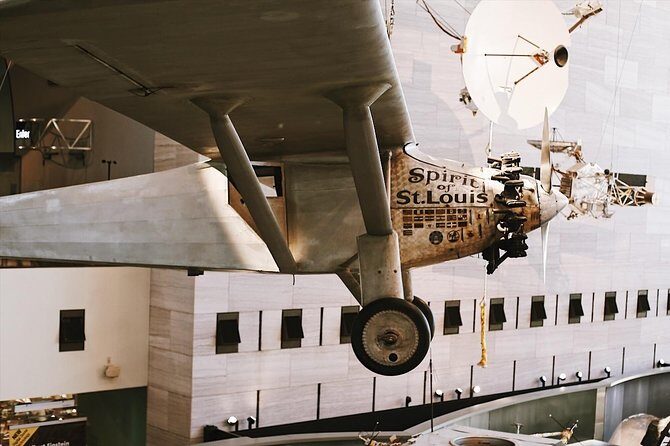
One of the headline aviation moments you may see is the Wright Flyer (original). It’s the kind of exhibit that feels simple on paper, yet you realize how radical it was when you’re standing there.
A good guide does more than point. They connect it to the bigger theme: how aviation moved from an experiment to a system. That’s the bridge the tour is trying to build—so when you later see space hardware, it doesn’t feel like a totally different universe.
You may also see other major aviation artifacts depending on what’s on view. The tour’s typical highlights include pieces like Chuck Yeager’s Bell X-1 (original), which fits perfectly into the story of testing limits.
You can also read our reviews of more private tours in Washington DC






The Lindbergh Moment: Spirit of St. Louis and Human Courage
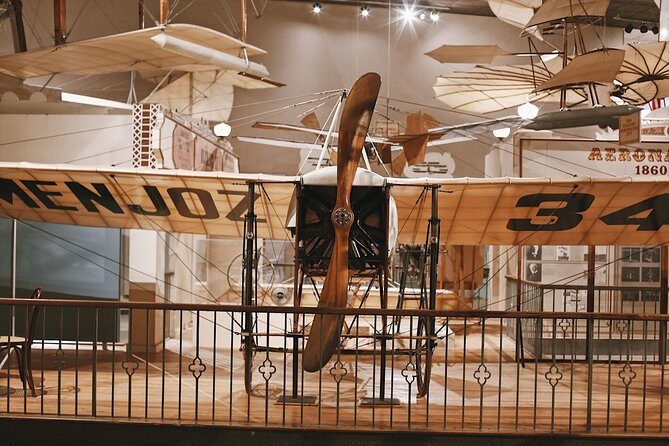
From early flight, the route moves to the Spirit of St. Louis, associated with Charles Lindbergh’s 1927 flight from New York to Paris. This is one of those exhibits that works on two levels: technology and human risk.
A guided story helps you see why this matters beyond the trivia. It’s not only about crossing an ocean. It’s about the mindset and the navigation confidence required for flight at that scale—things engineers build, and people then bet their lives on.
If you’re traveling with teens, this is also a good mental reset from pure engineering. It turns the exhibits into a timeline of ambition.
Apollo 11 Close-Ups: Aldrin’s Suit, Moon Boots, and Command Module
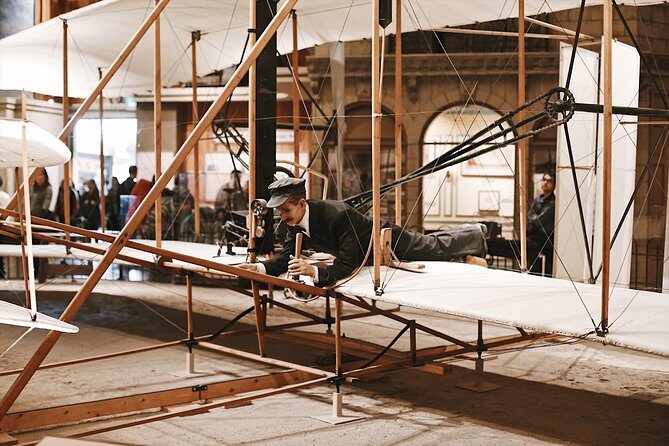
Now you hit the space era. The tour is designed so you don’t just hear about Apollo—you get close to the artifacts that made it real. Among the most exciting stops are:
- Neil Armstrong Apollo 11 spacesuit (original)
- Buzz Aldrin’s space suit and moon boots
- Apollo 11 Command Module
- Real moon rocks
Seeing spacesuits and moon boots in person changes how you process the mission. Photos are impressive, but you don’t get the scale and the feel for materials. A guide also helps you interpret the “why” behind what you’re looking at—how suit design, life-support thinking, and mission planning connect to the technology chain.
The Apollo 11 Command Module is a standout because it represents the mission’s job: get humans safely to and from the Moon. It’s not the romance piece. It’s the engineering piece. When it’s explained well, it becomes one of the most emotionally satisfying exhibits in the museum.
Moon Rocks and the Astronaut Question: What It Means Now

Real moon rocks are included among the tour’s common highlights. This is where the museum switches from history into proof. Your brain keeps trying to treat it like a science display, but it’s actually a physical return from a mission that happened decades ago.
And then the tour asks a different kind of question: what it means to be an astronaut today. That’s the value of the guide’s narrative. Instead of stopping at the landing, you’re nudged toward the modern reality of space work—training, risk, teamwork, and technology that keeps changing.
You may also see additional space-program items depending on availability, such as:
- John Glenn’s Mercury capsule (original)
- Hubble Telescope (test vehicle)
- Skylab (backup)
- Space Shuttle mid deck (model)
In a museum under construction, these “may see” items are a reminder to stay flexible and let the route you’re given do the work.
The Renovation Factor: Managing Expectations Without Dimming the Magic
The museum is in long-term construction, and the operator explicitly warns that many exhibits described may not be on display. I think this is the single biggest consideration for this tour.
The good news: the tour route is adjusted based on what’s open, and your guide is expected to keep the story moving. The tour is still structured—from early flight through major space moments—even if a specific gallery is temporarily closed.
If your top priority is a very specific object, check what’s currently viewable using the museum’s “now view” page linked above. Then keep a second-level plan: even when one exhibit is missing, the guide can often steer you to something that still supports the flight-to-Moon storyline.
Price and Value: Is $89.67 Worth It?
The price is $89.67 per person, for about 2 hours 30 minutes (approx.), and the museum admission is listed as free with the tour. So you’re paying for something pretty specific: time saved, direction, and interpretation.
Here’s the value equation I’d use:
- If you love reading and want to self-tour, you might feel you could do it on your own.
- If you want the museum to make sense quickly—especially with construction—this kind of guided route can save you hours of decision-making.
- In a museum this spread out, a guide’s job is to shorten the distance between seeing something famous and understanding why it’s famous.
There’s also practical value in getting moved to major exhibits with less wandering. Past experiences describe guides as moving groups efficiently and hitting the most important rooms in the time window. In the end, if you’re spending a limited number of hours at the Air and Space Museum, paying for a plan can feel like buying time back.
One caution: some people can be disappointed when construction limits access and they feel the pricing should reflect that. If this museum is your one must-do stop, go in with flexibility, and you’ll likely be happier with the outcome.
Timing, Pacing, and the Quiet Rooms Detail
Your tour time is either morning or afternoon. That choice matters because crowd patterns shift. Even with a guide, security and interior congestion can happen—especially during peak season.
One detail worth knowing: some rooms inside the museum have restricted or very quiet speaking rules. Your guide will tell you before you enter those areas. It’s not a big deal, but it does affect how you experience the space—more respectful, less talky, and often better for listening.
Also, security rules matter. The tour notes say no large bags or suitcases are allowed inside the museum—only handbags or small thin bag packs. That’s the kind of thing that can ruin your day if you show up with the wrong bag.
Who This Tour Suits Best
This guided route is a strong fit for:
- families who want a structured visit that keeps kids interested
- couples who want highlights plus context
- adults who love aviation and space, but don’t want to spend a whole day figuring out where to start
It’s also a good choice if you’ve only got a short window at the museum. The tour ends back at the meeting point, but it also gives you time afterward to keep exploring on your own and check out the gift shop.
On that note: the tour specifically points out freeze-dried ice cream in the gift shop. It’s not a history lesson, but it is a fun way to end an aviation-and-space day.
Should You Book This Semi-Private Air & Space Museum Tour?
Book it if you want a time-efficient, story-driven visit and you’d rather be guided through the big artifacts than guess your way through a massive museum during construction. The small group size makes the experience feel personal, and the focus on objects like the Wright Flyer, Apollo 11 Command Module, and real moon rocks is exactly where a guide earns their keep.
Skip (or adjust your expectations) if you’re very sensitive to renovation cancellations or you’re traveling with needs not covered by the tour rules. The tour is not available for people with walking disabilities or wheelchair use, and construction may limit what’s actually on display.
If you’re trying to pick between a self-guided wander and a structured route, I’d lean guided—especially if this is your main Air and Space stop.
FAQ
How many people are in the tour?
The tour is limited to a maximum of 8 people, which is part of why it feels semi-private and allows for more attention from the guide.
Where do we meet, and how long is the tour?
You meet at 600 Independence Ave SW, Washington, DC 20560. The tour lasts about 2 hours 30 minutes (approx.) and ends back at the meeting point.
What’s included in the price?
Included: a small group museum tour and a professional tour guide. Not included: hotel pickup or drop-off, and gratuities.
Does this tour include museum admission?
The tour price notes admission ticket free, meaning you’re paying for the guided experience rather than paying for general museum entry.
What if some exhibits are closed due to construction?
The Air and Space Museum is under massive construction, and the tour is adjusted based on what’s available during your visit. You can check current exhibit availability at the museum’s now-view page before you go.
Can I cancel for a refund?
Yes. You can cancel up to 24 hours in advance for a full refund. Free cancellation is available under that condition.