REVIEW · GHOST & GEORGETOWN TOURS
The Escape Game DC: 60-Minute Adventure in Georgetown
Book on Viator →Operated by The Escape Game DC · Bookable on Viator
Georgetown turns into a puzzle in an hour. I like that Escape Game DC keeps things story-driven and collaborative, with missions designed to be exciting without going dark or scary. You pick a themed adventure and then race your group against the clock to complete the mission.
Two things I really appreciate: the setup keeps the pressure manageable (a max group size of 10) and you’ll get a dedicated guide to help if you hit a wall. One consideration: unless you reserve all spots for your exact game, your session can become a shared team with other people joining you.
In This Review
- Key things to know before you go
- Where Escape Game DC Meets You in Georgetown
- Picking Your Mission: Pirates, Mummy, Dr. Whack, Titanic, The Cabin, The Depths
- The 15-Minute Briefing That Makes or Breaks Your Run
- Locked Door, Real Teamwork: How the Game Actually Works
- Your “Escape Room” Timing: 45 to 60 Minutes Plus Debrief Time
- Small Group Size and Dedicated Guides: Star, Matt, and the Human Help Factor
- What the Room Experience Feels Like (and why it’s family-friendly-ish)
- Price and Value: Is $38.15 Worth It?
- Who Should Book Escape Game DC in Georgetown?
- FAQ
- FAQ
- How long is the Escape Game DC adventure?
- Where is the meeting point?
- What games can I choose from?
- Are the escape rooms scary or dark?
- Is there an English-language option?
- Can I leave the locked room during the game?
- Is there a minimum age requirement?
- Is pickup included from a hotel?
- Should You Book Escape Game DC in Georgetown?
Key things to know before you go

- Pick from multiple themed missions: From Pirates and the Mummy to Dr. Whack and even Titanic
- Not scary, not dark: The experience is designed for fun problem-solving, not fear
- You’ll get guide support: Staff keep you moving when you need a nudge (people like guide Star and Matt get praised for that)
- Timing is built in: Plan on prep/briefing, then your main run, then debrief and photos
- Small group energy: A 10-player cap helps the game stay focused
- There’s an exit button: If you need to leave, you can do so during the game
Where Escape Game DC Meets You in Georgetown
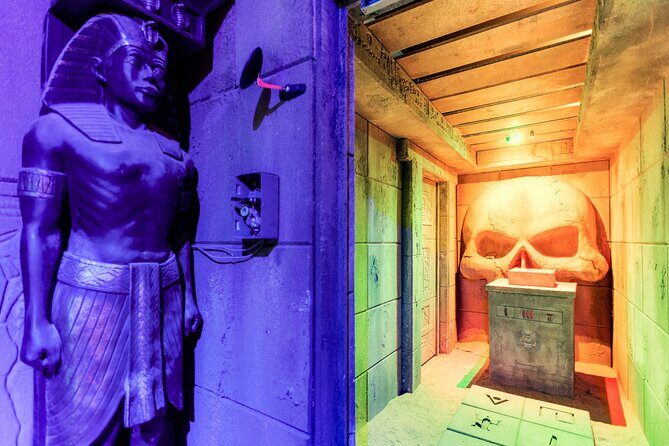
Your session starts at The Escape Game DC in Georgetown: 3345 M St NW, Washington, DC 20007. The tour ends back at the same meeting point, so you’re not crisscrossing the city after you’ve solved (or almost solved) your way out.
Practical upside: it’s near public transportation, and there’s no hotel pick-up/drop-off included. So you’ll want to plan to get yourself there on your schedule—especially if you’re coordinating with friends or family.
Also worth noting: you’ll receive confirmation at booking, and you can use a mobile ticket. That’s one less thing to worry about when you’re moving through DC.
You can also read our reviews of more tours and experiences in Washington DC.



Picking Your Mission: Pirates, Mummy, Dr. Whack, Titanic, The Cabin, The Depths

This is the fun part: you choose one adventure. The themes are clear, and each one has its own mission feel. Some are built closer to 45 minutes, others closer to an hour, but the experience overall is designed around intense play time plus prep and wrap-up.
Here are the options you can choose from:
- A Pirate’s Adventure: 60 minutes to break the curse
- The Curse of the Mummy: 60 minutes to escape the tomb
- Dr. Whack’s Elixer of Life: 60 minutes to retrieve the secret
- Titanic: 45 minutes to save yourself and your team
- The Cabin: 45 minutes to get inside the cabin
- The Depths: uncover the lab’s secrets
A smart strategy: if your group likes a challenge, consider Titanic. One guide, Matt, has been noted for calling Titanic one of the more difficult escapes—so it’s a good choice when your group wants to work for it rather than coast to an easy win.
If your group is new to escape rooms, go for something that matches your team’s tastes—Pirates and the Mummy are straightforward fantasy hooks, while Dr. Whack leans into a more playful, “retrieve the secret” style mission.
The 15-Minute Briefing That Makes or Breaks Your Run
When you arrive, you don’t just get shoved into a locked room. You get time for preparing and briefing, roughly 15 minutes before your game. This matters more than most people think.
In a good escape game, you want your team to start with:
- a shared understanding of what you’re trying to do
- a plan for how you’ll split tasks
- a way to communicate so clues don’t get missed
The briefing isn’t about giving away the solution. It’s about helping you get your bearings fast so you can spend your energy solving instead of figuring out how to play.
Locked Door, Real Teamwork: How the Game Actually Works

Here’s the core idea: you and your team work together to find clues, solve puzzles, and complete a mission before time runs out. Escaping requires teamwork, communication, and problem-solving. In other words, it’s not a solo sport.
You’ll be in a room with a locked door, but the setup is designed with an escape hatch built in: every door has an exit button. If you feel you need to leave, you can do so at any time. That alone can lower stress—especially for people who don’t love tight, trapped-feeling situations.
What also helps: these experiences are designed to avoid being too scary or dark. The tone is more adventure than horror. That makes it easier to bring a wider range of ages and temperaments, and it keeps the focus on the puzzles.
Your “Escape Room” Timing: 45 to 60 Minutes Plus Debrief Time
The total experience runs about 1 hour 15 minutes. That fits with how the event is structured:
- about 15 minutes before for prep and briefing
- about 45 to 60 minutes for the game itself (depending on the mission)
- about 15 minutes after to debrief and take photos
That debrief time is practical. It gives you space to talk through what you found, what you missed, and what you’ll do differently next time. And yes, photos matter here—partly because you’ll want proof you actually tried, and partly because it helps make the whole thing feel like an event, not just a task.
If your group is competitive, keep the debrief friendly. You’ll get more out of the experience by learning what tripped you up rather than treating it like a test you failed.






Small Group Size and Dedicated Guides: Star, Matt, and the Human Help Factor
This place caps the game at a maximum of 10 travelers. That limit is a big deal. With fewer people in the room, puzzles are easier to manage, and communication stays workable instead of chaotic.
Just as important: you’re not on your own. A dedicated game guide comes with you and helps when needed. The guide role is key for a couple reasons:
- You’ll keep moving when you get stuck.
- You can ask for help without feeling like you’re admitting defeat.
- The guide can steer you back toward productive thinking.
From the experience notes people shared, guides such as Star are known for being friendly and energetic. Matt is also highlighted for being helpful, including pointing out that Titanic tends to be more difficult.
One more thing: unless you book all spots in your chosen game, your session can be a shared experience. That means your team might mix with other people. In my view, that’s usually fine if your group is social and communicative. If you prefer total control over team dynamics—like you’re playing as a private family unit—you’ll want to book in a way that prevents overlap.
What the Room Experience Feels Like (and why it’s family-friendly-ish)

You’ll be in a themed room with a locked door, but the overall approach is designed to keep things comfortable. These games aren’t built like haunted attractions.
Instead, the “pressure” is mostly the time limit and the puzzle complexity. That changes the vibe. You’re not reacting to jump scares—you’re reacting to clues and communication. For many groups, that’s a better match for vacation energy.
The minimum age guidance is also reassuring:
- games are recommended for ages 13 and up
- younger players are allowed, but some content may be difficult
- an adult age 18 or older must participate with anyone age 14 and under
- participants under 18 need an adult to sign their waiver
If you’re traveling with teens, this setup is often a great fit: old enough to handle the puzzle thinking, and young enough to enjoy the story theme.
And yes, service animals are allowed, which is helpful for accessibility planning.
Price and Value: Is $38.15 Worth It?
At $38.15 per person, this is priced like a mid-range activity: not cheap, not outrageous, but it earns its keep by giving you real group time and a structured game format.
Here’s where the value comes from:
- You get admission to play one adventure (not just a tour of the space)
- the experience is built around active teamwork for roughly 1 hour 15 minutes
- the room setup includes guide support, plus prep and debrief time
- there’s a small group cap of 10, which generally helps the experience feel organized
It’s also good to know what’s not included: no hotel pick-up/drop-off. So your “total cost” is really your ticket price plus whatever it takes you to get to 3345 M St NW.
If you’re already in Georgetown or nearby, this is one of those activities that can punch above its weight: you’re paying for a complete, timed experience with story, puzzles, and a clear endpoint.
Who Should Book Escape Game DC in Georgetown?
Book this if you want:
- a group activity that’s not passive
- a puzzle challenge with a friendly guide safety net
- a themed experience that stays away from scary/dark horror vibes
- something easy to fit into a DC day without extra planning beyond getting to the address
It’s especially good for:
- friend groups celebrating a birthday or just wanting laughs and teamwork
- families with older kids who can work puzzles together
- anyone who’s done escape rooms before and wants to try different themed missions
It may not be the best fit if:
- you hate being timed, even gently
- your group doesn’t like communication or shared problem-solving
- you need total privacy and hate the idea of a shared team, since sessions can be joined by other people unless you book all spots
FAQ
FAQ
How long is the Escape Game DC adventure?
Plan for about 1 hour 15 minutes total. The games are designed for intense play for about an hour, with about 15 minutes for prep and briefing before the game and about 15 minutes after for debrief and photos.
Where is the meeting point?
You start at The Escape Game DC (Georgetown), 3345 M St NW, Washington, DC 20007. The activity ends back at the same meeting point.
What games can I choose from?
You can choose one of these themed adventures: A Pirate’s Adventure, The Curse of the Mummy, Dr. Whack’s Elixer of Life, Titanic, The Cabin, or The Depths.
Are the escape rooms scary or dark?
No. These games are designed to avoid being too scary or dark. They’re meant to be exciting, adventurous, and enjoyable.
Is there an English-language option?
Yes, the experiences are offered in English.
Can I leave the locked room during the game?
Yes. You’ll be in a room with a locked door, but there is an exit button on the door, and you’re welcome to leave if you feel you need to.
Is there a minimum age requirement?
Games are recommended for ages 13 and up. Younger players can participate, but some content may be difficult. An adult age 18 or older must participate with anyone age 14 and under, and participants under 18 will need an adult to sign their waiver.
Is pickup included from a hotel?
No. Hotel pick-up and drop-off are not included.
Should You Book Escape Game DC in Georgetown?
I’d book it if you want a structured, time-based group challenge that feels like an adventure instead of a dark scare-fest. The combination of a 10-player max, guide help, and a menu of missions gives you a strong chance of having fun even if your group is mixed in skill level.
If you’re the type who likes puzzles, enjoys teamwork, and doesn’t mind a bit of competition with the clock, this is a very practical choice for a Georgetown day. Just make sure you coordinate your group size and your expectations—especially if you prefer a private team rather than a shared game.