REVIEW · EVENING EXPERIENCES
Semi-Private Evening Tour of Washington D.C.
Book on Viator →Operated by Continental City Tours · Bookable on Viator
Night monuments change the whole mood.
This semi-private evening tour shows you the big-name sights—White House, U.S. Capitol, Lincoln Memorial, and more—after dark, when the lighting does the heavy lifting. I especially liked the small group size (up to 14), which keeps things calm and lets your guide answer questions instead of racing through. I also liked the guide-led context at each stop, so you’re not just taking photos—you’re getting the why behind what you see. The only drawback to consider is that it’s a drive-and-stop format: you’ll see a lot, but you won’t linger long at every monument.
You’ll ride in an air-conditioned, spacious vehicle with bottled water, and you’ll start at the Smithsonian National Air and Space Museum (Independence Ave SW) around 7:00 pm. In past groups, guides like Nader, Nate, Kia, and Victor stood out for making the night feel special—fun facts, good pacing, and no rushing through the stops.
If you want a monument tour that feels more like a smart night out than a bus shuffle, this one fits. If you’re hoping for long indoor visits or a deep, hour-by-hour museum plan, you might want a different style of tour.
In This Review
- Key highlights worth planning for
- Why Washington D.C. at night feels like a different city
- The semi-private setup: comfort, timing, and how the route works
- First look at the power center: White House to FBI headquarters and the National Archives
- The National Mall rhythm: U.S. Capitol, American Indian Museum, and the Eisenhower Memorial
- World War II Memorial under the lights: a moving stop with included admission
- Martin Luther King, Jr. Memorial: included entry and a powerful viewpoint
- Lincoln to Vietnam: how the tour keeps the story moving
- Lincoln Memorial (included)
- Vietnam Veterans Memorial (included)
- Korean War Veterans Memorial (included)
- U.S. Marine Corps War Memorial and the Pentagon-area finale
- Getting great photos without feeling rushed
- Price and value: is $80 per person worth it?
- Who should book, and who should skip
- Should you book this semi-private evening D.C. tour?
- FAQ
- What is the duration of the Semi-Private Evening Tour of Washington D.C.?
- How much does the tour cost?
- What time does the tour start?
- Where does the tour meet?
- Does it include hotel pickup and drop-off?
- How large is the group?
- Are tickets included for the stops?
- What’s included in the tour besides the guide?
- Is the tour good for people who need public transportation?
- What’s the cancellation rule?
Key highlights worth planning for
- Up to 14 people: small-group attention without the big-bus bottleneck
- Night lighting payoff: monuments look different after dark, and the photos usually cooperate
- Guided stop-by-stop context: you get significance, not just locations
- Hotel transfers included: easy start and end once you’re picked up
- A mix of memorials and power centers: White House, Capitol, FBI, National Archives, and Pentagon-area sights
- Timed photo stops with real breathing room: most stops fall between 10–25 minutes
Why Washington D.C. at night feels like a different city
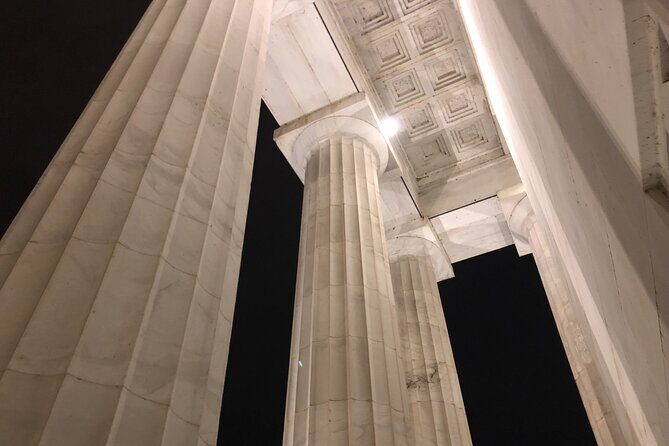
Daytime Washington can be grand, but night is when it turns cinematic. The monuments aren’t just buildings you pass by—they’re lit, framed, and easier to take in because the crowds tend to thin out. You’re also on a schedule designed for evening light, so you’re not stuck waiting for the day to cool off or worrying about museums closing while you’re still sight-seeing.
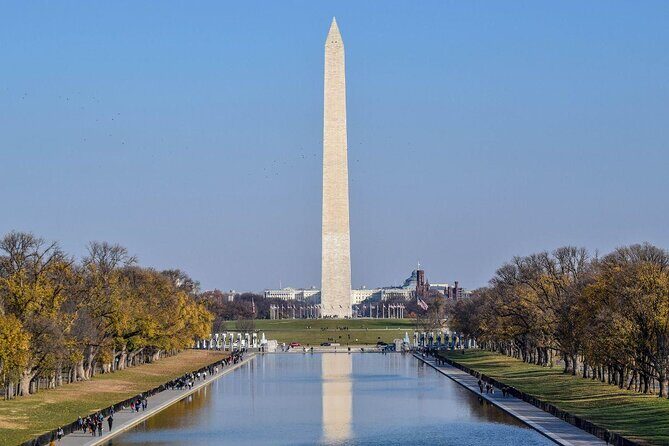
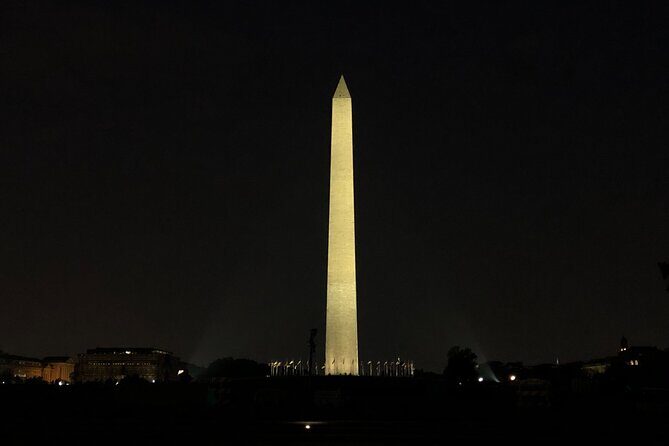
A big reason I like this tour is that you’re not spending all your time driving past everything. It’s built around frequent stops, so you get the payoff of seeing landmarks like the Lincoln Memorial and the Washington Monument in their nighttime “stage mode.” And because it’s semi-private, you aren’t fighting for sidewalk space every time the guide says, everyone grab a quick photo.
The guides in this format often adjust what they emphasize depending on the group. In the past, guides such as Nader and Nate were praised for sharing plenty of details that felt different from a daytime tour approach—less “checklist,” more “what should you notice while it’s dark.”
You can also read our reviews of more private tours in Washington DC

The semi-private setup: comfort, timing, and how the route works
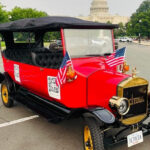
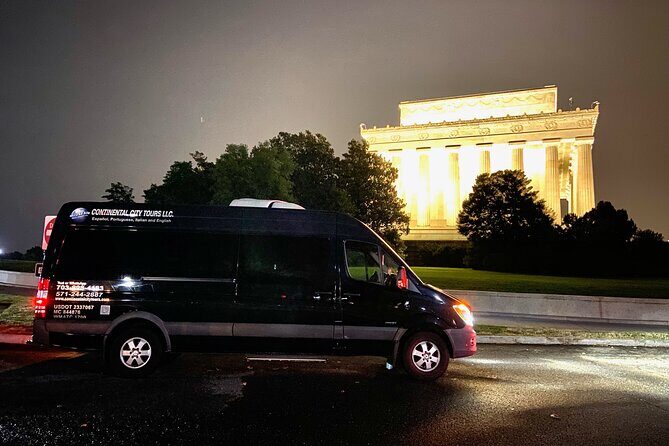
This isn’t a huge coach. It’s a small group tour with a maximum of 14 travelers, and you’ll ride in an air-conditioned vehicle—a comfort win in hot or humid months. Bottled water is included, which sounds small until you’re outside in the evening and don’t want to scramble for it.
The duration is about 3 hours, starting at 7:00 pm. That matters because you’ll hit several major areas before the late-night rush. You’ll be moving through key downtown corridors and the National Mall area, with short pauses that still leave enough time to walk around a bit, orient yourself, and take photos.
There’s also a practical edge here: your group is small enough that the guide can manage the flow. You’re less likely to feel lost at the curb, and you can ask questions without hearing a rushed answer. Past groups specifically called out that the guides were personable, friendly, and responsive, and that the pacing felt fair—especially for families.
One more logistics note: hotel transfers are included from Washington D.C. hotels, but the meeting point is listed at the Smithsonian National Air and Space Museum. If you’re staying near that area, you might find the meeting point straightforward. If you’re farther out, you’ll want to watch for pickup details at booking.
First look at the power center: White House to FBI headquarters and the National Archives
The tour kicks off near the White House area, and the first big stop is the White House itself. Admission is listed as free, and the photo moment is timed so you can see the building with nighttime illumination rather than under a midday glare.
From there, you keep rolling with views and narration tied to major institutions. You’ll stop near the Old Post Office Building and Clock Tower, see the FBI headquarters in Washington, D.C., and move on to one of the most meaningful stops on the entire route: the National Archives. The National Archives is where three core U.S. documents are preserved—the Declaration of Independence, the Constitution, and the Bill of Rights. Even if you’re only getting a stop-around look, that context changes how you view the building. It turns it from a landmark photo into a “this is the seat of the documents that shaped the country” moment.
Next, you’ll also have time to connect a few more dots along the National Mall corridor, with a stop that includes the National Gallery of Art and its Sculpture Garden. This is the kind of add-on that makes the tour feel richer without turning it into a long museum day. You get art-world context while you’re already in the district where everything else is happening.
Potential drawback to consider: this portion is very “see it from outside and get the meaning fast.” If you’re the type who wants to go inside every major site, you’ll need to pair this with separate daytime museum or building-access plans.
The National Mall rhythm: U.S. Capitol, American Indian Museum, and the Eisenhower Memorial
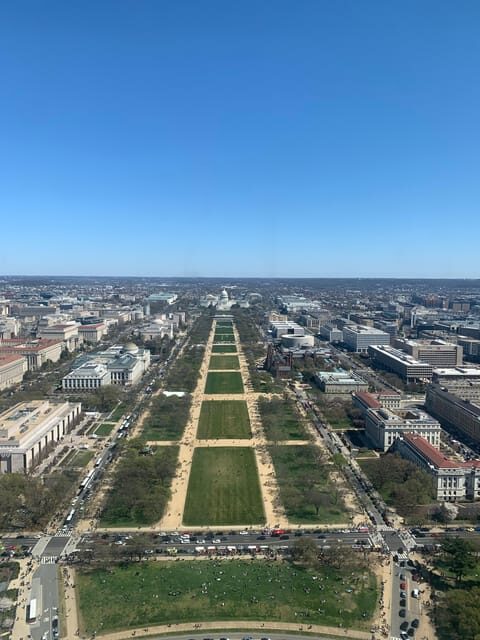
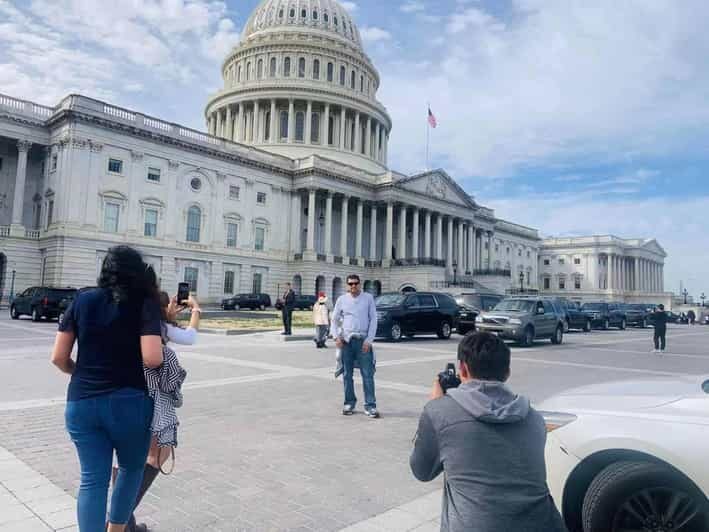
After the early landmarks, the route builds toward the National Mall area in a way that helps you understand how the district is laid out. The next major photo stop is the U.S. Capitol, with time to take pictures and also view memorials related to President Garfield, General Grant, and the Peace Memorial.
This is also where you’ll appreciate the “night lighting does the work” effect. The Capitol exterior and the surrounding memorial spaces are made to be seen at night. Your guide’s job is to tell you what you’re looking at while the monuments are glowing rather than washed out.
You’ll also stop at the National Museum of the American Indian area. The focus here is on the landmark itself, and your guide’s context helps you understand why it belongs on a major monuments route—this museum is a key part of how Washington tells U.S. history and culture in a modern way.
Then you’ll shift to the Dwight D. Eisenhower Memorial, honoring Eisenhower’s role as Supreme Commander of Allied Forces in Europe and his presidency as the 34th president. The stop time is set so you can see the memorial quickly, take in the scale, and move on without feeling behind schedule.
If your group includes teens or kids, this section can work well because it breaks up the “single monument, same vibe” problem. The content changes from government symbolism to memorial design to cultural history, and that variety keeps attention from drifting.
World War II Memorial under the lights: a moving stop with included admission
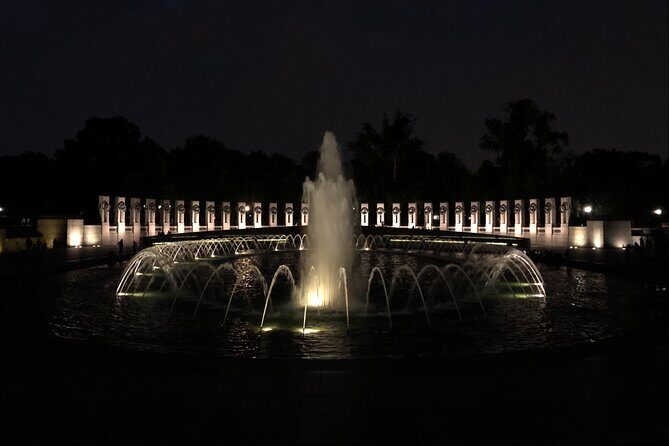
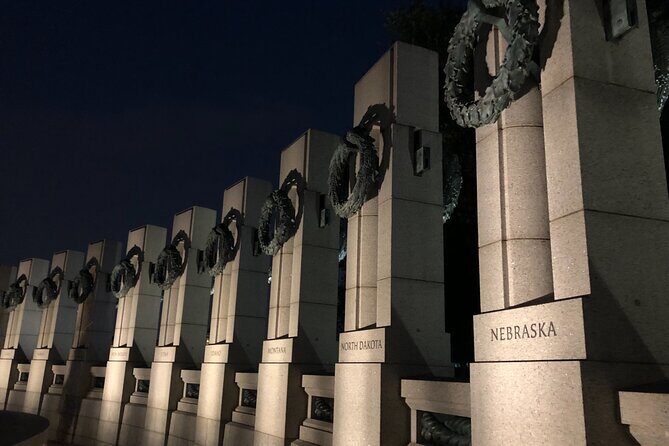
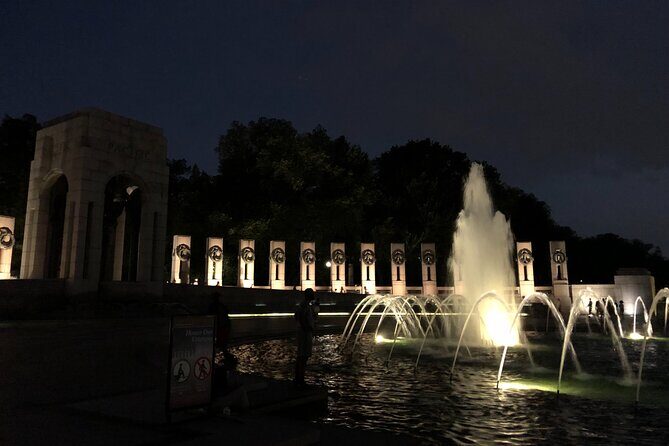
Next is one of the most emotionally powerful stops: the National World War II Memorial. Admission is listed as included, which is a relief because it removes one more planning variable. You’ll be stepping into a space built for remembrance, with an open-air layout meant to be felt as you walk.
The memorial honors the 16 million Americans who served in World War II. At night, that open-air setting can feel even more contemplative. You aren’t surrounded by the same daytime noise and traffic; instead, the lighting and quiet give you room to absorb what the memorial is communicating.
Time is limited (about 20 minutes), so this is not a “read every inscription slowly” tour. But if you want a meaningful stop that doesn’t require a full day on your feet, this is a smart pairing. It’s also one of the stops that tends to land well with multi-generation groups because it’s big, clear, and memorable even if you’re moving at a moderate pace.
You can also read our reviews of more evening experiences in Washington DC


Martin Luther King, Jr. Memorial: included entry and a powerful viewpoint
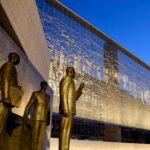
The route continues to the Martin Luther King, Jr. Memorial, with admission listed as included and a stop time around 15 minutes. It overlooks the Jefferson Memorial and the Tidal Basin area, which is part of why this stop feels distinct. You’re not just looking at a memorial; you’re looking over a view that’s part of Washington’s iconic waterfront-like geometry.
Night changes how you experience memorials like this. The spacing, the lighting, and the sightlines can make the design feel more intentional, especially if you can get positioned for a decent photo angle. Your guide will help point out what matters—so you know what to look for instead of just guessing.
If you’re traveling with kids, this is a great stop because it’s visually strong. And if you’re the type who likes to learn, it’s a stop where your guide’s explanations can do a lot in a short amount of time.
Lincoln to Vietnam: how the tour keeps the story moving
The next major sequence is where many people come for the photos, and where your guide’s commentary becomes the difference between seeing and understanding.
Lincoln Memorial (included)
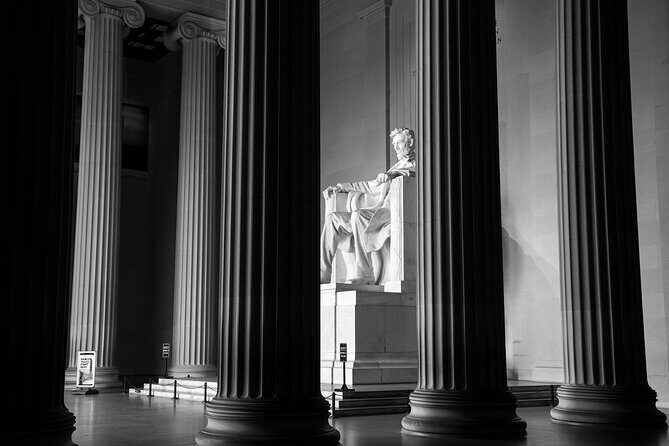
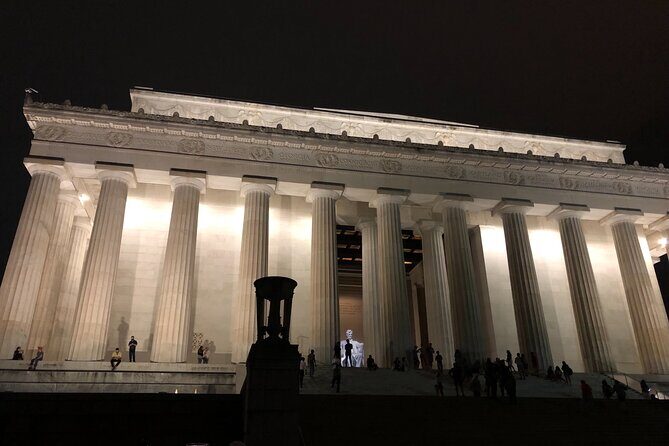
You’ll get a stop at the Lincoln Memorial with admission listed as included and a duration around 25 minutes. The stop centers on the parthenon-style tribute to Lincoln, including the 6-meter marble statue, murals, and the reflecting pool area. At night, the reflection isn’t always dramatic like you’d see on a sunny photo day, but the lighting still makes the space feel iconic.
This is also a good stretch to gather yourself. If you’ve been bouncing between stops, this one gives you a longer window so you can walk a bit, take photos, and absorb the monument’s scale.
Vietnam Veterans Memorial (included)
Next is the Vietnam Veterans Memorial (around 25 minutes), with admission included. The wall with more than 58,000 names is the key focus. Even if you don’t have time to search for a specific name, the scale and structure hit hard. Your guide’s framing helps you understand what the memorial is trying to do emotionally: it turns history into personal impact.
Korean War Veterans Memorial (included)
Then you’ll stop at the Korean War Veterans Memorial for about 15 minutes, also included. It has realistic statues that commemorate Korean War veterans. Again, the quick-stop format means you won’t walk every path like a full museum visit, but you can still experience the core message and take away strong visual memory.
A big practical benefit here: this route keeps the sequence connected. It moves from a presidential monument to remembrance spaces without feeling random. Your guide’s job is to connect the “why” across stops so the night has a thread.
U.S. Marine Corps War Memorial and the Pentagon-area finale
The last memorial stop is the U.S. Marine Corps War Memorial, listed with included admission and about 10 minutes. The design depicts the scene of Iwo Jima in 1945, so it’s not subtle. Even in a short stop, it’s likely to be one of those “photo plus explanation” moments where you suddenly get why the memorial looks the way it does.
Finally, you’ll end with an exterior look at the headquarters of the U.S. Department of Defense, commonly associated with the Pentagon—described as the impressive pentagonal building. This isn’t usually about lingering; it’s about finishing the “power and service” arc of the night with a landmark that’s instantly recognizable.
The tour ends back at the meeting point, so you’re not stuck figuring out transit after dark. That matters because Washington can be confusing after sunset if you’re trying to self-navigate between distant points.
Getting great photos without feeling rushed
Photo time here is real, but it’s not unlimited. Most stops are built around quick photo moments plus a chance to walk around and get oriented.
Here’s what helps most:
- Aim to stand where your guide positions the group first, then move a few steps if you need a better angle.
- Keep your camera ready when you see the lighting shift—night photos are often about timing, not just equipment.
- Wear comfortable shoes. Even “short” monument walks can add up across a 3-hour loop.
Also, don’t expect the perfect postcard from every angle. Some areas will have reflections, street lights, or busier sidewalks. The win is that you see so much in one night, and your guide can steer you to the spots that work best for that quick timeframe.
Price and value: is $80 per person worth it?
At $80 per person for about 3 hours, the value depends on how you like to travel.
If you’d otherwise spend time cobbling together separate rides, and you want guided meaning at major stops, this price feels fair. You’re paying for:
- Small-group touring instead of a crowd-control mega-bus
- Transportation in a comfortable vehicle
- A professional guide who explains significance at each stop
- Bottled water
- Hotel-area transfers (round-trip transfers are included)
- Included admissions for several major memorial stops
Lots of the stops are listed as free (White House, U.S. Capitol, Washington Monument), but the memorials and remembrance spaces include admissions for multiple key sites. So even if you don’t add up every “ticket value,” the overall experience is designed to reduce friction.
And the reviews support the idea that the guides keep things friendly and not rushed. When someone’s paying to see the nation’s capital at night, that pacing matters. Too fast feels like sightseeing by blur. This tour appears built for balanced attention.
Who should book, and who should skip
This tour is a great fit if you want:
- A nighttime monument route that covers the main highlights
- A small group feel with guide attention
- Hotel pickup so you don’t stress transit after dark
- A learning-first approach where monuments come with meaning
It might not be ideal if you want:
- Long museum time inside buildings (the stops are timed)
- Deep, slow reading at every memorial inscription
- A flexible route that can adapt for hours on one site
For families, it tends to work well because you get variety. One moment you’re at major government symbols; the next you’re at remembrance spaces. That keeps the night from feeling repetitive, especially for kids who don’t want to “stand still” for too long.
Should you book this semi-private evening D.C. tour?
If your goal is to see Washington’s most famous monuments lit up, while getting the story behind what you’re looking at, I’d say yes. The small group size, the air-conditioned comfort, and the guided stop-by-stop pacing are exactly what make a night tour work in a city that’s otherwise easy to over-plan.
Book it if you:
- Have limited time and want a tight loop
- Like photos, but also want context
- Prefer a calmer experience than big-bus tours
Skip it if you:
- Want extended time at individual sites or lots of indoor exploring
- Are looking for a museum-heavy day rather than a monument-focused evening
If you do book, plan to arrive rested and wear comfortable shoes. Washington at night is at its best when you’re ready to walk a little, look closely, and let the lights do their job.
FAQ
What is the duration of the Semi-Private Evening Tour of Washington D.C.?
It runs for about 3 hours.
How much does the tour cost?
The price is $80.00 per person.
What time does the tour start?
The start time is 7:00 pm.
Where does the tour meet?
The meeting point is the Smithsonian National Air and Space Museum, 600 Independence Ave SW, Washington, DC 20560.
Does it include hotel pickup and drop-off?
Yes. Round-trip transfers from your Washington D.C. hotel are included.
How large is the group?
The tour has a maximum of 14 travelers.
Are tickets included for the stops?
Some stops are listed as free, and several memorial stops are listed as admission included (such as the National World War II Memorial, Martin Luther King Jr. Memorial, Lincoln Memorial, Vietnam Veterans Memorial, Korean War Veterans Memorial, and the U.S. Marine Corps War Memorial).
What’s included in the tour besides the guide?
You’ll have an air-conditioned vehicle, bottled water, and a professional tour guide. You also use a mobile ticket.
Is the tour good for people who need public transportation?
It’s near public transportation.
What’s the cancellation rule?
You can cancel for a full refund if you cancel at least 24 hours before the experience’s start time. If you cancel less than 24 hours before, the amount paid won’t be refunded.