REVIEW · EVENING EXPERIENCES
Monuments and Memorials Night Walking Tour
Book on Viator →Operated by The Daily Trips · Bookable on Viator
DC gets personal after dark.
This Monuments and Memorials Night Walking Tour strings together seven of Washington’s most powerful stops, with a professional guide and a small group (max 10). I like that it’s built for a human pace, not a cattle-call rush, and that you can move through landmarks that are often overwhelming when you go solo.
Two things I particularly like: the memorials have free admission at every stop, and the guide makes the details click in a way a quick pass never does. You’ll get photo opportunities along the way, and the evening timing gives you a calmer feel at these major sites than the typical daytime sprint.
One possible drawback: it’s a steady walking evening. If you’re easily tired on your feet, plan for about 2 hours of nonstop movement and stop-for-photos. Wear shoes you trust.
In This Review
- Key highlights worth showing up for
- Starting Point to Lincoln Memorial: Getting Your Bearings Fast
- Lincoln Memorial: The Martin Luther King Jr. Connection You Might Miss
- Three Servicemen Statue: Frederick Hart’s Message in Solid Bronze
- Vietnam Veterans Memorial: How to Read the Names Without Rushing
- Korean War Veterans Memorial: Soldier Statues and Freedom Is Not Free
- World War II Memorial: A Tribute That Benefits From Slowing Down
- Capitol Reflecting Pool: The Waterway Between Stories
- Washington Monument at 555 Feet: What to Look For at Night
- Price and Value: Why $43 Can Make Sense for DC
- The Guide Factor: Jeff’s Patient, Let-You-Explore Style
- Practical Tips for This 7:30 pm Night Walk
- Who This Tour Fits Best
- Should You Book the Monuments and Memorials Night Walking Tour?
- FAQ
- How long is the Monuments and Memorials Night Walking Tour?
- Where do I meet, and where does the tour end?
- What language is the tour offered in?
- Is admission included for the memorial stops?
- How large is the group?
- Is there free cancellation?
Key highlights worth showing up for
- Small group size (max 10) keeps the experience question-friendly
- A guide-led pace that doesn’t force you to skim
- Free entry memorial stops means you pay for the tour, not admissions
- Real details about what each memorial is saying and why it matters
- Night atmosphere adds a quieter, more reflective tone to big monuments
Starting Point to Lincoln Memorial: Getting Your Bearings Fast
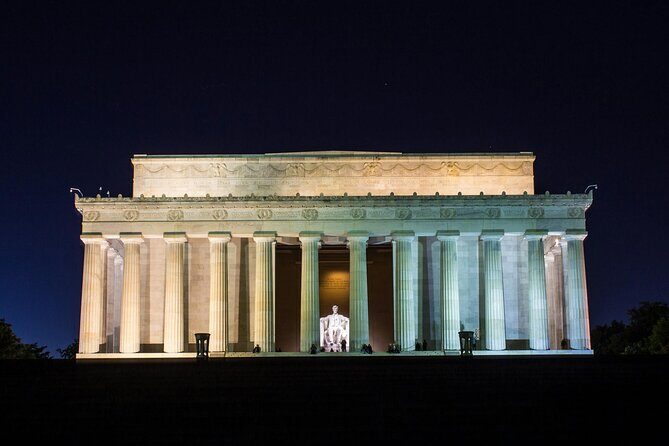
The tour meets at 10 Henry Bacon Dr NW and begins your walk toward the Lincoln Memorial, with the evening start time set for 7:30 pm. Because you’re doing this as a guided loop, you get a clear sense of how these landmarks connect across major decades of American history—civil rights, war, remembrance, and national ideals.
What I like here is the practical flow. In a short walking tour, the biggest mistake is wandering with no context. Instead, you’re guided from one memorial message to the next, so you’re not just taking in architecture—you’re reading meaning.
A small-group format matters more than people expect. When the group stays under 10, you can ask questions without the guide juggling 30 voices at once. And if your guide is patient—as many people report about this tour’s guide—you can actually slow down at the stops that hit you.
You can also read our reviews of more walking tours in Washington DC



Lincoln Memorial: The Martin Luther King Jr. Connection You Might Miss
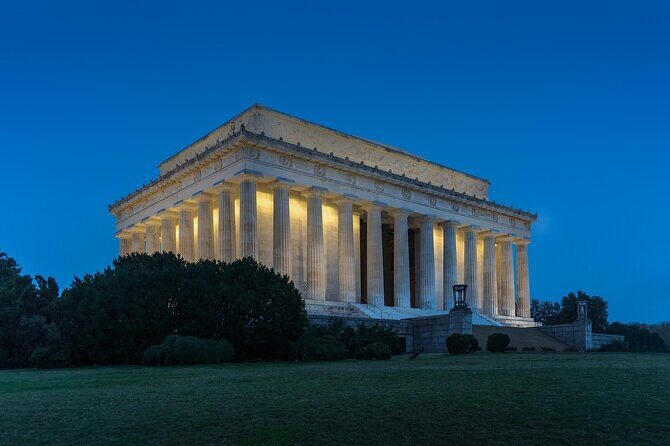
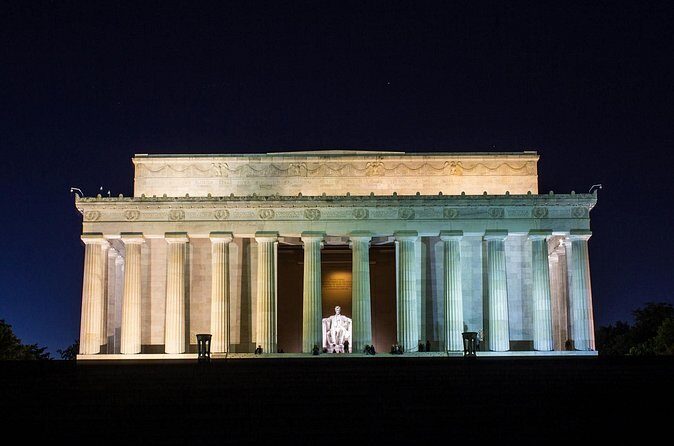
The first stop is the Lincoln Memorial, where you’ll end the journey as well, but you start here to set the tone. The site is instantly recognizable, and you’re given the key link to Martin Luther King Jr.’s I Have a Dream speech, tying Lincoln’s legacy to the civil rights movement.
At this stage, you’re not just seeing a famous building. You’re learning why people gather here and why it matters that one era of striving connects to another. That context changes how you look at the space, especially at night when the lighting makes the statue and steps feel more solemn.
Photo tip: plan a couple shots that include the steps or the overall front view, then let yourself linger for one close-up angle where the details feel readable. The guide’s job is to give you the right sights to look for so you don’t waste your time hunting.
Three Servicemen Statue: Frederick Hart’s Message in Solid Bronze
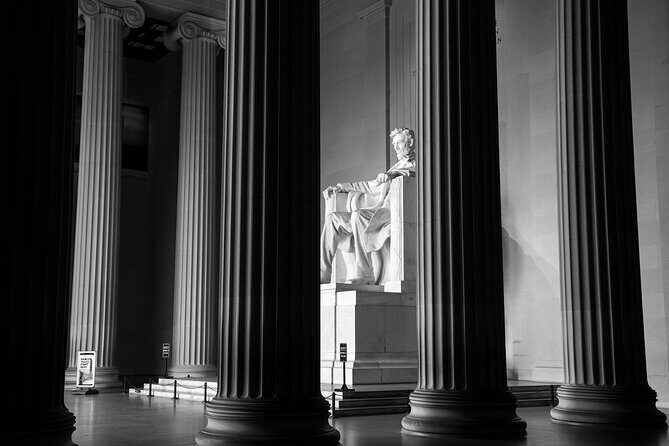
Next you’ll walk to The Three Servicemen Statue, a Vietnam War–era memorial tribute featuring three soldiers—White, Black, and Hispanic—standing in solidarity. It was sculpted by Frederick Hart, and the entire point is the human one: camaraderie, sacrifice, resilience, and a direct link to the nearby Vietnam Veterans Memorial.
This stop is short—about 5 minutes—but it’s worth paying attention to the scale and placement. A bronze figure group like this can feel small compared to the walls and big architecture around it, yet the symbolism lands fast: it’s about people, not just dates.
If you want one practical way to make this stop meaningful, do this: spend 30 seconds looking at the trio as a unit, then look at each soldier again. The artistry communicates togetherness, and the guide helps you see that the statue isn’t random decoration—it’s a deliberate statement that supports what’s written a little farther along.
Vietnam Veterans Memorial: How to Read the Names Without Rushing
The Vietnam Veterans Memorial is the stop most people remember. The black granite wall with etched names can hit hard because it’s personal at a scale that feels almost impossible.
You’ll have around 10 minutes here, which is just enough time to do two things well: (1) find a name connected to your own life if you want, or (2) read a chunk carefully even without a personal match. The goal isn’t to finish the wall. It’s to feel how the names are organized and how the shape of the wall changes as you move.
What helps on a guided walk like this is knowing where to look and what to notice. A good guide also keeps you moving without erasing the moment—meaning you can step back, take a breath, and then come forward again without feeling pressured.
If you’re taking photos, remember: the wall is a memorial, not a postcard backdrop. Keep your phone steady, take your frames quickly, and leave room for others who need a quieter minute.
Korean War Veterans Memorial: Soldier Statues and Freedom Is Not Free
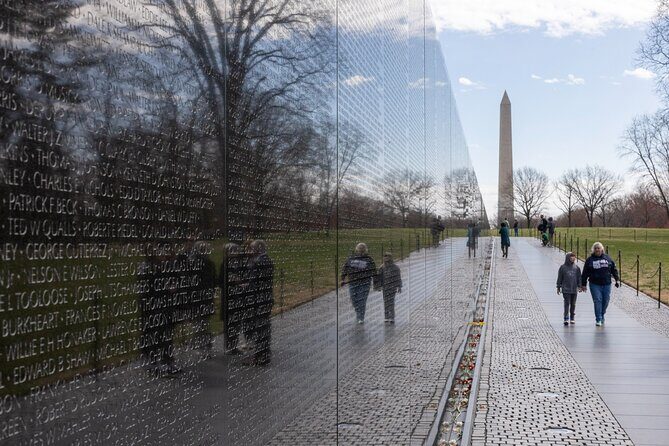
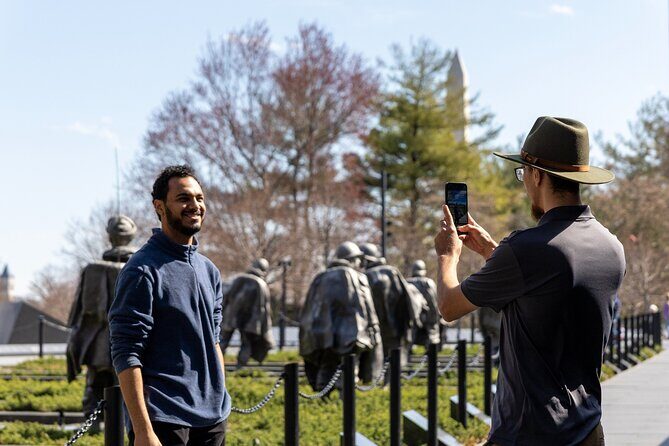
After Vietnam, you shift to the Korean War Veterans Memorial, a site built around striking soldier statues and a message that doesn’t let you soften the meaning: Freedom is Not Free. You’ll spend around 10 minutes here.
This memorial works because it’s not only about the war—it’s about the price of the freedoms people often treat like background noise. When you see the statues alongside the inscription, it reframes what you think you’re looking at. You’re not just viewing sculptures; you’re being told to connect service with consequence.
Practical takeaway for you: if you’re short on attention time, don’t try to see everything. Pick one statue to understand as a character, then read how the surrounding composition guides your eye. That’s how you get a full experience without turning it into a checklist.
You can also read our reviews of more evening experiences in Washington DC





World War II Memorial: A Tribute That Benefits From Slowing Down
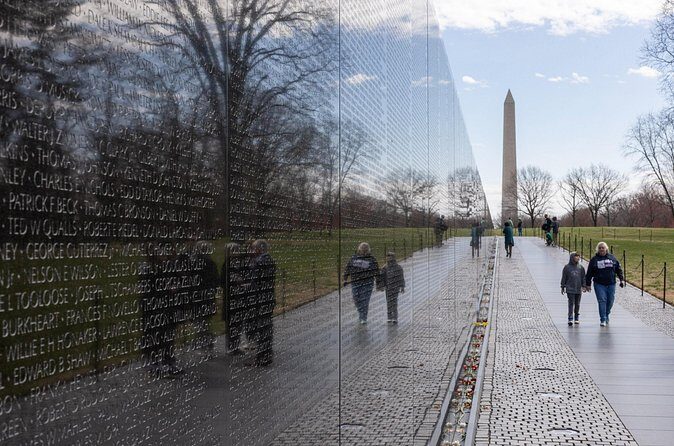
The World War II Memorial follows, set up as a tribute to the 16 million who served in the U.S. Armed Forces during the war. You’ll have about 10 minutes.
This is where the guided pacing really matters. WWII is often treated as history class material—big numbers, big battles, big outcomes. But at a memorial, the scale can become emotional in a different way. A good guide helps you translate the magnitude into something you can actually grasp in a short visit.
I recommend you give yourself two brief passes: one to catch the overall design, and one to zoom into the details the guide points out. The second look is what turns a photo stop into a memory.
Capitol Reflecting Pool: The Waterway Between Stories
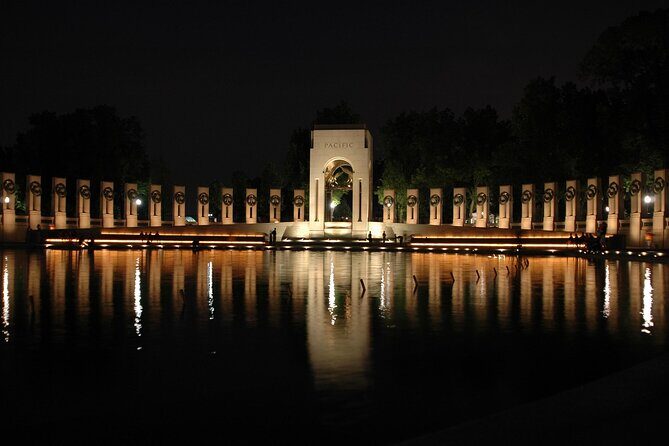
Next is the Capitol Reflecting Pool, about 15 minutes of walking time here. This is more open and less text-heavy than the memorial stops, and that’s a good thing. It offers a breather between heavy remembrance sites.
The pool mirrors its surroundings and is described as an iconic waterway that has reflected historic events and protests. Even if you’re not thinking about those specific moments, the practical effect is calming: the water gives you space to reset while your mind processes what you just saw.
If you’re traveling with people who get restless easily, this section can be the glue that keeps everyone together. It’s still part of the story—America’s public space isn’t only buildings. It’s how people gather in front of them.
Photo tip: try one shot with the horizon line and one shot low to capture the reflection texture. Night lighting can make the surface look different than daytime, and that’s where you get variety without leaving the path.
Washington Monument at 555 Feet: What to Look For at Night
The tour ends with the Washington Monument, and it’s hard to miss. It’s 555 feet tall and described as the tallest stone structure in the world. You’ll spend about 10 minutes here, learning what it represents and why it matters to American history.
At night, your main job is orientation. The monument can dominate the skyline, and without context it turns into a silhouette. The guide’s role is to help you connect what you’re seeing—the height, the design, the national symbolism—to the bigger walk you just completed.
Practical photo advice: stand back enough to include the full obelisk, then move slightly to frame it with the sky rather than random street clutter. You’ll get cleaner shots and you’ll appreciate scale more.
The end point is near 1 15th St NW, so you’ll be well positioned to keep exploring on your own after the tour finishes.
Price and Value: Why $43 Can Make Sense for DC
At $43 per person for about 2 hours, this tour isn’t trying to compete with big all-day buses or free DIY walking maps. Instead, it sells something simpler: a guided route that strings together key memorials with context and a tempo that works.
Here’s the value angle I see:
- Free admission at each stop means you’re paying for guidance, not entry fees.
- Max 10 guests increases your chances of actual conversation, not just hearing facts from the sidewalk.
- You’re getting a local, professional guide and structured time at each memorial, including room to take photos.
You also get a mobile ticket and confirmation at booking, which helps you show up without extra friction. For a night tour, that matters more than it sounds. People hesitate when logistics are messy. Here, you just meet and walk.
Bottom line: if you like memorials but want them explained in plain language, the price is reasonable. If you only want the best photos with zero talking, you might feel paying for a guide is overkill.
The Guide Factor: Jeff’s Patient, Let-You-Explore Style
A standout theme from the experience is how the guide runs the walk—especially one guide named Jeff. People highlight that he’s patient, doesn’t rush, and answers questions as they come up.
That style changes everything in a memorial setting. You don’t want a guide who treats sites like train stops. You want someone who keeps the group moving when needed, but also gives you space to absorb what you’re seeing. That matches the itinerary structure too: short stops at the statues and longer ones at the Vietnam and Korean War memorials.
You’ll likely appreciate the small extras as well. One of the best reported touches is that Jeff shares tidbits you won’t find on Wikipedia, plus practical guidance that helps you notice what matters while you’re there.
If you’re a family group, this kind of pace helps a lot too, since different people process in different ways. A guide who keeps everyone informed and gives time to wander a bit makes the tour feel personal, not mechanical.
Practical Tips for This 7:30 pm Night Walk
For a night walking tour, your success mostly depends on comfort and timing. Here’s what I’d do to make it smooth:
- Wear comfortable walking shoes. This is real sidewalk time.
- Bring layers you can adjust. Even if you don’t know the temperature, evening walks often feel cooler than daytime.
- Plan to take photos quickly. The stops are short enough that you’ll feel better if you don’t spend 20 minutes in one spot.
- If you have mobility needs, ask yourself whether you can handle frequent stops and short walking segments across multiple sites.
Logistics are fairly straightforward. The tour offers a mobile ticket, it’s in English, and it’s marked as near public transportation. Service animals are allowed, and the experience says most travelers can participate.
Who This Tour Fits Best
This is a strong pick if you want:
- A guided path through major DC memorials in a time-efficient way
- Context you can carry with you after you leave
- A tour pace that doesn’t bulldoze your questions
I’d also say it’s a great match for first-timers who don’t want to build a route from scratch. The order takes you through some of the biggest themes in the nation’s 20th-century memory without requiring you to study beforehand.
If you’re the type who only wants quiet time and hates group conversation, you might find any guided tour too social. In that case, consider doing memorials on your own. But if you want to understand what you’re seeing, this format helps.
Should You Book the Monuments and Memorials Night Walking Tour?
I’d book it if your goal is to see the key memorials in one compact evening and walk away with actual meaning, not just photos. The combination of free entry stops, a small group, and a guide style that’s patient and not rushed makes the $43 feel like paying for clarity.
Skip it if you’re trying to do DC on autopilot or you dislike walking tours. The tour is short, but it’s still a night walk, and the experience is designed to be active.
If you want the best odds of enjoying it, go with an open mind and one or two questions in your pocket. A tour like this works best when you let the guide help you look closer.
FAQ
How long is the Monuments and Memorials Night Walking Tour?
It runs for about 2 hours.
Where do I meet, and where does the tour end?
You start at 10 Henry Bacon Dr NW, Washington, DC 20004 and end at 1 15th St NW, Washington, DC 20004.
What language is the tour offered in?
The tour is offered in English.
Is admission included for the memorial stops?
The tour lists admission ticket free for each memorial stop on the route.
How large is the group?
The experience has a maximum of 10 travelers.
Is there free cancellation?
Yes. You can cancel up to 24 hours in advance for a full refund.