REVIEW · EVENING EXPERIENCES
Private Monuments At Night Tour
Book on Viator →Operated by Capital City Tours · Bookable on Viator
One good plan turns DC at night into something you can actually enjoy. This private monuments tour strings together the big symbols of American democracy and sacrifice in a tight, doable 3-hour walk around Washington, DC.
I especially like the easy pacing: you get short, focused time at each stop instead of getting stuck somewhere too long. I also like that the guide keeps things personal and practical, including helpful updates throughout the walk, plus the flexibility to adjust how much time you want at each site. One drawback to consider: since you’re outside for multiple stops, you’ll want comfortable shoes and a willingness to walk at night, even though the individual visits are brief.
In This Review
- Quick reasons this private night tour is worth your time
- Why nighttime DC makes sense in a 3-hour private format
- Meeting points, pickup, and how you’ll actually use your time
- Stop 1: U.S. Capitol grounds for architecture, statues, and a fast government “big picture”
- Stop 2: The White House exterior in 15 minutes for photos and history vibes
- Stop 3: National World War II Memorial for a moving, educational 20 minutes
- Stop 4: Thomas Jefferson Memorial by the Tidal Basin for democracy themes
- Stop 5: Martin Luther King, Jr. Memorial for hope, equality, and reflection
- Stop 6: Korean War Veterans Memorial for remembrance in a set time window
- Stop 7: Lincoln Memorial for symbolism and unity
- Stop 8: U.S. Marine Corps War Memorial (Iwo Jima Memorial) for a final tribute
- Stop 9: Vietnam Veterans Memorial for healing and gratitude
- What makes the guide experience special (and why Brittany matters)
- Value and logistics: what you’re really paying for
- Who this night monuments tour is best for
- Should you book the Private Monuments At Night Tour?
- FAQ
- What time does the tour start?
- How long is the Private Monuments At Night Tour?
- Is this tour private?
- Does the tour include pickup?
- Are admission tickets required for the stops?
- Will I be able to visit the White House?
- What language is the tour offered in?
- Do I get a ticket on my phone?
- Are service animals allowed?
- What is the cancellation window?
Quick reasons this private night tour is worth your time

- 7:00 pm start puts you in the monuments after dark window without dragging the evening on
- Private group only means you’re not competing with a big crowd for photos and angles
- All stops are listed as free admission so you can spend time looking, not paying entry fees
- Pickup offered + mobile ticket makes it simple to meet up and stay organized
- English-speaking guide fits most visitors comfortably
- Time is adjustable at each stop, so you’re not locked into a rigid schedule
Why nighttime DC makes sense in a 3-hour private format
Night in Washington, DC changes the whole feel. The monuments don’t just look impressive; they feel more reflective and less hectic. That matters because this tour is built for real viewing time, not a marathon. With a roughly 3-hour duration and a 7:00 pm start, you’re getting an evening highlight loop that still leaves you energy for dinner afterward.
The private format is also a big deal for comfort and flow. You’re not waiting for stragglers from another tour group, and you can ask quick questions as you go. On a route packed with major memorials, that flexibility keeps the experience from feeling rushed.
You can also read our reviews of more private tours in Washington DC



Meeting points, pickup, and how you’ll actually use your time
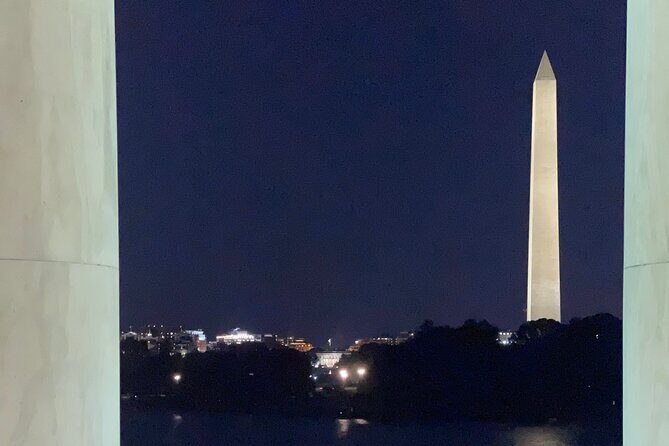
The tour starts at 7:00 pm, and confirmation is received at booking. Pickup is offered, and you’ll use a mobile ticket, which is handy if you’re juggling plans across the day. It’s also described as near public transportation, so you have options if you’d rather not rely on pickup.
Here’s what I’d call the biggest value of the logistics: they reduce friction. You don’t have to play meet-up detective at every turn. Your guide keeps the group moving and communicates clearly step-by-step, which is exactly what you want at night when streets, lighting, and crowds can make everything feel more complicated.
One more practical note: service animals are allowed, and the tour lists that most travelers can participate. If you have specific mobility needs, it’s smart to confirm what walking is involved on your day.
Stop 1: U.S. Capitol grounds for architecture, statues, and a fast government “big picture”
You start with the U.S. Capitol area, and the planned time is about 15 minutes for a walk around the Capitol grounds. Even with a short stop, this works because the Capitol grounds are built for orientation: you can quickly get a sense of scale, symbolism, and the layout of major civic space.
What makes this stop valuable is the way it sets context for the rest of the tour. After seeing the Capitol’s architecture and surrounding statues and gardens, the memorials that follow feel less random. You’re no longer just checking off famous names—you’re watching themes unfold: government, ideals, and national memory.
The main consideration is the short time. Fifteen minutes is enough to look and take photos around the grounds, but it’s not enough to linger for long readings or slower wandering.
Stop 2: The White House exterior in 15 minutes for photos and history vibes
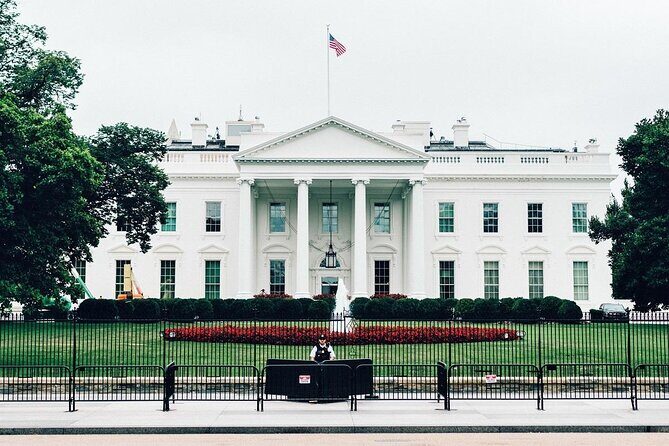
Next up is the White House, and it’s explicitly exterior only. The time allotment is also about 15 minutes, which is perfect if your goal is to see it up close, grab a few photos, and move on.
Exterior-only visits can actually be a benefit on a night tour. You keep momentum, you avoid the kind of time sink that can eat an entire evening, and you still get the payoff of seeing the building itself in the famous Washington setting.
Do note one thing: since you’re not going inside, plan your expectations around street-level viewing, photos, and the atmosphere rather than a museum-style visit.
Stop 3: National World War II Memorial for a moving, educational 20 minutes
Then the tour turns more solemn with the National World War II Memorial. You’ll have about 20 minutes, and the focus is on honoring the bravery and sacrifice of what the tour describes as the Greatest Generation.
This stop is often where the tone of the whole evening shifts. You’re still moving along a route, but the memorial’s message is direct and emotional. In a short time window, it helps to go at a slower pace once you’re there—give yourself a few minutes to actually read what’s around you and not just snap photos.
Because this is a guided night tour, you’re not standing alone with a memorial and guessing what you’re supposed to notice. That’s a real advantage when time is limited and the meaning matters.
You can also read our reviews of more evening experiences in Washington DC





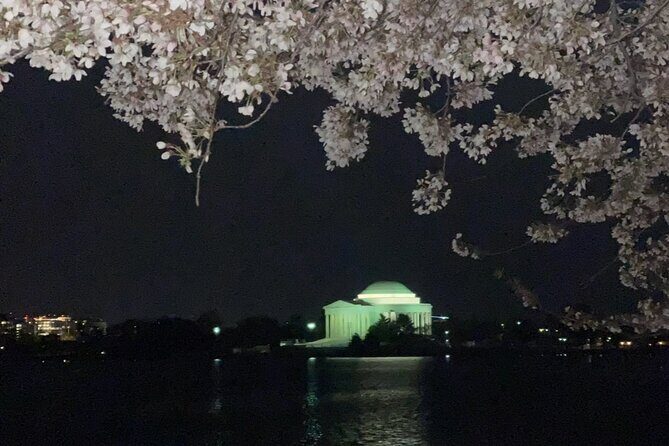
Stop 4: Thomas Jefferson Memorial by the Tidal Basin for democracy themes
The Thomas Jefferson Memorial is next, with around 20 minutes. The tour describes it as a tribute to Jefferson, located on the Tidal Basin—a location that already signals why this memorial is such a signature Washington setting.
What I like about scheduling Jefferson here is the pacing. You go from World War II’s direct remembrance into a memorial tied to political ideals and American democracy. The shift keeps the tour balanced instead of feeling like all remembrance, all the time.
A practical consideration: the time is still fixed at about 20 minutes. If you love lingering at reflective spaces, you’ll want to be intentional about what you want out of this stop—photos, reading, or just soaking in the atmosphere with a calmer walk.
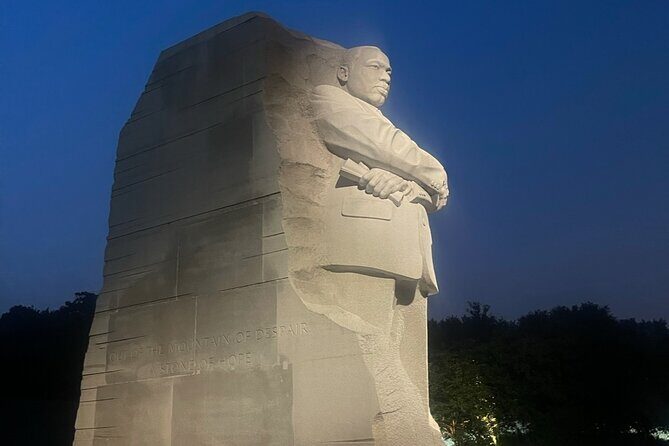
Stop 5: Martin Luther King, Jr. Memorial for hope, equality, and reflection
The Martin Luther King, Jr. Memorial is allotted about 15 minutes. The tour frames it around King’s enduring legacy, including nonviolence, equality, and social change—and it positions the memorial as a reminder of the ongoing struggle for civil rights and justice.
In a night schedule, the challenge is always the same: can you feel anything meaningful in a short time? This stop is designed for the opposite approach—because the theme is clear, you don’t need hours of background to be moved. With a guide shaping what you look for, 15 minutes can be plenty to leave with the main message.
If you’re the type who likes to stand still and absorb, use the time deliberately. One good minute of quiet at the center of the memorial can outweigh several hurried photos.
Stop 6: Korean War Veterans Memorial for remembrance in a set time window
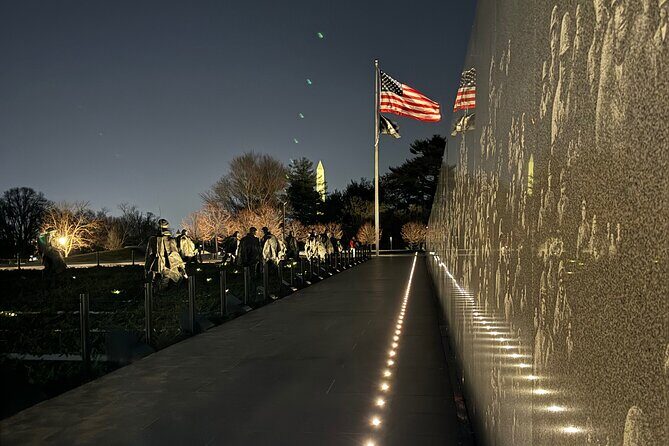
Next is the Korean War Veterans Memorial, with about 20 minutes. The tour describes it as a lasting tribute to veterans of the Korean War and a reminder of courage, dedication, and service in defense of freedom and democracy.
This is one of those stops where a tour format helps you move from information to respect. Without guidance, it can be easy to treat a memorial like another photo backdrop. With a guide, you’re more likely to connect what you see with what it honors—and that connection is what turns the visit into something memorable.
As with other memorials on the route, your main trade-off is time. Twenty minutes sounds roomy, but you’ll still be outdoors and moving between points, so pace yourself.
Stop 7: Lincoln Memorial for symbolism and unity
Then you reach the Lincoln Memorial, with about 20 minutes. The tour describes it as a powerful symbol of democracy, equality, and freedom, and it highlights the idea of unity and perseverance.
Lincoln is a natural mid-to-late evening anchor. By this point, you’ve already covered the Capitol, the White House, and multiple memorial themes. Lincoln ties things together into a clearer sense of what the tour is really doing: spotlighting American values and the people connected to them.
If you want the most from Lincoln, don’t sprint through it. Even on a set schedule, I’d recommend taking one slow circuit—enough to notice the layout and the way your viewpoint shifts as you move.
Stop 8: U.S. Marine Corps War Memorial (Iwo Jima Memorial) for a final tribute
The next stop is the U.S. Marine Corps War Memorial, also referred to in the tour description as the Iwo Jima Memorial. You get about 15 minutes, and the focus is on honoring Marines and all service members who served and sacrificed.
This stop is powerful, but it’s also time-compressed. That’s why the guided approach matters here. Your guide can help you focus on what’s most important during that quarter-hour, so you’re not left wondering what to pay attention to.
If you’re traveling with family or mixed ages, this is also a good “meaningful stop” that often holds interest even when people might not read a lot. It’s easier to remember visually and emotionally.
Stop 9: Vietnam Veterans Memorial for healing and gratitude
You finish at the Vietnam Veterans Memorial, with about 20 minutes. The tour describes it as a powerful tribute to Vietnam War veterans, and it frames the space as one of remembrance, healing, and gratitude.
Ending here is a strong choice. It’s the kind of stop that can land emotionally, even for people who think they’ll feel overwhelmed or unsure what to do at first. Give it a little time to slow you down. Ten minutes can pass fast at a memorial; twenty minutes gives you a real chance to connect.
If you’re hoping to walk away with a sense of closure to the route, this is the last stop that can deliver it. It’s also a good point to take any final photos you didn’t get earlier, but keep the focus on the meaning, not the checklist.
What makes the guide experience special (and why Brittany matters)
One of the best parts of this tour is the way the guide runs the evening. In particular, the name Brittany comes up for a reason: she’s described as personal, flexible, and clear, with the ability to adjust how long you spend at each stop.
That flexibility is the difference between a tour that feels like transport and a tour that feels like a plan. When the timing can flex, you can match the experience to your interests. If you want an extra minute to frame a photo at the White House exterior, you might get it. If you want less time at another stop, you might also get that.
I also like that she was on time early and communicated clearly step-by-step. On night outings, that kind of calm leadership turns a potentially stressful schedule into a smooth evening.
Value and logistics: what you’re really paying for
There’s no single detail that makes this “worth it.” It’s the combination. The tour strings together major DC icons and memorials in one organized loop, for a planned 3 hours, with free admission noted for each stop. That means your money is going toward guidance and coordination, not entry fees.
You’re also getting a private setup, which can be especially valuable if you’re traveling as a small group and want your own pace. A shared tour can be fun, but it can also add noise and waiting. Here, the private nature keeps things moving with less friction.
The pickup offered and mobile ticket are practical value too. They help you focus on seeing DC instead of figuring out where to stand and when.
Who this night monuments tour is best for
This tour fits best if you want:
- A well-paced way to see Washington’s big symbols in one evening
- A private experience where your group isn’t competing with strangers
- A route built around major memorial themes, from WWII through Vietnam
- A guide who helps you focus and adjust timing during the walk
It’s also a good option if you’re short on time. A night tour is a way to get the highlights without spending your entire day traveling and re-planning.
If you’re the type who wants long museum-style experiences at every stop, this may feel short at times. The strength here is the overall route and pacing, not deep study at one location.
Should you book the Private Monuments At Night Tour?
Yes, if you want a structured, low-hassle way to see major Washington DC monuments after dark with a private group and clear guidance. The route is built for pacing, and the free-admission focus is a smart way to keep the evening simple.
Skip it or reconsider if your main goal is deep, unhurried exploration at a single site. This is designed to move. That can be exactly what you want at night, but it’s worth matching your expectations.
If you book, do yourself a favor: bring comfortable shoes, decide what you want most from the evening (photos, meaning, or both), and be ready to slow down just a bit at the memorials. That’s where the tour really pays off.
FAQ
What time does the tour start?
The tour starts at 7:00 pm.
How long is the Private Monuments At Night Tour?
It lasts about 3 hours (approx.).
Is this tour private?
Yes. It’s private, and only your group will participate.
Does the tour include pickup?
Pickup is offered.
Are admission tickets required for the stops?
Admission tickets are listed as free for each stop.
Will I be able to visit the White House?
You can visit the White House exterior only.
What language is the tour offered in?
The tour is offered in English.
Do I get a ticket on my phone?
Yes. The tour includes a mobile ticket.
Are service animals allowed?
Yes, service animals are allowed.
What is the cancellation window?
You can cancel for a full refund up to 24 hours before the experience’s start time. If you cancel less than 24 hours before, the amount paid is not refunded.