REVIEW · NATIONAL MALL NIGHT TOURS
National Mall Expedition: Personalized Self-Guided App Tour
Book on Viator →Operated by Pintours · Bookable on Viator
Want to see DC fast without rushing? This self-guided app tour strings together DC’s big-name landmarks with enough structure to keep you moving. I love that admission is included for most stops, so your money buys entry, not just sightseeing instructions. The main drawback: it’s app-led, so if you get stuck at the start or need on-the-spot help, you’re largely on your own.
In about 1 to 3 hours, you can go from the U.S. Capitol to top Smithsonian stops and then finish at the National Archives without building a complicated plan. The timing per stop is tight on purpose, roughly 15–25 minutes, which makes this a smart option when your DC day is short.
One more consideration: the White House stop is listed with admission not included, so plan for viewing time (and photos) more than an inside visit. If you’re hoping for a live guide to answer questions as you go, this isn’t that kind of tour.
In This Review
- Key Things I’d Focus On Before You Go
- The Route: Capitol to National Archives in 1–3 Hours
- Start at the U.S. Capitol: The Best “Set Your Bearings” Stop
- National Museum of the American Indian: 15 Minutes, Big Themes
- National Air and Space Museum: “Up Through the Atmosphere”
- Smithsonian Castle: A Classic Stop With a Notable Architect
- Washington Monument: Height, Scale, and Time to Look
- FDR Memorial: A 1930s to WWII Timeline Moment
- Thomas Jefferson Memorial: Short Time, Clear Character
- Lincoln Memorial: Free Time Equals More Flexible Energy
- The White House Stop: What Is Included (and What Isn’t)
- National Archives Museum: Your Final “Proof of History” Stop
- Price and Value: $5 Per Group Is the Big Hook
- Timing and Pacing: How to Make 15 Minutes Feel Like Enough
- App-Led Reality Check: The “No Live Guide” Factor
- Who This Tour Fits Best (and Who Should Skip It)
- Should You Book This National Mall App Tour?
Key Things I’d Focus On Before You Go

- Self-paced by design: built for short visits (about 15–25 minutes per stop) so you can move on when you’re done.
- Admissions included for many sites: several major stops list entry included, which can save time and avoid extra ticket steps.
- A clear landmark chain: Capitol → Smithsonian area → Washington Monument → memorials → Lincoln → Archives, in a smooth order.
- Private group feel: you and your group only, up to 15 people.
- White House access is limited: ticketed entry isn’t included, so treat it as a viewing stop.
- You need app confidence: if directions or start details are unclear, there’s no guarantee of a person standing there to fix it.
The Route: Capitol to National Archives in 1–3 Hours
This tour works like a DC “greatest hits” loop. You start at the U.S. Capitol, then head through some of the National Mall’s most famous stops: the National Museum of the American Indian, the National Air and Space Museum, the Smithsonian Castle, and the biggest memorials and monuments. It ends back at the same meeting point, which is useful when you want a clear finish line instead of a loose wander.
The schedule is tight: most stops are about 15 minutes, with a couple stretching to 20 or 25. That doesn’t mean you’ll feel rushed. It usually means you’ll see the key exterior or exhibit highlights and then decide what’s worth slowing down for later on your own.
If you love the idea of walking around iconic DC sites at your own speed, this is a strong format. If you need someone to manage every detail, you might feel the absence of live guidance.
You can also read our reviews of more guided tours in Washington DC



Start at the U.S. Capitol: The Best “Set Your Bearings” Stop

Your day begins at the United States Capitol. The tour frames it as the citadel of American democracy—the place where Congress meets to analyze, debate, and pass laws. Even if you’re not going deep into civics, the Capitol is a great starting point because it gives you a mental map for the rest of your walk.
You’re allotted about 15 minutes here and admission is listed as included. That’s enough time to orient yourself, get the key views, and figure out your next move without turning it into an all-day project.
Practical tip: if you’re using the app on mobile data, make sure your phone is charged first. Starting at a major landmark is the moment when you least want a battery panic or a map freeze.
National Museum of the American Indian: 15 Minutes, Big Themes
Next up is the National Museum of the American Indian, opened in 2004. The focus is on experiences of Indigenous people, with an expansive collection of photographs, objects, and other media.
This stop is also about 15 minutes, with admission included. In that short time, you’re not doing an all-night museum visit. Instead, you’re getting a meaningful cultural and historical anchor that adds depth to the rest of the day. It also helps that it’s a museum stop inside the overall National Mall vibe, so you can switch from monuments and memorials to exhibits without losing momentum.
If you tend to skim when you’re short on time, pick one area to focus on rather than trying to “see everything.” With 15 minutes, your best move is choosing one thread and reading enough to feel something land.
National Air and Space Museum: “Up Through the Atmosphere”
Then comes the National Air and Space Museum. The tour’s pitch is exactly right: you’re taken on a journey through our own atmosphere and across the universe—built for wonder, curiosity, and that classic museum mix of big ideas and hands-on attention.
Again, you get about 15 minutes and admission is included. That’s perfect for a quick hits-and-photos visit: you can aim for the most attention-grabbing galleries, catch a few standout displays, and move on. If you’re a space nerd, you’ll likely want longer—so use this stop as a sampler.
One tip that keeps your day smooth: decide in advance whether you want the museum to be a photo break or an information break. In a tight tour, trying to do both can make your 15 minutes feel like a blur.
Smithsonian Castle: A Classic Stop With a Notable Architect
You’ll also hit the Smithsonian Castle. The tour notes it was designed by James Renwick, who also worked on St. Patrick’s Cathedral.
This is a short, about 15-minute stop with admission included. Think of it as a “DC building photo + quick context” pause. Even if you don’t spend a lot of time inside, it’s a useful waypoint that makes the Smithsonian area feel connected instead of random.
If you like architecture or you’re traveling with someone who needs breaks, this is a good one because it’s structured and compact.
You can also read our reviews of more tours and experiences in Washington DC






Washington Monument: Height, Scale, and Time to Look
The Washington Monument stop gives you about 20 minutes, with admission included. It’s described with a specific height: 555 feet 5 1/8 inch. It honors the first American president, which adds a clean historical note as you stand in front of a landmark that’s hard to ignore.
This is one of those moments where time feels different. Even if you don’t spend a ton of time, you’ll want a few pauses to take in the scale and line up your views for the next memorials.
Practical tip: wear comfortable shoes and plan for the fact that monument areas can mean walking in open sun. If you’re doing this in warmer months, bringing water is the boring choice that makes the day better.
FDR Memorial: A 1930s to WWII Timeline Moment
Next is the Franklin Delano Roosevelt Memorial. The tour frames F.D.R. as the commander in chief during the Great Depression of the 1930s and World War II.
You’ll get 20 minutes here with admission included. This stop works especially well if you like memorials that feel like you’re moving through an era, not just stopping for photos. The limited time nudges you to read enough to connect the dots, rather than trying to memorize every detail.
For me, the value of this kind of timed stop is pacing. You don’t lose the thread of the day, and you still get a meaningful pause that isn’t just visual.
Thomas Jefferson Memorial: Short Time, Clear Character
After FDR comes the Thomas Jefferson Memorial. The tour calls him one of the most notable founding fathers and adds that Jefferson was a jack of all trades.
This is about 15 minutes, with admission included. That’s enough time to understand the memorial’s vibe and take in the main design, and it pairs nicely with the Jefferson-FDR-Lincoln flow of the day. The structure helps you keep the timeline straight even when your brain is tired from walking.
If you like to go in order and build context, this sequence is helpful. If you don’t care about memorizing names, you can treat it as a pleasant break between the larger “must-see” photo points.
Lincoln Memorial: Free Time Equals More Flexible Energy
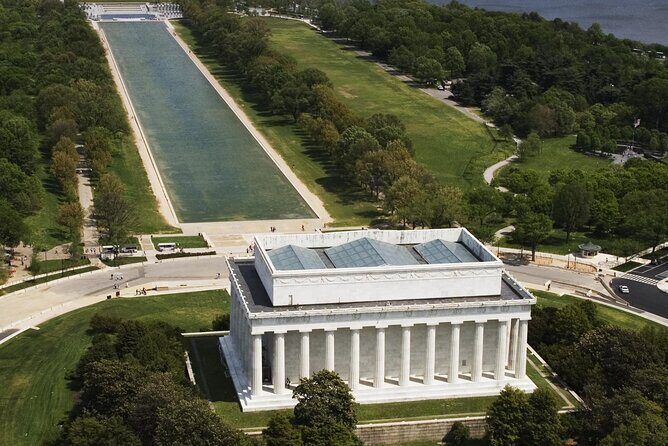
The Lincoln Memorial is next, with 15 minutes and admission listed as free. It also notes the memorial opened in 1922 and has shown up in films like Wedding Crashers and Forrest Gump.
This stop is a gift for budget and timing. Since admission is free, you can spend your mental energy on the experience rather than ticket math. And with only 15 minutes on the schedule, it’s well matched to a quick, meaningful viewing.
If you want a calm moment here, pick a spot where you can face the structure and slow down for a minute. The best use of a short stop is to resist turning it into a speed-run.
The White House Stop: What Is Included (and What Isn’t)
The tour includes a stop at the White House at 1600 Pennsylvania Avenue NW, with about 25 minutes allocated. The key detail: admission is listed as not included.
So, plan for viewing and photos, not an inside visit. You’ll still get the satisfaction of being at a globally famous address. The tour also notes that every president except George Washington lived there, which is a helpful fact to keep in your head while you look.
If you’re the type who needs a ticketed “experience,” this might feel incomplete. But if you’re happy with a landmark encounter and you’re using this tour to set your bearings, it fits well.
National Archives Museum: Your Final “Proof of History” Stop
You end at the National Archives Museum, with about 15 minutes and admission included. The tour describes it as the repository of some of the most important documents in U.S. history.
This is a great closing stop because it connects your day of symbols—Capitol, memorials, presidential names—to the idea of documents and records. Even if you don’t get a long museum session, you’ll feel the shift from monuments outside to primary-source history.
Also, finishing here keeps the day from ending on a purely visual high note. You end with something that sounds like it would matter in real life, not just on a postcard.
Price and Value: $5 Per Group Is the Big Hook
The price is $5.00 per group, up to 15 people. That’s unusually low, and it changes how you should judge the value. In DC, the cost of a day can add up fast once you factor in timed entries and separate admissions—so if this format includes admission tickets for many stops, the math can work in your favor quickly.
The route is also built for efficiency. With 1–3 hours, you can fit it into a busy itinerary without losing a full day. The tour is typically booked about 27 days in advance, which suggests it’s popular enough that early planning helps.
One caution on value: the White House stop is listed as not included for admission. Don’t assume your purchase automatically covers everything inside every landmark. Read the ticket notes carefully before you arrive.
Timing and Pacing: How to Make 15 Minutes Feel Like Enough
This tour gives you consistent stop blocks: mostly 15 minutes, with a couple longer stretches (around 20–25 minutes). For a self-guided format, that structure is your friend. It keeps you from getting stuck in one place too long and missing the rest.
Here’s how to make the most of it:
- Decide what matters to you at each stop: a quick view, a quick read, or a quick photo.
- Use the app to follow the sequence, then give yourself permission to linger later if something grabs you.
- Keep breaks short. In a 1–3 hour loop, long pauses can quietly steal time.
If you’ve only got an hour or so in DC, this style can still work. The key is treating it as a fast orientation circuit, then choosing one or two places to extend on your own afterward.
App-Led Reality Check: The “No Live Guide” Factor
This is a private, self-guided experience, and that affects your risk level. If everything works smoothly on your phone, it’s great—easy, paced, and simple. But if you have trouble finding the meeting point, understanding ticket instructions, or starting the app directions, there may not be a person stepping in right then.
So here’s my practical advice: before you head out, confirm you know exactly where to start (the U.S. Capitol meeting point). Keep your phone data on or download what you can. And when tickets are involved, make sure you’re not accidentally buying duplicates.
I also recommend taking one photo of your start location and one screenshot of the app instructions. That sounds like overkill—until it saves you 20 minutes of confusion on a busy DC day.
Who This Tour Fits Best (and Who Should Skip It)
This works best for you if:
- you want to cover the big DC highlights quickly
- you prefer setting your own pace
- you like structured stops but don’t want to join a long guided program
- you’re traveling with a small group and want it private
It might not fit well if:
- you hate app-based navigation
- you want live answers to questions as you go
- you’re counting on ticketed access for every single stop (the White House admission is listed as not included)
If you’re flexible and you read the ticket notes carefully, you’ll likely get strong value for your time.
Should You Book This National Mall App Tour?
Book it if you want a low-cost, private, self-guided loop that helps you see a lot of iconic DC stops in 1–3 hours, with admission included for many major sites along the way. It’s ideal for tight schedules, first-time orientation, and travelers who like to walk with a plan but not under a megaphone.
Skip or be extra cautious if you need a live guide to troubleshoot problems or if you rely on ticketing being fully automatic for every stop. The White House admission is not included, and app-start confusion can waste time—so make sure you’re ready before you leave.
If you do book, I’d make your day easy on purpose: confirm your start point, charge your phone, and treat this as your DC “map in motion.” Then you can spend the rest of your time where you actually want to linger.