REVIEW · WALKING TOURS
Monuments and Memorials Architectural Walking Tour
Book on Viator →Operated by DC Design Tours · Bookable on Viator
Monuments make more sense when you can read them. This National Mall architectural walking tour turns a simple stroll into a design-focused lesson on how Washington DC got built—and why each landmark looks the way it does. You’ll cover the Washington Monument, the White House area, and major war memorials, then finish at the Lincoln Memorial, with a local guide keeping the story clear and grounded.
I like that the emphasis stays on architecture and design elements, not just dates and speeches. In the best-guide examples, the explanations are detailed enough to make you notice things you’d normally miss—especially at the Vietnam Veterans Memorial and the National World War II Memorial. One caution: time at each stop is brief, and the Washington Monument requires separate admission since that ticket is not included.
In This Review
- Quick hits before you go
- What the tour is really like on the National Mall
- Meeting at the Washington Monument and getting oriented fast
- Stop at the Washington Monument: scale, masonry, and symbolism
- The White House corridor: learning what a sightline means
- World War II Memorial: the newest landmark and why it feels modern
- Vietnam Veterans Memorial: the design choices that create impact
- Korean War Veterans Memorial: visceral layout and quick, focused time
- Lincoln Memorial: a “temple” in stone and proportion
- Price and value: why $48 can make sense here
- The kind of guide you’ll want for this route (and what to expect)
- Who should book this tour
- Should you book this National Mall architecture walk?
- FAQ
- Where is the tour meeting point?
- How long is the walking tour?
- How much does the tour cost?
- What’s included in the price?
- Do I need tickets for the Washington Monument?
- Is admission free for the other memorials?
- What language is the tour offered in?
- Can I bring a service animal?
- What is the cancellation rule?
Quick hits before you go
- Architecture-first route: you’ll be looking at massing, materials, and layout—not just landmarks on a map
- WWII, Vietnam, Korean War memorials: short stops, but with enough context to make each one hit harder
- A real local guide: at least one guide (Sam) has been praised for being both enthusiastic and very specific
- Max 20 people: small enough to hear explanations and keep the pace comfortable
- Morning or evening timing: you can match your visit to your energy and daylight
What the tour is really like on the National Mall
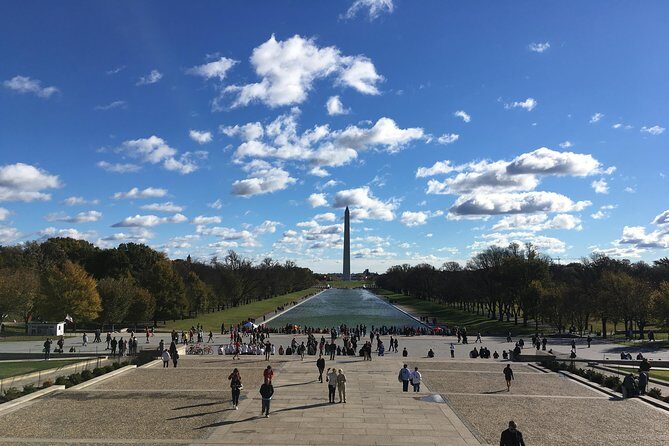
This is a 2-hour, guided walking tour of the National Mall designed to help you see monuments as intentional design choices. The guide meets you at the Washington Monument area, then leads your group down the Mall while explaining what you’re seeing and how urban planning, symbolism, and materials all work together.
You’ll move through a classic DC spine: big civic spaces, long sightlines, and memorials set up so you naturally feel their scale. That’s why this works better than a random “go see everything” plan. The guide’s job is to give you a lens, so when you look at a wall, an inscription, or a formal axis, you’ll know what questions to ask.
The group size caps at 20, which matters. On a popular route like this, smaller groups mean less waiting, fewer missed explanations, and more chance to ask a quick question if something doesn’t make sense.
You can also read our reviews of more walking tours in Washington DC



Meeting at the Washington Monument and getting oriented fast
The starting point is the base of the east side of the Washington Monument at 2 15th St NW, facing the Capitol Building. That positioning is smart because it gives you an immediate sense of the Mall’s main alignment and why so many monuments feel connected, even when they’re different in style.
Expect the guide to set the tone right away: what you’ll see next, what to look for, and how the memorials fit into the broader DC layout. If you’re new to the city, this is the kind of orientation that saves you time later. You’ll leave with an internal map of the area, not just a camera roll.
Also note the format: you get a mobile ticket, and the tour is offered in English. For a short walking tour, that’s the kind of simplicity that reduces friction.
Stop at the Washington Monument: scale, masonry, and symbolism
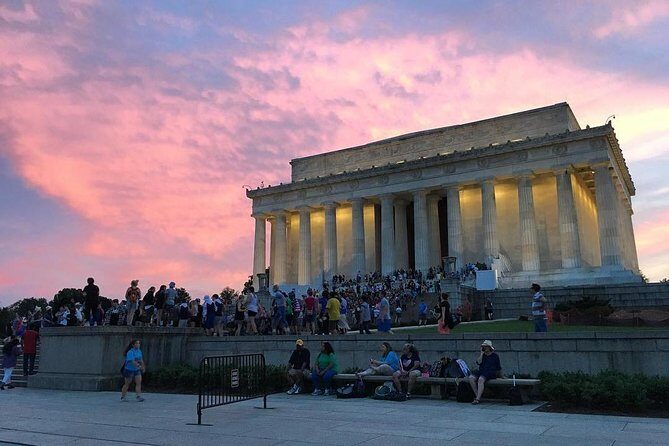
Your first stop is the Washington Monument. It’s the tallest freestanding masonry structure in the world, and it’s also one of those landmarks that can feel almost unreal until you see it close up.
With only about 10 minutes here, this isn’t a slow museum moment. It’s more about getting the “why it looks like this” understanding. The guide’s architectural focus helps you notice how the monument’s shape and construction create a strong vertical statement against the horizontal sweep of the Mall.
One key practical note: admission tickets are not included for the Washington Monument. So if you want to go inside, you’ll need to plan that separately. If you’re only interested in seeing the exterior and hearing the design explanations, you’re still in the right place for this tour.
The White House corridor: learning what a sightline means
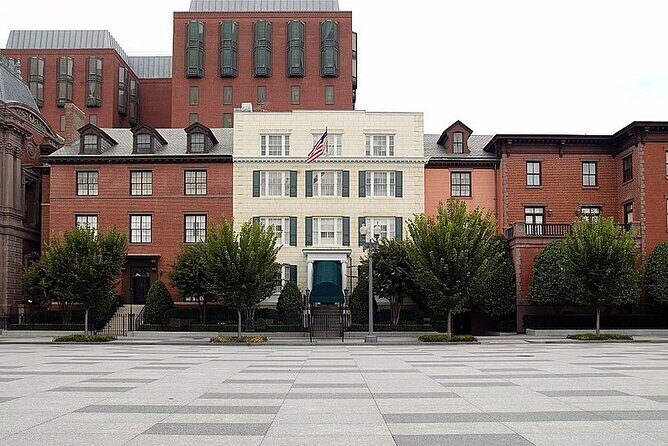
Even though the route lists the White House as part of what you’ll explore, you should think of it as a “design and city planning” moment more than a long stop. This is still valuable. The White House is less about walking up close and more about understanding the urban choreography around it.
When you’re on the Mall, the White House’s position helps explain DC’s civic layout: formal approaches, deliberate views, and a sense of order created through spacing. If you’ve ever looked at a skyline and wondered how planners decided what would dominate, this section helps you connect the dots.
If you’re hoping for deep time for photos or close access, manage expectations. This is an efficient 2-hour walk, so the “learn” part comes first.
World War II Memorial: the newest landmark and why it feels modern
Next up is the National World War II Memorial, typically a 15-minute stop, and it has free admission. Because it’s the newest of the major Mall memorials in this itinerary, it also gives you an interesting comparison point: you can feel how memorial design evolved over time.
The guide’s architecture-and-design approach matters here because WWII memorials often carry a lot of narrative weight. In practice, what makes this stop work is how the design helps organize emotion without becoming a chaotic wall of information. You’ll get enough context to understand why certain elements are arranged the way they are, and how visitors are meant to move through the space.
If you’re the type who likes to understand symbolism—how a site shapes what you think and feel—this is one of the stops that rewards attention.






Vietnam Veterans Memorial: the design choices that create impact

Then comes the Vietnam Veterans Memorial, another 15-minute stop with free admission. This is one of the most emotionally loaded sites in DC, and the design is a big part of why it hurts in a memorable way.
This memorial is known for being visually direct but emotionally complex, and the guide’s architectural focus is what turns “I’ve seen photos” into “I understand how it works.” You’ll get explanations meant to help you see the memorial not just as a wall of names, but as an engineered experience—one that uses form, orientation, and space to guide where your eyes land and how you process the scale.
One caution: it can feel intense. If you’re short on time, you might rush and miss what the design is doing. If you can, slow down just a bit when you’re at the memorial area. Even a small pause can make the guide’s explanation click.
Korean War Veterans Memorial: visceral layout and quick, focused time
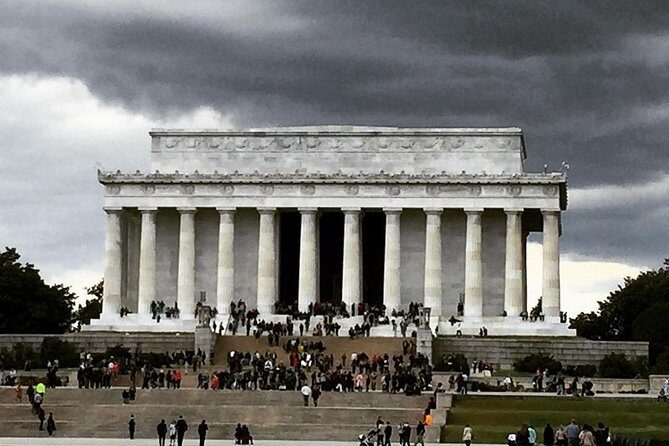
Your Korean War Veterans Memorial stop is about 10 minutes, also with free admission. This one is described as haunting and visceral, and you’ll likely understand why through how it’s arranged and how it pulls your attention.
Because the stop is shorter, you’ll benefit most if you stay present while the guide is speaking. With memorials like this, it’s easy to treat them like checkboxes. The design-focused approach makes it harder to do that—in a good way.
If you want a deeper pause for your own reflection, you can do that before or after your guided window. But for this tour’s pace, the guide’s context is the “fast track” to understanding.
Lincoln Memorial: a “temple” in stone and proportion
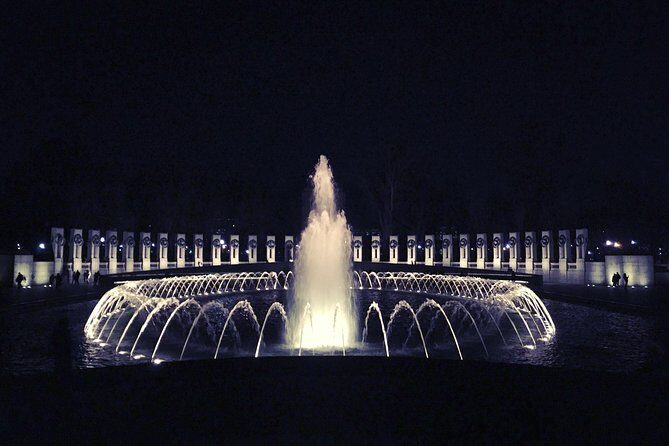
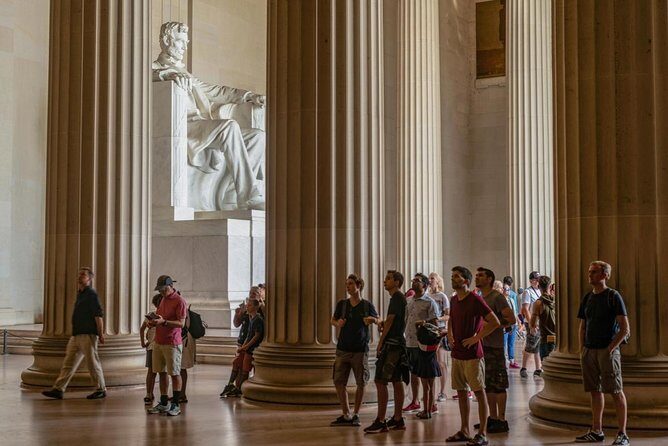
The tour ends at the Lincoln Memorial with about 20 minutes at the site. That extra time is no accident. The Lincoln Memorial is a formal, temple-like setting for one of America’s most revered presidents, and its architecture is all about proportion, symmetry, and posture—how the building frames Lincoln and how visitors are directed to stand and look.
With the guide’s framing, you’ll likely start noticing the difference between memorials that are mainly about names and those that are mainly about a civic monument setting. Lincoln Memorial works as an architectural statement, and once you know what to look for, it’s easier to see it as more than a famous photo spot.
If your legs are tired by the end, this is still a good payoff stop. The longer time makes it easier to slow your pace for a final take-in.
Price and value: why $48 can make sense here
At $48 per person for about 2 hours, the value depends on what you want from the National Mall. If your goal is just to see icons quickly, you can do a lot on your own with transit and a map. But if you want to understand the design logic behind each landmark, the guide is what you’re paying for.
This tour also keeps costs manageable because most of the memorials on your route are free, and you’re not paying extra for entries at every stop. The one notable exception is the Washington Monument, where admission is not included. So the cost is mainly for the guide and the timed, coherent route rather than for attraction fees.
That’s a solid deal for people who like architecture, symbolism, and guided context—and who don’t want to spend half a day bouncing between separate museums and tickets.
The kind of guide you’ll want for this route (and what to expect)
This experience lives or dies by the guide, because the walking time is limited and the design details are the point. One guide named Sam has been specifically praised for being enthusiastic, knowledgeable, and personable, with the kind of explanations that make the Vietnam Veterans Memorial and the World War II Memorial feel clearer and more intentional.
It’s also worth noting there was an incident reported where a guide didn’t show due to a medical emergency. The provider’s response indicates it was isolated and the office wasn’t aware until after scheduling began. The key takeaway for you: plan to check your start time, keep your phone handy, and treat meeting points like you would any timed tour—arrive a few minutes early so you’re ready if anything shifts.
Who should book this tour
You’ll get the most from this architectural walking tour if:
- You’re a first-time (or “I need a clearer map”) DC visitor and want the National Mall story in order
- You like architecture, layout, and design symbolism more than long museum stops
- You want a short, efficient plan that still touches multiple major memorials
- You prefer a smaller group setting (max 20) over a crowded big-bus vibe
If you’re hoping for long stays at every site or private access, this probably isn’t your match. It’s built for focused explanation, not for lingering for hours.
Should you book this National Mall architecture walk?
I think it’s a strong choice if you want to understand the monuments instead of just photograph them. The combination of key stops, the architectural emphasis, and the small-group pace makes the $48 price feel more like a guided interpretation than a sightseeing add-on.
Before you book, decide how you feel about two things: first, the time at each stop is limited, so you’ll get the most if you stay engaged as the guide talks. Second, if you want inside the Washington Monument, you’ll need separate admission planning since that ticket isn’t included.
If that fits your style, book it. It’s one of the better ways to turn the National Mall from a list of icons into a readable design story.
FAQ
Where is the tour meeting point?
You meet at the Washington Monument, base of the east side, at 2 15th St NW, Washington, DC 20024, facing the Capitol Building.
How long is the walking tour?
The tour lasts about 2 hours.
How much does the tour cost?
The price is $48.00 per person.
What’s included in the price?
The tour includes a local guide. Admission tickets are not included for the Washington Monument.
Do I need tickets for the Washington Monument?
Yes. The Washington Monument stop notes that an admission ticket is not included.
Is admission free for the other memorials?
The World War II Memorial, Vietnam Veterans Memorial, Korean War Veterans Memorial, and Lincoln Memorial are listed as free admission.
What language is the tour offered in?
The tour is offered in English.
Can I bring a service animal?
Yes, service animals are allowed.
What is the cancellation rule?
You can cancel for a full refund if you do it up to 24 hours before the experience’s start time.