REVIEW · GHOST & GEORGETOWN TOURS
Historic Georgetown Architectural Walking Tour
Book on Viator →Operated by DC Design Tours · Bookable on Viator
Georgetown history moves at a walking pace. This 2-hour, fully narrated small-group stroll strings together the neighborhood’s most important architectural stops with real context, starting right in local hangout territory near Baked & Wired.
I love that you cover about 2 miles without feeling rushed, and you get a tight orientation to Georgetown through landmark homes, churches, and campus buildings led by local guides such as Brian and Kim. One thing to plan for: it’s a moderate walking experience with uneven sidewalks and stairs along the route.
In This Review
- Key highlights to know before you go
- Starting at Baked & Wired: a local-friendly kickoff
- The C&O Canal overview: why Georgetown got built where it did
- Old Stone House: the short stop that changes how you see DC
- Francis Scott Key Memorial Park: cobblestones, big names, and side stories
- Houses, churches, and the story behind Georgetown’s “in-between” streets
- Pomander Walk and Volta Laboratory: pastel streets meet inventor energy
- Georgetown University landmarks: Healy Hall, the library, and The Tombs at night
- Car Barn and the waterfront finish: streetcars to the Potomac’s edge
- Price and logistics: is $48 worth it for this 2-hour format?
- Who should book this tour, and who might want a different plan
- Should you book this Historic Georgetown Architectural Walking Tour?
- FAQ
- What is the duration of the Historic Georgetown Architectural Walking Tour?
- How far will I walk during the tour?
- How much does the tour cost?
- Where do I meet the guide?
- What time does the tour start?
- Where does the tour end?
- Is the tour narrated, and what language is it in?
- Is there a limit on group size?
- Is admission included for any stops?
- Is the tour suitable for people with mobility limitations?
- Are service animals allowed?
Key highlights to know before you go
- Two hours and about 2 miles at a leisurely pace, with narration throughout
- Meet at Baked & Wired at 10:00 am, then head straight to the C&O Canal area
- Old Stone House stop includes a peek inside the oldest building in Washington, DC
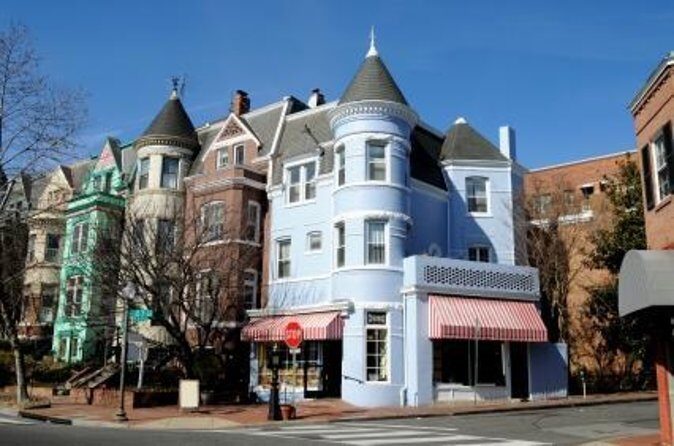
- Pomander Walk and Cady’s Alley bring you into quieter, more storybook-feeling Georgetown streets
- Georgetown University landmarks like Healy Hall and the University Library, plus The Tombs
- Renovated Car Barn and the Georgetown Waterfront Park finish the walk by the Potomac
Starting at Baked & Wired: a local-friendly kickoff
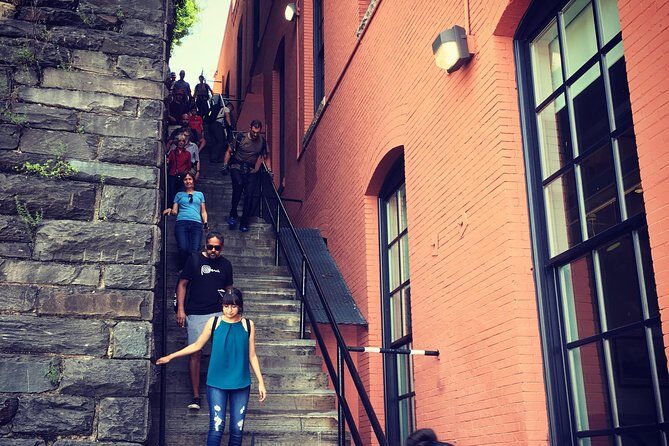
This tour begins at Baked & Wired (1052 Thomas Jefferson St NW), right in the middle of Georgetown life. The idea is simple: grab a quick snack if you want, then get moving with your guide and a small group (up to 20 people). The start time is 10:00 am, and it helps to arrive a few minutes early so you’re not doing a frantic coffee sprint.
What makes this setup work is that you’re not just jumping from one “sight” to the next. You’re getting an early orientation to how Georgetown feels on a normal morning. And since the tour is fully narrated and offered in English, you’ll have a running thread connecting the architecture, the people, and the places you’re seeing.
Also, you’ll use a mobile ticket, and the stops are near public transportation. If you’re the type who likes to pair a walk with a relaxed coffee afterward, this is a good match.
You can also read our reviews of more walking tours in Washington DC



The C&O Canal overview: why Georgetown got built where it did
Soon after meeting, you’ll be oriented toward the Chesapeake & Ohio Canal, the waterway that connected Potomac River communities with markets and goods. Even if your main interest is buildings, this canal context helps you read the neighborhood better.
Here’s the practical value: the canal explains why Georgetown mattered early on, and why the streets and institutions that come later feel so tied to trade, movement, and wealth. Your guide sets the stage, and then the walk becomes more than a photo tour. You start noticing how the neighborhood’s story keeps returning to the same themes: commerce, power, and the people who had enough money to shape the built environment.
You’re also looking at Georgetown in layers. The C&O Canal area sets up the “old working landscape” feeling before you shift toward homes, churches, and university buildings.
Old Stone House: the short stop that changes how you see DC
One of the most satisfying moments on the route is the Old Stone House, where you can peek inside Washington, DC’s oldest building. The stop is brief, but it lands. A lot of people walk past historic structures without context; this one gives you a tangible sense of the past, right when the tour is still building momentum.
Why I think this matters: once you step into a structure like the Old Stone House, later sights hit differently. A big mansion, a church, even a campus building all feel like they belong to a longer story, not just a collection of pretty stops.
This is also one of the easiest “win” moments of the day. The time is tight (about 5 minutes) and the admission is free.
Francis Scott Key Memorial Park: cobblestones, big names, and side stories
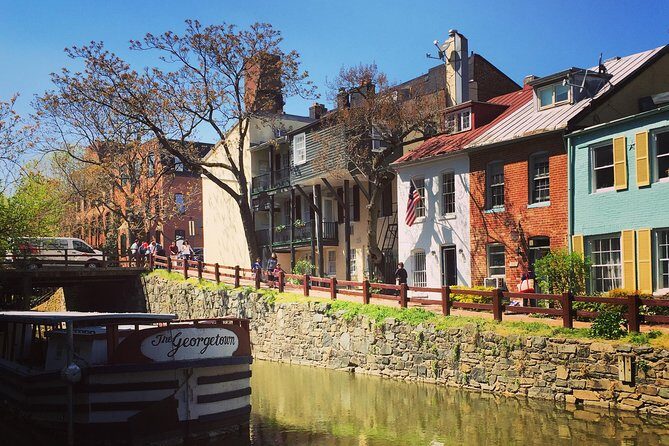
From the Old Stone House area, the tour shifts into Francis Scott Key Memorial Park, with a stroll along cobblestone streets. This is where the tour leans into Georgetown’s reputation as a place of high society—and the twists that come with it.
You’ll hear and see references connected to Jackie Kennedy and Ben Bradley, plus imposing mansions and stately churches. Your guide also points out a formerly salacious establishment—exactly the kind of contrast that makes architecture feel alive, not sanitized.
There’s also a practical geographic shift here. You cross Wisconsin Avenue to the west side of town. That matters because Georgetown doesn’t feel the same across its whole footprint. The move helps you understand how the neighborhood is organized, and it sets up what’s next: houses, schools, and eventually the university core.
Houses, churches, and the story behind Georgetown’s “in-between” streets
As you continue, the tour becomes a sequence of architectural snapshots linked by people and purpose. You’ll pass or stop near a cluster of notable homes and institutions, including the Laird-Dunlop House and the Newton D. Baker House.
Then the walk turns into a lesson on education and class, with the Lydia English Seminary School for Girls, a boarding school that served the upper class. Even if you’re not usually a school-history person, it’s one of the most useful stops for understanding why Georgetown looks the way it does: powerful communities built institutions that reinforced their social position.
You’ll also see the Grafton Tyler Double House and Christ Episcopal Church, plus the Hyde-Addison School. This mix of domestic architecture and formal institutions gives you a clearer sense of Georgetown as a working social system, not just a scenic postcard.
And when you reach Yellow Tavern, also called the White Horse Tavern, you get another layer of Georgetown life. Taverns were social hubs, and that’s where stories often gather. The tour uses it like a narrative pivot: you move from “who lived here” to “how communities interacted.”
You can also read our reviews of more historical tours in Washington DC






Pomander Walk and Volta Laboratory: pastel streets meet inventor energy
Two of the most fun sections for walking vibes are Pomander Walk and the route to Volta Laboratory.
Pomander Walk is one of those places that feels tucked away. Past you’ll find tiny, pastel-hued row houses, and it’s exactly the kind of street that makes Georgetown feel charming even when you’re not hunting for photos. If you like “quiet corners,” this is where your pace naturally slows.
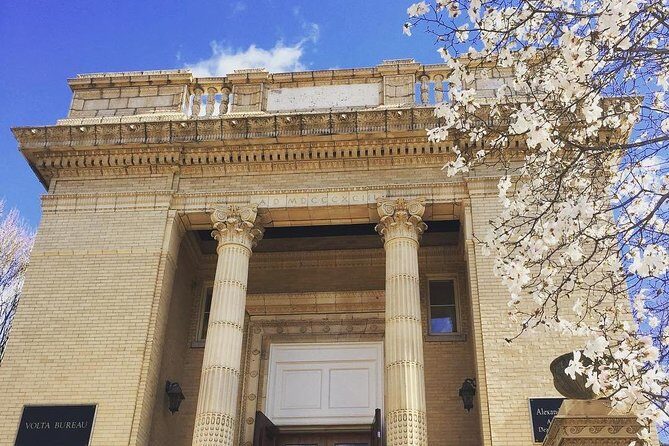
Then comes Volta Laboratory, where Alexander Graham Bell founded the lab. This stop is a reminder that Georgetown isn’t only about old buildings and old money. It also connects to science and innovation, and your guide weaves that into the surrounding academic environment you’ll see next.
It’s a nice shift in tone. You start with canal and early buildings, move through big names and institutions, then land in a science story before heading back into university territory.
Georgetown University landmarks: Healy Hall, the library, and The Tombs at night
A big reason this tour works for first-timers is how it threads through Georgetown University without turning into a campus lecture. You’ll see Georgetown Preparatory School, Healy Hall, and the University Library along the way.
These stops give you practical orientation: you learn what’s central, what’s ceremonial, and what feels like the campus heart. And because the tour is narrated start-to-finish, the buildings aren’t random. They’re connected to Georgetown’s identity.
One of the more interesting additions is The Tombs, discussed as a place tied to campus nightlife. Even if you’re visiting during the day, you get a sense of where student life gathers after hours. It keeps the tour from feeling like history is stuck in glass.
And as you move through these academic stops, you’ll also notice how the earlier architectural themes keep reappearing: power, education, and community institutions built into the fabric of the neighborhood.
Car Barn and the waterfront finish: streetcars to the Potomac’s edge
Near the end, you’ll encounter Georgetown Car Barn, a renovated streetcar depot. This is a strong closing theme because it links Georgetown’s earlier movement of people and goods to the modern city you see today. Even if you’ve never thought much about streetcars before, this stop gives you something concrete to picture: infrastructure that helped the city function.
Finally, the tour ends around Francis Scott Key Memorial, Cady’s Alley, and the Georgetown Waterfront Park. Ending at the waterfront works because it’s a visual release. After a concentrated run of buildings, churches, campuses, and alleys, you get a broader view over the Potomac. It’s a satisfying place to land, especially since the tour concludes right where the earlier canal story connects to the river.
Price and logistics: is $48 worth it for this 2-hour format?
At $48 per person for about 2 hours, I think the value is strong if you want a guided route that covers a lot of ground with meaning attached. You’re not just paying for movement; you’re paying for narration that links the stops into one storyline.
A few value signals stand out:
- Small group size (max 20), which keeps the experience from feeling like a rushed parade
- Local guide leadership throughout
- Mobile ticket and a clear meetup point at Baked & Wired
- An early free admission moment at the Old Stone House
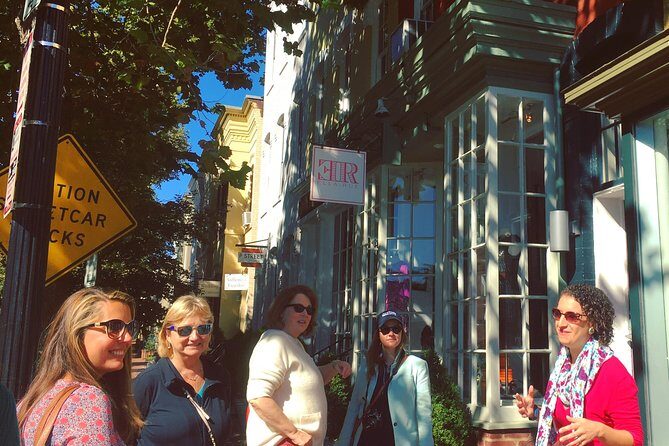
The only “consideration” is physical effort. The route is about 2 miles and includes hills, stairs, and a section called the Exorcist Steps (you’ll head down toward the Potomac as the walk comes toward the end). If you have limited mobility or you dislike stairs, this may feel harder than the distance suggests.
Who should book this tour, and who might want a different plan
I’d especially recommend this if you:
- Want an easy way to learn Georgetown quickly, without studying maps
- Like history tied to specific buildings (houses, schools, churches, campus landmarks)
- Enjoy stories that mix big names with smaller, street-level details like Pomander Walk and Cady’s Alley
- Are traveling with middle-school age kids or older who can handle a narrated walking pace
It’s less ideal if you want a silent “just show me the sights” stroll. This is built for listening. It’s also best for you if you’re comfortable with moderate walking fitness, since the tour includes stair sections.
Should you book this Historic Georgetown Architectural Walking Tour?
If you want Georgetown in a single morning-shaped experience, I’d book it. The mix of Old Stone House, canal context, tavern-era storytelling, and Georgetown University landmarks gives you more than one kind of sightseeing. You also get a strong end cap at the Georgetown Waterfront, which helps the whole day feel complete.
Book it if you like guided structure and you’re happy to walk about 2 miles. Skip it only if you’d rather go at your own pace without stairs or narration.
FAQ
What is the duration of the Historic Georgetown Architectural Walking Tour?
The tour runs for about 2 hours.
How far will I walk during the tour?
Plan on walking about 2 miles (3.2 km) during the 2-hour experience.
How much does the tour cost?
The price is $48.00 per person.
Where do I meet the guide?
You meet at Baked & Wired, 1052 Thomas Jefferson St NW, Washington, DC 20007.
What time does the tour start?
The start time is 10:00 am.
Where does the tour end?
The tour ends at Georgetown Waterfront Park, 3303 Water St NW, Washington, DC 20007.
Is the tour narrated, and what language is it in?
Yes, it is fully narrated, and it is offered in English.
Is there a limit on group size?
Yes. The tour has a maximum of 20 travelers.
Is admission included for any stops?
The Old Stone House stop includes a free admission ticket for that segment.
Is the tour suitable for people with mobility limitations?
The tour notes moderate physical fitness is recommended, and it includes walking and stair sections.
Are service animals allowed?
Yes, service animals are allowed.
If you want, tell me what day you’re visiting and whether you prefer fewer hills or more museums, and I’ll suggest a simple before-and-after plan around this 10:00 am start.