REVIEW · CAPITOL & LIBRARY OF CONGRESS
Washington, D.C.: U.S. Capitol & Monuments Walking Tour
Book on GetYourGuide →Operated by The Daily Trips · Bookable on GetYourGuide
Capitol Hill turns politics into a stroll. I loved the Library of Congress interior and how guides like Jeff keep the history clear, fun, and easy to follow in a small group of up to 10. One possible drawback: the tour isn’t suitable for wheelchair users, and one guide named Ricardo was criticized for injecting extreme political opinions.
This tour is built for first-timers who want the big moments without feeling lost. You’ll start in front of the Library of Congress, head out to major monuments, and finish with standout views like the U.S. Capitol Dome for prime photos.
Wear comfortable shoes, bring water, and plan to use your camera. The pace is active for 2 hours, but that’s also why the explanations land fast and you feel like you learned the place, not just walked through it.
In This Review
- Key highlights worth your time
- Starting at the Library of Congress: the smartest place to begin
- The equestrian statue of Ulysses S. Grant and the Civil War-to-Presidency connection
- Peace Monument symbolism: unity and sacrifice in naval-hero form
- The Garfield Monument: a presidency cut short and reforms that survived
- Outside the U.S. Capitol and Supreme Court: neoclassical power you can read
- Around the Capitol grounds: getting the dome views you’ll remember
- Inside the Thomas Jefferson Building: Gutenberg Bible and Declaration draft moments
- Price value and what to expect from the 2-hour pace
- Should you book this Capitol Hill and Library of Congress tour?
- FAQ
- How long is the walking tour?
- Where does the tour meet?
- Is entry inside the Library of Congress included?
- What are the main stops on the tour?
- What should I bring?
- Is this tour wheelchair accessible?
Key highlights worth your time
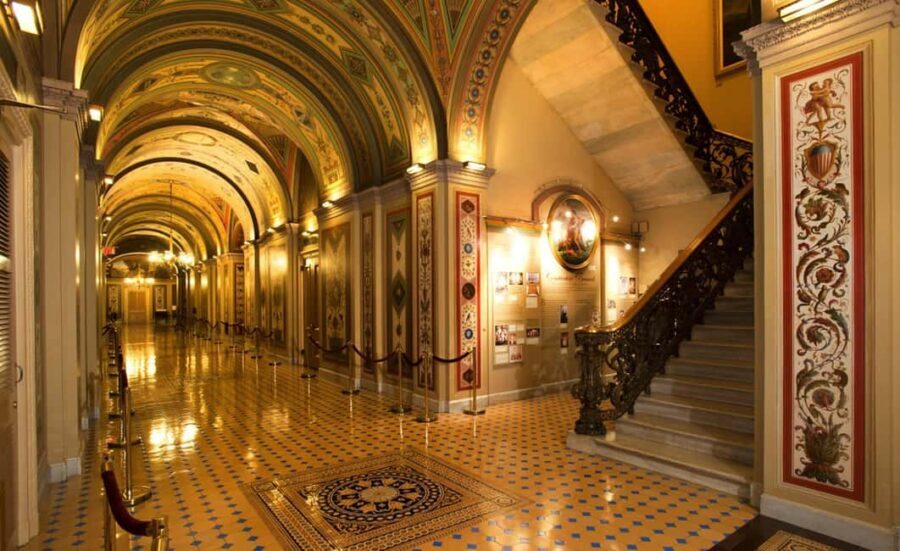
- Capitol Hill + government icons, linked by stories: Grant, Peace Monument, Garfield, Capitol, Supreme Court, and the Library of Congress.
- Entry inside the Thomas Jefferson Building: you’re not stuck outside looking in.
- Rare-document moments: you may see an original Gutenberg Bible and a draft of the Declaration of Independence.
- Photo opportunities built in: Capitol Dome backdrops and other ideal monument angles.
- Guides can make it light and lively: Jeff is repeatedly singled out for patience, enthusiasm, and clear explanations.
- 2 hours hits the essentials: great for a tight schedule, with less time to roam on your own afterward.
Starting at the Library of Congress: the smartest place to begin
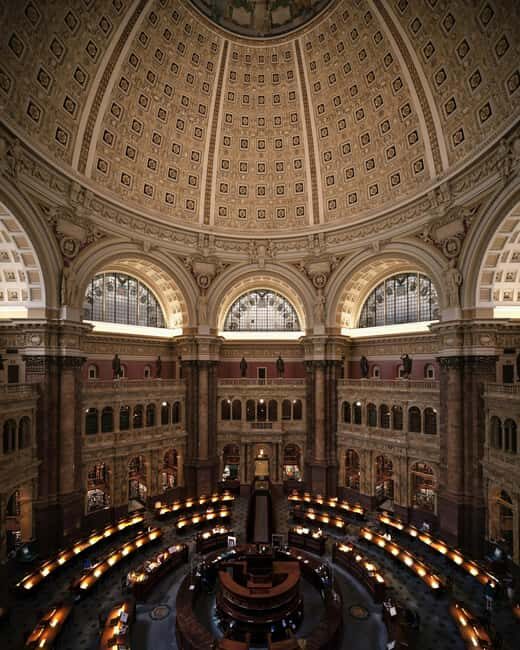
Meeting in front of the Library of Congress is more useful than it sounds. You start with the city’s brain, not its crown. That matters because once you’re inside later, you’ll understand what you’re looking at: the Library isn’t just a building. It’s a working symbol of national knowledge—paired with the government buildings you’ll see on foot.
On this walking tour, you’re introduced to the overall route before you break into the monuments. Then you head out from that landmark base to the Capitol area, where the architecture shifts from civic grandeur to classical “explanation by stone.” The guide’s job is to translate what you see into why it exists.
This is also where you’ll set yourself up for the best photos. Before the crowds and angles get chaotic, you’ll get a sense of where the Capitol Dome will come into view and how to frame it. With your camera out early, you waste less time later.
You can also read our reviews of more walking tours in Washington Dc



The equestrian statue of Ulysses S. Grant and the Civil War-to-Presidency connection
The tour begins at the equestrian statue of General Ulysses S. Grant, positioned before the U.S. Capitol Reflecting Pool area. This is a strong opener because Grant is both a Civil War leader and a president. The guide’s stories make that double role feel real instead of like a name on a plaque.
Grant’s statue is one of those scenes that tells you instantly this is the center of power—then the tour slows down to tell you what that power cost. You’ll hear about his Civil War leadership and his presidency, which helps you connect the monument to the national turn from battlefield command to political responsibility.
And yes, it’s also a great “Washington postcard” moment. If you’re the type who likes photos that actually match what you learned, this stop does that well: you’re not just taking a picture of bronze. You’re photographing a theme.
Peace Monument symbolism: unity and sacrifice in naval-hero form

A short walk takes you to the Peace Monument, dedicated to naval heroes of the Civil War. Even if you’re not a Civil War superfan, this stop works because it teaches you how monuments communicate without words—through allegorical figures and symbolism.
You’ll learn how those figures are meant to represent national unity and sacrifice. That’s the kind of detail that makes a monument feel less like decoration and more like a message written in stone. It also helps explain why the Capitol area is full of memorial art: Washington is designed to remind you, repeatedly, what the nation believes it endured.
This is one of those stops where I think comfortable shoes matter. You’ll want a few minutes to look around instead of just passing through. Give yourself that moment, and the symbolism clicks faster.
The Garfield Monument: a presidency cut short and reforms that survived
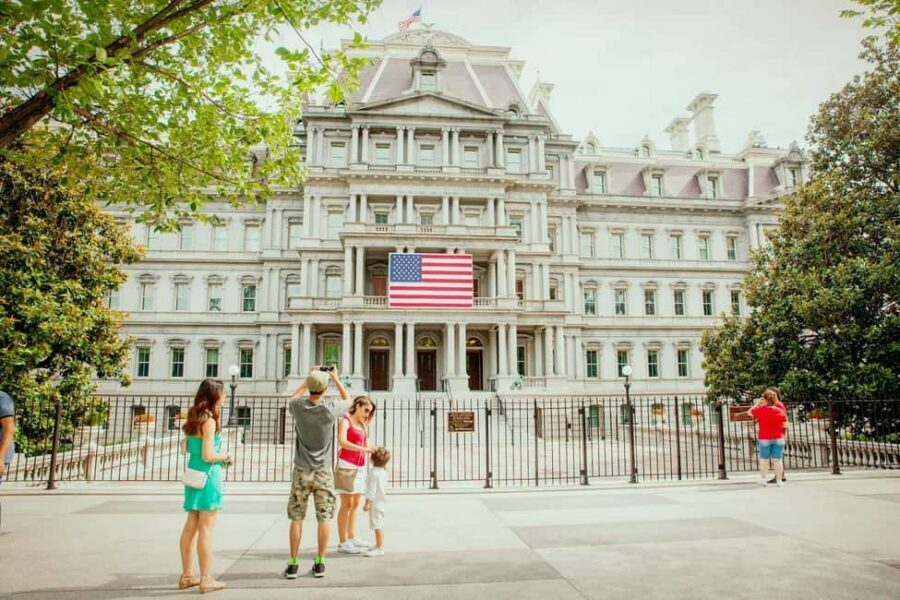
Next up is the Garfield Monument, honoring the 20th U.S. president, who was assassinated just months into his term. This is a heavy subject, but the tour format helps keep it grounded and understandable.
What I like about this stop is the way it moves beyond tragedy. You’ll hear about Garfield’s legacy and how his presidency shaped future reforms. That’s important because it prevents the story from ending at a single violent headline.
If your goal is to see what “history” actually means at these sites—how one event connects to policy and future change—this is the stop that delivers that link.
It’s also a good mental reset. You’ve just been in Civil War territory with Grant and the naval memorial. Garfield brings the story into the postwar federal government and the personal fragility of political leadership.
Outside the U.S. Capitol and Supreme Court: neoclassical power you can read
Then you pause outside the U.S. Capitol, the heart of the legislative branch. The guide points out the neoclassical architecture and what it’s trying to project—order, stability, and authority.
This is also where you get practical context: you’ll learn about the Capitol’s role in American government and historic events that have taken place within its halls. Even though you’re outside, the narration helps you imagine the inside function. That makes the building more than a backdrop.
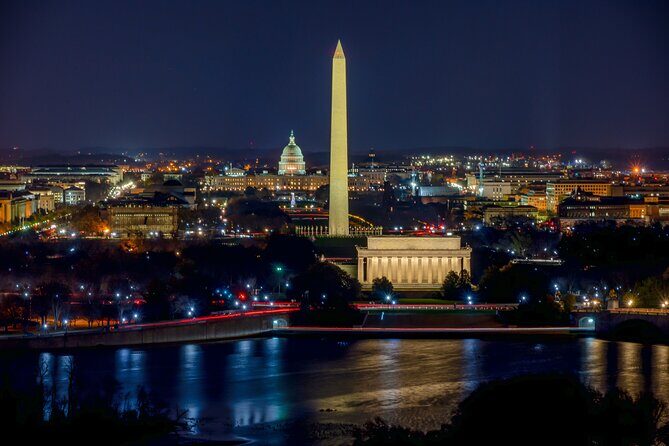
There’s also a prime photo opportunity with the Capitol Dome as your backdrop. Do yourself a favor and actually look up and take in the dome from the angle your guide shows you. It’s one of those views that feels simple until you realize that Washington’s monument sightlines are engineered. You’ll walk into the design instead of only seeing it.
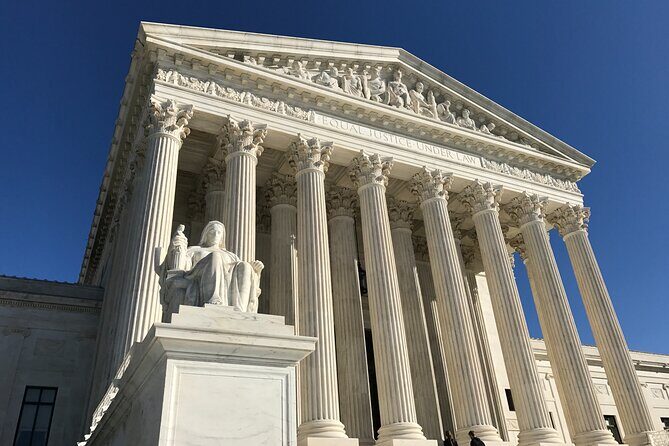
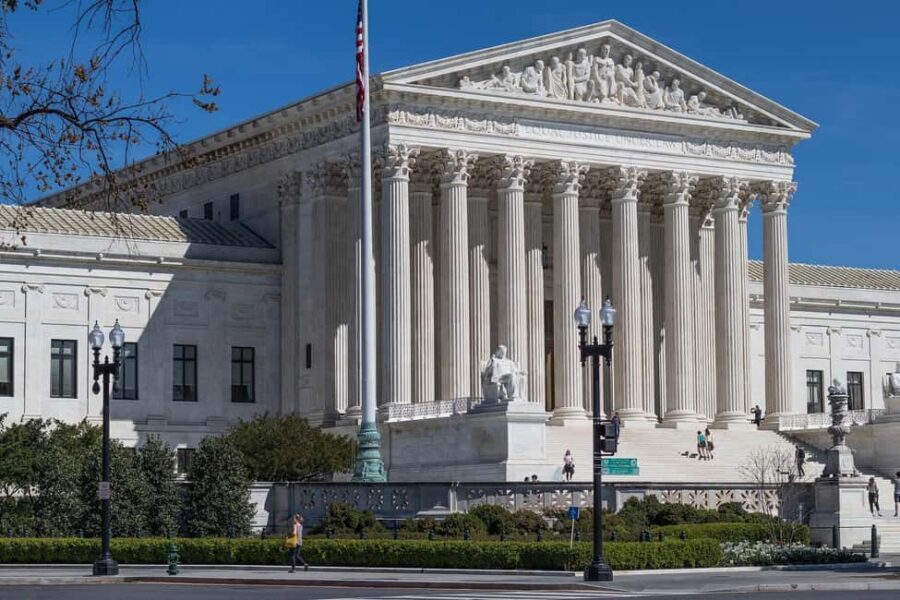
After that, you stand before the grand neoclassical Supreme Court building. Landmark cases are decided here, and the tour connects the architecture to the institution’s weight in real life. Again, the benefit is not just what the building looks like. It’s what the place does—and how that role shapes the country’s legal direction.
If you’re visiting Washington for the first time, this section is the fastest way to build mental map skills. After it, you won’t feel like you’re seeing random famous buildings. You’ll feel like you’re walking through a system.






Around the Capitol grounds: getting the dome views you’ll remember
Between the building stops, you’ll stroll around the Capitol grounds and take in breathtaking views of the iconic dome. This part matters more than it sounds. It’s where your brain absorbs scale and placement.
The dome is visually dominant, but it changes depending on where you stand. On a guided walk, you’re not wandering blindly—you’re getting “look here” moments tied to the stories the guide is telling.
I like this pacing because it prevents the tour from feeling like a race. You learn, then you reset with a view, then you learn again.
If you’re a photographer, use this time. Don’t only shoot the big dome shot. Also capture smaller courthouse-and-statue relationships in the frame, because that’s what makes your Washington photos feel like more than postcards.
Inside the Thomas Jefferson Building: Gutenberg Bible and Declaration draft moments

The highlight for many people is stepping inside the Thomas Jefferson Building of the Library of Congress. Here’s where the tour turns from outside monuments into something you’d struggle to appreciate without context.
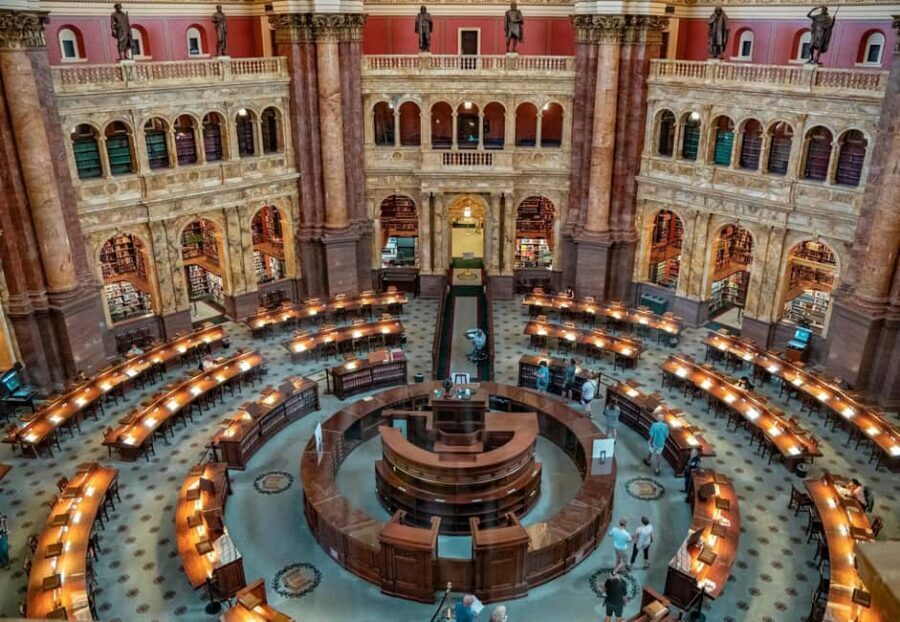
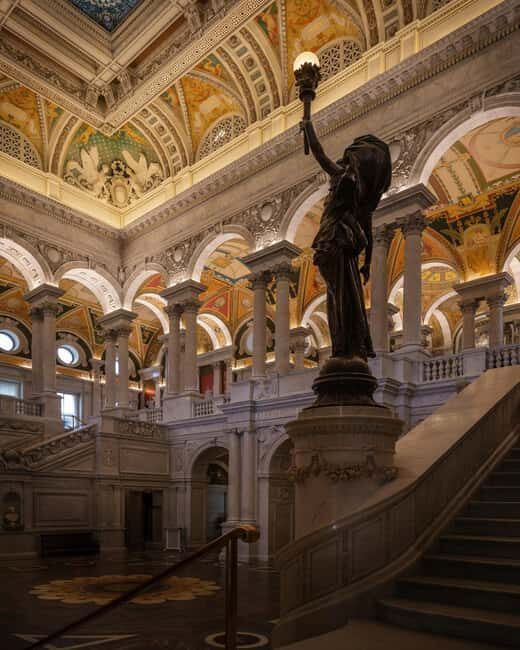
You’ll see the stunning interior of the Thomas Jefferson Building and explore historic exhibits. This is where the building earns its reputation. You’re surrounded by an atmosphere built for wonder and focus, and it feels different from the civic seriousness outside.
The tour includes mentions of rare documents, including an original Gutenberg Bible and a draft of the Declaration of Independence. Even if you’ve seen photos before, seeing these items or their exhibit context in person can be a real jolt. It reframes the Capitol area from a place where laws are enforced into a place where ideas were recorded, preserved, and argued over long before modern government looked the way it does.
A guide helps you connect the dots, too. With the monument stories you heard earlier—Grant, naval sacrifice, Garfield’s reforms—you start to see how the Library fits. It’s not just a tourist stop. It’s a storage room for the nation’s memory.
And don’t ignore the group photo opportunities included in the experience. It’s easy to forget to take photos when you’re staring at details. These built-in breaks keep you from rushing past the best spots.
Price value and what to expect from the 2-hour pace
The price is $56 per person for a 2-hour small-group walking tour with a professional guide, entry inside the Library of Congress (Thomas Jefferson Building), and guided historical insights. If you compare that to paying for a guide plus separate entry, the value comes from the storytelling and the Library access included in your time budget.
You’re also limited to 10 participants, which changes the experience. In a small group, the guide can pace explanations and keep everyone oriented. That’s a big deal when you’re walking through an area where it’s easy to lose the plot.
Still, manage expectations: you won’t linger for long at every stop. This is designed to cover the essentials—Capitol-area monuments plus one major interior space—so you leave with the big picture. If you want a slower, longer museum-style visit, you’ll probably want to come back after.
What to bring is simple but important:
- Comfortable shoes for the walking
- Camera for the Capitol Dome and monument angles
- Water, because you’ll be outside moving between stops
Food and beverages aren’t included, so plan to eat before or after. The tour also runs in English with a live guide, which is ideal if you want real-time questions rather than reading off a screen.
One more practical note: wheelchair users aren’t accommodated, so if mobility is an issue, look for a different format.
Should you book this Capitol Hill and Library of Congress tour?

Book this if you want an efficient, guided way to understand Washington’s “three-branch” feeling—the Capitol, the Supreme Court, and the Library’s role as a keeper of documents and ideas. I also think it’s a strong choice if you like monuments but want the symbolism and timelines explained, not just pointed out.
It’s especially worth it when a guide like Jeff is on the route. The consistent praise for Jeff includes being patient, taking time to explain, and making the information feel light rather than heavy. That’s the difference between a tour where you hear facts and a tour where you actually remember them.
Skip it if you can’t do walking, since it’s not suitable for wheelchair users and the schedule involves enough movement that comfortable shoes matter. Also consider your personal tolerance for political talk. One guide named Ricardo was criticized for inserting extreme political opinions, so if that’s a dealbreaker for you, it’s smart to choose your approach carefully and keep expectations realistic.
If you’re here for a short stay, this tour gives you the Capitol area’s core story in one tidy 2-hour loop—plus the inside-the-Library wow factor that’s hard to replicate on your own.
FAQ
How long is the walking tour?
The tour lasts 2 hours.
Where does the tour meet?
The meeting point is in front of the Library of Congress.
Is entry inside the Library of Congress included?
Yes. Entry inside the Library of Congress (Thomas Jefferson Building) is included.
What are the main stops on the tour?
You’ll see the U.S. Capitol, the Supreme Court, the Library of Congress, and memorials such as the Grant equestrian statue, the Peace Monument, and the Garfield Monument.
What should I bring?
Bring comfortable shoes, a camera, and water.
Is this tour wheelchair accessible?
No, it is not suitable for wheelchair users.