REVIEW · TOUR REVIEWS
Extended Monuments & Memorials Tour
Book on Viator →Operated by Adventure DC Tricycle Tours · Bookable on Viator
A pedicab cuts the slog fast. I love that you get a private, tailored ride that still hits the key stops on the National Mall with guide commentary for context, not just photos. The one thing to plan around: this tour really depends on good weather, and you’ll be outside a lot.
You also get a smoother start than most DIY days. Pickup is available at many spots within about a mile of the White House, and the tour is designed for your group only, so you can linger when something catches your eye. My advice is to wear layers and expect a tight, half-day route that packs a lot in, especially if you want to see several monuments up close rather than only from afar.
In This Review
- Key highlights that make this tour work
- Why a private pedicab tour beats walking the Mall
- Pickup within a mile of the White House keeps your day from shrinking
- From Jefferson to the Washington Monument: the Mall’s big-name starter set
- The National Mall’s memorial chain: Hamilton to George Mason to the Three Servicemen
- The Tidal Basin vibe: Declaration signers, MLK, vets, and Lincoln
- Franklin Roosevelt and the WWII Memorial: sweeping views in short stops
- Capitol-edge sights: Navy, historic buildings, and the art-and-government mix
- Grant, Garfield, and the Botanic Garden: finishing with statues that frame the Mall
- Cost and value: $997 for up to 3 people can be smart math
- Who this tour fits best (and who might want a different plan)
- Should you book the Extended Monuments & Memorials Tour?
- FAQ
- How long is the Extended Monuments & Memorials Tour?
- What is the group size for this private tour?
- Is pickup available?
- Do I need to buy tickets for the stops?
- Is this tour mainly outdoors?
- What happens if the weather is bad?
Key highlights that make this tour work
- Private-only group time: you won’t be squeezed into someone else’s schedule
- Pedicab pace: you cover a big chunk of the Mall without marathon walking
- From afar and up close stops: you can choose what feels worth the extra minutes
- Guide-led storytelling: short commentary turns the stone landmarks into a clear timeline
- Photo-friendly flexibility: you can ask for stops and picture moments without feeling rushed
Why a private pedicab tour beats walking the Mall
The National Mall is gorgeous, but it can also be a test of stamina. This tour’s core idea is simple: let a pedicab do the heavy lifting while your guide keeps the day organized and interesting.
What I like is how that changes the feel of sightseeing. Instead of bouncing between stops hoping you’ll remember what you saw, you get a steady flow: pause, look, listen, then move on. The ride also helps if you’re traveling with teens, parents, or anyone who prefers a slower pace without giving up the big-ticket sights.
You’re still outdoors most of the time, so you’ll want to think like a local: plan for sun or rain, keep water handy, and wear comfortable shoes even though the pedicab does the main work. In colder or rainy weather, a rain cover is something the guide may bring, which can make the whole experience feel easier.
You can also read our reviews of more tours and experiences in Washington DC.



Pickup within a mile of the White House keeps your day from shrinking

A lot of DC tours start with a “meet at this random landmark” moment. Here, pickup is offered at many museums, downtown restaurants, and attractions—generally within about a mile of the White House. Hotels not listed are often included too if they’re within about a mile.
That matters more than it sounds. If you’re staying downtown, you can save time and hassle, which means you’re more likely to spend your energy on the monuments, not on navigating cross-town routes. The tour also uses a mobile ticket, which keeps things low-fuss.
It’s a private tour/activity, so only your group participates. That’s a big deal if you want photo stops, small schedule changes, or a more conversational guide pace rather than a rigid checklist.
From Jefferson to the Washington Monument: the Mall’s big-name starter set

The timing is built for momentum, with short viewing windows at each stop. The tour starts at the Jefferson Memorial, where you first view it from afar and then have the option to see it up close. Even with a short visit, the back-and-forth approach helps you get orientation fast, then decide if you want more time at the water-facing views.
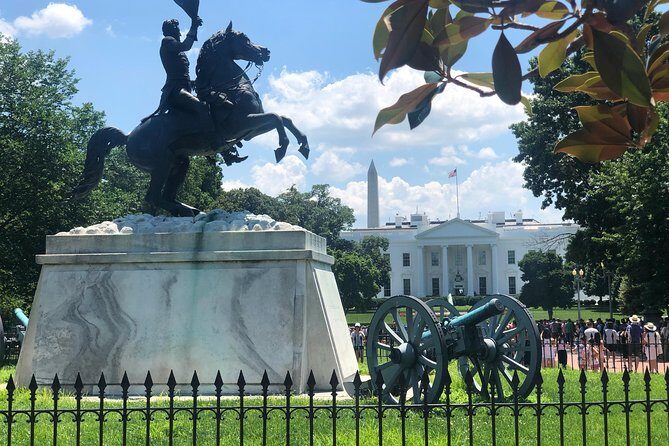
Next comes the White House. You’ll likely see it from afar and have a chance to get a closer look too, depending on what fits best. One extra layer that can make this stop memorable is rooftop access near the White House that has been available on at least some outings, giving an elevated perspective for photos and skyline context. That’s not something you should plan your entire day around, but it’s a bonus if it’s offered.
Then you’ll roll past the United States Department of the Treasury, including a statue of Alexander Hamilton. This is the kind of quick stop where a guide’s commentary matters. Without context, you’d just be looking at a dramatic building. With commentary, the architecture and symbolism become part of the story.
After that, you get the Washington Monument, with time to talk about the monument’s building and history. You’ll be close enough to really register scale, but the main value is that your guide can tie it to the broader National Mall layout so the rest of the stops make sense.
The National Mall’s memorial chain: Hamilton to George Mason to the Three Servicemen
After the early hits, the route leans into memorials and statues that don’t always get your full attention when you’re touring on your own.
You’ll pause for the Three Servicemen Statue, a stop designed for both overview and up-close viewing. Next is the William Tecumseh Sherman Monument, where you’ll hear a bit about Sherman. Then you’ll move to the George Mason Memorial, often framed as the Forgotten Founder. That label is a clue for how you’ll get value out of this stop: it’s not just a name on a map. It’s a chance to learn why certain figures matter to the story of the United States, even if they’re less famous than others.
You also get a look at the InterContinental the Willard Washington D.C. by IHG. Even though it’s a hotel, it’s a stop that helps the day feel grounded in real DC streets, not only museum-style landmarks. Nearby, you’ll also point out the Holocaust Memorial Museum, plus the Smithsonian Castle as you pass along the Mall corridor.
There’s also a stop focused on the Department of Commerce as you view the building, plus quick orientation points as the route keeps moving. If you like short, frequent context moments rather than long museum time, this format fits.
The Tidal Basin vibe: Declaration signers, MLK, vets, and Lincoln
The middle stretch is where the tour feels most emotionally powerful, mostly because you move between monuments that represent different eras of American history.
You’ll see the 56 Signers of the Declaration of Independence Memorial, starting from afar and then having time to go closer if you want. That pattern repeats throughout the tour: look once for orientation, then choose how much up-close time is worth it.
After that, the Martin Luther King, Jr. Memorial comes next. You’ll view it from afar and then can see it closer, with enough time to read and absorb key details before moving on. Next comes the Korean War Veterans Memorial, then Lincoln Memorial.
Lincoln is one of those stops where scale alone can hit you. With the tour format, you’re not just rushing to the iconic photo—you get a guided way to understand what you’re seeing in the context of the Mall’s overall arc.
Then you’ll continue to the Vietnam Veterans Memorial, again with time to see it from afar and then up close. Finally, you’ll get a stop for Albert Einstein Memorial. There’s a fun extra here: you can climb on the statue, and there’s a popular lore about touching his nose for good luck or getting smarter. It’s lighthearted, but it also makes the memorial feel less like a somber checkpoint and more like a place where people interact with history in their own way.
The tour also includes narration about the history and status of the Tidal Basin. Even if you’re not studying engineering or landscape design, that kind of quick explanation helps you understand why the waterline and surrounding monuments create such a distinctive DC mood.






Franklin Roosevelt and the WWII Memorial: sweeping views in short stops

Next comes the Franklin Delano Roosevelt Memorial, first with an overview view. You’ll then have a bit more time to take it in as the route shifts. The key here is pacing: you’re not asked to “complete” the memorial like it’s a checklist, but you’ll still have enough minutes to feel the design and symbolism.
After that, the National World War II Memorial is another from-afar-to-up-close stop. That means you get both the big picture and a chance to slow down enough to notice what’s there. For me, that’s the sweet spot on a day like this: you keep moving, but you don’t skip the details that make a memorial stick with you.
Then you’ll roll toward the John Paul Jones Memorial, where you’ll view it from afar. It’s a shorter stop by design, but the ride keeps the day from feeling like you’re constantly hopping in and out of cars.
Capitol-edge sights: Navy, historic buildings, and the art-and-government mix

Later in the tour, you start mixing memorials with institutional DC landmarks, which is a nice change of pace if you’ve spent the morning only focused on monuments.
You’ll view the United States Navy Memorial and the Naval Heritage Center, where the mission centers on honoring and recognizing service members across generations. The tour gives you time to take that in, even if you’re only seeing it from outside.
Then comes a point for the Newseum, described as a dynamic, engaging, interactive news museum. You’ll also get quick stops for other culturally oriented landmarks as you pass, including a memorial honoring George Meade, plus a national art museum as part of the route.
Next, you’ll see the Peace Monument, also known as the Naval Monument or Civil War Sailors Monument, located on the grounds of the United States Capitol in Peace Circle. You’ll then pass through the West Side on the way to the home of the U.S. Congress, so the route shifts from memorials to the political heart of the country.
You’ll also get views connected to the historical buildings around this area, including one stop that highlights a building tied to the Declaration of Independence, the Constitution, the Bill of Rights, the Emancipation Proclamation, the Louisiana Purchase, and one copy of the Magna Carta. The tour data also notes a current context where the area is associated with the Trump International Hotel. This part of the tour is mainly about guiding your attention: where you’re looking and why that specific site matters.
After that, you’ll pass headquarters for the Federal Bureau of Investigation. Then you’ll see the Peace Circle again in the context of the Capitol area as the tour continues toward more statues.
Grant, Garfield, and the Botanic Garden: finishing with statues that frame the Mall
The last stretch includes Ulysses S. Grant Memorial, with time for the details of the bronze reliefs and the flanking sculptures, plus the overall meaning of the Grant and Lincoln memorials defining the eastern and western ends of the National Mall. It’s a great way to end because it ties the route together like a finished picture.
Then you’ll see a sculptural monument to President James A. Garfield. The tour also points out the United States Botanic Garden on the grounds of the United States Capitol, plus a few additional museum pass-by moments with brief descriptions as you go.
Even if some of those final stops are quick, the route lands where it should: you leave with a clearer mental map of Washington DC’s symbolic geography, not just a stack of photos.
Cost and value: $997 for up to 3 people can be smart math
At $997 per group (up to 3), this tour isn’t cheap on paper. But for a private, guided, multi-stop route that includes pickup and a pedicab ride, the math can work out better than you’d expect if you’re traveling with family or a couple of friends.
If you book with the maximum group size, that works out to about $332 per person for roughly 4 hours 45 minutes. Even if you’re not the max number, you’re paying for time savings, guide interpretation, and a smoother sightseeing flow than DIY.
Where it becomes good value is when you care about two things:
- You want the National Mall highlights without losing half your day to walking and navigation.
- You want your time turned into learning, not just looking.
If you’re traveling solo and you’re very budget-focused, you might compare this to a hop-on-hop-off bus or free walking tour. But if your group wants a private guide and a comfortable pace, this price can feel less like a splurge and more like a practical service.
Who this tour fits best (and who might want a different plan)
This tour is a strong match for:
- Families with mixed ages who need a manageable pace
- Teenagers and first-timers who want context, not just famous names
- Anyone who likes history but gets tired of long standing lines and slow logistics
- Small groups who want a tailored day rather than a fixed schedule
It may be less ideal if:
- You hate being outdoors in changing weather
- You expect lots of indoor time at museums (this tour is built around quick external stops and short viewing windows)
- You want a slow, deep, stop-everything day at just one or two memorials
A good mindset: treat it like a fast, guided “see it all, understand it fast” loop, then pick your must-do indoor experiences later.
Should you book the Extended Monuments & Memorials Tour?
I’d book it if you want to cover a serious chunk of Washington DC in one half-day and leave with real context. The private pedicab format helps you see more without feeling wrecked, and the guide commentary is designed to turn the National Mall into a readable story.
If you’re the kind of traveler who wants to linger at just a few favorites, this tour can still work well because it’s built for flexibility within the time window. Just plan ahead for weather, dress for cool evenings or damp days, and bring the expectation that this is a quick-sequence tour rather than a slow museum day.
If that sounds like your style, the Extended Monuments & Memorials Tour is a smart way to get your bearings fast and then enjoy DC on your own terms afterward.
FAQ
How long is the Extended Monuments & Memorials Tour?
It runs about 4 hours 45 minutes.
What is the group size for this private tour?
It’s a private tour/activity where only your group participates, and the price is listed per group for up to 3 people.
Is pickup available?
Yes. Pickup is offered at many museums and downtown restaurants, and at many other attractions generally within a mile of the White House. Hotels not listed may also be included if they’re generally within a mile of the White House.
Do I need to buy tickets for the stops?
The tour listing shows admission tickets as free for the stops, and it includes a mobile ticket.
Is this tour mainly outdoors?
Yes. The route focuses on viewing monuments and memorials from both afar and up close, so you’ll be outside for long stretches.
What happens if the weather is bad?
This experience requires good weather. If it’s canceled due to poor weather, you’ll be offered a different date or a full refund.