REVIEW · TOUR REVIEWS
Embassy Row: Architecture, Mansions & International Intrigue
Book on Viator →Operated by DC by Foot · Bookable on Viator
Embassy Row hides a second world. On this 2-hour walk starting at Dupont Circle, you connect beautiful mansions with diplomats and diplomacy—all with a licensed guide keeping the stories moving.
I really like the stop-by-stop pace. Each corner adds a new layer, from the neighborhood’s origin to the way embassies took over grand old homes.
One thing to plan for: it’s a walking neighborhood route, so comfortable shoes matter, and the ending point is still in the area rather than at a single landmark.
Here are the best reasons to book it.
- Small group max of 15 keeps the questions coming
- Embassy Row mansions get explained as living architecture, not museum pieces
- Culture stops like the Saraswati statue add meaning beyond politics
- You learn how Washington’s old money spaces became diplomatic offices
- Dupont Circle to Spanish Steps gives you a satisfying finish near the start
In This Review
- Embassy Row Mansions: Why Old Wealth Became Today’s Diplomacy
- Start at Dupont Circle: A Simple 10:00 AM Plan
- Dupont Circle Fountain: Neighborhood History With Food and Shop Clues
- Embassy Row: The 30-Minute Walk Through Mansion Power
- Goddess Dewi Saraswati Statue: A Short Stop With Big Cultural Meaning
- The Society of the Cincinnati: Who Built It, and Who Inherited It
- Embassy of India and the Gandhi Statue Nearby: Diplomacy Meets Peace Symbols
- Embassy of Ireland: How Style Becomes Cultural Messaging
- Sheridan Circle and Phillip Sheridan: The Mount Rushmore Connection
- Woodrow Wilson House From Outside: The Only President Who Stayed
- Spanish Steps: A Rome-Inspired Pause Near Dupont Circle
- What You Really Get for $49: Value in Guide Time and Free Stops
- Pace, Group Size, and Questions: How the Tour Feels in Real Life
- Who This Tour Suits Best (and Who Might Want a Different Plan)
- Should You Book This Embassy Row Walk?
- FAQ
- Where is the meeting point for the Embassy Row tour?
- What time does the tour start?
- How long is the tour?
- How much does it cost?
- How big is the group?
- Is the tour in English?
- Is there an admission fee for the stops?
- Will I need to print anything?
- Is it near public transportation and are service animals allowed?
- What is the cancellation window for a full refund?
Embassy Row Mansions: Why Old Wealth Became Today’s Diplomacy
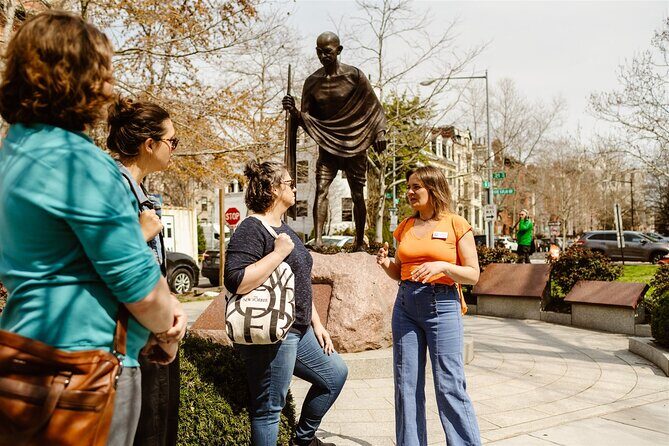
Washington’s Embassy Row looks like a postcard of classy streets. But the magic is what the buildings actually are. Many of these grand homes began as places of power and prestige, then later shifted roles as foreign missions and ambassadors’ offices moved in.
I like the way this tour treats the architecture as a clue. A mansion façade is never just a façade when the inside later becomes a diplomatic workplace. You’ll get a sense of why the details mattered to the millionaires who built these houses—and why those same spaces became useful to governments later.
And yes, the tour leans into story. One of the most praised parts is the guide’s ability to mix architecture with the political drama that tends to travel with Washington. If you enjoy a little scandal mixed with context, this is your lane.
Start at Dupont Circle: A Simple 10:00 AM Plan
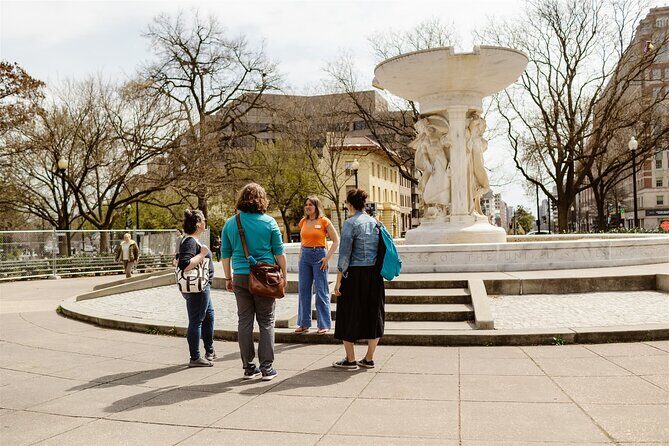
The meeting point is Dupont Circle, and the start time is 10:00 am. You’ll gather at the fountain, where the guide sets the tone with what this neighborhood became and why it mattered enough to shape so many important addresses.
This is also a practical tour for travelers who don’t want a complicated itinerary. It’s set up as a 2-hour small-group walk with a clear beginning and end back in the Dupont area. You also get a mobile ticket, and the tour is offered in English.
One more practical note: it’s described as a long-but-easy walk. That does not mean it’s a sit-and-stare tour, but it should feel manageable if you’re okay walking for a couple hours on city sidewalks.
You can also read our reviews of more tours and experiences in Washington DC.



Dupont Circle Fountain: Neighborhood History With Food and Shop Clues
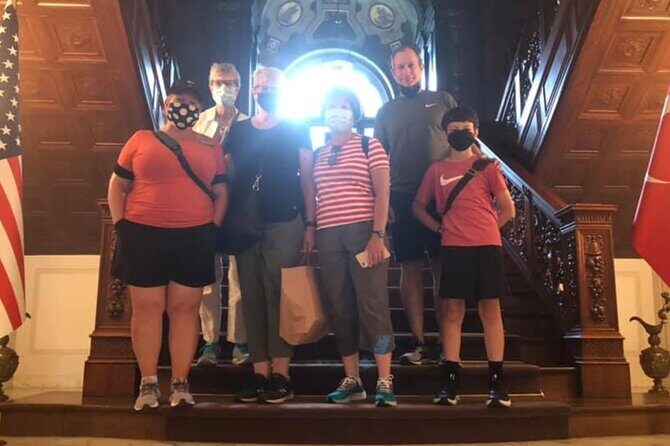
Stop 1 is the Dupont Circle fountain, and that first chunk is about history and orientation. This is where you get the baseline story for the blocks you’re about to see.
What I find useful is that the guide isn’t only lecturing. The tour also includes recommendations on where to eat or shop after the tour, which helps you turn the walking time into a real afternoon plan. Even if you’re headed to museums later, those neighborhood pointers can save time.
If you already know Dupont Circle well, the start may feel familiar. Still, even a quick orientation helps you read Embassy Row with clearer eyes.
Embassy Row: The 30-Minute Walk Through Mansion Power
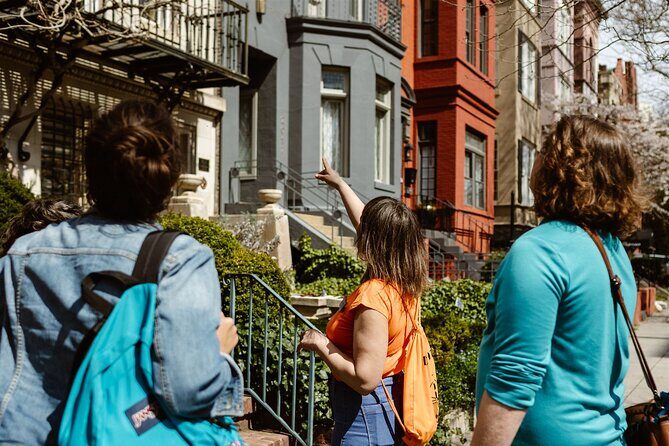
Stop 2 is the heart of the route: Embassy Row. This is where you explore the embassies along the corridor and learn about the mansions that once belonged to millionaires.
The key idea here is transformation. These weren’t built as diplomatic offices at the start. Over time, that grand residential scale became diplomatic real estate—useful because it already offered space, presence, and a built-in sense of seriousness. With the guide explaining it, you start noticing how architecture can signal status even when the occupants change.
This stop is also where the tour’s most praised storytelling usually shines. People love that it’s not only names and dates. You’ll hear how the past and present connect—plus the lighter, scandal-adjacent stories that make Washington feel like a living soap opera with good shoes.
Goddess Dewi Saraswati Statue: A Short Stop With Big Cultural Meaning
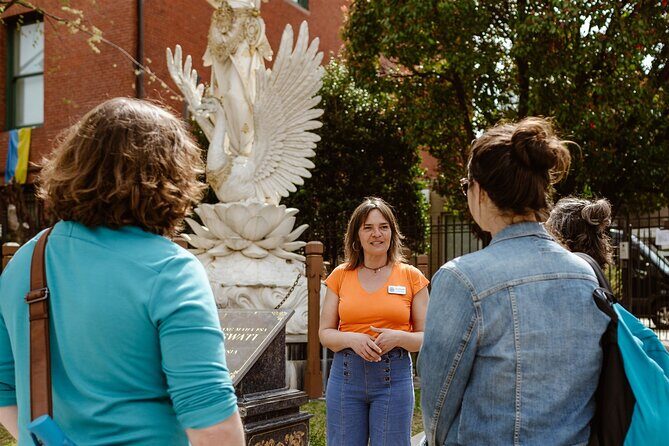
Stop 3 is the Statue of Goddess Dewi Saraswati along Embassy Row. The tour keeps this stop brief, but it gives you a clear reason it matters: Saraswati is associated with knowledge, music, and the arts.
You’ll find it surrounded by flowers and set near the Indian Embassy area. That location matters, because the message isn’t only spiritual. It’s about cultural exchange right in the middle of a diplomatic corridor.
The drawback here is also simple: it’s a quick moment. If you want a long pause for photos, you might take an extra minute on your own after the group moves on.
The Society of the Cincinnati: Who Built It, and Who Inherited It
Stop 4 brings you to The Society of the Cincinnati. This is one of the stops that helps you connect the mansion world to broader American legacy stories.
The tour focuses on the millionaires who built the home and the society who inherited it. Even if you’re not a deep-history person, the framing is easy to follow. You’re learning how private wealth and public-minded organizations can share the same physical space—then carry different meanings over time.
Because the time here is around 10 minutes, the tour won’t turn this into a full lecture. Think of it as the “why this exists” segment, delivered by a guide who keeps things moving.






Embassy of India and the Gandhi Statue Nearby: Diplomacy Meets Peace Symbols

Stop 5 is the Embassy of India. The tour describes the Indian Embassy building as a historic structure reflecting Indian heritage and cultural diplomacy, serving as a hub for strengthening Indo-US relations.
Right alongside this, the tour also points out the Gandhi statue on Massachusetts Avenue NW. The guide ties Gandhi’s legacy to peace and nonviolence, and the message lands even if you only catch it in passing.
What’s good about pairing these two is that it prevents “embassy sightseeing” from becoming just politics. You get the softer side: cultural ties, values, and symbolic diplomacy.
Since this is a short stop, you won’t get a long look at every detail. If you love architecture, you may want to circle back on your own later using what you learned from the guide.
Embassy of Ireland: How Style Becomes Cultural Messaging
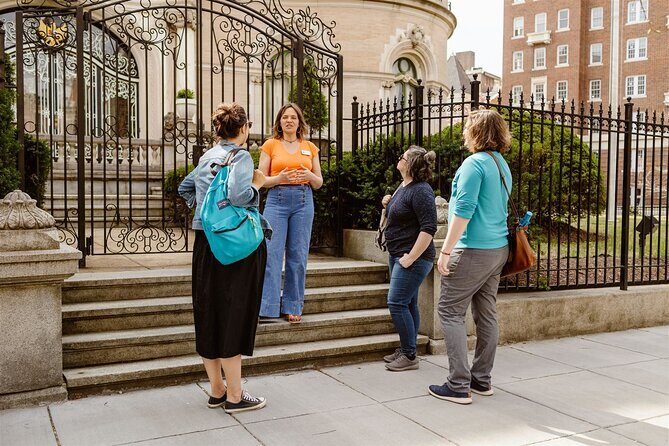
Stop 6 takes you to the Embassy of Ireland. Here, the point is the building as an elegant expression of Ireland’s history and culture, and how its location on a prominent avenue supports Irish heritage and international engagement.
This is one of those moments where you can look at the façade and start imagining how the space works once it becomes an official mission. A building can be political without saying a word. This stop teaches you to notice how.
The stop is short (around 5 minutes), so it’s best for people who like quick “taste samples” and then want to look closer on their own.
Sheridan Circle and Phillip Sheridan: The Mount Rushmore Connection

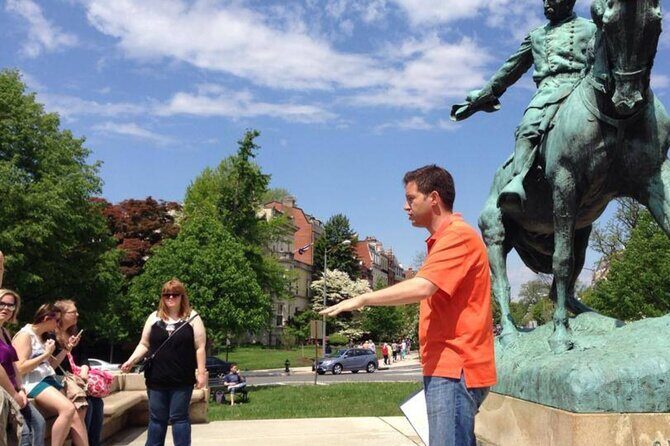
Stop 7 is Sheridan Circle Northwest, centered on an equestrian statue of Phillip Sheridan. The tour asks a fun question: how is Sheridan connected to Mount Rushmore?
Even with only 5 minutes here, the guide’s explanation is the point. This kind of stop works well when you like learning a small fact that makes a bigger national image feel less random. It’s the type of detail that makes the walk feel like more than just pretty buildings.
If you’re not into U.S. monuments, you may find this the least essential stop. Still, it’s a quick payoff and an easy way to keep the variety high.
Woodrow Wilson House From Outside: The Only President Who Stayed
Stop 8 is the President Woodrow Wilson House, discussed from the outside. The tour focuses on a specific angle: Wilson was the only president who lived in DC after his term (other than Obama now, as the tour frames it).
This is a clever stop because it connects architecture to timeline. You’re not only seeing a structure; you’re learning a particular fact that changes how you imagine the building’s meaning.
You’ll likely also appreciate the pacing. After several embassy and statue stops, this provides a more “historical person” perspective that balances out the diplomacy theme.
Spanish Steps: A Rome-Inspired Pause Near Dupont Circle
Stop 9 is the Spanish Steps, described as a picturesque urban landmark inspired by the iconic steps in Rome. The tour treats it like a brief reset—greenery, historic surroundings, and a chance to catch your breath in a part of the city that feels calmer than the streets around it.
This stop is short (around 5 minutes), but it matters because it gives the tour a natural ending beat. After two hours of “look, learn, walk,” you get a small pocket of scenery before you head out.
It also helps you mentally connect back to Dupont Circle, so you don’t feel like you vanished into another part of Washington.
What You Really Get for $49: Value in Guide Time and Free Stops
The price is $49 per person, and the tour runs about 2 hours. For DC, that lands in a reasonable range when you consider what you’re getting: a licensed professional guide plus a structured route through Embassy Row.
A big value point is that the tour’s listed stops are admission ticket free. You’re not paying extra entry fees for each sight. Instead, you’re paying for the guide’s interpretation—how all these places connect into a single story about wealth, power, and international presence.
Also, the group is capped at 15 travelers. Small groups often mean you can actually ask questions and not lose the thread every time someone needs to catch up. If you like conversation instead of passive listening, this matters.
If you hate walking tours, you might decide it’s not for you. But if you like explanations as you go, this is a pretty efficient way to cover a lot of meaningful stops without building your own route from scratch.
Pace, Group Size, and Questions: How the Tour Feels in Real Life
The walk is described as long but easy. That makes sense for a route that includes multiple short stops. You’re not trudging for hours at a slow grind; you’re moving in bursts, then stopping for stories.
One of the most repeated themes in the experience is that guides bring a strong storytelling style and handle questions comfortably. Names that come up include Becca, Tyler, Mark, Dan, Eli, and John, and the common thread is a friendly, steady delivery.
You should still keep expectations honest. The tour is only two hours. That means each stop is a snapshot. If you want deep time with one building, you’ll need to plan a return visit after.
One more practical consideration: the tour is neighborhood-based. So it may end somewhere still in the area rather than at a big, obvious attraction. If you’re trying to line up a tight schedule, I recommend planning a little flexibility after the walk.
Who This Tour Suits Best (and Who Might Want a Different Plan)
I think this tour is ideal if you like architecture, but also if you want the human story behind it. Embassy Row works best when someone explains how the spaces evolved. You’ll also enjoy it if you want a DC walk that isn’t limited to monuments and memorials.
It’s also a good fit for couples, solo travelers, and families who want an organized route without losing the chance to explore after. The small group format helps everyone stay together without feeling trapped.
If you already know Washington’s history in detail, you might crave more time at each stop or a tour with fewer stops and more depth per building. Still, even then, you may find value in the way the guide connects the dots between mansions and modern diplomacy.
Should You Book This Embassy Row Walk?
Yes—if you want a focused, story-driven walk through Embassy Row with a small-group feel. The $49 price makes the guide time feel like a good deal, especially since the tour’s stops are admission ticket free.
Skip it only if you dislike walking tours or if you’re looking for long interior access. This experience is about outside views, context, and connections—plus the guide’s ability to turn a street of mansions into something you actually understand.
If you’re in Washington for just a day or two, this is also a smart “orientation through architecture” move. You’ll leave with a clearer picture of how wealth, politics, and culture share the same real estate.
FAQ
Where is the meeting point for the Embassy Row tour?
The tour meets at Dupont Circle, Washington, DC 20036, USA at the Dupont Circle fountain.
What time does the tour start?
The start time is 10:00 am.
How long is the tour?
It lasts about 2 hours.
How much does it cost?
The price is $49.00 per person.
How big is the group?
The tour has a maximum of 15 travelers.
Is the tour in English?
Yes, it is offered in English.
Is there an admission fee for the stops?
The tour lists admission ticket free for the stops it visits.
Will I need to print anything?
No. It uses a mobile ticket.
Is it near public transportation and are service animals allowed?
It is near public transportation, and service animals are allowed. Most travelers can participate.
What is the cancellation window for a full refund?
You can cancel up to 24 hours in advance for a full refund.