REVIEW · WALKING TOURS
Dupont Circle and Embassy Row Architectural Walking Tour
Book on Viator →Operated by DC Design Tours · Bookable on Viator
Dupont Circle has receipts. This Dupont Circle and Embassy Row walking tour turns pretty facades into understandable stories about how Washington got built.
I love the fully narrated flow—every stop connects to the next so you don’t get lost in architectural trivia. I also like the small group size (max 20), which makes it easier to hear your guide and ask questions.
One thing to consider: this is mainly a sidewalk-and-sightlines experience. If you’re hoping to go inside every embassy or mansion, plan for mostly exterior views and focused storytelling during the 2-hour walk.
In This Review
- Key highlights you’ll actually notice
- Dupont Circle and Embassy Row: DC power, explained on foot
- Meeting points, time on the clock, and a walk that stays friendly
- Dupont Circle fountain: the perfect warm-up block
- Embassy Row mansions: the architecture styles you’ll start spotting later
- The Indonesian Embassy stop: how the Hope Diamond story echoes
- Anderson House: patriotic legacy inside a mansion shell
- Turkish ambassador residence and music lore: not just politics
- Sheridan Circle and the Civil War monument backstory
- Kalorama: the quieter side of the power story
- Woodrow Wilson’s former home: the presidential thread
- Washington’s Spanish Steps: small, quiet, and actually worth a glance
- The Phillips Collection finish: where the tour naturally hands off to art
- Price and value: why $48 feels fair for this part of DC
- What kind of people this tour suits best
- Small tips to make the walk easier and better
- Should you book this Dupont Circle and Embassy Row tour?
- FAQ
- How long is the Dupont Circle and Embassy Row Architectural Walking Tour?
- How much does the tour cost?
- Where do the tour start and finish?
- What language is the tour offered in?
- Is it a mobile ticket tour?
- What group size should I expect?
Key highlights you’ll actually notice
- A guide who makes architecture readable fast using clear style cues you can spot on your own afterward
- Dupont Circle as the setup with context before you hit Embassy Row
- Embassy Row’s “former homes” angle that explains why so many buildings feel private and grand
- Stops that connect to famous names like the Hope Diamond story
- One modern-art finish at The Phillips Collection so you end with culture, not just cobblestones
- A manageable pace designed for a short neighborhood walk with room for questions
Dupont Circle and Embassy Row: DC power, explained on foot
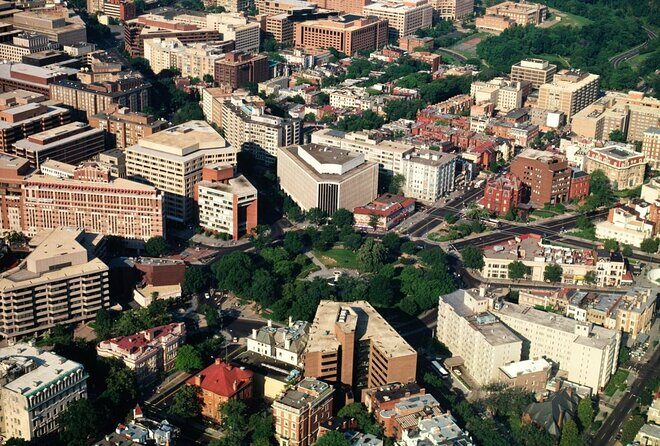
Washington can feel like a maze—big monuments, wide roads, and lots of “forms to fill out” energy. This tour is the opposite. You walk through a tight stretch of neighborhoods where the city’s elite life used to happen on the same blocks you’ll be standing on today.
Dupont Circle is the starting pulse. Embassy Row is the payoff. This combination works because you get both the social “center” of the neighborhood and the political “outer ring,” all tied together by architecture styles you can actually see.
You can also read our reviews of more walking tours in Washington DC



Meeting points, time on the clock, and a walk that stays friendly
The tour starts at Dupont Circle (Washington, DC 20036) and ends at The Phillips Collection (1600 21st St NW, Washington, DC 20009). You’re looking at about 2 hours on foot, so you can plan a second activity after—dinner nearby, or a museum stop—without wrecking your day.
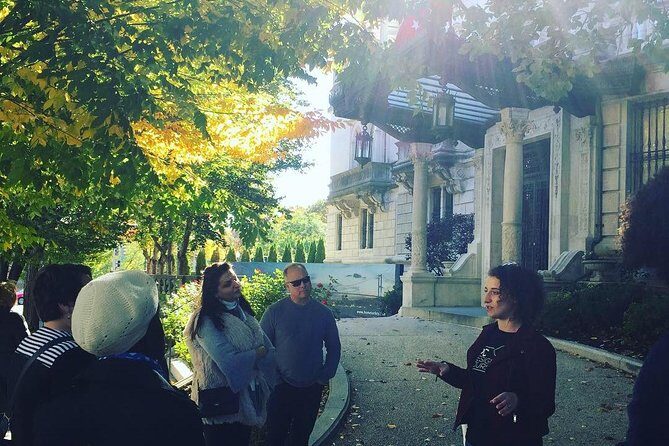
The pace is built for a typical group. The maximum is 20 people, and the experience is led by a local guide. In other words, you’re not stuck in a giant pack. You should still wear comfortable shoes, because DC sidewalks don’t do you any favors.
Also: this tour uses a mobile ticket. If you like everything ready before you leave your hotel, you’ll appreciate not digging for paper.
Dupont Circle fountain: the perfect warm-up block
Dupont Circle is the heart of this part of DC, and the fountain at the center is a visual anchor. It’s a photogenic stop that also helps you understand why this neighborhood became such a magnet.
Here’s the practical benefit: your guide starts by putting Dupont Circle in context—what it is, why it mattered, and how the surrounding streets became the address people wanted. Once you get that foundation, the later mansion and embassy buildings make more sense. You’re not just looking at stonework; you’re reading social status in architecture.
Expect this to feel like a warm welcome rather than a lecture. Even if you’re not an architecture person, the guide usually helps you see patterns quickly.
Embassy Row mansions: the architecture styles you’ll start spotting later

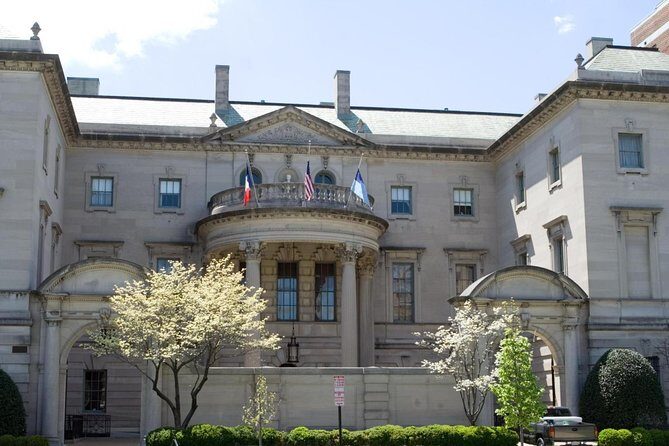
Embassy Row is where the tour earns its name. You walk past impressive properties that cover several major architectural styles—so you get variety without doubling your walking time.
The big value here is the interpretation. Instead of treating each building as a one-off, your guide ties together style choices and the people who lived there. That means you’ll pick up how styles like Neo-classical, Beaux-Arts, and Queen Anne show up in real Washington street form.
You’ll also hear the human side of the street—social climbers, power brokers, and famous residents. Names you might recognize include Alice Roosevelt Longworth and Evalyn Walsh McLean, the woman associated with the Hope Diamond story. The point isn’t celebrity trivia. It’s how wealth, influence, and taste shaped the built environment.
A guide matters a lot on this route. The vibe you’ll want is the kind that keeps the story moving and helps you keep your eyes up. Guides such as Sam and Mark are especially praised for pacing and storytelling energy, and guides like Natalie are mentioned for using supplemental pictures to help you visualize how people lived.
The Indonesian Embassy stop: how the Hope Diamond story echoes
One of the stops on the route focuses on the Embassy of Indonesia. This stop carries an extra layer because the building story links back to the Hope Diamond connection you’ll hear earlier.
Why it’s worth your attention: it shows how Washington’s “big name” histories don’t stay in one era. A building can hold one kind of private power in one century, then shift into another role later. Your guide uses that continuity to make the architecture feel more grounded and less like museum signage.






Anderson House: patriotic legacy inside a mansion shell
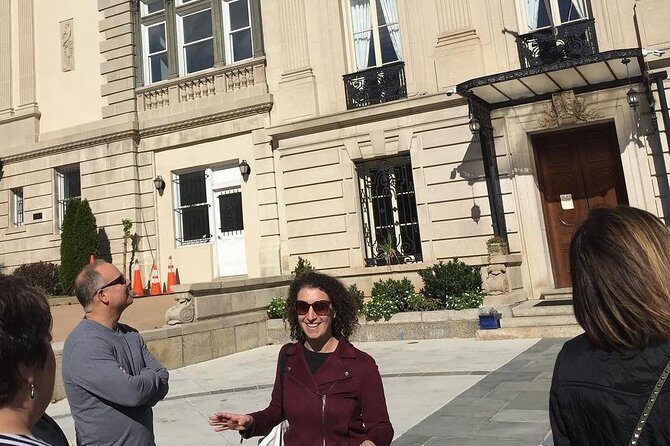
You also pass the Anderson House, described as the former home of the wealthiest power couple in Washington DC. Today it serves as headquarters for the Nation’s oldest patriotic organization.
This is the kind of stop that helps you understand why so many grand houses were re-used rather than erased. DC didn’t just build impressive residences; it kept repurposing them. That repurposing becomes a theme you’ll see across the route.
If you like your history with a little cause-and-effect, this stop delivers. It’s not only about who lived there—it’s about what the building became.
Turkish ambassador residence and music lore: not just politics
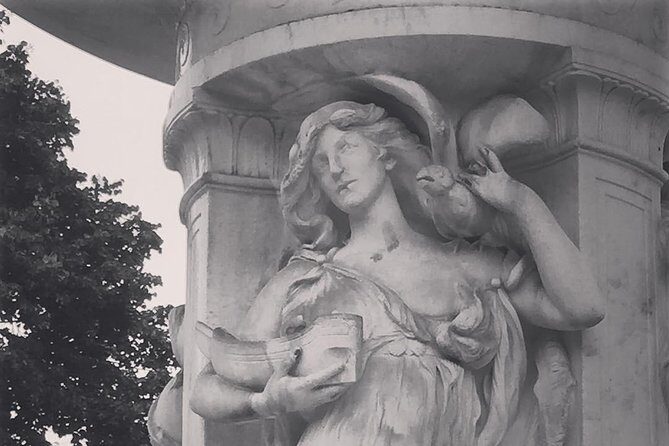
The walk includes a look at the residence of the Turkish Ambassador, positioned off Sheridan Circle. This is a Beaux-Arts mansion, and the story ties it to music history—specifically Ahmet Ertegun, a legend who got his start there.
This stop is a reminder that Embassy Row isn’t only about diplomats. It’s also a snapshot of the cultural circles that formed around influence and funding. If you think of DC as politics-only, this is one of the stops that quietly corrects that.
Sheridan Circle and the Civil War monument backstory
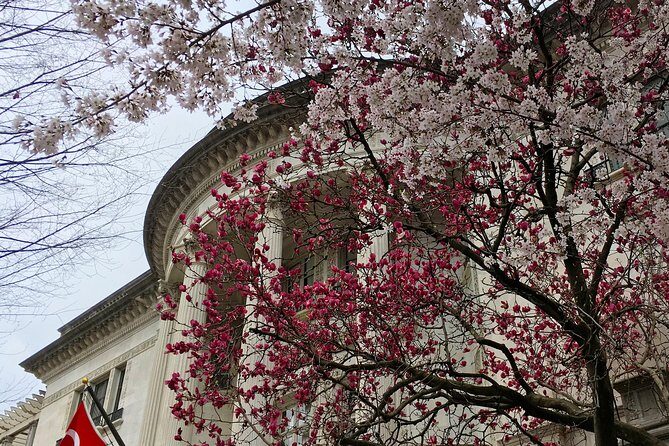
Next comes Sheridan Circle Northwest, built around a Civil War monument with a weirdly memorable backstory. The sculptor is also credited as the sculptor behind Mount Rushmore, which is the sort of detail that makes your guide sound like they have DC on speed dial.
Why this matters for your walk: monuments can feel like interruptions. Here, the guide uses the monument story to connect back to how Washington remembers people—then how those memories play out in public space near private power.
If you like when a tour takes you off the obvious route, this is one of the better moments.
Kalorama: the quieter side of the power story
After the embassy-street intensity, you get Kalorama, a residential neighborhood off Embassy Row. The name means Beautiful View in Greek.
This stop is a breathing space. You’re not leaving the story behind—you’re changing the tone. The guide uses Kalorama to show how influence still mattered even when it didn’t advertise itself like a grand embassy frontage.
It’s a good segment for people who want architecture but also want the social geography of DC. You’ll start to see how the city’s layers work: center social life, then diplomatic life, then quieter prestige.
Woodrow Wilson’s former home: the presidential thread
You’ll pass the President Woodrow Wilson House, described as his former post-presidency home. You won’t spend long here, but it threads the entire walk back to the idea that Washington is built by people who then become symbols.
One useful note: the stop is listed as Admission Ticket Not Included, so don’t plan on entering or touring that site as part of the experience.
Still, even a short pass can help you link the “private wealth turned public legacy” theme to a big national name.
Washington’s Spanish Steps: small, quiet, and actually worth a glance
Then you’ll reach Spanish Steps—Washington’s modest version of the famous European landmark. This is described as a quiet oasis in the middle of the city.
Why I like this part of the walk: it breaks the pattern. After mansions and monuments, you get a human-scale pause. It’s a good place to check in with yourself—look around, take a photo, and reset your legs before the final culture stop.
The Phillips Collection finish: where the tour naturally hands off to art
You end with The Phillips Collection—the first modern art museum in the United States, and known here for its red brick exterior.
This ending is smart because it doesn’t feel like the tour just cuts you loose. You finish with a destination that works for a variety of visitors. Even if you’re not a big art person, the museum gives you a clean next step.
If you want a little bonus time afterward, this is a good area to keep exploring on your own. The tour ends at the museum address, so it’s convenient rather than an abrupt return-to-metro situation.
Price and value: why $48 feels fair for this part of DC
At $48 per person for about 2 hours, the value comes from the guide, not the buildings alone. DC architecture can be striking even without narration, sure. But a guided walk makes the difference between seeing pretty structures and understanding why they matter.
You’re paying for:
- Context (why Dupont Circle and Embassy Row developed this way)
- Architecture interpretation (how to spot style differences)
- Story connection (how wealth, culture, and diplomacy interlock on these blocks)
- A group size that doesn’t overwhelm you (max 20)
It’s also a practical use of time. If you’re only in DC for a short stretch, this tour gives you a concentrated slice of the city’s elite geography without requiring a car or multiple transfers.
What kind of people this tour suits best
This is a strong fit if you like:
- Architecture that comes with explanations you can remember
- A neighborhood walk that feels manageable and not exhausting
- International-relations vibes without needing a passport
It also works well for mixed groups. People mention taking parents and even teens and finding the pace and storytelling fun enough to keep attention. That’s not an automatic thing in architecture tours, so it’s a real plus.
If you’re very museum-only—meaning you want to go inside lots of buildings—this may feel more like a “see and learn” outing than an “access and explore” one. The format is designed for walking and narration.
Small tips to make the walk easier and better
A few practical habits will improve your experience:
- Bring a camera, but also look up often. The interesting cues are in the details above street level.
- Wear layers if weather is extreme. Guides are working outdoors year-round, and DC can swing from cold to hot fast.
- If your guide offers helpful visuals (some guides are described as using supplemental pictures), pay attention early. It makes later stops click faster.
- Ask questions at the natural pauses. With a group this size, you’re more likely to get direct answers.
And if your brain is already trying to cram in DC’s monuments, this tour helps you slow down. The city’s big-ticket landmarks are loud. Embassy Row is quieter—and that quiet is where the stories live.
Should you book this Dupont Circle and Embassy Row tour?
I’d book it if you want DC that feels personal. Not the postcard version, and not the “walk past it fast” version either. This is a structured neighborhood walk where you learn how the city’s power used architecture as a language.
It’s especially worth it when you’re short on time but don’t want to skip the context. You’ll leave with a better sense of what you just saw and why it looks the way it does.
If you hate walking or you’re expecting lots of interior access, you might feel disappointed. But if you’re happy to trade some doors for clear explanations and good sightlines, this tour is a solid use of a morning or afternoon.
FAQ
How long is the Dupont Circle and Embassy Row Architectural Walking Tour?
It runs for approximately 2 hours.
How much does the tour cost?
The price is $48.00 per person.
Where do the tour start and finish?
You start at Dupont Circle, Washington, DC 20036, USA. The tour ends at The Phillips Collection, 1600 21st St NW, Washington, DC 20009, USA.
What language is the tour offered in?
The tour is offered in English.
Is it a mobile ticket tour?
Yes, the tour includes a mobile ticket.
What group size should I expect?
The tour has a maximum of 20 travelers, and it’s led by a local guide. Service animals are allowed and it’s near public transportation.