REVIEW · TOUR REVIEWS
District of Punk
Book on Viator →Operated by Off the Mall Tours · Bookable on Viator
Punk lives in unexpected Washington corners. This 1.5-hour District of Punk walk maps an under-recognized DC punk scene—with stops tied to the 1980s and the clubs that helped shape what came later—while also explaining how punk grew as a reaction to what felt like a cold, soulless government. I like the clear, site-based storytelling, and I especially like how the route centers on neighborhoods such as Gallery Place rather than defaulting to the usual NYC/London comparisons. One drawback: each stop is brief, so if you want a lot of sitting, deep artifact time, or long explanations at every building, this format might feel fast.
I also like that the price is low for a themed walking tour in downtown DC, and you do not have to pay extra at the stops. Tickets are $30 per person, and the library end point gives the tour a satisfying finish at the MLK Jr. Memorial Library. The third thing I appreciate is that the tour ends in a place with real documentation: the library holds DC’s Punk Archive.
Do double-check the start time before you go. The schedule notes a second Saturday option at 1pm starting March 2025, while the booking info also lists a start time of 10:30am, so your confirmation is what matters.
In This Review
- Key things to know before you go
- District of Punk: a Washington idea, not a copy-paste scene
- Price and timing: what $30 really buys you
- Meet at Gallery Place Chinatown and plan for a short, focused walk
- Stop 1 at 443 7th St NW: the former DC Space and the Unheard Of Music Festival link
- Stop 2 at The Lansburgh: a 1980s punk show venue, not a random building
- Stop 3 at the 9:30 Club former site: how an iconic venue grew
- The MLK Jr. Memorial Library finish: the DC Punk Archive you can’t skip
- What makes the DC punk story feel distinct here
- Who should book District of Punk (and who might not love it)
- Practical logistics: what to bring and how to be ready
- FAQ
- How much is the District of Punk tour?
- How long is the tour?
- Where does the tour start and where does it end?
- When is the tour offered?
- What stops are included on the itinerary?
- Is admission included for the stops?
- Is there a refund if plans change or weather is bad?
- Should you book District of Punk?
Key things to know before you go
- A compact route through famous DC addresses tied to clubs and scene-building
- Free stop access at each location on the itinerary (you do not pay entrance fees for the sites)
- The DC Punk Archive lives at the finish line, at the MLK Jr. Memorial Library
- Small group size (max 20), which keeps the talk from turning into a lecture herd
- A politics-to-music story arc, connecting punk energy to the Reagan-era atmosphere
- Mobile ticket setup, helpful for quick check-ins in a busy part of the city
District of Punk: a Washington idea, not a copy-paste scene
If your mental picture of punk is all about London or New York, this tour nudges you into a different history. In the 1980s, the Reagan Administration’s reinstating of the Selective Service and the shift from hippies to yuppies helped create a tense cultural mood, and punk grew as a reaction to the idea of a soulless government. In DC, that reaction had its own geography and its own momentum.
The tour also frames punk as more than a sound. You get the sense that scenes form around places—clubs, hangouts, and recognizable corners—and that DC’s punk identity was shaped by anchor neighborhoods such as Gallery Place. The route is short on paper, but the idea is big: how local scenes feed later waves of music, not just a one-time moment.
And you finish in a spot built for record-keeping. The MLK Jr. Memorial Library houses DC’s Punk Archive, described as the only collection of punk ephemera documenting the DC scene. That ending matters because it turns your walk into more than nostalgia—it becomes a way to understand how a city remembers itself.
You can also read our reviews of more tours and experiences in Washington DC.


Price and timing: what $30 really buys you
At $30 per person for about 1 hour 30 minutes, this is priced like a value-forward city tour. What makes it feel like more than a bargain is that the itinerary uses downtown landmarks that are connected to DC punk’s development, instead of scattering you across random streets with vague stories.
The tour uses a mobile ticket and keeps things simple with no mention of private transportation. You also get a built-in schedule cadence: each of the first three stops gets about 15 minutes, then you wrap up with roughly 10 minutes at the library. That structure works well if you like your sightseeing with a time box. It can feel tight if you want to linger and read everything.
About timing: the tour is described as being offered on the second Saturday of the month starting in March 2025 at 1pm. At the same time, the booking details list a start time of 10:30am. I’d treat your confirmation as the source of truth, because missing the correct meetup time in downtown DC is an easy way to lose the whole day.
Meet at Gallery Place Chinatown and plan for a short, focused walk
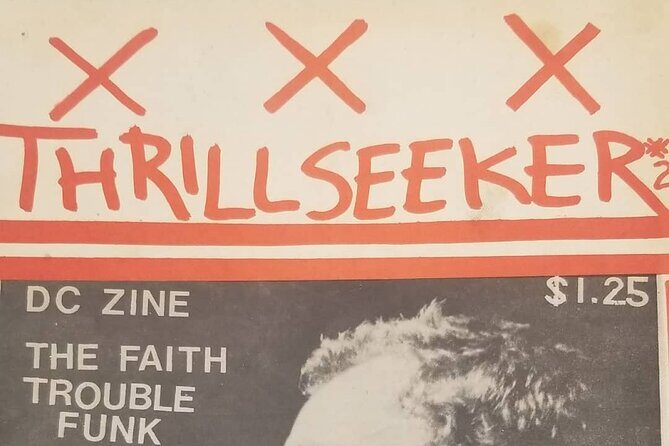
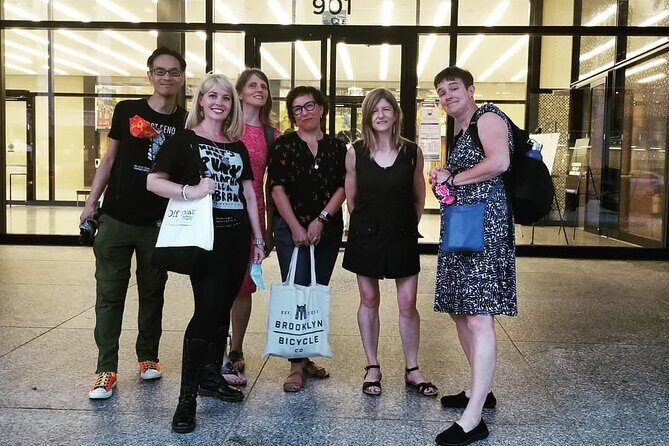
You start at Gallery Place Chinatown Station in Washington, DC. The end point is Martin Luther King Jr. Memorial Library, 901 G St NW, right in the same central area. This matters because you are not burning time on long transfers; the whole experience is designed to keep you in walkable parts of downtown.
Group size is capped at 20 travelers, which is big enough to feel social but small enough for a guide to actually keep the story moving. The tour is also listed as suitable for most travelers, and service animals are allowed. It is near public transportation, which is exactly what you want for a tour that depends on you showing up on time.
The one “plan ahead” note is weather. The experience requires good weather, and if it gets canceled due to poor conditions, you are offered a different date or a full refund. In other words, do not treat this like a museum that always runs regardless—check the forecast if you’re traveling in a shoulder-season week.
Stop 1 at 443 7th St NW: the former DC Space and the Unheard Of Music Festival link
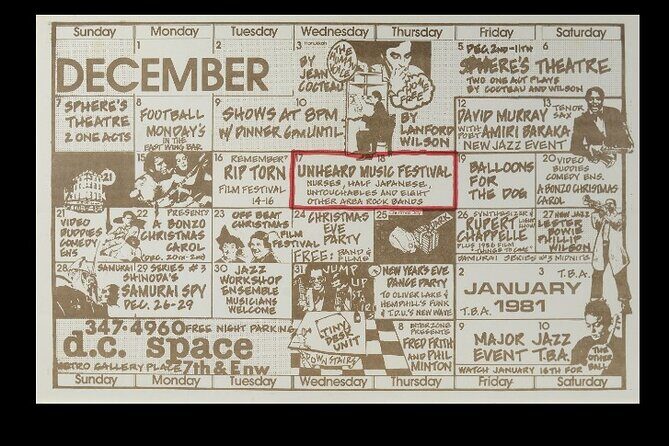
The first stop is at 443 7th St NW, tied to the former DC Space. This spot is described as the first club to host the Unheard Of Music Festival, and the tour uses that clue to connect early punk momentum to real-world events. Even with just 15 minutes here, it sets the tone: DC punk is not a theory, it’s a local system of places and gatherings.
What I like about starting with this location is that it gives you a baseline. By the time you reach the rest of the route, you can compare how different venues and neighborhoods played roles in the scene. It also helps that DC Space is specifically called out as defunct, which underlines a big theme of the tour: scenes evolve, buildings change, and memory lives in documentation.
A practical drawback: because the stop is short, you’ll get the story in a quick, guided burst. If you want to photograph and read slowly, you may have to do it on the fly. My advice is simple: take a couple of photos, then listen first. You can always come back later on your own.
Stop 2 at The Lansburgh: a 1980s punk show venue, not a random building
Next up is The Lansburgh, the former location of the Lansburgh Center. This is described as a popular venue for punk shows in the 1980s, and the tour uses that fact to explain why DC had staying power. A single club can spark a scene, but regular venues let bands tour, fans connect, and the culture build its own norms.
This stop also helps you understand how DC’s punk identity wasn’t limited to one single pocket. Even when the tour highlights anchors like Gallery Place, it still suggests the scene had multiple relevant locations. That makes the story feel more like an ecosystem than a single landmark myth.
The tradeoff is time again: you get about 15 minutes. So you’ll likely get the “why this mattered” part more than a detailed catalog of every show ever held there. Still, if you go in expecting a guided street-story rather than an archive session, this stop delivers.




Stop 3 at the 9:30 Club former site: how an iconic venue grew
The third stop visits the former location of the first 9:30 Club. Today, the 9:30 Club is one of DC’s most iconic performance venues, and this stop gives you a clean cause-and-effect: you’re looking at where it began, not where it ended up.
I like this stop because it bridges past to present. A lot of history tours end at a dead end, either literally (closed buildings) or emotionally (old photos only). Here, you see the line from early punk-era roots to a venue that still draws crowds.
There is also a practical advantage. If you’re the kind of traveler who wants to connect your tour to what you might do after, the 9:30 Club connection gives you options. Even if the day you’re in DC doesn’t include a show, you can still treat it as a living music anchor rather than a relic.
Again, the time is tight—about 15 minutes. But that’s also what keeps the whole tour at roughly 1.5 hours. You’re meant to stitch together the pattern across multiple stops, not camp out at one.
The MLK Jr. Memorial Library finish: the DC Punk Archive you can’t skip
The tour ends at the Martin Luther King Jr. Memorial Library, which holds DC’s Punk Archive. This archive is described as the only collection of punk ephemera documenting the DC scene, and that makes the stop more than a ceremonial finish. It is where the stories become evidence.
The itinerary gives you about 10 minutes at this last stop, which is short, but it’s the kind of short that can still feel meaningful. The point is to leave you with a sense of where to look next—toward documentation, not just recollection. In a city where so much changes fast, that matters.
A note on expectations: 10 minutes is unlikely to be enough for a deep reading session of any archive materials you might find. Use the time to understand what the archive is, why it exists, and how it connects to the buildings you just saw. If you want more detail afterward, you’ll know what to seek.
What makes the DC punk story feel distinct here
This tour is built around more than “cool punk facts.” It connects a specific political and cultural atmosphere to how scenes formed in DC. In the 1980s, the Reagan-era shift around Selective Service, plus the perceived transition from hippies to yuppies, created a sense of alienation. Punk rose as a reaction to what was received as a soulless government.
That framing makes the punk aesthetic feel less like a fashion and more like a response. It also explains why a DC scene could be both under-recognized and still impactful: if the energy is tied to local institutions and local venues, it won’t get the same headlines as bigger cities, even when the output is real.
The tour also emphasizes lasting impact on the local music scene today. You’re not just shown old addresses; you’re shown an argument—about how the scene’s legacy continues through DC’s musical identity.
And the route itself supports the story. By focusing on Gallery Place area anchoring and pairing it with key venue-related sites, you get a sense of how DC punk had its own map. That makes it easier to remember than a list of names with no geography.
Who should book District of Punk (and who might not love it)
This tour is a strong pick if you like city history that connects to culture. If you enjoy walking tours but also care about the human side—why people make art, why they gather, why certain neighborhoods matter—this one fits.
It’s also a good match if you want value. $30 for about 90 minutes in central DC, with free access at the sites and a finish at a unique archive, is a tidy deal. If you’re traveling with limited time and want something different from the standard monuments-only loop, it’s a smart switch.
You may want to skip or at least temper expectations if you’re after a super-long museum-style experience or a deep, stop-by-stop discussion that runs for two hours or more at each location. This tour is designed for momentum. It moves, it focuses, and it leaves you wanting a bit more—mostly in a good way.
Practical logistics: what to bring and how to be ready
This is a downtown walk with multiple outdoor stops, so plan for comfortable walking shoes and weather-appropriate layers. The experience needs good weather, so check conditions the day of.
Bring your phone even if you’re used to printing everything. The tour uses a mobile ticket, so you’ll want access to it during check-in. Since the start is at a major transit hub—Gallery Place Chinatown—arriving by transit is straightforward.
If you care about timing, build a little buffer into your plan. With a small group size (max 20), arriving late can mean you miss the beginning of the story, and that first stop sets the tone for the rest.
FAQ
How much is the District of Punk tour?
The price is $30.00 per person.
How long is the tour?
It lasts about 1 hour 30 minutes.
Where does the tour start and where does it end?
It starts at Gallery Place Chinatown Station in Washington, DC and ends at Martin Luther King Jr. Memorial Library at 901 G St NW, Washington, DC.
When is the tour offered?
Starting in March 2025, it is offered on the second Saturday of the month at 1pm. The start time shown for the experience is also listed as 10:30am, so check your booking confirmation for the exact time.
What stops are included on the itinerary?
You’ll visit 443 7th St NW (the former DC Space), The Lansburgh (former Lansburgh Center), the former location of the first 9:30 Club, and Martin Luther King Jr. Memorial Library (DC Punk Archive).
Is admission included for the stops?
The stops are listed with admission ticket free.
Is there a refund if plans change or weather is bad?
Yes. There is free cancellation up to 24 hours in advance for a full refund, and if it is canceled due to poor weather you’ll be offered a different date or a full refund.
Should you book District of Punk?
If you’re spending time in Washington DC and you want a tour that feels local, specific, and tied to real places (not just general talking points), I’d book it. The low $30 price, the compact 1.5-hour format, and the rare finish at the DC Punk Archive make it one of those tours that’s easy to fit into a day and still feel like you learned something genuinely DC.
Do book it if you like punk culture, alternative music, or city history through culture. Skip it if you want long time inside buildings or a slow, deep archive session. For most people, this is the sweet spot: a focused route, a clear storyline, and a finish that turns punk memories into documented evidence.