REVIEW · WALKING TOURS
Beyond the Closet Walking Tour
Book on Viator →Operated by Beyond The Landmarks · Bookable on Viator
Queer DC history is right under your feet. Beyond the Closet Walking Tour threads together LGBTQ persecution in the mid-20th century with real, on-street landmarks across central Washington DC. You’ll cover the first LGBTQ rights protest location, learn about a groundbreaking figure tied to the White House, and finish near Dupont Circle—all in about 2.5 hours with a small-group pace.
Two things I especially liked: the guide’s ability to connect the facts to what you’re actually seeing, and the way the tour turns familiar sites into something meaningful. Zach leads with clear, direct answers during the walk, and I love how everyday landmarks (ones you pass all the time) become the entry point for understanding why community organizing mattered.
One drawback to consider: this is an on-your-feet experience, and the tour does not provide bottled water or snacks. Plan ahead—especially if you’re sensitive to long walks or you need food for health reasons—so you can focus on the story instead of logistics.
In This Review
- Key highlights before you go
- Beyond the Closet Walking Tour: what you’re really signing up for
- Lafayette Square: LGBTQ persecution in the 1940s–1960s and the first protest site
- White House stop: a focused lesson on the first openly gay woman in a presidential administration
- Dupont Circle: the first gay bookstore and how it shaped Capital Pride
- Price and value: how $30 becomes more than a walk
- Small-group design (max 15) and why it changes the experience
- What to bring: water, snacks, and comfort for a 2.5-hour walk
- Who this tour suits best (and who should think twice)
- Tips to get the most out of your guide-led walk
- Should you book Beyond the Closet Walking Tour?
- FAQ
- How long is the Beyond the Closet Walking Tour?
- Where does the tour start?
- What time does the tour start?
- Where does the tour end?
- Is it a walking tour or a bus tour?
- Is the tour offered in English?
- How much does it cost?
- Are bottled water or snacks included?
- Is admission included for all stops?
- Can I bring a service animal?
- What if I need to cancel?
Key highlights before you go
- Zach’s Q&A style: you get time to ask questions and actually get answers during the walk
- A protest site you can point to: learn about the first LGBTQ rights protest in the US from the ground level
- White House-area learning without a long detour: a focused stop that fits the tour’s flow
- Dupont Circle’s bookstore legacy: community influence tied to the start of the Capital Pride parade
- Small group size (max 15): easier conversation, less rush, more attention on details
- 2.5 hours with a clean start and finish: meets at Farragut Square and ends at Dupont Circle North Metro
Beyond the Closet Walking Tour: what you’re really signing up for
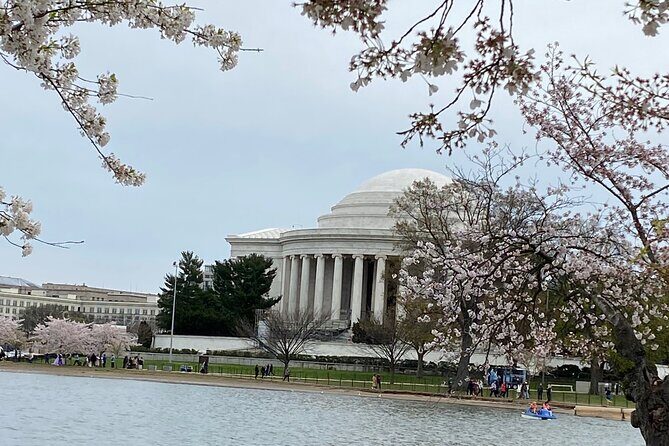
This isn’t a museum day where you sit and read plaques. It’s a guided walking experience built around streets, sightlines, and context. The goal is simple: help you understand how LGBTQ people pushed back and built community, using key DC locations you can recognize instantly once you’re standing there.
You start at 9:30 am at Farragut Square (912 17th St NW). You’ll finish at Dupont Circle North Metro Station (1908-1998 Q St NW). The whole thing runs about 2 hours 30 minutes and stays in English. It’s also explicitly a guided walking tour only, with a maximum group size of 15 travelers, which matters more than you might think for a topic this personal and this heavy.
The price is $30 per person, and that’s where the value calculation gets interesting: you’re paying primarily for the guided interpretation (the human part). Some stop-related admissions are marked as free, while one stop notes that admission isn’t included. In other words, you’re not buying a stack of entry tickets—you’re buying someone’s time and their ability to connect the dots between DC geography and LGBTQ history.
One more practical note: bring a mobile ticket. You’ll want your phone ready, and you’ll want to arrive a few minutes early so you’re not rushed at the start.
You can also read our reviews of more walking tours in Washington DC



Lafayette Square: LGBTQ persecution in the 1940s–1960s and the first protest site
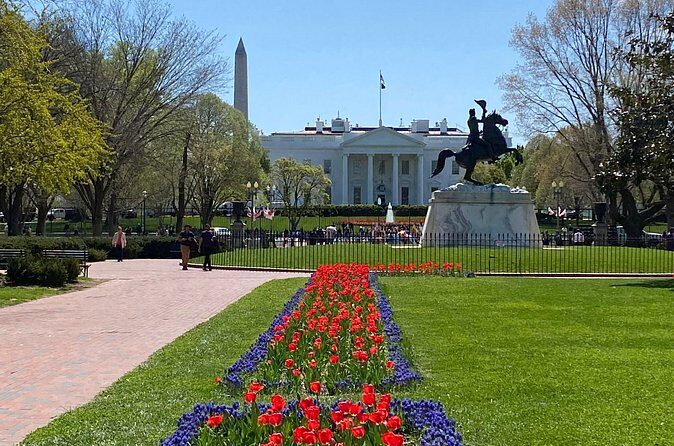
Lafayette Square is where the tour sets its emotional tone. You’ll learn about LGBTQ persecution during the 1940s–1960s, and you’ll also see the sight tied to the first protest in the US for LGBTQ rights. That’s a lot to hold in 15 minutes, so the pacing is important here. You’re not meant to skim. You’re meant to understand what you’re looking at and why it mattered.
Why this stop is valuable: Lafayette Square is one of those DC locations that people treat like background scenery. On this walk, it becomes the opposite—your guide frames it as part of a real struggle, tied to how public space was contested. Even if you’ve walked past it dozens of times, the tour helps you notice details you wouldn’t normally connect to LGBTQ organizing.
Practical tip: wear comfortable shoes and give yourself permission to slow down. The best experience here comes when you take in both the location and the meaning. If the topic hits hard, that’s normal. This part of the tour is designed for learning, not for party vibes.
Admission-wise, this stop is marked as free (admission ticket free). So you’re not juggling additional fees right there—you’re paying attention.
White House stop: a focused lesson on the first openly gay woman in a presidential administration
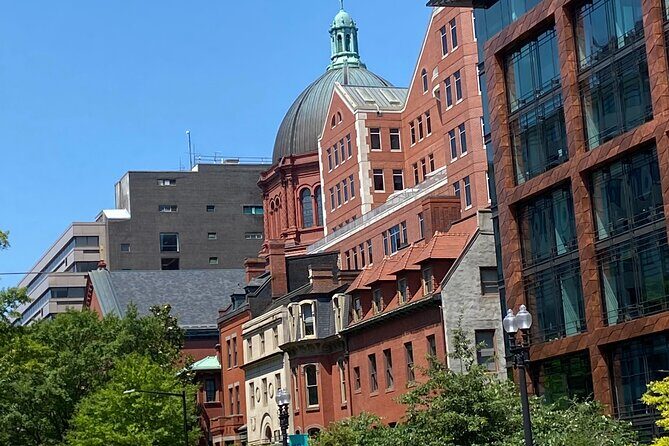
Next comes a shorter stop connected to the White House area, lasting about 10 minutes. Here you’ll learn about the first openly gay woman who served in a presidential administration.
This is a quick moment, so manage expectations: the tour isn’t presented as a long building visit. The stop is about the lesson and the landmark context, not about a full “inside the site” experience. Also, note that admission is not included for this portion. If any part of the experience involves paid entry or a ticket requirement, it won’t be covered in the tour price based on what’s listed.
How I’d think about it: this stop works best when you treat it like a briefing. You’ll get the guided narrative and then you move on. If you want only slow, deep, interior museum-style experiences, this may feel short—but for a walking tour, the time makes sense.
Dupont Circle: the first gay bookstore and how it shaped Capital Pride
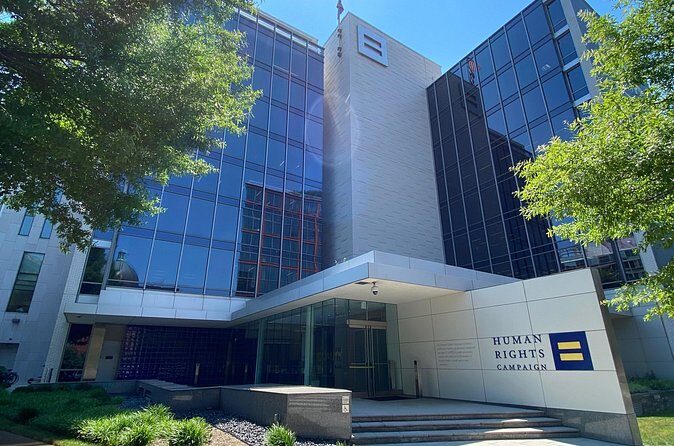
Dupont Circle is where the tour shifts from persecution and protest toward community-building—and it does it through a very DC-specific story. You’ll learn about the first gay bookstore in Washington DC and how it influenced community life, including how it played a role in starting the Capital Pride parade.
This stop is timed at about 15 minutes, and admission is marked as free. That’s helpful because it keeps the focus where it should be: on the people and the organizing energy that grew from more than just politics. Bookstores were community hubs, meeting points, and information channels. Here, you see how that kind of grassroots infrastructure can ripple outward into something as visible as a pride parade.
Why it lands well as a finale: Dupont Circle is also a natural place to keep exploring on your own afterward, especially since the tour ends at Dupont Circle North Metro Station. When you finish, you’re not stranded in the middle of nowhere—you’re in the part of DC with lots of transit options and nearby places to grab a bite or continue your own research.
Price and value: how $30 becomes more than a walk
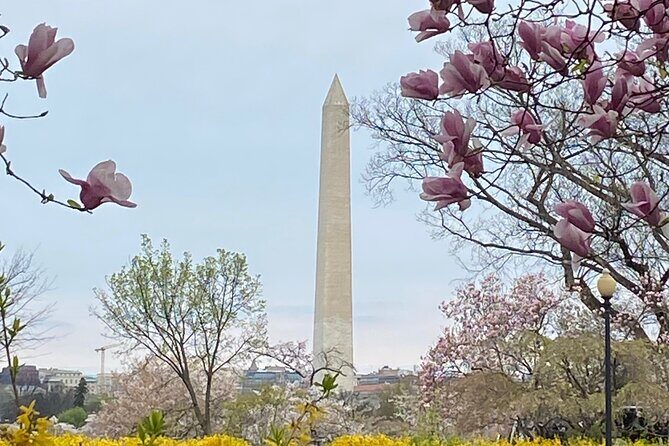
At $30 per person for roughly 2.5 hours, the math is mostly about what you’re buying: guidance, interpretation, and the chance to ask questions without sorting through a pile of sources yourself.
Here’s what makes it feel like good value instead of just another “tour for tourists”:
- The tour focuses on three major, story-rich locations rather than dozens of random stops.
- You get a small group size (max 15), which makes discussion realistic.
- Some portions are free admission, so you’re not adding surprise costs at each point.
There are also costs the tour doesn’t cover. The big two are bottled water and snacks. No water is provided, and no food is provided either. That doesn’t make the price bad—it just means you should plan like a smart walker:
- Bring water with you.
- Bring a snack if you might need one for energy or health.
If you’re someone who likes history but gets impatient with long lectures, this price can feel fair because the pacing is designed for attention. You’re not trapped in a classroom. You’re walking, looking, and learning in real time.






Small-group design (max 15) and why it changes the experience
For a topic like LGBTQ history—especially one that includes persecution and protest—a big group can flatten the human meaning. With a maximum of 15 travelers, you’re more likely to have a real exchange instead of watching the guide talk to the back row.
The standout detail from the experience is the guide’s interaction. The name that comes up again and again is Zach, and what people appreciated was the combination of strong landmark explanation and the ability to answer questions. That matters because it’s easy for a walking tour to stop being a conversation. In this one, the questions are part of the product.
For you, that means:
- You can ask for clarification without feeling disruptive.
- You’re more likely to remember the story because it’s reinforced through dialogue.
- You won’t just hear facts—you’ll understand why those facts connect to the city you’re walking through.
What to bring: water, snacks, and comfort for a 2.5-hour walk
This is the practical section that can make or break the day. The tour description is clear: bottled water is not provided, and no snacks are provided.
So I suggest you:
- Bring your own water bottle.
- Pack a small snack, especially if you have dietary needs or you get lightheaded without food.
- Wear comfortable, walk-friendly shoes. This is downtown DC terrain—your feet will lead the experience.
- Check the weather and dress accordingly. You’ll spend time outside at each stop.
If you travel with a service animal, you’re covered: service animals are allowed.
Who this tour suits best (and who should think twice)
This is a great fit if you want:
- A guided way to understand queer history in Washington DC without spending hours in multiple museums
- An experience built around real locations you can revisit later
- A tour where the guide can handle questions while keeping the walk moving
- A morning schedule that ends near major transit so you can keep your day going
It might be less ideal if you:
- Want a long, ticketed interior visit at every stop (the tour is described as walking-only, and at least one stop notes that admission isn’t included)
- Need lots of breaks or have mobility limits that make a 2.5-hour walk tough (the listing says most travelers can participate, but comfort is still personal)
- Get uncomfortable with learning about persecution and protests without a gentler pace
Tips to get the most out of your guide-led walk
A walking tour is not a passive activity. If you treat it like a guided conversation, the city starts making more sense fast.
Here are a few ways to maximize your time:
- Arrive a little early at Farragut Square so you start calmly, not hurried.
- Keep your phone ready for the mobile ticket check.
- Ask questions early. If you wait, you may run out of time before the next stop.
- After the tour ends at Dupont Circle North Metro Station, use that momentum to keep learning nearby—your guide’s framing will make the area easier to read.
And if you’re the type who likes to spot details, pay attention to how the guide connects the story to what’s physically in front of you. That’s where this tour feels most “DC,” not generic.
Should you book Beyond the Closet Walking Tour?
If you want a meaningful way to see Washington DC through LGBTQ history, this is a strong choice. The combination of a small group, a guide like Zach who can answer questions, and three tightly focused stops makes it feel efficient and human. The price—$30 for about 2.5 hours—stacks up well when you remember you’re mainly paying for guided interpretation, not multiple expensive admissions.
Book it if:
- You’re visiting DC for the first time or you live here and want a new lens
- You like walking tours that teach you how to look at familiar streets
- You’re comfortable with serious history topics
Pass or consider an alternative if:
- You prefer fully ticketed indoor attractions
- You don’t want to handle a 2.5-hour outdoor walk
- You’re unprepared for the fact that you must bring your own water and snacks
If you come ready with comfortable shoes and a refillable water bottle, you’ll leave with a city that makes more sense—and a better understanding of how community organizing shaped the DC you can still see today.
FAQ
How long is the Beyond the Closet Walking Tour?
It’s listed as approximately 2 hours 30 minutes.
Where does the tour start?
The meeting point is Farragut Square, 912 17th St NW, Washington, DC 20006, USA.
What time does the tour start?
The start time is 9:30 am.
Where does the tour end?
The tour ends at Dupont Circle North Metro Station, 1908-1998 Q St NW, Washington, DC 20036, USA.
Is it a walking tour or a bus tour?
It’s a guided walking tour only.
Is the tour offered in English?
Yes, it’s offered in English.
How much does it cost?
The price is $30.00 per person.
Are bottled water or snacks included?
No. Bottled water is not provided, and no snacks or food are provided. You should bring your own water, and bring snacks if needed for health purposes.
Is admission included for all stops?
Not fully. Lafayette Square and Dupont Circle stops are marked as free admission tickets, while the White House stop notes that admission is not included.
Can I bring a service animal?
Yes. Service animals are allowed.
What if I need to cancel?
Free cancellation is offered. You can cancel up to 24 hours in advance for a full refund. If you cancel less than 24 hours before the start time, the amount paid is not refunded.