REVIEW · WALKING TOURS
The “Madams of DC” Guided Walking Tour
Book on Viator →Operated by Off the Mall Tours · Bookable on Viator
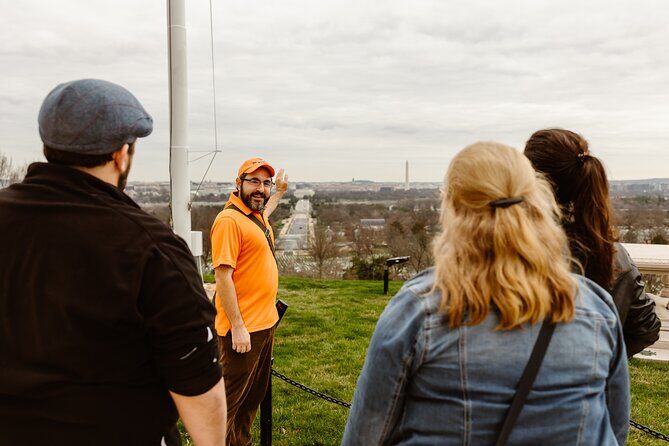
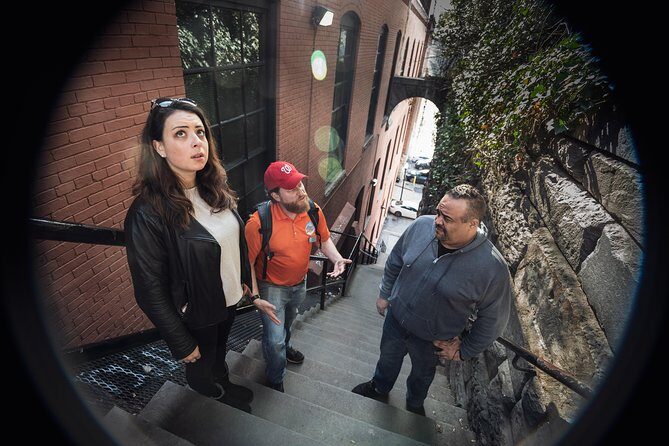
DC has a darker side you can walk to. The Madams of DC Guided Walking Tour shows you Washington’s street-level past—taverns, gambling houses, brothels, and the women running much of it—while you move between major landmarks with a guide telling the stories. I especially liked the specific, place-based storytelling and how the tour turns recognizable buildings into evidence of real lives, not just monuments.
Two things I truly like: first, the walking format keeps you close to the neighborhood vibe, so the history feels grounded. Second, the guide’s approach is practical and detail-rich—pointing out what stood where you’re standing now and explaining who was affected, including Civil War-era DC and how the city’s red-light areas worked. One consideration: the subject matter is adult-history and can be uncomfortable if you’d rather keep your sightseeing squeaky clean, and you also need to handle about two hours on your feet.
In This Review
- Key Things to Know Before You Go
- A Wartime Side of DC You Won’t See From the Mall
- Getting There: Meet on Pennsylvania Ave, End Near the National Museum of the American Indian
- Stop One: Freedom Plaza and the Story of Murder Bay
- Waldorf Astoria Area: The Old Postal Office Block and the 11th Street Strip
- National Archives Museum: Civil War Prostitution and a Central Urban Market
- IOOF Temple Building: Odd Fellows Parties and a Drink Break
- National Gallery of Art Area: Marble Alley and a Rivalry Between Top Madams
- National Museum of the American Indian: The Charitable Madams and an Archaeological Find
- What This Tour Does Better Than “Monument DC”
- Timing, Weather, and How to Dress for a 7:00 pm History Walk
- Who Should Book Madams of DC (and Who Might Skip It)
- Should You Book This Tour?
- FAQ
- How long is the Madams of DC Guided Walking Tour?
- How much does the tour cost?
- Where do I meet, and where does the tour end?
- What time does the tour start?
- Is the tour offered in English?
- Do I need to pay admission for stops along the way?
- Is there a stop for food or drinks?
- Do I need to be able to walk for the whole tour?
- What’s the cancellation window for a refund?
Key Things to Know Before You Go
- Adult-history topic: madams, brothels, and red-light districts, told as history rather than sensational gossip
- Small group: maximum of 20 people, which helps questions and keeps the pace friendly
- Evening start: 7:00 pm, so plan a relaxed dinner first and wear shoes you can trust
- Street-to-street route: you’ll connect spots like Freedom Plaza, the National Archives area, and the National Gallery of Art
- Most museum stops are free: the walk focuses on outside context and short visits where admission is free
- Drink break option: a stop near Hill Country BBQ is included for a beverage at your own cost
A Wartime Side of DC You Won’t See From the Mall
If you’ve only done the classic Washington sightseeing loop, this tour gives you a different angle on how the city functioned. The tour isn’t about hero statues or marble façades. It’s about the economy of survival—who profited, who got squeezed, and how powerful people responded when prostitution (and the businesses around it) became part of the city’s infrastructure.
The price is $30 per person for about 2 hours 30 minutes. That’s not a bargain-bucket cost, but it’s also not trying to compete with museum tickets or private car tours. You’re paying for something you can’t easily replicate on your own: a guided, step-by-step walk that connects the dots between locations that look unrelated today.
One practical plus is the tour’s structure: short stops, clear waypoints, and a guide who stays focused on what you’re seeing in front of you. Another plus: the group size is kept small (up to 20), which matters when you’re covering real places in a tight area. And since the tour runs as a mobile-ticket experience in English, it’s built for easy check-in and straightforward participation.
You can also read our reviews of more walking tours in Washington DC



Getting There: Meet on Pennsylvania Ave, End Near the National Museum of the American Indian
You start at 1401 Pennsylvania Ave NW, Washington, DC 20004 with a 7:00 pm start. The tour ends at Jefferson Drive SW & 4th Street SW, right near the National Museum of the American Indian.
Transit is a big help here. The Smithsonian and Federal Center Metro stations (Orange/Blue/Silver lines) are only about two blocks away from the finish. If you’re coming from downtown, this is one of the smoother ending points I’ve seen for evening walking tours.
You’ll walk through a central corridor where you can keep moving between stops without adding extra transit legs. That saves time and helps the tour keep its rhythm. Just bring common-sense evening logistics: a light layer (DC can turn chilly after sunset), and shoes that don’t punish you for cobblestones and curbs.
Also note the pacing requirement: the tour says most people can join, but you must be able to stand and walk for at least two hours. If your legs need more frequent breaks, build that into your expectations.
Stop One: Freedom Plaza and the Story of Murder Bay
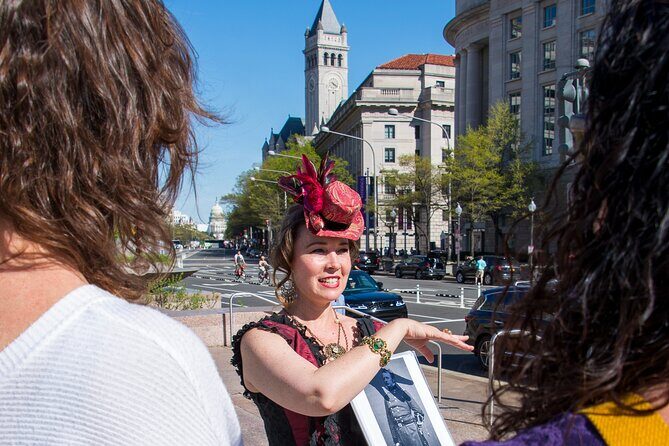
The tour begins with a location that’s now wide open and easy to pass by: where Freedom Plaza is today. The guide reframes it as part of a notorious neighborhood once known as Murder Bay.
Right away, you get the core idea: DC’s present-day civic spaces were once full of taverns, gambling houses, and brothels. The guide ties these places to the people who were drawn there, including Northern Arm soldiers. That detail matters because it explains why these districts grew where they did—cities form entertainment clusters around the people who have money, power, and a temporary timeline.
At this stop, the tour also gives you a sense of how history can disappear under modern design. Freedom Plaza looks like a festival-and-music venue now. The guided commentary helps you mentally overlay the older street life on the same open space.
Waldorf Astoria Area: The Old Postal Office Block and the 11th Street Strip
Next you move to the block where the Waldorf Astoria Washington DC is located. The tour connects it to the former Old Postal Office building, which is tied to today’s Trump International Hotel.
This is where the story sharpens into a specific red-light subdistrict. You’ll hear about the 11th Street strip on Pennsylvania Avenue, described as part of the Red Light district. Then comes a key historical thread: the Military Provost Guard harassed and arrested “raucous Madams” in the neighborhood.
That’s a useful reminder that enforcement didn’t just happen in some distant court system. It showed up on the street—sometimes as pressure, raids, and sudden disruption. The guide’s framing makes the police-and-power angle feel real instead of abstract.
National Archives Museum: Civil War Prostitution and a Central Urban Market
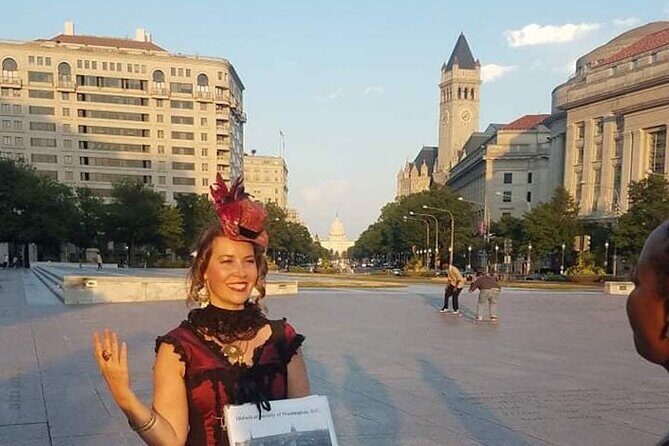
Then you head toward the National Archives Museum area. This part is short, but it does an important job: it links the lives of prostitutes in Civil War DC to the city’s commercial heart.
You’ll also pass by what used to be the largest central urban market in DC. The point isn’t just that there was a market nearby. It’s that prostitution existed alongside regular economic activity, in a city that needed people to buy, sell, eat, and survive.
The tour’s strength here is balance. It isn’t only about shock or scandal. It focuses on how these women fit into society at the time—how their work was tolerated, policed, or negotiated depending on the moment.
You can also read our reviews of more guided tours in Washington DC





IOOF Temple Building: Odd Fellows Parties and a Drink Break
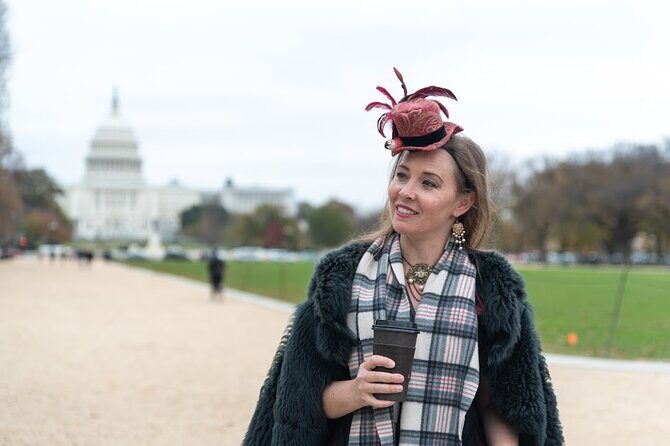
A standout stop is the area around the International Order of Odd Fellows (IOOF) Temple Building. The tour makes a fascinating connection between social clubs, arts support, and nightlife.
Across the street, you’ll stop for a drink at Hill Country BBQ. Cost of the beverage isn’t included, but the stop is built in (about 20 minutes). This is a good time to reset, especially because you’ve moved through the heaviest historical density earlier.
The story here is playful in a dark way, and that’s part of the tour’s charm. The IOOF supported the arts, and it was common to see higher-class working girls attending grand parties hosted by the Odd Fellows, often on the arm of an Army Officer. Scandalous is the vibe—yet the guide keeps it tied to social structures, not just gossip.
If you’re the type who likes your history with human details—who went where, who had social access, who used institutions—this is one of the most memorable segments.
National Gallery of Art Area: Marble Alley and a Rivalry Between Top Madams
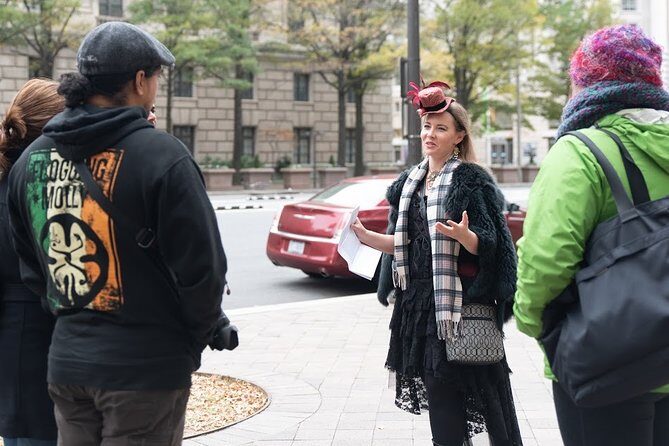
At the National Gallery of Art, the tour points you toward the former Marble Alley. This stop is brief, but it lands a memorable story: two of DC’s highest paid madams had a vicious rivalry there.
That rivalry detail matters because it shows how “the industry” wasn’t a single uniform thing. It had tiers, reputations, and competition. Even when you’re talking about places that are now art-focused, the guide keeps the narrative anchored in how money and status worked back then.
It’s also a reminder that power didn’t always flow through official channels. People found influence through location, clientele, and relationships—and those choices left patterns on the map.
National Museum of the American Indian: The Charitable Madams and an Archaeological Find
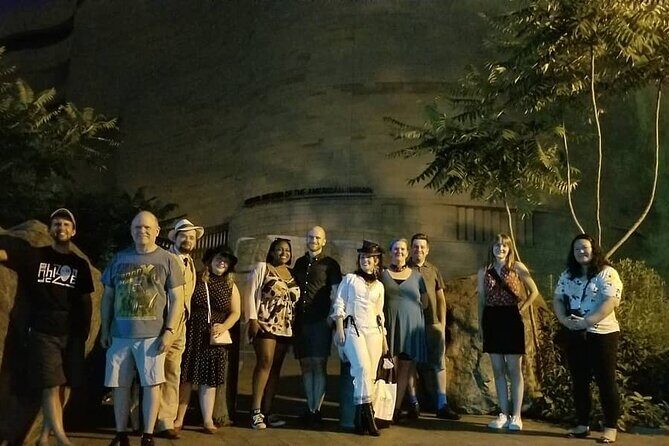
The final stop is at the National Museum of the American Indian, where the tour ends. Here, the guide ties the story to something physical and surprisingly tangible: an archeological dig discovered remains connected to DC’s most notorious, yet charitable, madams.
The ending is also described as the most glamorous of DC’s Civil War-era pleasure houses. That pairing—notorious and charitable—is the kind of contrast that can make you sit up. It complicates the easy moral boxes people like to put history into, and it forces you to think about how reputations formed in real communities.
After the last story, you’re in a great position to transit or continue exploring nearby Smithsonian-area sights. And since it ends close to multiple Metro options, you can wrap the evening without needing a long ride home.
What This Tour Does Better Than “Monument DC”
This is where the tour earns its reputation. A lot of Washington tours teach you dates and famous names. This one teaches you how the city’s systems worked at street level—how power, policing, money, and social clubs interacted.
I also like that the guide’s research shows up in the specificity. You’re not just told that there were brothels. You’re told which areas were tied to which behaviors, how enforcement targeted certain actors, and how the city shaped the business around it.
One useful thing I appreciated from the accounts I’ve heard is how the guide handles visual material. There’s an example of the guide describing photos when someone in the group needed it, which signals the tour can be narrated in a more accessible way than you might expect for a walking history route.
Timing, Weather, and How to Dress for a 7:00 pm History Walk
The tour runs in the evening, starting at 7:00 pm. That means you’re walking in low light, and you’ll want to be comfortable more than fancy. Bring a jacket, especially in fall or winter, and plan to move through sidewalks and open areas.
Weather matters. The experience notes it requires good weather, and if it’s canceled due to poor weather, you’ll be offered a different date or a full refund. In practical terms, that means the route depends on being outside and moving between points, not stopping in heated indoor spaces for long.
The walking requirement is also very real: plan for about two hours on your feet even though individual stops are time-limited.
Who Should Book Madams of DC (and Who Might Skip It)
This tour fits best if you want Washington DC in a non-standard way. If you like:
- history that focuses on real people’s lives,
- a guided walk with clear stop-by-stop storytelling,
- and context tied to locations you’ll actually see again later,
…you’ll probably have a good time.
It’s also a strong pick for anyone who’s already done the main museum circuit and wants a different, more human scale view of the city’s past.
If you’re uncomfortable with adult-history themes—brothels, madams, and red-light districts—this may not be your cup of tea. It’s not graphic, but it does deal with the subject directly.
Should You Book This Tour?
Yes, if you want more than postcard Washington and you like guided storytelling that connects street corners to events and social life. The $30 price makes it accessible for a one-off evening, and the small group size helps keep it interactive.
Book it especially if you enjoy Civil War-era context and want to understand how the city’s institutions—markets, military policing, social clubs, and wealthy patrons—shaped what happened on the street. Just go in with the right expectations: you’re walking through a DC chapter that’s adult, complicated, and very human.
If you prefer upbeat comedy-history or you want your tours to avoid mature topics, you might be happier with a different route.
FAQ
How long is the Madams of DC Guided Walking Tour?
It runs for about 2 hours 30 minutes.
How much does the tour cost?
The price is $30.00 per person.
Where do I meet, and where does the tour end?
You meet at 1401 Pennsylvania Ave NW, Washington, DC 20004, and the tour ends at Jefferson Drive Southwest & 4th Street Southwest (near the National Museum of the American Indian).
What time does the tour start?
The start time listed is 7:00 pm.
Is the tour offered in English?
Yes, the tour is offered in English.
Do I need to pay admission for stops along the way?
The itinerary lists admission tickets as free at most stops, while one drink stop has beverage cost not included.
Is there a stop for food or drinks?
Yes. There’s a planned drink stop near Hill Country BBQ, and the cost of the beverage is not included.
Do I need to be able to walk for the whole tour?
You need to be able to be on your feet for at least 2 hours.
What’s the cancellation window for a refund?
Free cancellation is available, and you can cancel up to 24 hours in advance for a full refund.