REVIEW · TOUR REVIEWS
DC Monuments and Memorials Tour Day Tour
Book on Viator →Operated by Heart of DC Tours · Bookable on Viator
Four hours, ten DC icons, zero guesswork. This tour is a smart way to see the major memorials and historic landmarks without spending your day figuring out routes, parking, or what to look at first. You get a mobile ticket, bottled water, and an audio link for each site so the stories make sense as you walk.
My favorite part is the pace: you’re given enough time to get photos and read the key moments, but you’re not stuck all day. The one drawback to plan for is time—most stops are brief (about 10–20 minutes), so if you want slow, line-by-line reading, you’ll probably want to come back on your own.
In This Review
- Key Highlights You’ll Actually Feel During the Tour
- Price and Logistics: Why $89 Works for DC in Limited Time
- The Small-Group Advantage (Max 12) in the Real World
- Audio Links and Mobile Ticket: How You’ll Make the Walk Make Sense
- Thomas Jefferson Memorial: Neoclassical Calm by the Tidal Basin
- White House Exterior: Getting Your Best Photos from the Ellipse Area
- World War II Memorial: 56 Pillars and a Serious Reflection Moment
- Ford’s Theatre Photo Stop: Red Brick and 19th-Century Detail
- Franklin Delano Roosevelt Memorial: Four Sections and Waterfall Quiet
- Martin Luther King, Jr. Memorial: The 30-Foot Statue and Quotes That Land
- Vietnam Veterans Memorial: The Names Wall and the Companion Statues
- Lincoln Memorial: Columns, Unity, and the Steps That Hold Memory
- Korean War Veterans Memorial: Stainless Steel Figures Against Black Granite
- U.S. Capitol Exterior: The West Side Dome in a Photo-Friendly Moment
- Bonus Stops and a Restroom Break Without Losing the Thread
- Who This Tour Fits Best (And Who Might Want Another Option)
- Should You Book This DC Monuments and Memorials Tour?
- FAQ
- How long is the tour?
- How much does it cost?
- What time does the tour start, and where does it meet?
- What kind of tickets or tech do I get?
- Is WiFi or onboard internet included?
- What about headphones?
- How big is the group?
- Are admission tickets included?
- What happens if weather is bad?
Key Highlights You’ll Actually Feel During the Tour

- Small group size (max 12) keeps boarding smooth and cuts down on waiting.
- On-the-walk audio links help you understand each stop while you’re outside.
- Air-conditioned vehicle + bottled water makes the whole thing easier in DC heat.
- Major DC anchors in one route: Jefferson, MLK, Vietnam Veterans, Lincoln, Capitol area.
- Photo-friendly access at places like the White House and US Capitol exterior.
- Guide-led timing and directions so you maximize what you came to see.
Price and Logistics: Why $89 Works for DC in Limited Time
At $89 per person for about 4 hours, you’re buying convenience and structure more than “extra sightseeing.” Washington, DC, can be spread out. This tour compresses a lot of the most-requested memorials and monuments into one day without you juggling transit times or ordering separate tickets.
The tour starts at 9:00am from One CityCenter, 850 10th St NW and ends back there. That matters because DC mornings move fast: earlier light and fewer crowds help you enjoy the sites instead of waiting around. You’ll ride in an air-conditioned vehicle and get bottled water, which is a simple comfort that adds up.
One thing to keep in mind: there’s no WiFi on board, and you won’t have earbuds/headphones included. Bring your own headphones or plan to listen in whatever way works for your phone.
You can also read our reviews of more tours and experiences in Washington DC.



The Small-Group Advantage (Max 12) in the Real World

A maximum of 12 people is a big deal here. In a city of big monuments and busy sidewalks, smaller groups tend to move as one unit: you get in and out of stops faster, and you spend more time at the memorials instead of gathering and waiting.
The tour also includes instructions and timing from the guide, which helps you hit the main viewpoints quickly. In past experiences with this operator, the guide (Ken/Kenneth) is described as early and organized, with a clean van stocked with water and practical items like trash cans. That sounds small—until you’re standing outside in summer and you suddenly need a place to toss a bottle or wrapper.
If you dislike long bus rides and standing around at each location, this group size is one of the best reasons to book.
Audio Links and Mobile Ticket: How You’ll Make the Walk Make Sense

This tour gives you an audio link for each site and a mobile ticket. The point isn’t just listening—it’s matching what you see to what it means while you’re standing right there.
A detail I really like: the guide provides a way to use a QR code (linked to what you’re about to see), so you can follow along during the walk and not miss the meaning of key elements like inscriptions, statues, or the layout choices. When you’re moving between the Tidal Basin memorials and the larger downtown anchors, that kind of context keeps everything from feeling like random photo stops.
Bring your own headphones if you want the smoothest experience. And if you’re the type who likes to read slowly, use the audio as a shortcut, then switch to quiet reading during the stop.
Thomas Jefferson Memorial: Neoclassical Calm by the Tidal Basin
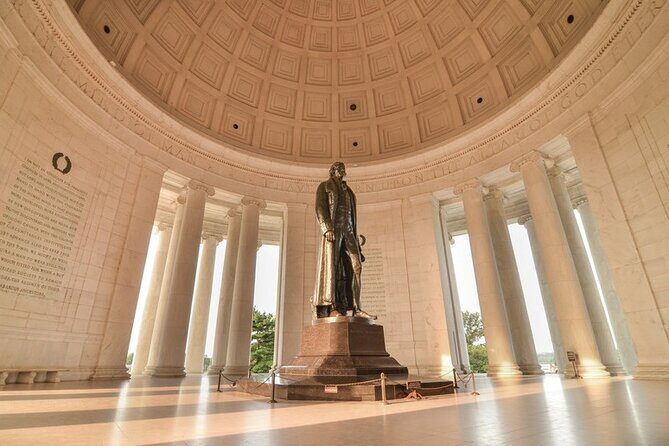
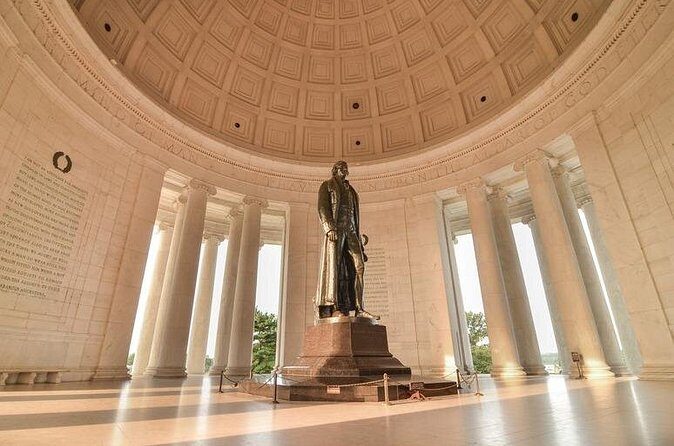
The Thomas Jefferson Memorial is your peaceful warm-up. It’s neoclassical in style, with architecture inspired by the Pantheon in Rome. Inside, there’s a towering Jefferson statue surrounded by excerpts from his writings—so the building isn’t just pretty; it’s making an argument about liberty and democracy.
You’ll get about 15 minutes, which is enough to do two things well: step in for the key interior moment and then walk the surrounding area long enough to appreciate the setting. If you’re visiting during cherry blossom season, the Tidal Basin backdrop is especially photogenic, and the overall mood fits the topic.
Possible drawback: because time is limited, you may not be able to linger for every line of text. If you’re a serious reader, treat this as an overview stop and plan a longer return later.
White House Exterior: Getting Your Best Photos from the Ellipse Area
The White House stop is a quick, exterior-focused moment—about 10 minutes—best for photos and orientation. You’ll see the grand neoclassical building from strong angles, especially around the Ellipse area.
This is where the tour earns its value even if you don’t care about politics. The White House is one of the most recognizable structures in the world, and capturing it from a good angle takes more effort than most people expect. The guide’s timing helps you avoid wasting minutes trying to find a decent vantage point on your own.
Do not expect a long walkthrough here. Plan this stop for photos, quick context, and moving on.






World War II Memorial: 56 Pillars and a Serious Reflection Moment
The World War II Memorial hits hard in the best way. You’ll be looking at a design built around remembrance: 56 pillars representing U.S. states and territories, set in the view corridor toward the Reflecting Pool and the nearby Lincoln Memorial axis.
You’ll have around 15 minutes. That’s just enough to take in the overall composition and then slow down at key spots—especially the mosaics and fountains that create a sense of motion and quiet at the same time.
If you’re traveling with kids, this memorial can be emotional, but it also provides clear visual storytelling. It’s one of those places where you can switch between “look at the shapes” and “talk about sacrifice” without it feeling forced.
Ford’s Theatre Photo Stop: Red Brick and 19th-Century Detail
Ford’s Theatre is a different tone—more street-level and architectural. The red brick façade and ornate columns give it a distinct 19th-century grandeur, and the surrounding area has energy, which makes it useful as a photo break.
You’ll have this as a stop within the route (exact duration isn’t spelled out in the details you provided), but treat it like a short chance to capture exterior shots and reset before the next memorial-heavy segment.
Practical tip: if you want clean photos, step a little away from the busiest sidewalk spots so you’re not fighting crowds in the frame.
Franklin Delano Roosevelt Memorial: Four Sections and Waterfall Quiet

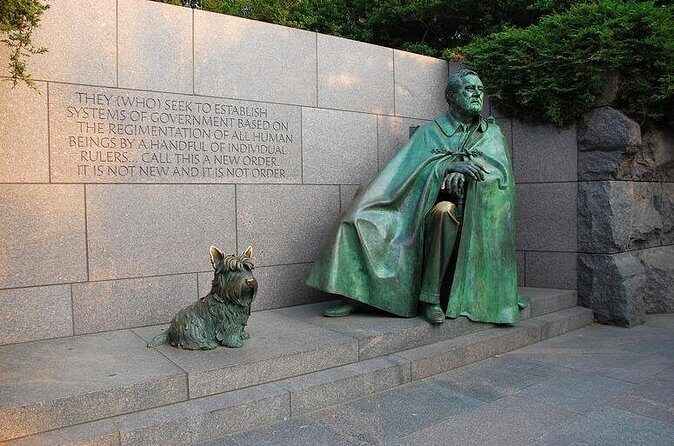
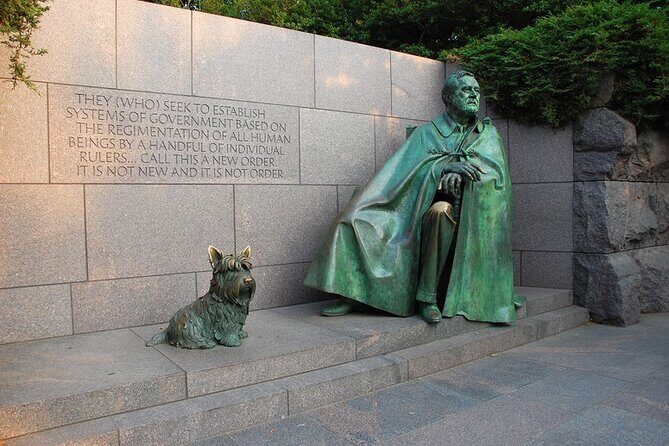
The Franklin Delano Roosevelt Memorial is built for lingering, even if your stop is about 20 minutes. It’s divided into four sections representing Roosevelt’s four terms, with sculptures and inscriptions that focus on perseverance through difficult times.
You’ll notice the layout works like a walking path through ideas: instead of one big room, you move between segments and let the story unfold. The waterfalls nearby also help the atmosphere. They add that soft background sound that makes it easier to think.
A small consideration: because it’s designed as multiple sections, people who want to read everything may feel rushed. If you’re short on time, focus on the major inscriptions first, then soak up the surroundings.
Martin Luther King, Jr. Memorial: The 30-Foot Statue and Quotes That Land
The Martin Luther King, Jr. Memorial is one of the most striking visual statements on the route. You’ll see a 30-foot statue rising from granite, and the surrounding gardens include quotes that connect to his messages of love and equality.
You’ll get about 15 minutes. That’s enough time to get the full statue in your photos, then read a few of the most important lines up close. The design is intentionally dramatic—so even a short stop feels meaningful.
If you’re the type who likes to talk while you walk, this is a strong stop. The quotes give you easy topics without needing to invent discussion.
Vietnam Veterans Memorial: The Names Wall and the Companion Statues
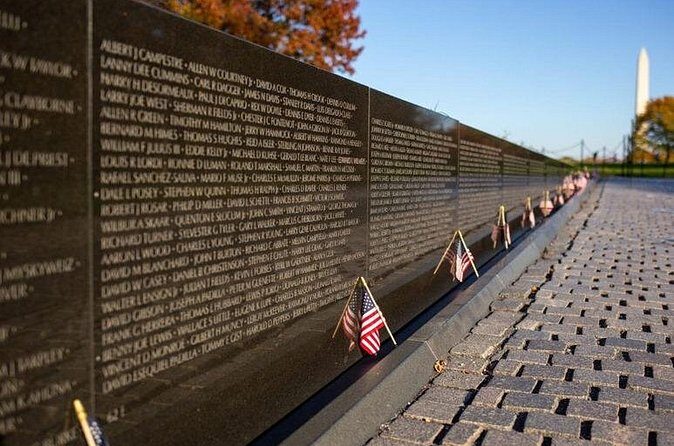
The Vietnam Veterans Memorial is not “light and scenic.” It’s the kind of place where you find yourself quiet without trying. The polished black granite wall is inscribed with over 58,000 names, which means the memorial’s power is in the scale and the directness.
You’ll have about 20 minutes, which is good because you’ll want at least a moment to find a section and look at names rather than just snapping photos. There are also companion elements, including the Three Servicemen Statue and the Vietnam Women’s Memorial, which help you see a fuller picture of people affected—not just one angle.
Practical note: black granite can reflect light and create glare. If photos matter, try stepping slightly to find the right angle rather than fighting the sun head-on.
Lincoln Memorial: Columns, Unity, and the Steps That Hold Memory
The Lincoln Memorial is classic DC for a reason. You’ll see a towering Lincoln statue framed by classical architecture, with 36 columns representing the states at the time of his death. It’s designed to feel solid and steady, which helps you reflect on unity and freedom without distraction.
You’ll get about 20 minutes. The steps are a major part of the emotional impact because they connect directly to the civil rights legacy—it’s also where Dr. King delivered his iconic speech.
If you’re planning your day based on “what’s most important,” Lincoln is the stop that tends to anchor the whole route.
Korean War Veterans Memorial: Stainless Steel Figures Against Black Granite
The Korean War Veterans Memorial keeps the focus on people rather than abstract ideas. You’ll see 19 stainless steel statues of soldiers set against a black granite wall that mirrors their presence. That mirror effect changes how it feels depending on where you stand and how the light hits.
You’ll have about 15 minutes. This is enough to walk the memorial layout and take in the full lineup, but not enough to linger for everyone’s story in detail. Still, the visual design is clear and immediate.
If you’re traveling with anyone who likes photography, this stop tends to produce strong results because the contrast is dramatic and the figures have distinct poses.
U.S. Capitol Exterior: The West Side Dome in a Photo-Friendly Moment
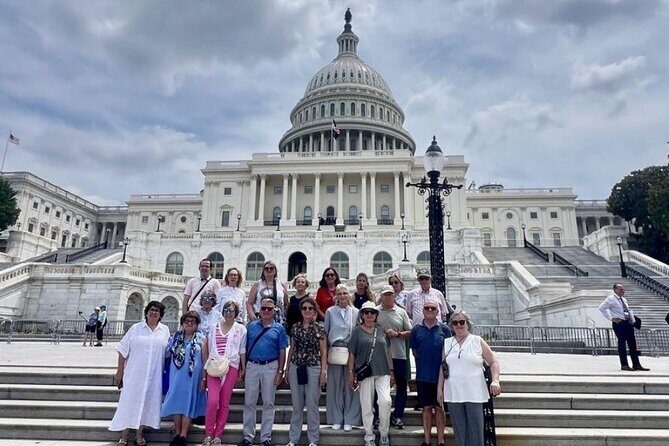
The tour wraps the major monuments with a U.S. Capitol exterior stop. You’ll focus on the west side and the dome, with gardens and the Reflecting Pool nearby. It’s especially worth it when the light is warm—sunset tends to make the building look softer and more golden.
You’ll have about 10 minutes here. That time is just for exterior framing and a quick sense of place. It’s also a good final mental reset before heading back to the meeting point.
Bonus Stops and a Restroom Break Without Losing the Thread
Besides the headline memorials, the route passes several important landmarks and sites, including: the Justice Department, Waldorf Astoria, Willard Hotel, WWI Memorial, and the National Archives area. You’ll also have a chance to stop and use public restrooms.
This kind of add-on is practical. DC can surprise you with long walks between places, and having a restroom option helps keep the whole day comfortable.
If you’re planning for heat, I suggest using the restroom break strategically—don’t wait until you’re desperate.
Who This Tour Fits Best (And Who Might Want Another Option)
This tour is ideal if you want to hit the biggest DC memorials in one morning and you prefer a guided route with timing. It’s also a good choice for people traveling with kids, because you can maintain movement while still visiting the most visually and emotionally powerful sites.
I’d consider another option if you’re the type who wants to read everything slowly at every wall, statue, and inscription. The short stop durations (often 10–20 minutes) are built for efficiency, not hours of quiet study.
One more note: wear comfortable shoes. DC sidewalks are not a gentle stroll day after day.
Should You Book This DC Monuments and Memorials Tour?
Yes, if you want a structured, small-group way to see the Tidal Basin memorial cluster plus the bigger downtown anchors without wasting time. The mix of air-conditioned comfort, bottled water, and audio links makes the route feel purposeful instead of random.
Don’t book if you’re looking for a slow museum-style experience at each stop. This is built for moving, photographing, and learning just enough to make the memorials hit.
If you’re short on time in Washington, DC, this is one of the most sensible ways to spend it.
FAQ
How long is the tour?
The tour is about 4 hours (approximately).
How much does it cost?
It costs $89.00 per person.
What time does the tour start, and where does it meet?
It starts at 9:00am and meets at One CityCenter, 850 10th St NW, Washington, DC 20001.
What kind of tickets or tech do I get?
You’ll receive a mobile ticket, and there’s an audio link for each site.
Is WiFi or onboard internet included?
No, WiFi on board is not included.
What about headphones?
Earbuds/headphones are not included, so you’ll need your own if you want audio.
How big is the group?
The tour has a maximum of 12 travelers.
Are admission tickets included?
Admission tickets are included for the stops where tickets are indicated (for example Jefferson Memorial, White House, World War II Memorial, Franklin Delano Roosevelt Memorial, Martin Luther King Jr. Memorial, Vietnam Veterans Memorial, Lincoln Memorial, Korean War Veterans Memorial, and U.S. Capitol in the provided details).
What happens if weather is bad?
This experience requires good weather. If it’s canceled due to poor weather, you’ll be offered a different date or a full refund.
If you want, tell me your travel month and who’s in your group (ages, interests like photos vs. history), and I’ll suggest how to prioritize these stops for the best vibe.