REVIEW · CITY TOURS
Washington DC Narrated City Tour
Book on Viator →Operated by All Washington View LLC · Bookable on Viator
White House photos can be trickier than they look. This 3-hour narrated tour runs a tight loop past DC’s big icons, with live guide commentary and planned short walks that help you see the right sides of the landmarks. The one catch: stop time can shrink during renovations, ceremonies, or heavy traffic, so you may not linger as long as you’d like.
For $59 per person, you’re paying mostly for convenience: pickup by air-conditioned coach or minivan, transport between sights, and a guide who ties everything together as you go. Most listed stops are free to enter, so your money goes toward narration and getting you close enough to make photos (and quick memories) work.
In This Review
- Key things that make this DC tour worth your time
- 3 Hours That Fit the DC You Actually Want
- Price and What You’re Really Paying For at $59
- Getting On the Bus: Meeting Point and Time Punctuality
- Stop by Stop: White House North-Side Views and the Capitol Area
- National Mall Crossroads: Navy Memorial and the National Archives
- World War II and Lincoln Memorial Photo Windows
- MLK Memorial and the Tidal Basin in Any Season
- Guides Make the Difference (From Ali Zohery to Charles to Bobby)
- When Renovations, Ceremonies, and Traffic Change the Timing
- What to Bring for a Comfortable 3-Hour Capitol Run
- Who This Tour Suits Best
- Should You Book This Tour or Not?
- FAQ
- How long is the Washington DC narrated city tour?
- What time does the tour start?
- Where does the tour meet?
- How much does the tour cost?
- What landmarks are included?
- Is admission included?
- Are food and drinks included?
- Is the tour okay for children?
- Can I cancel for a full refund?
- Does the tour run in bad weather?
Key things that make this DC tour worth your time

- Live narration that keeps the pace moving so you don’t waste time guessing what you’re looking at
- Free-entry stops built around DC’s core political and memorial zones
- Short walking windows that fit families and first-timers who want the highlights fast
- North-side White House focus plus Lafayette Park and nearby executive buildings
- Maximum group size of 60, with professional guide management reported across many departures
- Weather-ready format that still runs in all conditions
3 Hours That Fit the DC You Actually Want
This is a “see the classics” tour, built for days when you want the big DC landmarks without committing to a full-day grind. You’ll do a lot of seeing per hour, but in a way that usually feels doable: coach between stops, then brief time on foot to look, read, and take a few photos.
The route is also designed to make first-timers feel oriented fast. DC can be confusing when you’re walking streets and crossing open plazas, especially around the National Mall. This tour helps you understand what sits where—politics, presidents, and major war memorials—so your later independent exploring makes more sense.
You can also read our reviews of more city tours in Washington DC


Price and What You’re Really Paying For at $59
$59 sounds like a fair deal for DC because it’s not paying entrance fees at most stops. The value is in the structure: transport, live narration, and practical timing that puts you at the main sights within a half-day window.
Also, remember what you’re avoiding. Without a tour, you still have to work out how to get from place to place, line up for tickets if needed, and figure out what angles are best. Here, the guide’s job is to point you to the meaningful parts while the bus handles the “how do we get there” problem.
That said, if your priority is long, slow museum-style visits, this may feel short. Many stops are timed for quick viewing, so think of it as a highlights sampler, not a deep research project.
Getting On the Bus: Meeting Point and Time Punctuality

The meeting point is 400 New Jersey Ave NW, Washington, DC 20001, and the tour starts at 10:30 am. The biggest practical tip is simple: double-check NW versus SW. One missed direction can send you on a wild goose chase, because DC streets around the Capitol area can look similar on a phone map pin.
Plan to arrive early—before the 10:30 start time—because parking and curbside pick-up can take longer than expected. Several departures run as scheduled, but delays can happen in DC, and the tour format depends on keeping the schedule moving.
The tour ends back at the same meeting spot, which is great if you’re planning to continue on your own afterward. You’ll also want to keep your expectations flexible. Heavy traffic and road changes can affect stop length, even when the tour route remains the same.
Stop by Stop: White House North-Side Views and the Capitol Area

Your first major moment is the White House area. The focus is on what you can actually view from the bus and nearby sidewalks—specifically the northern side of the White House, plus Lafayette Park, the Old Executive Office building, and the Treasury.
Why this matters: many people expect to “see the White House” in a single clean photo. In reality, access and sightlines depend on security, event prep, and construction. This tour is designed around a realistic viewing approach, so you’re not left staring at a barrier and hoping for the best.
Next comes the Vietnam Veterans Memorial and the Nurses Memorial. This is one of the most moving stops on the day, especially because the memorial includes over 58,000 names. You’ll have time to walk and look up close, which is the best way to absorb what you’re seeing—fast bus windows won’t do it justice.
Then you roll toward the U.S. Capitol area. You’ll see the Capitol up close, and the plan includes the United States Botanical Garden and time around the National Mall and Memorial Parks area. If you like a mix of political symbols plus green space, the Botanical Garden stop can be a nice change of pace within the broader memorial day.
A consideration here: because you’re balancing a lot of ground in limited time, you’ll want to decide in advance what you want most—exterior views, quick reading, or a little extra walking for photos.
National Mall Crossroads: Navy Memorial and the National Archives
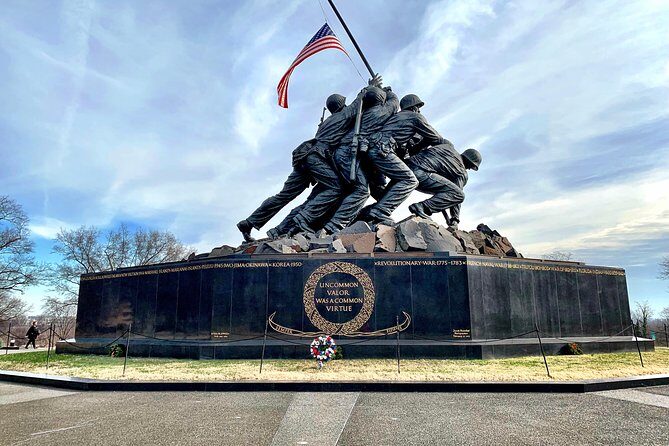
After the Capitol zone, the tour includes a stop centered on the U.S. Navy Memorial and the National Archives. This is a smart pairing because it adds two different kinds of DC meaning in a single block of time: service and history, government documents and national story.
This section works well if you’re trying to connect the dots between the memorials you’ll see later and the political institutions you’ll have already seen in the morning. Even with short time, you can leave with a clearer sense of what’s “where” and why it’s there.
If you’re the type who likes to read every sign, you may wish this stop had more minutes. But if you’re more focused on seeing the major touchpoints, it’s a solid stop to keep the day from feeling one-note.




World War II and Lincoln Memorial Photo Windows

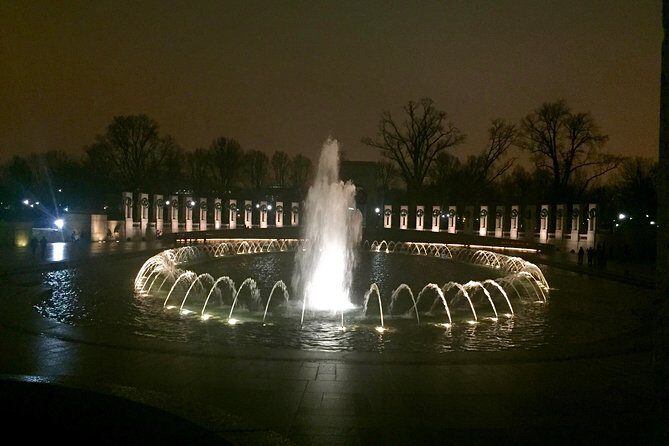
The National World War II Memorial is next, and your time is built for quick immersion. This is the spot where scale hits. It’s not just names and dates; it’s the kind of memorial where you feel the reason people build these places to begin with.
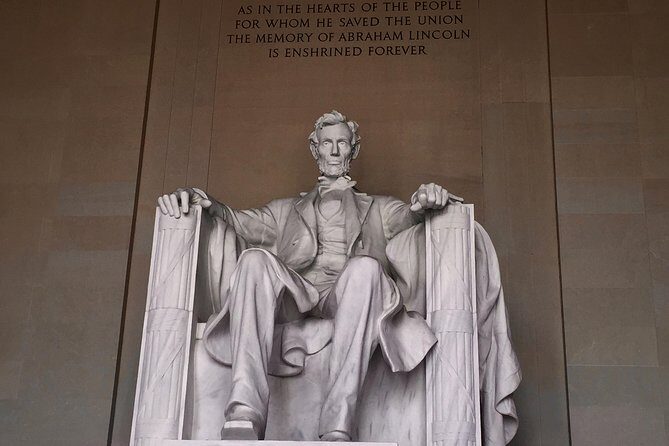
The tour then moves to the Lincoln Memorial and the Reflecting Pool. The Reflecting Pool is one of those DC “you’ll know it when you see it” scenes, and the timing here gives you a chance to get your photos and take in the view without rushing nonstop.
One practical note: many people don’t realize how much foot traffic can gather near the Lincoln Memorial area. If it’s busy, you’ll still manage a good viewing, but your comfort will depend on how patient you are in a crowd.
MLK Memorial and the Tidal Basin in Any Season
The final stop is the Martin Luther King, Jr. Memorial. The guide narration tends to make this section more than just a statue and plaques—you’ll hear why it has the impact it does and what it represents.
Also included is time around the Tidal Basin, which you’ll likely associate with the Cherry Blossom Festival even if you’re not visiting in spring. That association is useful because it gives context: the same basin that frames a festival also frames quiet, everyday DC beauty.
This stop can land really well for families, because it’s easy to talk about big ideas in a place that’s built for reflection. The short walk time also means you can enjoy it without ending the day feeling exhausted.
Guides Make the Difference (From Ali Zohery to Charles to Bobby)

A big reason this tour scores well is the guide impact. You’ll ride with a professional guide providing live commentary, and several names show up repeatedly in guide descriptions you might encounter, including Ali Zohery, Dr. Zaheril, Charles, Bobby, Nichole, and Juspal.
What you should expect from strong departures is clear communication plus story flow. Some guides are reported as funny, engaging, and patient with questions, including helping guests with mobility needs. Others manage the group well so you don’t spend the day stuck behind the same few people.
Some tours also go slightly off script in smart ways. For example, one departure reportedly added the Jefferson Memorial when requested, and another made a stop for hot chocolate or coffee at Starbucks when the weather was cold. Those perks aren’t guaranteed, but they show you the tour can adapt when the situation allows.
If you get a guide who keeps the narrative tight, the whole day feels more meaningful. If the pace is fast, you’ll still see the sights, but you might miss some of the “why it matters” pieces.
When Renovations, Ceremonies, and Traffic Change the Timing
DC is a moving target. Road closures, security adjustments, and renovations can affect sightlines and stop duration. One response you might run into is reduced time at memorials due to preparations for major milestones, including a 250th anniversary-type context.
Traffic can also cut into schedule. On some Memorial Day–type dates, road closures are common, and that can lead to less time at certain places. The tour will still try to hit the listed core stops, but you should plan for the possibility that a “20 minutes” moment could shrink.
My practical advice: don’t treat every minute like a promise. Treat the tour as a strong overview that will get you close to the essentials. If you want longer time at one place—like the Vietnam Veterans Memorial or MLK—plan to return on another day under your own pace.
What to Bring for a Comfortable 3-Hour Capitol Run
You’re mostly on and off the bus, with short walks. That means you should pack for weather, not just sunshine. The tour operates in all weather conditions, so dress appropriately and be ready for cold wind, heat, or rain.
A few practical items that help:
- Comfortable shoes for sidewalks and quick plaza crossings
- A light layer you can manage if temperatures swing
- Your camera, but also be ready to pause for a minute and actually look
If you’re visiting in peak heat, choose breathable clothing. Some departures report AC comfort between walks, which is exactly what you want when you’re doing memorials outdoors.
Who This Tour Suits Best
This is a good fit if you:
- Are seeing DC for the first time and want a fast orientation
- Have limited time and want the major sights without planning routes
- Prefer a structured day with live narration over self-guided wandering
It can be a great family option because time at each stop is short enough to keep kids from melting down, and it moves at a pace that still includes meaningful viewing windows.
It may be less ideal if you want museum-depth reading or long, quiet contemplation at a single memorial. Also, you need a moderate physical fitness level, and children must be accompanied by an adult.
Should You Book This Tour or Not?
Book it if your goal is to get your bearings fast and check off DC’s biggest landmarks in a half-day. For $59, the combo of air-conditioned transport and live guide narration makes the time feel efficient, especially with many stops having free admission.
Skip it or choose a longer, more flexible option if you know you need more than brief stop time. The tour’s strength is the highlights loop; the trade-off is that DC events and construction can tighten the schedule.
If you’re planning a short trip, I’d call this one a strong starting point—then use the rest of your days to return to your favorite stops at a slower pace.
FAQ
How long is the Washington DC narrated city tour?
It runs for about 3 hours.
What time does the tour start?
The start time is 10:30 am.
Where does the tour meet?
The meeting point is 400 New Jersey Ave NW, Washington, DC 20001.
How much does the tour cost?
The price is $59.00 per person.
What landmarks are included?
You’ll stop at the White House area, Vietnam Veterans Memorial (and Nurses Memorial), the U.S. Capitol area (including the U.S. Botanical Garden and the National Mall and Memorial Parks area), the U.S. Navy Memorial and the National Archives, the National World War II Memorial, the Lincoln Memorial and Reflecting Pool, and the Martin Luther King, Jr. Memorial (with the Tidal Basin area).
Is admission included?
The tour info lists free admission for the stops, and the White House stop notes an admission ticket free.
Are food and drinks included?
No. Food and drinks aren’t included unless specified.
Is the tour okay for children?
Children must be accompanied by an adult.
Can I cancel for a full refund?
Yes. Free cancellation is available up to 24 hours before the experience’s start time for a full refund. If you cancel less than 24 hours before, no refund is provided.
Does the tour run in bad weather?
It operates in all weather conditions, so you should dress appropriately.