REVIEW · 3-HOUR EXPERIENCES
DC Monuments Small Group Guided Night Tour 3 Hours
Book on Viator →Operated by Heart of DC Tours · Bookable on Viator
Nighttime DC feels like a movie set.
This 3-hour small-group night tour strings together the city’s biggest monuments and memorials with photo moments and time to read what you’re actually looking at.
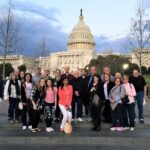
What I like most is the small-group setup and the fact that you can actually ask questions. The guide on these tours, often Ken, keeps the pace comfortable and gives clear instructions so you’re not hunting for the next stop in the dark.
One thing to consider: you’re spending real time outdoors in the evening, so plan for cold weather. Also, the tour focuses on landmark exteriors—the White House and Capitol are photo stops, not inside visits.
In This Review
- Key things to know before you go
- After 7 p.m., DC becomes a different kind of sightseeing
- One CityCenter pickup and the small-group rhythm
- Your 3-hour night route through DC’s biggest icons
- Thomas Jefferson Memorial: neoclassical columns and thoughtful pauses
- Ford’s Theatre: red-brick drama and classic photo angles
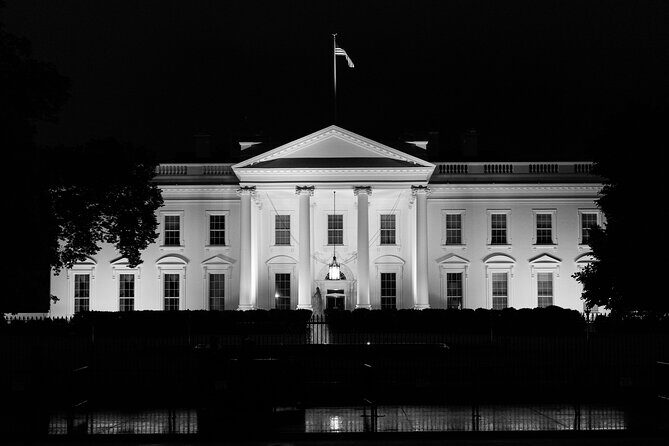
- The White House: your best shot for a lit-up exterior
- World War II Memorial: pillars, reflecting pool, and big-scale symbolism
- U.S. Marine Corps War Memorial (Iwo Jima): the statue that stops conversations
- Martin Luther King Jr. Memorial: the statue and the words around it
- Vietnam Veterans Memorial: black granite names and quiet intensity
- Lincoln Memorial: columns, steps, and the meaning of unity
- Korean War Veterans Memorial: soldiers, mirrored wall, and stillness
- U.S. Capitol (exterior): dome shots and evening glow
- Photo strategy for the White House and memorial walls
- Audio links and what you should bring
- How the guide changes the whole night (Ken’s style)
- Price and value: is $89 worth it?
- Who should book, and who might skip
- Should you book this DC monuments night tour?
- FAQ
- What time does the DC monuments night tour start?
- Where does the tour meet, and where does it end?
- How long is the tour?
- How much does the tour cost?
- How many people are in the group?
- Is the tour offered in English?
- Does the tour include audio for the stops?
- Do I need to bring headphones?
- Is the White House or U.S. Capitol admission included?
- What if the weather is poor or I need to cancel?
Key things to know before you go
- Max 12 people means the tour feels personal, not like a cattle chute
- Photo time built in at key stops, especially for the White House at night
- Audio link for each site helps you understand what you’re seeing on the spot
- Free time at stops so you can stretch, wander a bit, and read at your own pace
- Bottled water and flashlights on hand when it gets dark and cold
After 7 p.m., DC becomes a different kind of sightseeing
DC at night has a way of making big landmarks feel more human. When the lights come on, you can see shapes and details that daylight tourism often flattens. Plus, you avoid the harsh sun and the crush that can happen earlier in the day.
This tour is built around that idea: hit the major sites after dark, keep the walking manageable, and use the time well. You’ll be in an air-conditioned vehicle, and the stops are timed so you get a mix of narration and personal space.
You can also read our reviews of more guided tours in Washington DC


One CityCenter pickup and the small-group rhythm
The tour starts at One CityCenter (850 10th St NW) at 7:00 pm, and it ends back at the same meeting point. That loop matters. In a city as spread out as DC, returning you to the start is one less problem to solve when you’re tired and it’s late.
A few practical wins:
- You board a vehicle that’s air-conditioned (nice when the weather is hot or if the evening is chilly but not freezing).
- You get bottled water.
- You’ll use a mobile ticket.
- The group is limited to up to 12 people, which keeps the flow calm and makes it easier to hear the guide.
The meeting point is described as near public transportation. That’s helpful if you don’t want to rely on taxis for everything.
Your 3-hour night route through DC’s biggest icons
This is the “see a lot without sprinting” kind of tour. You get short-but-real viewing windows, plus free time at each stop. Below is what to expect, in the order you’ll experience it.
Thomas Jefferson Memorial: neoclassical columns and thoughtful pauses
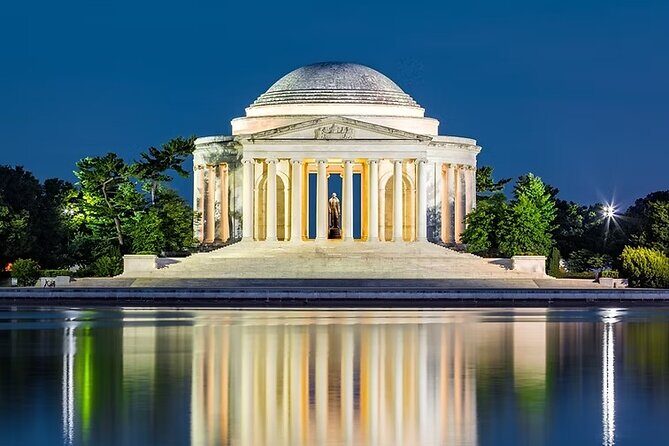
The night view of the Thomas Jefferson Memorial is about contrast: a bright monument frame against the darker Tidal Basin area. Outside, the neoclassical design pulls your eye up fast, and it’s easy to spot why it’s often compared to famous European inspiration.
Inside, Jefferson’s influence is spelled out through a towering statue and excerpts from his writings. Even if you only catch parts at night, you’ll understand the theme quickly: liberty and freedom. This stop is also a sweet spot for photos because the lighting makes the building look crisp.
Tip for your time here: don’t rush the reading sections. A 20-minute stop goes fast if you’re only snapping pictures.
Ford’s Theatre: red-brick drama and classic photo angles
Next is Ford’s Theatre, known for its striking red brick façade and ornate columns. At night, the building texture looks sharper, and the energy outside often makes it feel lively without being chaotic.
You’ll also have time for a quick look at the street scene—use it for marquee photos and wide shots. This one is short, so treat it like an “establish the story” stop: look, frame, move.
You can also read our reviews of more evening experiences in Washington DC

The White House: your best shot for a lit-up exterior
If you came for the White House, you’ll appreciate the focus here. You’ll have about 15 minutes to take in the exterior and grab photos from angles around the Ellipse area.
Night photography is all about timing and steadiness. The building is iconic, but the secret is keeping your shot clean—use the manicured lawns and surrounding gardens as visual anchors so the White House doesn’t look like it’s floating.
Consideration: since the tour is focused on the exterior, don’t plan on any inside access. The White House admission isn’t included.
World War II Memorial: pillars, reflecting pool, and big-scale symbolism
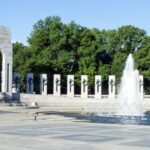
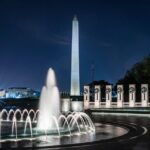
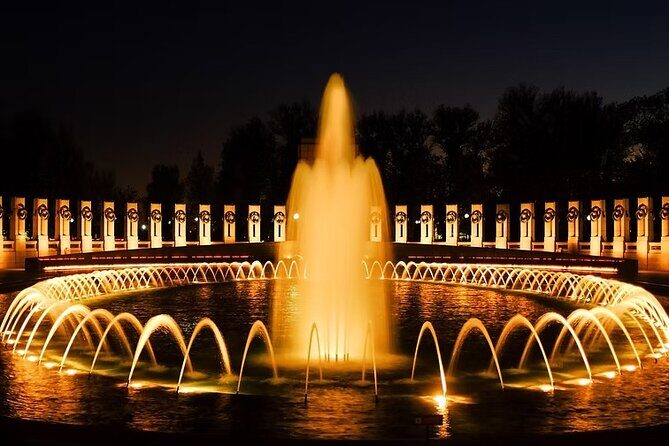
At the World War II Memorial, the main show is the 56 pillars that symbolize the U.S. states and territories involved in the war. The memorial’s placement near the Reflecting Pool gives you a natural photo line, and the lighting helps the pillars read clearly at night.
You’ll also notice cascading fountains and mosaic details. This is one of those stops where a short visit still feels weighty, because the design pushes you to slow down.
Practical tip: if you want a “read-and-think” moment, this is a good place to do it before the rest of the route keeps moving.
U.S. Marine Corps War Memorial (Iwo Jima): the statue that stops conversations
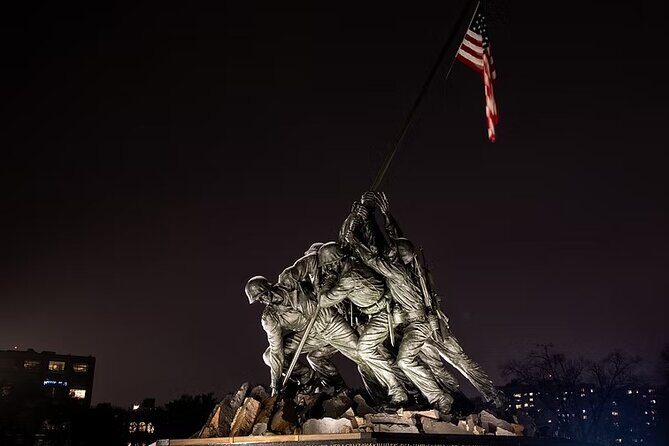
The Marine Corps War Memorial, often called the Iwo Jima Memorial, centers on a powerful statue of a flag-raising scene. At night, the contrast between the figure and the surrounding park helps it feel even more dramatic.
This is also a great place to look at the inscriptions around the site. Even with limited time, you’ll get the overall intent: honoring service and sacrifice through a single, unforgettable image.
Martin Luther King Jr. Memorial: the statue and the words around it
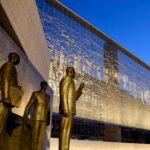
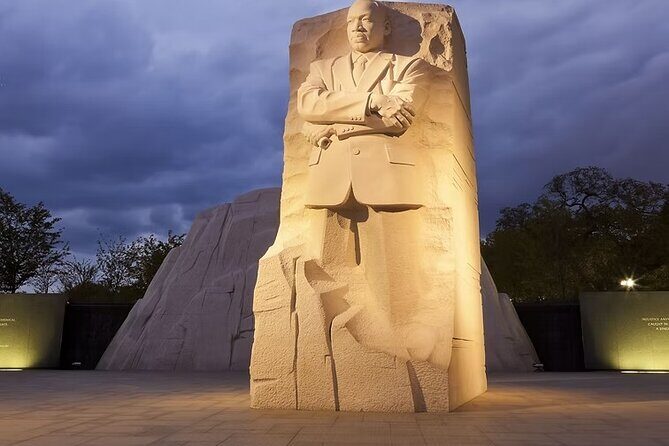
The Martin Luther King Jr. Memorial is designed to feel both grand and reflective. You’ll see the 30-foot statue rising from granite, and the quotes around the space connect the monument to the bigger story of equality and civil rights.
At night, the gardens and lighting create a calmer mood, which helps the message land. This stop works well if you want something more than just photos.
Consideration: the quote text matters here. If you only look at the statue, you’ll miss part of the point.
Vietnam Veterans Memorial: black granite names and quiet intensity
The Vietnam Veterans Memorial is unmistakable in the dark. The polished black granite wall lists more than 58,000 names, and when you’re standing there, the design makes you face the names directly.
This stop is often emotionally heavy, even on a short visit. You’ll also have access to the adjoining areas that include the Three Servicemen Statue and Vietnam Women’s Memorial, which helps show the broader human story connected to the site.
Time tip: if you want to do more than skim, pick one small section of names and really look. The wall is long, and 20 minutes can vanish faster than you expect.
Lincoln Memorial: columns, steps, and the meaning of unity
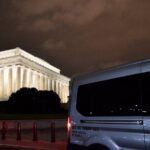
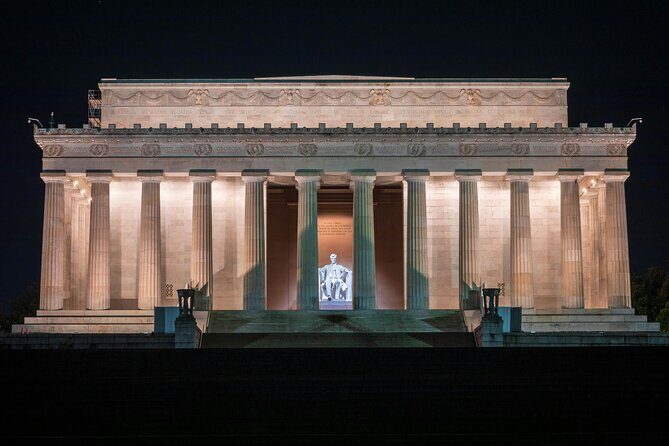
The Lincoln Memorial is a photo magnet, but it’s also a place built for reflection. The tall Lincoln statue, the classical architecture, and the 36 columns representing states at his death create strong visual structure—even at night.
The steps are a key part of the story because they connect to Dr. King’s famous speech. That connection gives you a clear “why it matters” thread as you move through DC’s civil rights and democracy sites in one evening.
If you’re short on time, still pause on the steps. It changes the feel of the monument.
Korean War Veterans Memorial: soldiers, mirrored wall, and stillness
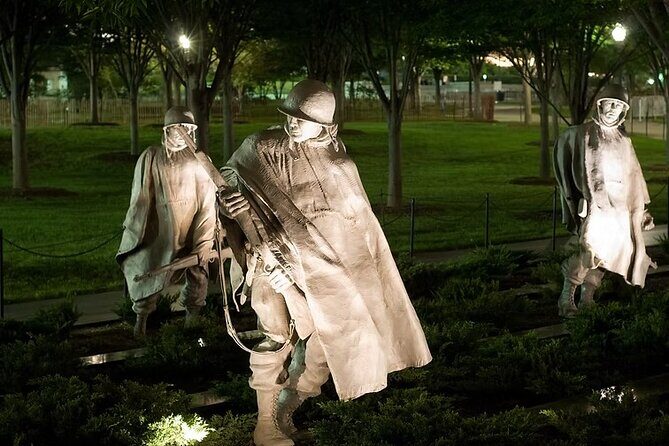
The Korean War Veterans Memorial uses 19 stainless steel statues set against a black granite wall that reflects the presence of visitors. Even when it’s crowded elsewhere, this one can feel like a pocket of quiet because of its design.
You’ll see juniper bushes around the memorial, which adds a natural frame and softens the scene visually. This is another spot where a quick stop can still feel meaningful if you read a little and stand still for a moment.
U.S. Capitol (exterior): dome shots and evening glow
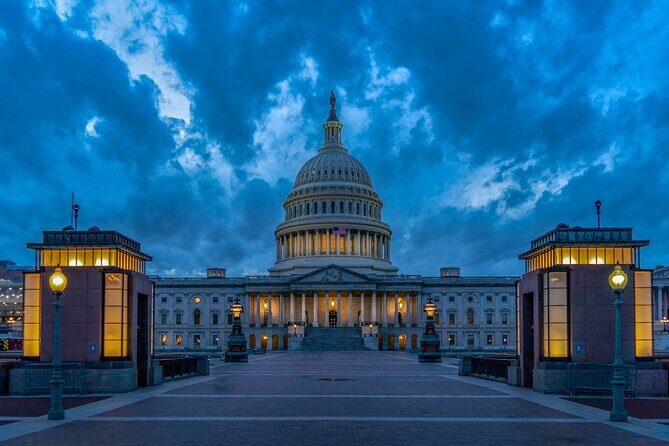
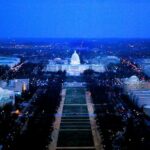
The final stop is the U.S. Capitol on the west side, focused on exterior views. You’ll see the neoclassical architecture and the dome, plus the gardens and the Reflecting Pool area around it.
Even though the tour is at night, the ending still has a payoff. The lighting on the Capitol can look warm as the evening progresses, especially if you time your photos while the sky still holds some color.
Consideration: Capitol admission isn’t included, so keep your plan aligned with exterior viewing.
Photo strategy for the White House and memorial walls
You’ll get the best results if you treat each stop differently.
- For the White House, think wide first. Then try one tighter angle that includes an architectural reference point (the lawn or a nearby line of sight) so the photo looks intentional.
- For memorials like the Vietnam Veterans Memorial and Korean War Veterans Memorial, steady your stance. These walls are reflective and high-contrast, which can turn phone screens into glare machines if you move too much.
- For pillar-based sites like the World War II Memorial, aim for framing that keeps the pillars vertical in your shot. The lighting helps, but only if your camera doesn’t tilt.
Also, don’t be afraid to use the free time as “personal time.” If the group moves on quickly elsewhere, you’ll still have time to reset your eyes and take a few cleaner shots.
Audio links and what you should bring
Each stop includes an audio link so you get context while you look. That’s a big deal in DC, where monuments can feel obvious in silhouette but surprising in meaning once you’re standing in front of them.
Two things to plan around:
- Earbuds/headphones are not included. Bring your own so you’re not blasting audio in a quiet memorial area.
- WiFi isn’t included on board. So have your phone ready with what you need before you start.
Your phone is also your photo tool, your ticket tool, and your audio tool in one. If your phone battery is sensitive, you’ll want to keep usage smart during the ride.
How the guide changes the whole night (Ken’s style)
A big reason this tour consistently gets high marks is how the guide runs the evening. On these nights, Ken’s approach is calm and organized. You get clear instructions on where to go, and you’re not left guessing when the group is moving.
You’ll also benefit from practical care:
- Lots of question time during stops, not just a lecture from the window.
- No rushing at the sites, so you can actually take photos and read.
- Restroom planning gets built in, which matters once you’ve been outside for an hour.
- When conditions change—like road closures—Ken finds alternate ways to keep you on track.
- Water is provided, and flashlights have been on hand in darker moments for easier navigation.
Small details like that prevent the night from feeling stressful. You’re still moving through a lot of landmarks, but you feel guided instead of managed.
Price and value: is $89 worth it?
At $89 per person, you’re paying for three things that are hard to DIY cleanly:
- A guided route that hits the biggest stops without you guessing timing in the dark
- Extra context through audio at each landmark, which turns photos into understanding
- Convenience: air-conditioned vehicle, bottled water, and a small group that keeps your time efficient
If your goal is a first-night DC overview—memorials, major architecture, and photo opportunities—this price often feels fair because the tour handles the “how do we make this work” part.
Where value drops a bit: if you want long stays inside buildings or more time at one memorial. This is a fast-and-focused route. It’s designed for seeing many icons, not for deep study at one wall.
Who should book, and who might skip
This tour is a strong fit if:
- You’re visiting for the first time and want the DC classics at night
- You like photo time but also want context, not just selfies
- You prefer a small-group pace over big bus schedules
- You want a guide who’s comfortable answering questions
You might look elsewhere if:
- You’re hoping for inside access to the White House or Capitol (this is exterior focused)
- You need lots of uninterrupted time at one memorial to fully read every element
- You struggle with being outdoors for short periods in cool evening weather
Should you book this DC monuments night tour?
If you want an efficient, well-run way to see Washington DC’s top memorials lit up, this is an easy yes. The small-group size, the audio at each stop, and the steady guidance help you enjoy the evening instead of racing it.
If cold weather or quick stop times are your biggest concern, plan your clothing and expectations. Dress for the outdoors, bring your own headphones for the audio, and treat the memorials like you’re there for meaning, not just images.
FAQ
What time does the DC monuments night tour start?
It starts at 7:00 pm.
Where does the tour meet, and where does it end?
It meets at One CityCenter, 850 10th St NW, Washington, DC 20001, and it ends back at the same meeting point.
How long is the tour?
The duration is approximately 3 hours.
How much does the tour cost?
The price is $89.00 per person.
How many people are in the group?
The tour has a maximum of 12 travelers.
Is the tour offered in English?
Yes, it is offered in English.
Does the tour include audio for the stops?
Yes. There’s an audio link for each site.
Do I need to bring headphones?
Earbuds/headphones are not included, so you should plan to bring your own.
Is the White House or U.S. Capitol admission included?
Admission tickets are not included for the White House and the U.S. Capitol (the tour focuses on exterior viewing).
What if the weather is poor or I need to cancel?
The tour requires good weather. If canceled due to poor weather, you’ll be offered a different date or a full refund. Free cancellation is available up to 24 hours in advance for a full refund.