REVIEW · 2-HOUR EXPERIENCES
DC: Lincoln’s Assassination 2 Hour Nighttime Walking Tour
Book on GetYourGuide →Operated by Visit DC Tours · Bookable on GetYourGuide
Lincoln’s last night plays out on city sidewalks. This 2-hour nighttime walking tour tracks the events leading to the assassination and the impact afterward, with stops from the White House to Ford’s Theatre. You also get a clearer look at the larger plot—especially the attempts on Secretary of State Seward and the Vice President—through story-led pacing and exterior-only landmarks.
Two things I really like: the guide’s storytelling style, and the way the tour mixes big moments (Booth’s motives and the coordinated attacks) with street-level details (escape routes and key building exteriors). I also appreciate that it’s family-friendly and built for questions, which comes through in how guides like Katherine and Lindsey deliver the story and keep kids engaged.
One consideration: this is exterior only, so if you’re hoping to go inside Ford’s Theatre as part of the tour, plan to buy your own ticket separately. And because it’s a nighttime walk, you’ll want comfortable shoes and a little patience for city sidewalks.
In This Review
- Key things to know before you go
- A 2-Hour Night Walk Built Around One Terrible Night
- Starting at St. John’s Episcopal Church by Lafayette Square
- Lafayette Square to the White House: Setting the stage for the plot
- Treasury, Pennsylvania Avenue, and the National Theatre: Seward, the VP, and coordinated attacks
- Old Post Office Museum area: Visualizing 1865 with historic photos
- Ford’s Theatre from the outside: Lincoln’s last breath, and the night’s climax
- Petersen House and the escape route: Baptist Alley and what happened after
- $49 for a 2-hour tour: Is it worth it?
- What the best guides do (and why it matters at night)
- Night-walk tips so you enjoy the walk more than you endure it
- Should you book this Lincoln assassination night tour?
- FAQ
- Where do I meet the guide?
- How long is the tour?
- Does the tour enter Ford’s Theatre?
- What’s included in the price?
- Is the tour wheelchair accessible?
- What language is the tour?
- How should I plan tickets for Ford’s Theatre?
- Is there free cancellation?
- Where does the tour end?
Key things to know before you go
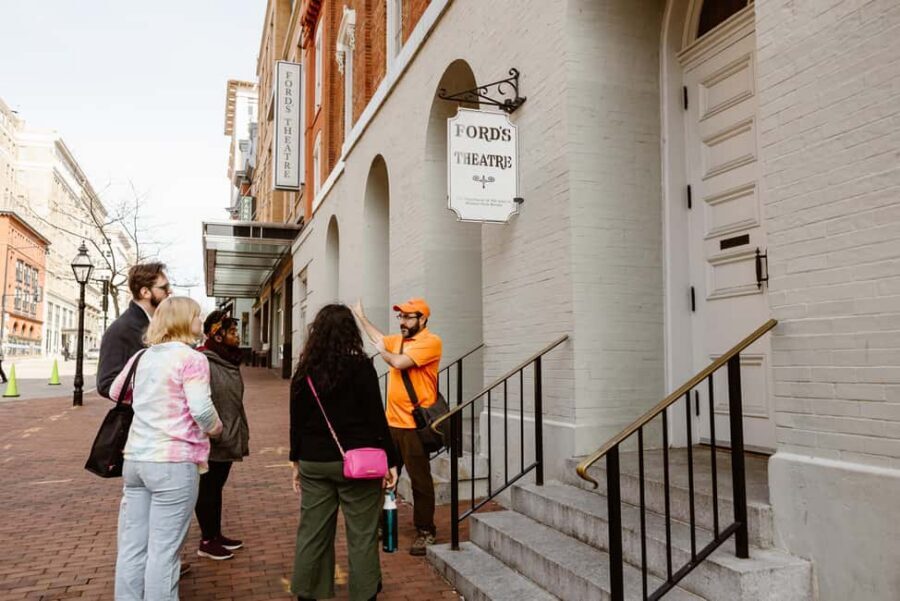
- Exterior-only route from the White House to Ford’s Theatre and Petersen’s Boarding House
- Seward and Vice President attack sites tied into one coordinated plot
- John Wilkes Booth’s plans and motives, explained in a clear, chronological way
- Photo stops that give you real orientation in 1865 Washington
- Historic images shown during the walk to help you visualize the original buildings
A 2-Hour Night Walk Built Around One Terrible Night
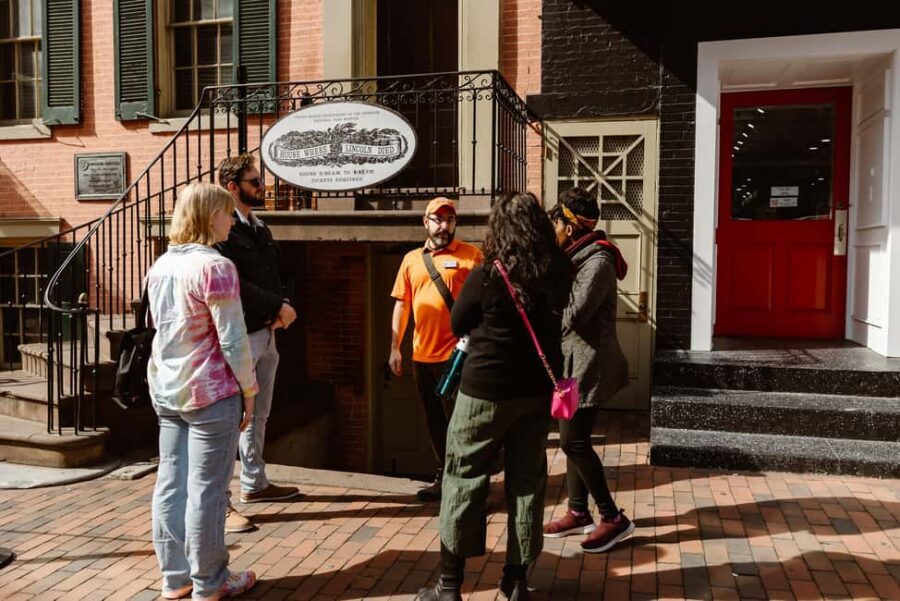
This tour is designed like a story with a map. Instead of bouncing between random Civil War facts, you move through downtown Washington as the narrative tightens—leading up to Lincoln’s assassination, then the consequences that followed. The pacing works well at night because you’re outdoors anyway, and the guide uses the city’s landmarks as plot points.
It’s also a practical length. With a 2-hour walk, you get enough time to connect dots between locations without feeling like you’ve signed up for a full evening marathon. The guide provides live narration throughout, so you’re not stuck reading plaques in the dark.
The biggest “know before you go” detail: you won’t enter buildings. Ford’s Theatre and Petersen’s Boarding House are seen from the outside. If you want the interior of Ford’s Theatre experience, you’ll need to plan that separately.
You can also read our reviews of more walking tours in Washington Dc


Starting at St. John’s Episcopal Church by Lafayette Square

You meet your guide at the entrance of St. John’s Church on 16th Street NW, at the yellow-columned church corner of 16th and H St NW, across from Lafayette Square. Important detail: it’s not the Parish House on H St NW. That kind of wrong-door mix-up is easy at night, so I’d aim to arrive a few minutes early and confirm you’re at the main church entrance.
Why this start spot matters: Lafayette Square is more than a backdrop. It sets the mood and geography for everything that follows, because you’ll spend time there for photo stops and context before the route moves closer to the heart of the story.
If you’re going with kids, this start also helps. They can see the “official” landmark zone right away, and the guide has room to frame the night’s events in simple terms before you start walking.
Lafayette Square to the White House: Setting the stage for the plot
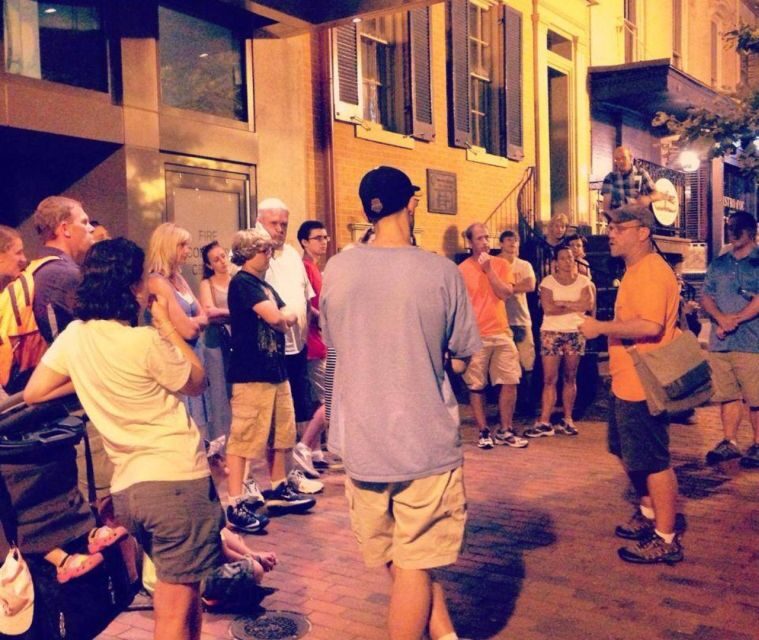
After St. John’s, you head into the Lafayette Square area. You’ll get a photo stop and visit time of about 20 minutes here, which is long enough to both take pictures and understand what Washington looked like in the lead-up to April 1865. It’s a smart move. If you don’t understand the setting, the assassination story can feel like disconnected drama.
Next comes another viewpoint photo stop (about 20 minutes). This is where you get spatial clarity—how the route relates to the city blocks—and it helps you track the direction of the story when you later hear about targets, escape routes, and movement during the chaos.
Then you make shorter stops as the group moves forward:
- U.S. Treasury Building area (about 5 minutes) for quick orientation
- The White House area (about 10 minutes) where you’ll walk past key perspectives tied to the night’s events
- Pennsylvania Avenue (about 10 minutes) for the broad “this is where everything converges” feeling
I like this stretch because the guide doesn’t rush straight to Ford’s Theatre. You get the “before” that makes the “during” make sense.
Treasury, Pennsylvania Avenue, and the National Theatre: Seward, the VP, and coordinated attacks
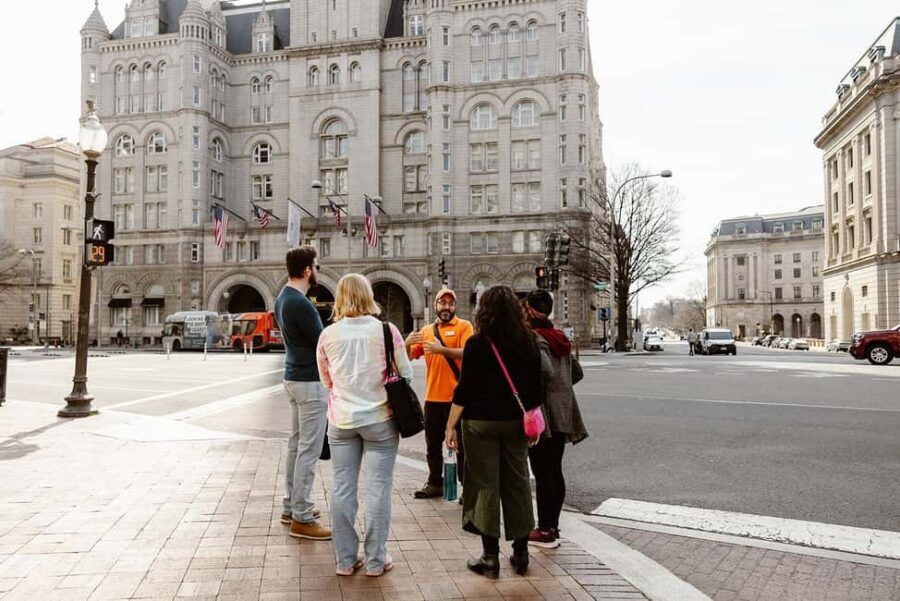
Once you leave the immediate White House zone, the tour starts doing something many history walks skip: it ties multiple targets to the same overarching plan. You’ll hear about the attempted assassination of Secretary of State Seward, and how that part of the plot fits into the broader coordinated design.
You also get the “why it mattered” context behind the planned attack on the Vice President. The tour highlights landmarks connected to this storyline, including the National Theatre area and the site of Kirkwood House Hotel, which is linked to the Vice President’s attempted assassination. Even though you’re outside and just looking at street-level spaces, the guide explains the stakes so the locations feel specific, not generic.
There’s also a downtown photo stop (about 20 minutes) as you move through the area. In practice, this is when you tend to get the best mix of questions and story pacing. The guide can slow down, answer “Wait, how did they plan that?” style questions, and then keep the momentum.
The route is still manageable, but it’s not a drive-by. The guide uses each pause to connect the dots—what was happening elsewhere while Booth’s plan was unfolding.
Old Post Office Museum area: Visualizing 1865 with historic photos
At about the midpoint (you’ll spend around 10 minutes at the Old Post Office Museum photo stop), the tour shifts from “you’re walking the story” to “you’re seeing what the city looked like.” That’s where the included historic images of buildings and characters become extra useful.
You’re not just hearing names and dates. You’re seeing how the city’s buildings relate to what the conspirators and authorities faced. And because this is an exterior-only walk, those photos do a lot of the heavy lifting. They help you picture original building appearances rather than relying on modern street views alone.
This section also helps you understand how the chaos of that night moved through the city. The story becomes less about one shooting and more about a chain reaction—planning, attempted attacks, escape routes, and the aftermath playing out in real spaces you can stand in.
You can also read our reviews of more tours and experiences in Washington Dc





Ford’s Theatre from the outside: Lincoln’s last breath, and the night’s climax
When you reach Ford’s Theatre, you’ll get a photo stop and visit time of about 15 minutes. You’ll see the exterior of the theatre connected to the assassination, and the guide brings you through what happened that night in a way that keeps the focus on the sequence of events.
A key detail: Lincoln took his final moments in Peterson’s Boarding House, not inside the theatre itself. The tour keeps that straight. You’re still building toward the end, and Ford’s Theatre is where the climax happens in the narrative—then you move on to the place where the story’s final chapter unfolds.
Because the tour doesn’t enter the theatre, you’ll get the most value if you treat Ford’s Theatre like your anchor stop. After the walk, you can add an indoor experience if you want. The tour suggests grabbing tickets from the theatre’s NPS option for about 2 hours after your tour start time (or earlier in the day for evening tours). That’s a smart rhythm: first you get the “why and how” on the street, then you see the space with those details in your head.
One more practical note: since it’s nighttime, you’ll want to watch your footing at curb edges and crosswalks. The stop photos are worth it, but don’t rush the group pacing.
Petersen House and the escape route: Baptist Alley and what happened after
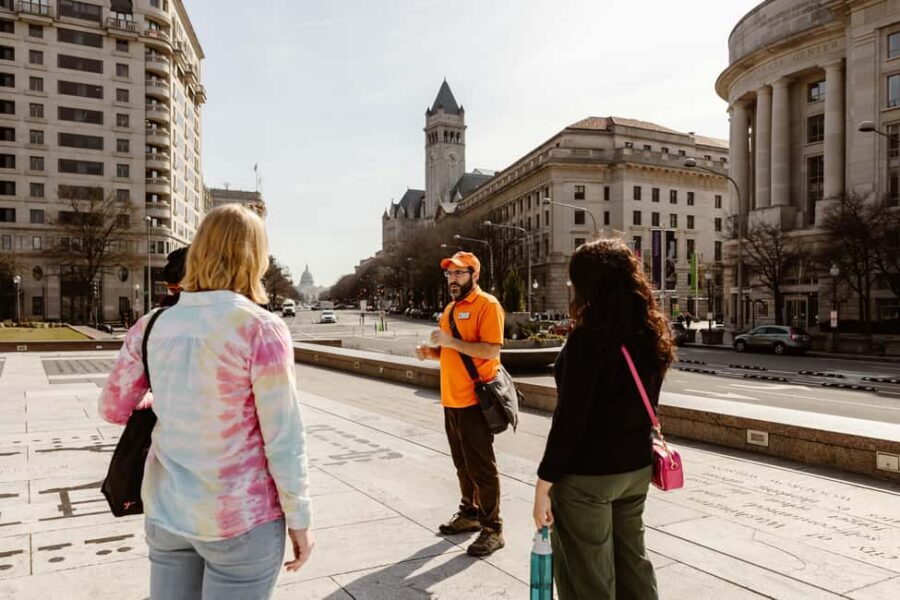
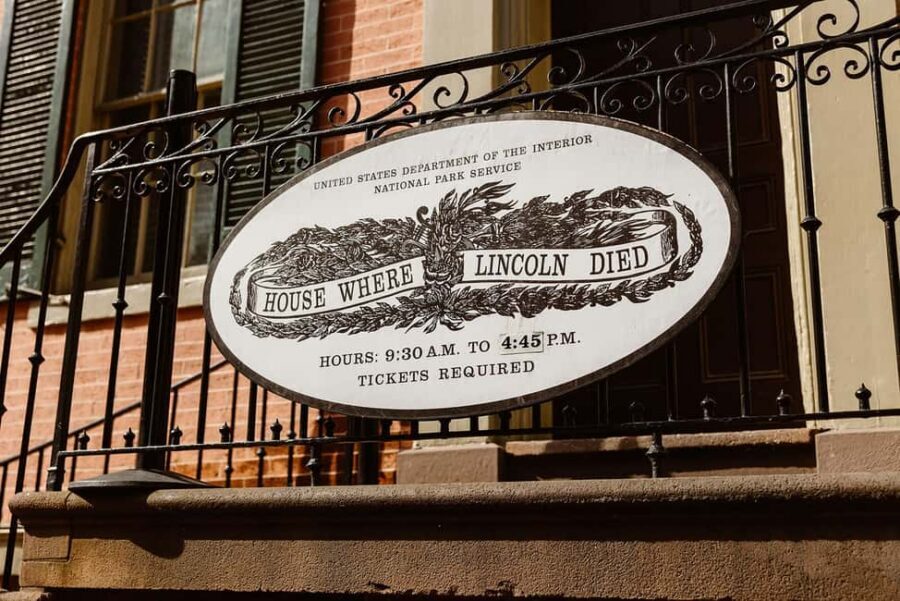
After Ford’s Theatre, the story closes with Peterson’s Boarding House, where Lincoln took his final breath. You’ll have about 10 minutes at that stop for photo and viewing time. Even though you’re seeing only the exterior, the guide ties the place to the immediate aftermath in a way that makes it feel like an endpoint with consequences, not just another photo op.
This is also where the tour’s darker threads come together: the guide explains the Baptist Alley escape route and connects it to the conspirators’ movements after the assassination. It’s the part that often makes the story feel stranger than fiction, because the planning and coordination you hear earlier starts to show up as physical routes through the city.
If you like historical crime stories, this is where the tour becomes extra satisfying. You’ll understand motive, method, and aftermath as one connected system rather than separate headlines.
$49 for a 2-hour tour: Is it worth it?
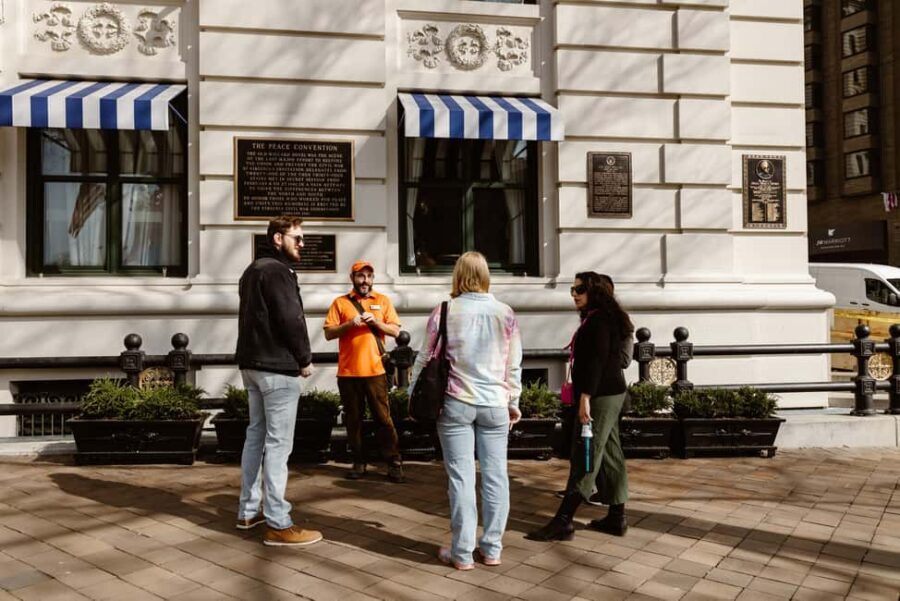
At $49 per person for a 2-hour nighttime walk, you’re paying for three things: live guidance, story structure, and access to a route that connects multiple locations in one coherent narrative. You’re not buying museum tickets or interior access here, so value comes from how well the guide uses the city as a stage.
From the guide delivery that’s been shared, this tour seems strongest when the narration is active and animated. Guides like Katherine and Lindsey are praised for being engaging and for answering questions well, including attention to younger kids. That matters. A history walk can become a lecture. When the pacing stays interactive, the time feels like it’s flying by.
The other value factor is that you leave the walk with a clearer plan for Ford’s Theatre itself. Even if you don’t go inside that night, you’ll understand why that building matters and what happened in the blocks around it. That makes your broader DC visit feel more connected.
What the best guides do (and why it matters at night)
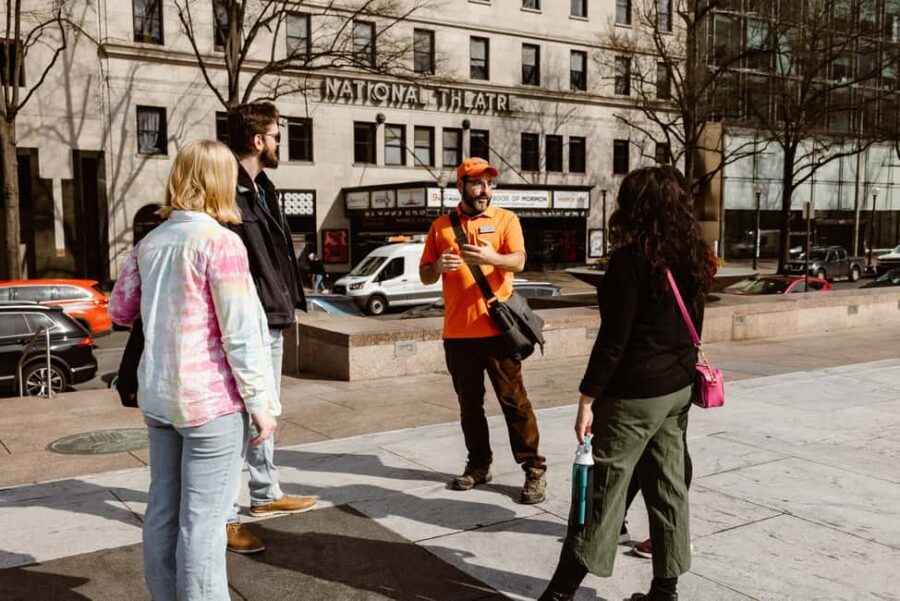
This tour is built around storytelling. So the guide isn’t just reciting facts; the guide is shaping how you experience the night. In the feedback, guides are described as very engaging and entertaining, with strong U.S. history focus and a delivery style that keeps people listening.
There’s also a practical angle. One guide situation was handled by offering another tour after an unexpected personal emergency (with Teresa mentioned). That’s not something you plan on, but it signals the company doesn’t just leave people stranded. If you’re counting on a specific schedule, still double-check your confirmation close to departure.
If you’re bringing family, look for the kind of guide who can talk to kids without talking down. The tour’s positioning as family-friendly is backed by comments about guides being attentive to young kids while still keeping the story tight for adults.
Night-walk tips so you enjoy the walk more than you endure it
Even though it’s only two hours, it’s still downtown walking at night. I’d plan for:
- Comfortable shoes with grip
- Layers, since night temperatures can swing
- A quick photo mindset (don’t stop moving every time you want a picture—save it for the guide’s pauses)
Also, if you want a smooth transition to an indoor Ford’s Theatre visit, give yourself buffer time. The tour focuses on setting up what you’ll see next. You’ll enjoy the theatre more if you’re not rushing from a crowd outside.
Should you book this Lincoln assassination night tour?
I’d book it if you want a structured, story-driven walk through downtown Washington that connects multiple assassination attempts into one night’s sequence. It’s especially worth it if you like understanding motives, coordination, and escape routes—not just the moment the shots were fired.
Skip it if you want an inside-theatre experience as part of the ticket. This is exterior only, so treat it as your pre-story and pick up Ford’s Theatre entry separately if you want that level of access.
If you can make a nighttime departure, this tour makes the city feel like part of the plot. And with guides like Katherine or Lindsey showing how lively and clear the narration can be, it can turn a historic subject into an evening you’ll actually remember.
FAQ
Where do I meet the guide?
Meet your guide at the entrance of St. John’s Church on 16th Street NW, at the yellow-columned church on the corner of 16th and H St NW, across from Lafayette Square. Do not meet at the Parish House on H St NW.
How long is the tour?
The tour lasts 2 hours.
Does the tour enter Ford’s Theatre?
No. It’s an exterior only walking tour, so you do not enter any buildings.
What’s included in the price?
You get live commentary from a professional guide and storyteller, plus historic images used during the walk.
Is the tour wheelchair accessible?
Yes, the tour is listed as wheelchair accessible.
What language is the tour?
The tour is provided in English.
How should I plan tickets for Ford’s Theatre?
The tour suggests purchasing Ford’s Theatre tickets for about 2 hours after the start time of your tour, or earlier in the day for your evening tour. The walking tour is meant as a complement to visiting the theatre.
Is there free cancellation?
Yes. You can cancel up to 24 hours in advance for a full refund.
Where does the tour end?
The information provided says it ends at Ford’s Theatre. Some activity details also note it can end back at the meeting point, so it’s worth checking your confirmation for the exact end location.