REVIEW · TOUR REVIEWS
Classic Monuments & Memorials Tour
Book on Viator →Operated by Nonpartisan Pedicab · Bookable on Viator
DC monuments can feel like a marathon. This private pedicab tour keeps it doable, and I love that it’s set up around your schedule. The guide narration turns landmark stops into clear stories, but one thing to consider is that most stops are short, so you’ll mostly capture photos and views rather than linger for hours.
In about 3 hours, you’ll cover a lot of the city’s most recognizable sights: the White House, Washington Monument, Lincoln Memorial, Jefferson Memorial, Martin Luther King Jr. Memorial, Franklin Delano Roosevelt Memorial, Korean War Veterans Memorial, and the Vietnam Veterans Memorial. It’s also built as a group-only experience (just your party), with pickup offered and a mobile ticket.
Since it’s an accessible-style pedicab outing with service animals allowed and a pace that avoids long walks, it’s a strong fit when mobility is limited. Still, expect some on-foot time at memorials where you’re invited to go inside or walk through. If weather turns poor, plan for the tour to shift because the experience requires good weather.
In This Review
- Key highlights to know before you go
- Why a pedicab works so well for DC monuments
- Price and value: a private loop for up to 2 people
- Timing, weather, and how the 3-hour plan feels
- White House to Washington Monument: quick icons with real context
- Lincoln, Jefferson, and MLK: the stops where you can step inside
- FDR, Korean War Veterans, and Vietnam: closer looks at sacrifice
- The guide narration is the real secret sauce
- Who should book this private DC monuments pedicab tour
- Should you book the Classic Monuments & Memorials Tour?
- FAQ
- How much does the tour cost?
- How long is the tour?
- Is this a private tour?
- Is pickup offered?
- Do you provide a mobile ticket?
- Is the tour accessible for limited mobility?
- Which major landmarks are included?
- Is admission free at the stops?
- Are service animals allowed?
- What happens if the weather is bad or I need to cancel?
Key highlights to know before you go
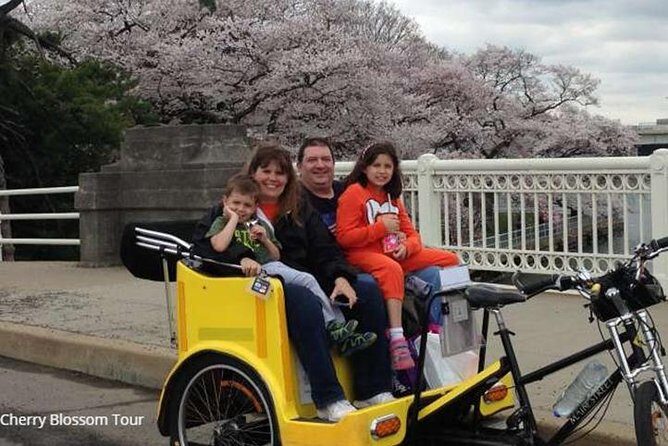
- Pedicab comfort, less strain: A lower-stress way to reach major monuments without long walking.
- A private pace that fits your day: Choose a departure time and keep the experience tailored to your group.
- Short, focused stops: You’ll hit many landmarks in one loop, with time for photos at each.
- Memorial access where it counts: Some sites include opportunities to go inside and explore at your own speed.
- Guide narration that gives context: The commentary is part of the value, not just background noise.
- Service animals welcome: Helpful if you need one for your trip.
Why a pedicab works so well for DC monuments

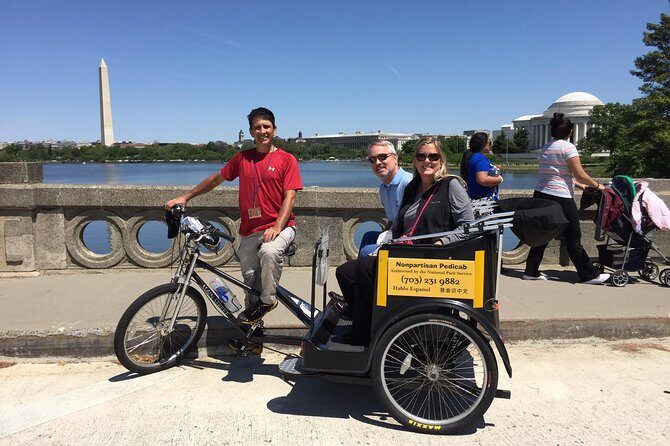
Washington’s monument zone is packed. Even if you can walk, the distances add up fast—curbs, long sightline walks, and lots of “one more block” moments. A pedicab changes the feel of the day because you’re not constantly managing the logistics of getting from one iconic stop to the next.
This tour is designed specifically around that reality. You’re meeting your guide downtown, hopping aboard, and then moving through the circuit in a way that helps people with limited mobility keep the day enjoyable. That doesn’t mean the day is completely hands-off: several memorials include invitations to go inside or walk through, so you’ll still want to plan for brief stretches on foot.
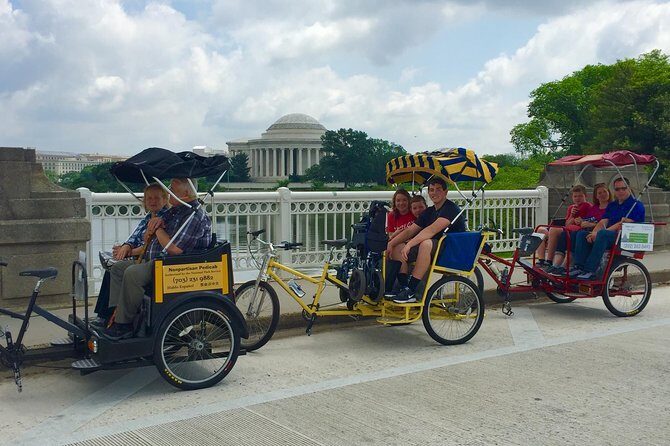
I also like that the tour is private. That’s not just a luxury label—it matters when you’re trying to match your pace to your energy. If you need an extra moment at a photo spot, or you want time to look around before moving on, the schedule is built around your group instead of a fixed crowd flow.
Finally, the “big names” you’ll see aren’t just exterior photo ops. The itinerary includes chances to step into key memorials like Lincoln, Jefferson, MLK, and FDR, plus walk-through time at Vietnam. That mix—viewing from the route and getting inside where allowed—is a smart way to make a short tour feel complete.
You can also read our reviews of more tours and experiences in Washington DC.



Price and value: a private loop for up to 2 people
The price is $554 per group (up to 2). On the surface, that’s “group pricing,” but how it feels depends on how you’re traveling.
If you’re two people who want a guided, private, easy-pace monuments plan, this can be good value because you’re paying for access to a tailored route plus a guide’s commentary. You’re not buying two separate tickets to cover multiple stops across the city. You also get a structured 3-hour plan that’s built around top DC landmarks—so you’re not spending your energy trying to map out timing, parking, and the best walking routes.
If you’re traveling with a larger group, this specific format may be less cost-effective because it’s set up for a group size up to 2. But for couples, friends, or a caregiver + guest, paying for a private experience with fewer mobility barriers often makes sense.
One more practical angle: most of the major stops listed come with admission ticket free time at the stop level. That helps you avoid surprise add-ons while you focus on the guide’s context and the views you came for.
Timing, weather, and how the 3-hour plan feels
You can pick a departure time within opening hours from 9:00 AM to 9:00 PM. The biggest advantage of that wide window is simple: you can choose the time that works best for your energy level, light, and overall day.
The day runs about 3 hours. The stops themselves are usually quick (think single digits to about 15 minutes), which is a trade-off. The upside is that you cover a lot of DC in one outing. The downside is that you won’t have unlimited time to linger at every angle, especially if you’re the type who wants to read every plaque slowly.
Weather is another key factor. The tour requires good weather, and if it’s canceled due to poor conditions, you’ll be offered a different date or a full refund. That means if you’re traveling in a season with frequent rain or heat waves, you should be ready with flexible plans.
A final small tip that makes this kind of tour work: even with short stop times, you’ll get more out of it if you decide what you want first—photo, close look, or reading/quiet time. Since the guide is narrating, you can also use that moment to decide where your attention goes before you step in and out of the memorial spaces.
White House to Washington Monument: quick icons with real context
Your first moments are at the White House. You’ll be able to see it either from farther away, up close, or both, depending on your exact route at the time. What makes the stop more than just a photo opportunity is the narration about the history of the White House and some of the notable men who lived there.
This is a good starting point because it sets the tone. You’re anchoring the rest of the tour to the idea of DC as both a political center and a symbol machine. If you’ve ever looked at the White House from afar and felt like you didn’t quite understand what you were really seeing, this kind of intro helps you connect names and events to what’s in front of you.
Next is the Washington Monument, with a short stop devoted to its building story and history. Seven minutes sounds fast, but for a monuments tour, that’s enough time for a solid “get your bearings” moment: orientation, scale, and context.
A quick consideration: because both of these stops are brief, you shouldn’t plan on a long, slow exploration. If you love architecture and want to stare for a while, you’ll need to be selective. Use the guide’s narration as your “first read,” then take your photos and move on while the tour keeps the momentum.
Still, for many people, the best part is that the tour doesn’t treat these icons like checkboxes. The commentary gives you the why behind the what, and that’s what makes the rest of the stops easier to understand.
Lincoln, Jefferson, and MLK: the stops where you can step inside
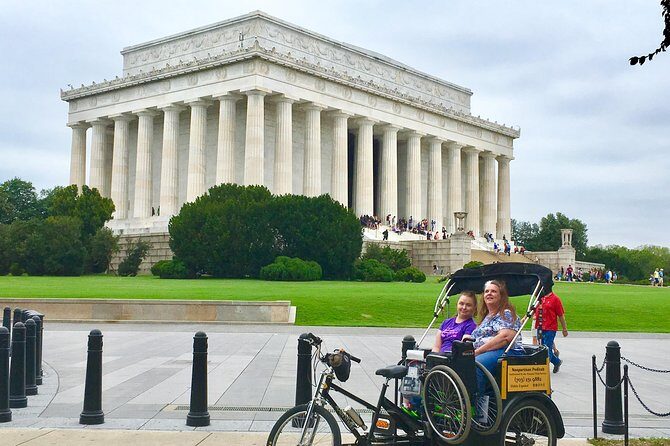
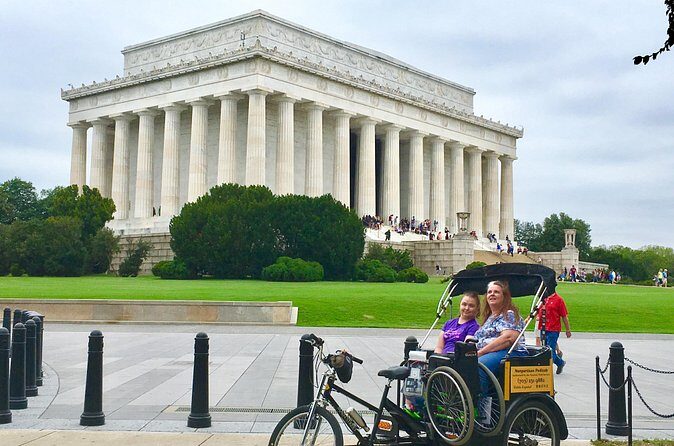
The Lincoln Memorial is up next, and this is one of the best time-value stops on the route. You’ll get a narrative explanation tied to what makes it special, with time for photos and views. After that, you can go inside the Lincoln Memorial to explore and take in what’s there at your own pace.
Fifteen minutes can fly by if you’re absorbed, but it’s long enough to do the essentials. If you want to read and look slowly, I’d treat this as your “priority stop” and use the guide’s narration as a head start—then you can spend your on-your-own time inside.
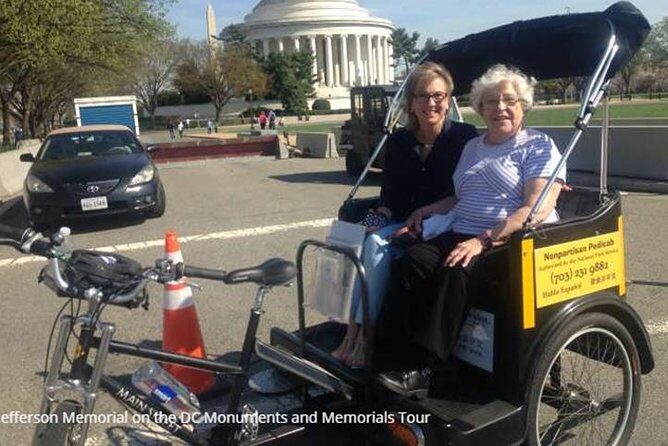
After Lincoln comes the Jefferson Memorial. Here, you start outside with narration about Jefferson and the symbolic construction of the memorial. Then you get invited to go inside to admire views and take photos.
This stop is worth it if you like the idea of symbols and design—how public monuments are built to communicate meaning. Even if you don’t read every line, the guide’s explanation helps you notice what you might otherwise miss.
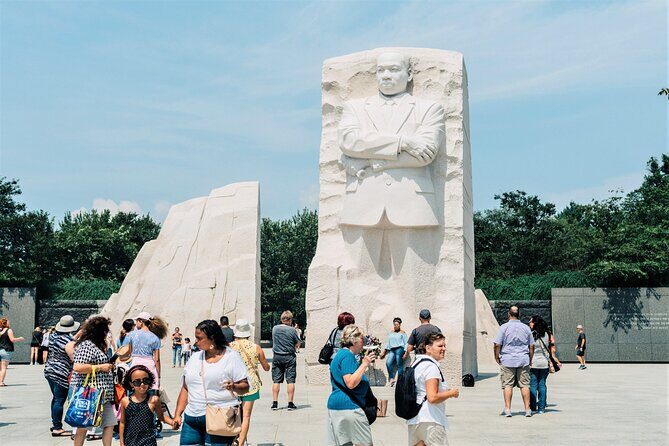
Then you reach the Martin Luther King Jr. Memorial. The stop starts just outside with narration about his life and significance. You’re then invited inside to admire the MLK statue and enjoy the great views around the Tidal Basin.
This one tends to feel different from the others because it mixes remembrance with open space and perspective. The Tidal Basin views give you a built-in way to take a breather. In a short tour day, that matters.
One practical drawback to keep in mind: since these stops include interior access, there may be small crowds or simple foot-traffic bottlenecks, and your time inside can feel tighter. Plan to prioritize the parts you care about most—statue first, views second, photos while you’re there rather than waiting for a “perfect moment” that may not come.






FDR, Korean War Veterans, and Vietnam: closer looks at sacrifice
The Franklin Delano Roosevelt Memorial stop begins near the entrance with a brief narration about Roosevelt and the symbolic significance of the memorial. Then you can enter on foot and explore.
Fifteen minutes here can be enough for a meaningful walk-through if you go in with a plan: decide whether you’re more interested in the Roosevelt-focused storytelling, the scale, or the photo angles. Because the guide narration comes first, you’ll likely understand what you’re looking at faster than if you arrived on your own.
Next is the Korean War Veterans Memorial. The itinerary includes viewing it from afar first, then being invited to see it up close. Seven minutes isn’t a long time, but it’s timed to give you both orientation and a personal look.
Then you finish with two memorials that carry heavy emotional weight. First is the Vietnam Veterans Memorial. The stop includes brief narration about the Vietnam War and the memorial’s construction, followed by an invitation to walk through the memorial to appreciate it fully.
Ten minutes might sound short for something this powerful, but the value here is in how the guide frames what you’re seeing before you walk through. That framing often turns a quick viewing into a more thoughtful experience—even if you can’t spend hours there.
A good consideration for this final stretch: if you’re someone who gets overwhelmed by crowds or emotional spaces, give yourself permission to move at a slower pace inside the memorial area. This tour is private, so you’re not stuck with a large group’s pace. But you will still want to keep an eye on time so you don’t feel rushed at the end.
Overall, this back half of the tour works well because it shifts from world-recognizable names to a deeper focus on remembrance. By the time you reach Vietnam, you’ll have already built context, which makes the memorial stories land better.
The guide narration is the real secret sauce

The standout theme here is that the guide commentary isn’t just facts for the sake of it. The itinerary is built so each stop includes a short narrative setup that explains what you’re about to see—then you get just enough time to confirm it in person.
This matters in DC. There are a lot of monuments. Without context, you can end up collecting photos but not really collecting meaning. With the narration, you’re learning why each place was built and what it represents.
The strongest feedback I’ve seen highlights the guides’ effort and engagement. Names like Robert and Richard come up in recent feedback, with praise for how much more people learned than they expected—and how the guide went the extra mile. That lines up with the way this tour is structured: short stop windows plus guided storylines can work really well when the guide knows how to communicate.
If you want to get the most out of the narration, do this: after you arrive at each stop, watch the guide for a minute, then switch into your own mode. Don’t multitask too hard. Let the story land, then take photos or explore right after. It helps the whole tour feel smoother instead of rushed.
Also, keep your expectations realistic. You’ll see a lot, but it’s still a “highlights” tour. The goal is to help you understand and orient quickly, not to replace a long, museum-style day.
Who should book this private DC monuments pedicab tour
This is a strong fit if you:
- Want a private tour format for just your group of up to 2.
- Need an easier mobility setup than long walks across the monument area.
- Like guided storytelling and want a clear overview before you explore more on your own.
- Are short on time but still want the major memorials—White House, Lincoln, Jefferson, MLK, FDR, Korean War, and Vietnam.
It’s also a good match if you’re traveling with someone who benefits from a guided route and fewer navigation decisions. With pickup offered and a pedicab-based approach, you’re spending less time figuring out what’s next and more time enjoying the landmarks.
If you’re the type who wants hours at a single site or plans to read every inscription in depth, this tour may feel too brief at each stop. But if you want a high-impact, well-paced introduction that still includes chances to go inside several memorials, it’s a smart use of a 3-hour window.
Should you book the Classic Monuments & Memorials Tour?
If you want the DC highlights without turning the day into an endurance test, I think you’ll like this. The pedicab setup helps reduce walking strain, and the guided narration gives your photos context instead of leaving you with a memory of “I saw it.”
Book it if you value a private pace, limited-mobility friendliness, and a route that hits major monuments efficiently. Skip it (or pair it with extra time elsewhere) if you’re hoping for long, slow stays at each memorial or you need a tour that functions like a full-day deep reading experience.
If your schedule is flexible and weather looks steady, this is the kind of tour that can make DC feel clear, meaningful, and manageable in just a few hours.
FAQ
How much does the tour cost?
It costs $554 per group for up to 2 people.
How long is the tour?
The tour runs about 3 hours.
Is this a private tour?
Yes. It’s private, and only your group participates.
Is pickup offered?
Yes, pickup is offered.
Do you provide a mobile ticket?
Yes, the tour uses a mobile ticket.
Is the tour accessible for limited mobility?
It’s designed as an accessible-style pedicab excursion, and most travelers can participate. Some stops do include time to go inside or walk through memorial areas.
Which major landmarks are included?
You’ll see the White House, Washington Monument, Lincoln Memorial, Jefferson Memorial, Martin Luther King Jr. Memorial, Franklin Delano Roosevelt Memorial, Korean War Veterans Memorial, and Vietnam Veterans Memorial.
Is admission free at the stops?
The stop details list admission ticket free for each included stop.
Are service animals allowed?
Yes, service animals are allowed.
What happens if the weather is bad or I need to cancel?
If weather is poor and the tour can’t run, you’ll be offered a different date or a full refund. There is also free cancellation up to 24 hours in advance for a full refund.